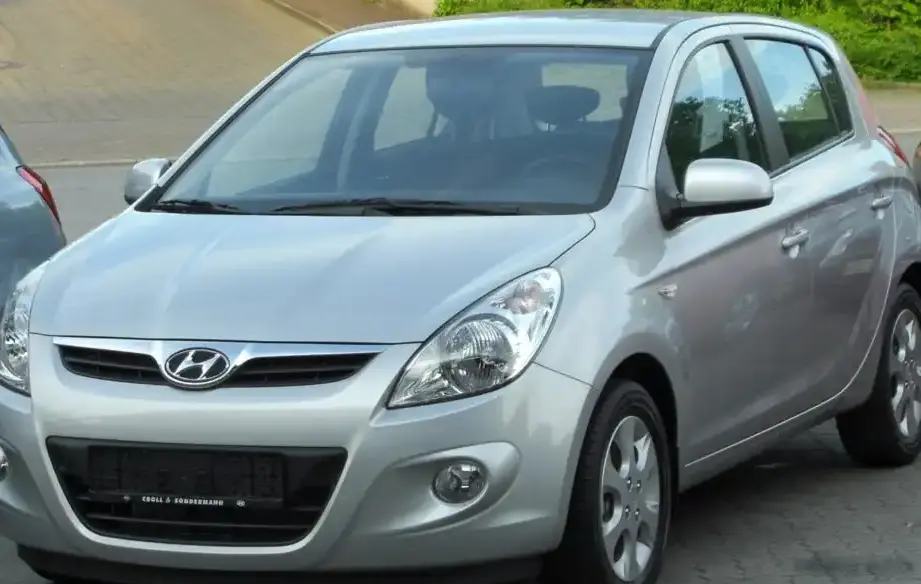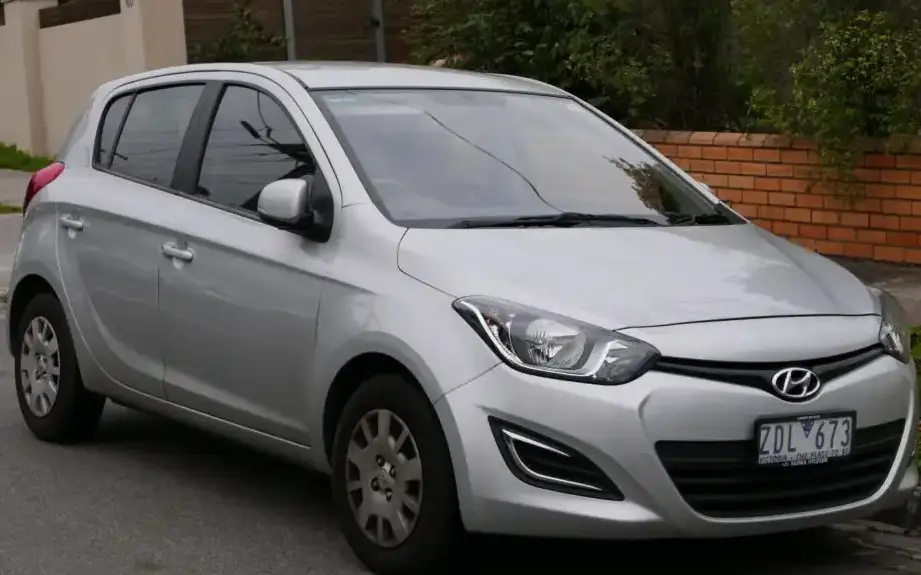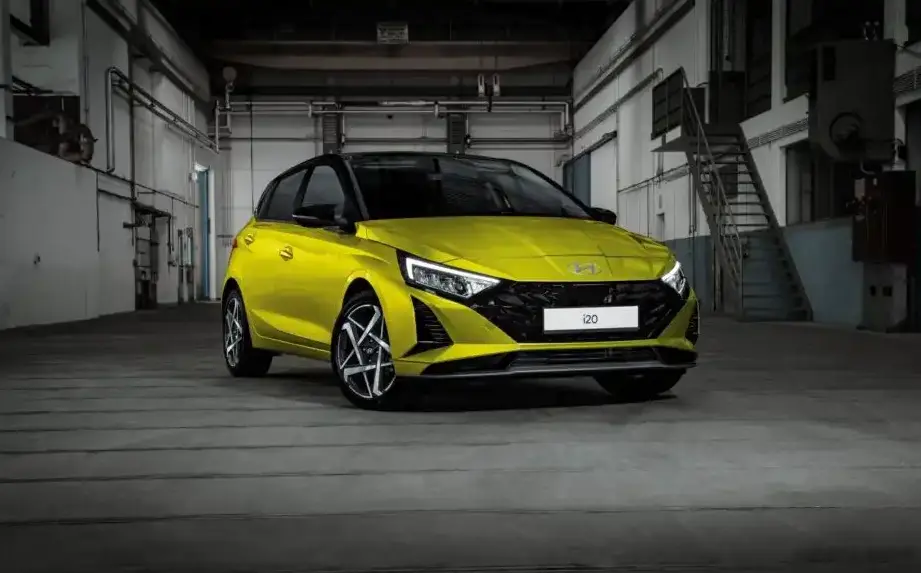
The Hyundai i20 III (facelift, introduced in late 2023 for the 2024 model year) represents a significant update to Hyundai’s subcompact hatchback, aimed primarily at the European and Asian markets. The 1.0 T-GDi (90 hp) variant, paired with a 7-speed Dual Clutch Transmission (DCT), occupies the entry to mid-level position within the i20 lineup. Production began in December 2023, building upon the foundation of the PB platform (also known as the 1HX0/A3 platform) which underpins the third-generation i20. This specific configuration balances fuel efficiency with acceptable performance for urban and highway driving, targeting cost-conscious buyers seeking a modern and well-equipped small car.
Technical Specifications
| Brand | Hyundai |
| Model | i20 |
| Generation | i20 III (facelift 2023) |
| Type (Engine) | 1.0 T-GDi (90 Hp) DCT |
| Start of production | December, 2023 |
| Powertrain Architecture | Internal Combustion engine |
| Body type | Hatchback |
| Seats | 5 |
| Doors | 5 |
| Fuel consumption at Low speed (WLTP) | 7.5-7.6 l/100 km (31.4 – 30.9 US mpg, 37.7 – 37.2 UK mpg, 13.3 – 13.2 km/l) |
| Fuel consumption at Medium speed (WLTP) | 5.2-5.3 l/100 km (45.2 – 44.4 US mpg, 54.3 – 53.3 UK mpg, 19.2 – 18.9 km/l) |
| Fuel consumption at high speed (WLTP) | 4.7-4.9 l/100 km (50 – 48 US mpg, 60.1 – 57.6 UK mpg, 21.3 – 20.4 km/l) |
| Fuel consumption at very high speed (WLTP) | 6.1-6.4 l/100 km (38.6 – 36.8 US mpg, 46.3 – 44.1 UK mpg, 16.4 – 15.6 km/l) |
| Combined fuel consumption (WLTP) | 5.7-5.9 l/100 km (41.3 – 39.9 US mpg, 49.6 – 47.9 UK mpg, 17.5 – 16.9 km/l) |
| CO2 emissions (WLTP) | 129-133 g/km |
| Fuel Type | Petrol (Gasoline) |
| Acceleration 0 – 100 km/h | 12.8 sec |
| Acceleration 0 – 62 mph | 12.8 sec |
| Acceleration 0 – 60 mph | 12.2 sec |
| Maximum speed | 179 km/h (111.23 mph) |
| Emission standard | Euro 6D |
| Weight-to-power ratio | 12.2 kg/Hp, 82.2 Hp/tonne |
| Weight-to-torque ratio | 6.4 kg/Nm, 157.1 Nm/tonne |
| Power | 90 Hp @ 4800-5700 rpm |
| Power per litre | 90.2 Hp/l |
| Torque | 172 Nm @ 1500-3000 rpm (126.86 lb.-ft. @ 1500-3000 rpm) |
| Engine layout | Front, Transverse |
| Engine Model/Code | G3LE |
| Engine displacement | 998 cm3 (60.9 cu. in.) |
| Number of cylinders | 3 |
| Engine configuration | Inline |
| Cylinder Bore | 71 mm (2.8 in.) |
| Piston Stroke | 84 mm (3.31 in.) |
| Compression ratio | 10.5:1 |
| Number of valves per cylinder | 4 |
| Fuel injection system | Direct injection |
| Engine aspiration | Turbocharger, Intercooler |
| Valvetrain | DOHC |
| Engine oil capacity | 3.6 l (3.8 US qt | 3.17 UK qt) |
| Coolant | 5.77 l (6.1 US qt | 5.08 UK qt) |
| Kerb Weight | 1095-1210 kg (2414.06 – 2667.59 lbs.) |
| Max. weight | 1625 kg (3582.51 lbs.) |
| Max load | 415-530 kg (914.92 – 1168.45 lbs.) |
| Trunk (boot) space – minimum | 352 l (12.43 cu. ft.) |
| Trunk (boot) space – maximum | 1165 l (41.14 cu. ft.) |
| Fuel tank capacity | 40 l (10.57 US gal | 8.8 UK gal) |
| Max. roof load | 75 kg (165.35 lbs.) |
| Permitted trailer load with brakes (12%) | 910 kg (2006.21 lbs.) |
| Permitted trailer load without brakes | 450 kg (992.08 lbs.) |
| Length | 4065 mm (160.04 in.) |
| Width | 1775 mm (69.88 in.) |
| Height | 1450 mm (57.09 in.) |
| Wheelbase | 2580 mm (101.57 in.) |
| Front track | 1531-1539 mm (60.28 – 60.59 in.) |
| Rear (Back) track | 1536-1543 mm (60.47 – 60.75 in.) |
| Minimum turning circle (turning diameter) | 10.4 m (34.12 ft.) |
| Drivetrain Architecture | The Internal combustion engine (ICE) drives the front wheels of the vehicle. |
| Drive wheel | Front wheel drive |
| Number of gears and type of gearbox | 7 gears, automatic transmission DCT |
| Front suspension | Independent type McPherson |
| Rear suspension | Torsion |
| Front brakes | Ventilated discs, 280 mm |
| Rear brakes | Disc, 262 mm |
| Assisting systems | ABS (Anti-lock braking system) |
| Steering type | Steering rack and pinion |
| Power steering | Electric Steering |
| Tires size | 195/55 R16; 215/45 R17 |
| Wheel rims size | 6.0J x 16; 7.0J x 17 |
INTRODUCTION
The Hyundai i20 III, particularly the facelifted version released in late 2023, is a front-wheel-drive, five-door hatchback designed to compete in the highly competitive subcompact segment. The 1.0 T-GDi 90 hp DCT model represents an efficient and accessible entry point into the i20 range. It’s positioned below the more powerful 1.0 T-GDi 120 hp variants and the previous generation’s diesel options. This variant aims to appeal to buyers prioritizing fuel economy and ease of driving, especially in urban environments. The facelift brought styling updates, enhanced safety features, and improvements to the infotainment system, further solidifying the i20’s position as a value-oriented choice.
Powertrain & Engine Architecture
At the heart of this i20 variant lies Hyundai’s G3LE, a 998cc three-cylinder turbocharged gasoline engine. This engine utilizes direct injection and a single scroll turbocharger with an intercooler to deliver a balance of power and efficiency. The engine’s code signifies its place within Hyundai’s Kappa engine family. The G3LE features a DOHC (Dual Overhead Camshaft) valvetrain with four valves per cylinder, optimizing gas flow for improved performance. The 172 Nm (126.86 lb.-ft.) of torque is available from 1500-3000 rpm, providing reasonable responsiveness for everyday driving. Paired with this engine is Hyundai’s 7-speed Dual Clutch Transmission (DCT). This DCT offers quicker and smoother gear changes compared to a traditional automatic transmission, contributing to both performance and fuel economy. The DCT’s programming prioritizes fuel efficiency, with taller gear ratios in the upper gears.
Driving Characteristics
The 90 hp 1.0 T-GDi with the DCT delivers adequate performance for typical urban and suburban driving. Acceleration from 0-60 mph takes approximately 12.2 seconds, and 0-100 km/h in 12.8 seconds. While not particularly sporty, the turbocharger provides a noticeable boost in power during acceleration. The DCT generally shifts smoothly, although some drivers may notice slight hesitation at low speeds. Compared to the 120 hp version, the 90 hp model feels less eager to accelerate, particularly when fully loaded or on inclines. The gear ratios are tuned for fuel efficiency, meaning the engine can feel slightly strained at higher speeds. However, for everyday commuting and city driving, the power delivery is sufficient and predictable.
Equipment & Trim Levels
The 1.0 T-GDi 90 hp DCT i20 typically comes equipped with a respectable level of standard features. These generally include air conditioning, a touchscreen infotainment system with Apple CarPlay and Android Auto compatibility, Bluetooth connectivity, and a suite of safety features such as lane keeping assist, forward collision avoidance assist, and automatic emergency braking. Higher trim levels add features like a larger touchscreen, a rearview camera, automatic climate control, and alloy wheels. Interior upholstery is typically cloth, with options for upgraded materials on higher trims. The dashboard layout is modern and functional, with a focus on ease of use.
Chassis & Braking
The i20 III utilizes a McPherson strut front suspension and a torsion beam rear suspension. This setup provides a comfortable ride quality, well-suited for everyday driving. The torsion beam rear suspension is a cost-effective solution that balances ride comfort with handling. Braking duties are handled by ventilated discs at the front and solid discs at the rear. ABS (Anti-lock Braking System) is standard, enhancing safety during emergency braking situations. The steering is electrically assisted, providing light and precise control. The i20’s chassis is tuned for comfort rather than outright sportiness, prioritizing a smooth and predictable driving experience.
Market Reception & Comparison
The Hyundai i20 III 1.0 T-GDi 90 hp DCT has been generally well-received by automotive critics as a practical and affordable subcompact hatchback. Reviewers have praised its fuel efficiency, comfortable ride, and generous standard equipment. However, some have noted its relatively modest performance compared to rivals and the slightly firm ride on certain road surfaces. Compared to the 120 hp version, the 90 hp model offers better fuel economy but sacrifices some performance. Against competitors like the Volkswagen Polo, Ford Fiesta (where available), and Toyota Yaris, the i20 offers a compelling value proposition, often undercutting its rivals in price while offering a similar level of features.
Legacy
The Hyundai i20 III 1.0 T-GDi 90 hp DCT powertrain is still relatively new, but early indications suggest it is a reliable and durable unit. The three-cylinder turbocharged engine has proven to be generally robust in other Hyundai and Kia models. The DCT transmission, while more complex than a traditional automatic, has also demonstrated good reliability when properly maintained. On the used car market, this variant is expected to hold its value reasonably well, particularly due to its fuel efficiency and low running costs. Its appeal will likely remain strong among buyers seeking an affordable and practical subcompact hatchback.