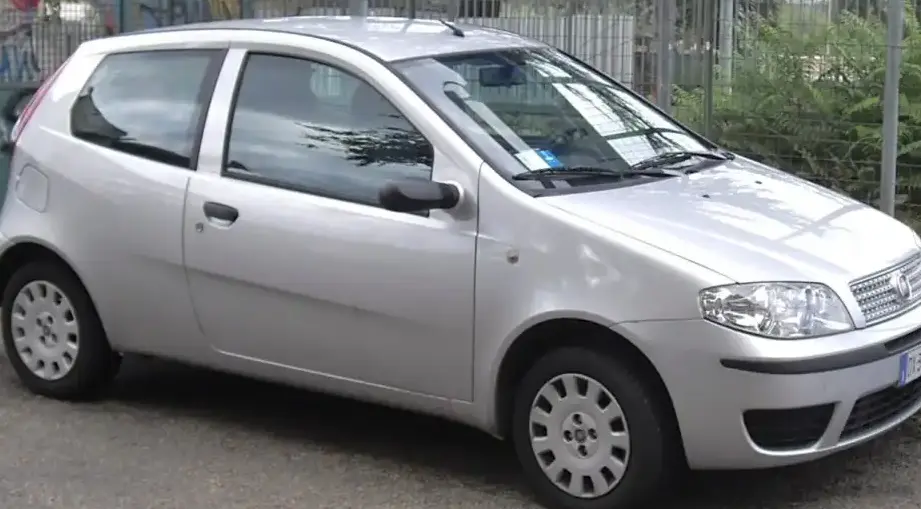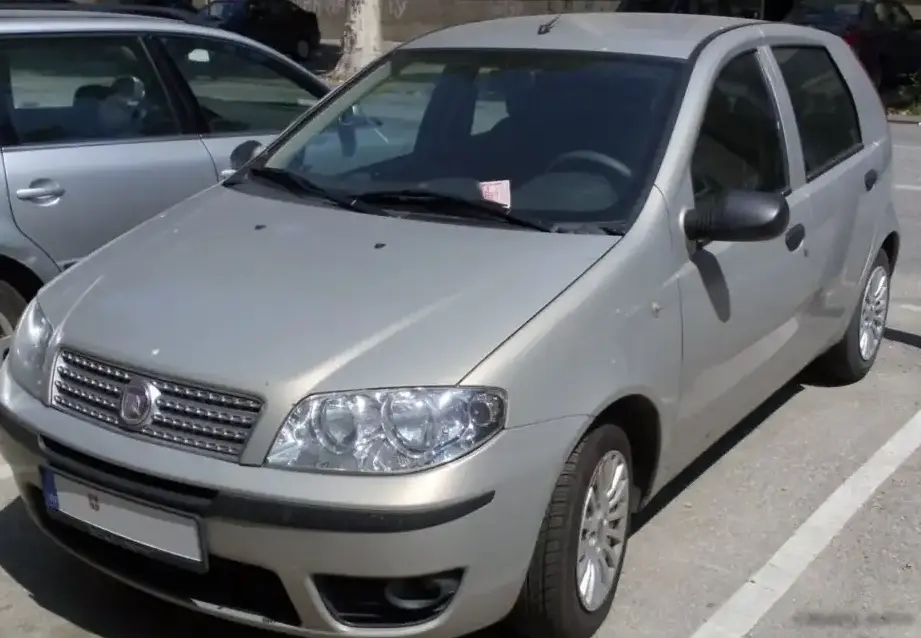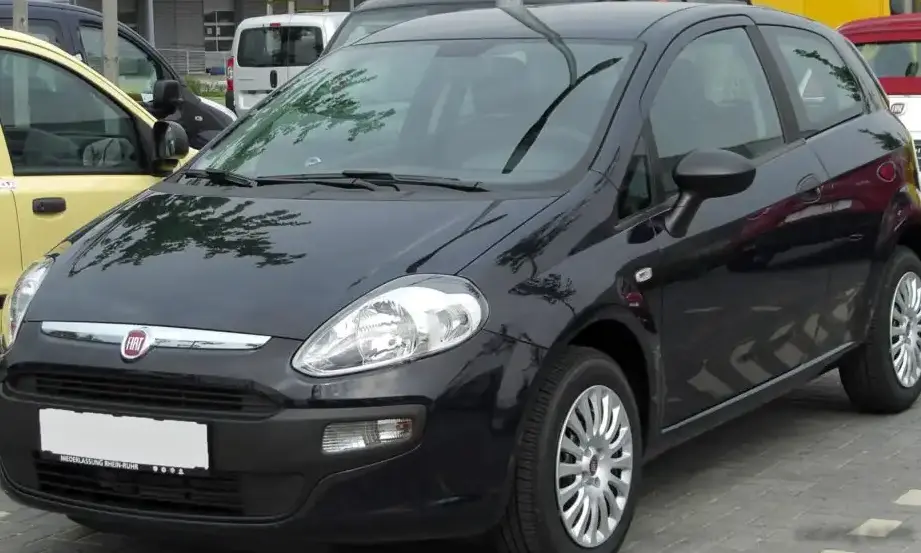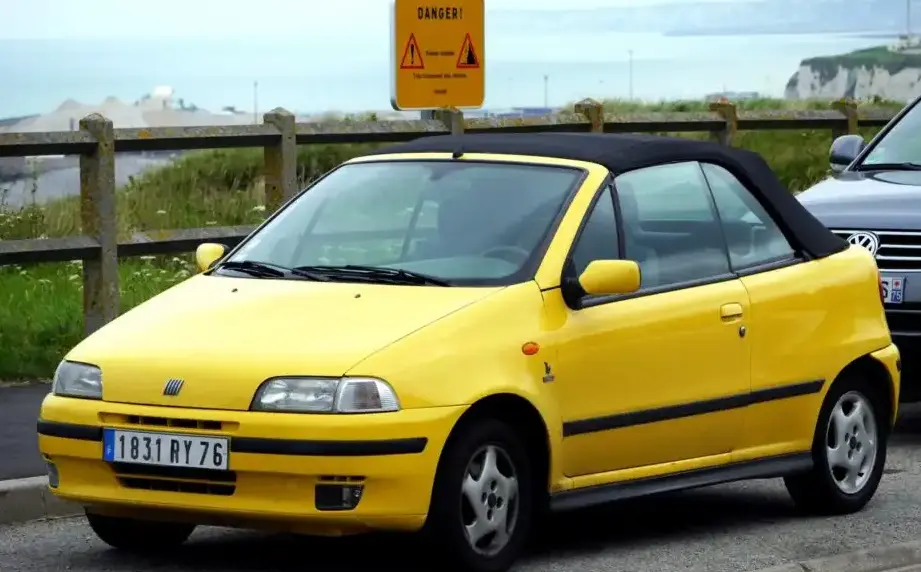
The Fiat Punto Cabrio (176C) 1.6, produced between 1994 and 1997, represented a stylish and accessible entry into the world of open-top motoring. Based on the second-generation Fiat Punto (176 series), the Cabriolet offered a more emotive and recreational alternative to the standard hatchback. It was primarily marketed in Europe, capitalizing on the demand for affordable convertibles. This 1.6-liter, 88 horsepower variant occupied a mid-range position within the Punto Cabrio lineup, offering a balance between performance and economy, appealing to buyers seeking a fun-to-drive, yet practical, small car.
Technical Specifications
| Brand | Fiat |
| Model | Punto |
| Generation | Punto Cabrio (176C) |
| Type (Engine) | 1.6 (88 Hp) |
| Start of production | 1994 |
| End of production | 1997 |
| Powertrain Architecture | Internal Combustion engine |
| Body type | Cabriolet |
| Seats | 4 |
| Doors | 2 |
| Fuel consumption (urban) | 11.9 l/100 km (19.8 US mpg, 23.7 UK mpg, 8.4 km/l) |
| Fuel consumption (extra urban) | 6.6 l/100 km (35.6 US mpg, 42.8 UK mpg, 15.2 km/l) |
| Fuel consumption (combined) | 8.5 l/100 km (27.7 US mpg, 33.2 UK mpg, 11.8 km/l) |
| Fuel Type | Petrol (Gasoline) |
| Acceleration 0 – 100 km/h | 12.3 sec |
| Acceleration 0 – 62 mph | 12.3 sec |
| Acceleration 0 – 60 mph | 11.7 sec |
| Maximum speed | 170 km/h (105.63 mph) |
| Weight-to-power ratio | 12 kg/Hp, 83 Hp/tonne |
| Weight-to-torque ratio | 8.3 kg/Nm, 119.8 Nm/tonne |
| Power | 88 Hp @ 5750 rpm |
| Power per litre | 55.7 Hp/l |
| Torque | 127 Nm @ 2750 rpm (93.67 lb.-ft. @ 2750 rpm) |
| Engine layout | Front, Transverse |
| Engine Model/Code | 176A9000 |
| Engine displacement | 1581 cm3 (96.48 cu. in.) |
| Number of cylinders | 4 |
| Engine configuration | Inline |
| Cylinder Bore | 86.4 mm (3.4 in.) |
| Piston Stroke | 67.4 mm (2.65 in.) |
| Compression ratio | 9.5:1 |
| Number of valves per cylinder | 2 |
| Fuel injection system | Multi-port manifold injection |
| Engine aspiration | Naturally aspirated engine |
| Engine oil capacity | 3.6 l (3.8 US qt | 3.17 UK qt) |
| Coolant | 5.9 l (6.23 US qt | 5.19 UK qt) |
| Kerb Weight | 1060 kg (2336.9 lbs.) |
| Max. weight | 1430 kg (3152.61 lbs.) |
| Max load | 370 kg (815.71 lbs.) |
| Trunk (boot) space – minimum | 200 l (7.06 cu. ft.) |
| Fuel tank capacity | 47 l (12.42 US gal | 10.34 UK gal) |
| Length | 3760 mm (148.03 in.) |
| Width | 1625 mm (63.98 in.) |
| Height | 1447 mm (56.97 in.) |
| Wheelbase | 2450 mm (96.46 in.) |
| Front track | 1369 mm (53.9 in.) |
| Rear (Back) track | 1352 mm (53.23 in.) |
| Drag coefficient (Cd) | 0.38 |
| Minimum turning circle | 10.2 m (33.46 ft.) |
| Drivetrain Architecture | Front wheel drive |
| Drive wheel | Front wheel drive |
| Number of gears | 5 gears, manual transmission |
| Front suspension | Spring Strut |
| Rear suspension | Coil spring |
| Front brakes | Disc |
| Rear brakes | Drum |
| Assisting systems | ABS (Anti-lock braking system) |
| Steering type | Steering rack and pinion |
| Power steering | Hydraulic Steering |
| Tires size | 165/65 R14 T |
Introduction
The Fiat Punto Cabrio (176C) 1.6, launched in 1994, was a significant addition to Fiat’s lineup, offering an affordable and stylish convertible option. Built on the underpinnings of the Punto hatchback (176 series), the Cabriolet distinguished itself with its folding soft-top roof and revised bodywork. The 1.6-liter engine, producing 88 horsepower, was a popular choice, providing a reasonable level of performance for leisurely cruising and everyday driving. This variant aimed to attract buyers who desired the open-air experience without sacrificing practicality or affordability. It was a key player in the small convertible segment in Europe during its production run.
Powertrain & Engine Architecture
The heart of the Punto Cabrio 1.6 is the 176A9000 engine, a 1.6-liter inline-four cylinder gasoline engine. This engine utilizes a naturally aspirated configuration and a multi-port fuel injection system, delivering fuel directly into the intake ports. The engine features a single overhead camshaft (SOHC) design with two valves per cylinder. The 9.5:1 compression ratio contributes to a balance between power and fuel efficiency. The engine’s 88 horsepower output at 5750 rpm and 127 Nm (93.67 lb-ft) of torque at 2750 rpm provided adequate performance for the lightweight Cabriolet. The engine was typically paired with a five-speed manual transmission, although an automatic transmission was also offered, albeit less common. The automatic transmission was a conventional hydraulic unit, offering smooth but not particularly sporty shifts.
Driving Characteristics
The Punto Cabrio 1.6 with the manual transmission offered a reasonably engaging driving experience. Acceleration from 0 to 60 mph took around 11.7 seconds, and the top speed was approximately 105.63 mph. While not a sports car, the 1.6-liter engine provided sufficient power for overtaking and maintaining comfortable cruising speeds. The automatic transmission, while offering convenience, noticeably dulled the car’s performance, increasing the 0-60 mph time to around 12.3 seconds. Gear ratios were tuned for economy, with a relatively long final drive. The steering was light and precise, making the car easy to maneuver in urban environments. The soft-top roof, while providing open-air enjoyment, did contribute to some chassis flex, particularly on uneven road surfaces.
Equipment & Trim Levels
The Punto Cabrio 1.6 typically came equipped with a reasonable level of standard features for its price point. These included power steering, central locking, and an AM/FM radio. Interior upholstery was typically cloth, with a simple and functional dashboard layout. Optional extras included alloy wheels, electric windows, and a more sophisticated audio system. Higher trim levels offered upgraded interior materials and additional comfort features. The Cabriolet’s interior, while not luxurious, was well-built and practical, focusing on usability rather than extravagance.
Chassis & Braking
The Punto Cabrio 1.6 utilized a front-wheel-drive layout with a MacPherson strut suspension at the front and a coil spring suspension at the rear. The suspension setup was tuned for comfort, providing a relatively smooth ride. Braking duties were handled by disc brakes at the front and drum brakes at the rear. An Anti-lock Braking System (ABS) was available as an option, enhancing safety. The car’s relatively light weight (approximately 1060 kg or 2336.9 lbs) helped to compensate for the less powerful engine and drum brakes at the rear.
Market Reception & Comparison
The Fiat Punto Cabrio 1.6 was generally well-received by automotive critics as an affordable and stylish convertible. It was praised for its attractive design, comfortable ride, and reasonable fuel economy (around 27.7 US mpg combined). However, some critics noted the engine’s lack of outright power and the presence of drum brakes at the rear. Compared to other small convertibles of the time, such as the Peugeot 205 Cabriolet, the Punto Cabrio offered a more modern design and a slightly more refined interior. The 1.6-liter engine provided a better balance of performance and economy than the smaller 1.4-liter engine, making it a more popular choice among buyers.
Legacy
The Fiat Punto Cabrio 1.6 has proven to be a relatively reliable car, with the 1.6-liter engine being known for its durability. However, like all older cars, it is susceptible to age-related issues such as rust and wear and tear on suspension components. Today, the Punto Cabrio 1.6 is a popular choice among classic car enthusiasts, offering an affordable and enjoyable way to experience open-top motoring. Parts availability is generally good, and the car’s simple mechanical design makes it relatively easy to maintain. The 1.6-liter engine, while not particularly powerful by modern standards, remains a reliable and enjoyable powerplant.