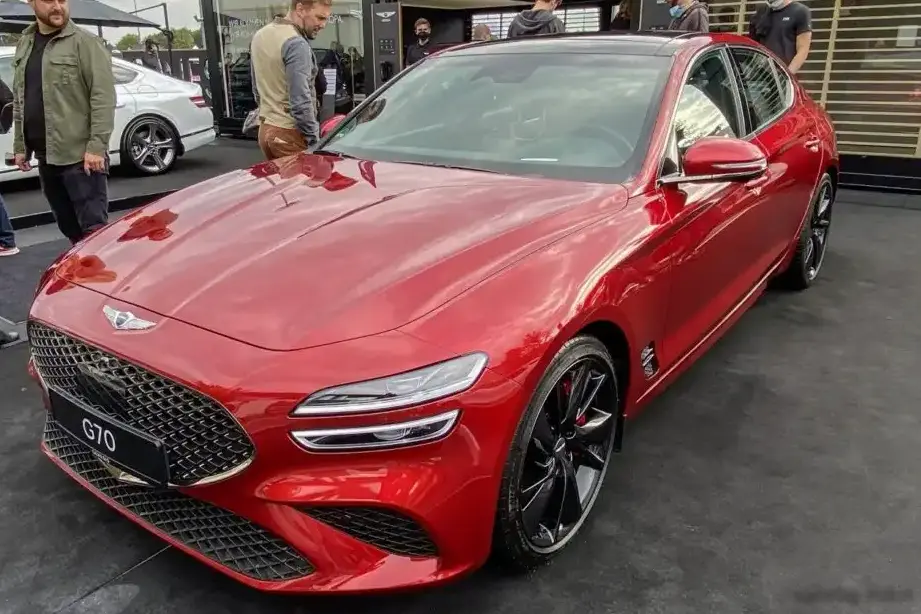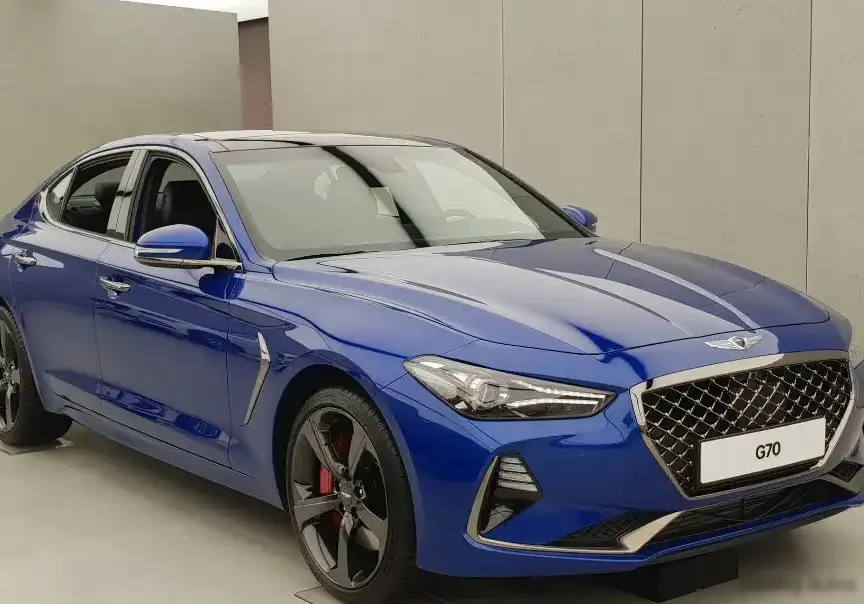
The Genesis G70 2.0T-GDi Automatic, produced from 2017 through October 2020, represents the entry point into the Genesis luxury sport sedan lineup. Positioned as a competitor to the BMW 3 Series, Audi A4, and Mercedes-Benz C-Class, the G70 aimed to deliver a compelling blend of performance, luxury, and value. This variant, equipped with the 2.0-liter turbocharged four-cylinder engine and an eight-speed automatic transmission, served as the volume model for buyers prioritizing a balance between spirited driving and everyday usability. It was a key component in establishing the Genesis brand’s presence in the North American market, showcasing Hyundai’s ambition to compete directly with established European luxury automakers.
Technical Specifications
| Brand | Genesis |
| Model | G70 |
| Generation | G70 |
| Type (Engine) | 2.0 T-GDi (252 Hp) Automatic |
| Start of production | 2017 |
| End of production | October, 2020 |
| Powertrain Architecture | Internal Combustion engine |
| Body type | Sedan |
| Seats | 5 |
| Doors | 4 |
| Fuel consumption (urban) | 10.6-10.8 l/100 km (22.2 – 21.8 US mpg) |
| Fuel consumption (extra urban) | 7.8-8.0 l/100 km (30.2 – 29.4 US mpg) |
| Fuel consumption (combined) | 9.3-9.6 l/100 km (25.3 – 24.5 US mpg) |
| CO2 emissions | 156-161 g/km |
| Fuel Type | Petrol (Gasoline) |
| Weight-to-power ratio | 6.3 kg/Hp, 158 Hp/tonne |
| Weight-to-torque ratio | 4.4 kg/Nm, 225.7 Nm/tonne |
| Power | 252 Hp @ 6200 rpm |
| Power per litre | 126.1 Hp/l |
| Torque | 360 Nm @ 1400-4000 rpm (265.52 lb.-ft. @ 1400-4000 rpm) |
| Engine layout | Front, Longitudinal |
| Engine Model/Code | Theta II / G4KL |
| Engine displacement | 1998 cm3 (121.93 cu. in.) |
| Number of cylinders | 4 |
| Engine configuration | Inline |
| Compression ratio | 10:1 |
| Fuel injection system | Direct injection |
| Engine aspiration | Turbocharger, Intercooler |
| Engine oil capacity | 5.7 l (6.02 US qt | 5.02 UK qt) |
| Coolant | 7.27 l (7.68 US qt | 6.4 UK qt) |
| Kerb Weight | 1595-1630 kg (3516.37 – 3593.53 lbs.) |
| Fuel tank capacity | 60 l (15.85 US gal | 13.2 UK gal) |
| Length | 4685 mm (184.45 in.) |
| Width | 1850 mm (72.83 in.) |
| Height | 1400 mm (55.12 in.) |
| Wheelbase | 2835 mm (111.61 in.) |
| Front track | 1596 mm (62.83 in.) |
| Rear track | 1632-1604 mm (64.25 – 63.15 in.) |
| Front overhang | 805 mm (31.69 in.) |
| Rear overhang | 1045 mm (41.14 in.) |
| Drag coefficient (Cd) | 0.28 |
| Drivetrain Architecture | Rear wheel drive |
| Number of gears | 8 |
| Gearbox type | Automatic transmission |
INTRODUCTION
The Genesis G70 2.0T-GDi Automatic, launched in 2017, marked a significant step for the fledgling Genesis brand. Built on the rear-wheel-drive platform (shared with the Kia Stinger), the G70 aimed to offer a more engaging driving experience than its front-wheel-drive competitors. This 2.0-liter turbocharged variant was positioned as the entry-level model, offering a balance of performance and affordability. It served as the gateway to the G70 range, attracting buyers who desired a luxury sport sedan without the higher price tag of the 3.3T model. Production continued through the 2020 model year, with minor updates to features and trim levels.
Powertrain & Engine Architecture
At the heart of the G70 2.0T lies the Hyundai-Kia Theta II engine family, specifically the G4KL 2.0-liter inline-four. This engine utilizes direct injection and a twin-scroll turbocharger to produce 252 horsepower and 265 lb-ft of torque. The engine’s design emphasizes low-end torque delivery, making it responsive in everyday driving situations. The Theta II engine is known for its relatively robust construction, though early versions were subject to some concerns regarding oil consumption, which were addressed in later model years. The engine is paired with a Hyundai-developed eight-speed automatic transmission. This transmission features a wide gear ratio spread, optimizing both acceleration and fuel efficiency. The transmission offers smooth shifts and responsive downshifts, contributing to a refined driving experience. While a manual transmission was available on some G70 models, the automatic was by far the more popular choice, particularly in the US market.
Driving Characteristics
The G70 2.0T Automatic delivers a comfortable yet engaging driving experience. While not as overtly sporty as the 3.3T variant, the 2.0T provides ample power for most driving situations. Acceleration from 0 to 60 mph typically takes around 6.2-6.5 seconds. The eight-speed automatic transmission is well-tuned, providing smooth and timely shifts. The rear-wheel-drive configuration contributes to a balanced chassis, offering predictable handling. The steering is well-weighted and provides good feedback, enhancing driver confidence. Compared to the 3.3T, the 2.0T feels less urgent in its acceleration, but the difference is often negligible in everyday driving. The 2.0T’s focus is more on refinement and fuel economy, making it a more practical choice for daily commutes.
Equipment & Trim Levels
The G70 2.0T Automatic was offered in several trim levels, including Standard, Sport, Elite, and Prestige. The base Standard trim included features such as leather upholstery, a 7-inch infotainment screen, Apple CarPlay and Android Auto compatibility, and a suite of safety features including automatic emergency braking and lane keeping assist. The Sport trim added sport seats, a sport-tuned suspension, and unique exterior styling elements. The Elite trim further enhanced the luxury with features like a larger 8-inch infotainment screen, a premium sound system, and heated and ventilated front seats. The top-of-the-line Prestige trim included features such as a heads-up display, a panoramic sunroof, and advanced driver-assistance systems like adaptive cruise control and blind-spot monitoring. Optional extras included a Lexicon premium sound system, Nappa leather upholstery, and a microfiber suede headliner.
Chassis & Braking
The G70’s chassis is a multi-link suspension setup at all four corners, designed to provide a balance of comfort and handling. The Sport trim featured a stiffer suspension and larger stabilizer bars for improved cornering performance. The G70 2.0T typically came equipped with 18-inch or 19-inch alloy wheels. Braking duties are handled by ventilated disc brakes at all four corners. The braking system is responsive and provides ample stopping power. ABS, electronic stability control, and traction control are standard features. Rear drum brakes were not used on any G70 models.
Market Reception & Comparison
The Genesis G70 2.0T Automatic was generally well-received by automotive critics. It was praised for its stylish design, comfortable interior, and engaging driving dynamics. Critics noted that the 2.0T offered a compelling value proposition compared to its European rivals. Fuel economy was also a strong point, with the G70 2.0T achieving around 24-25 mpg in combined driving. Compared to the G70 3.3T, the 2.0T offered a more affordable entry point, but at the expense of some performance. The 2.0T was also considered more fuel-efficient and easier to live with on a daily basis. Reliability ratings were generally good, although some owners reported minor issues with the infotainment system.
Legacy
The Genesis G70 2.0T Automatic has established itself as a solid performer in the used car market. Its combination of luxury, performance, and value has made it a popular choice among buyers seeking a sporty and refined sedan. The Theta II engine, while not without its quirks, has proven to be relatively durable with proper maintenance. The eight-speed automatic transmission is also known for its reliability. As the Genesis brand continues to evolve, the G70 2.0T remains a significant milestone, representing the brand’s initial foray into the luxury sport sedan segment and demonstrating its commitment to delivering a compelling alternative to established European automakers.