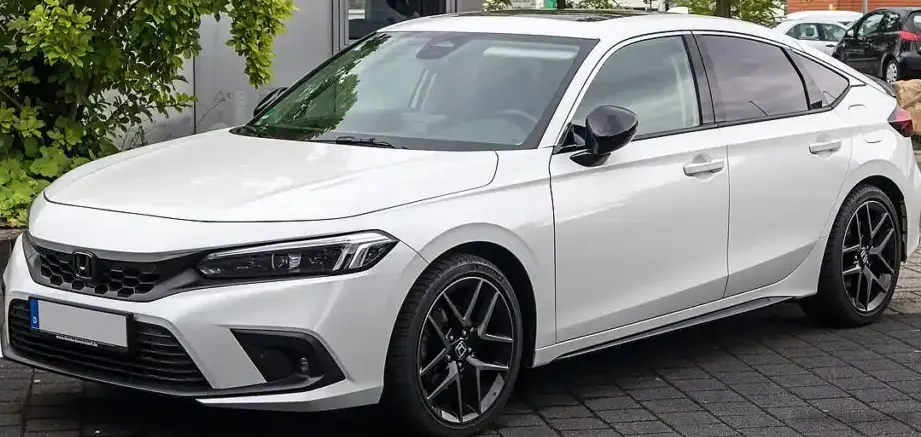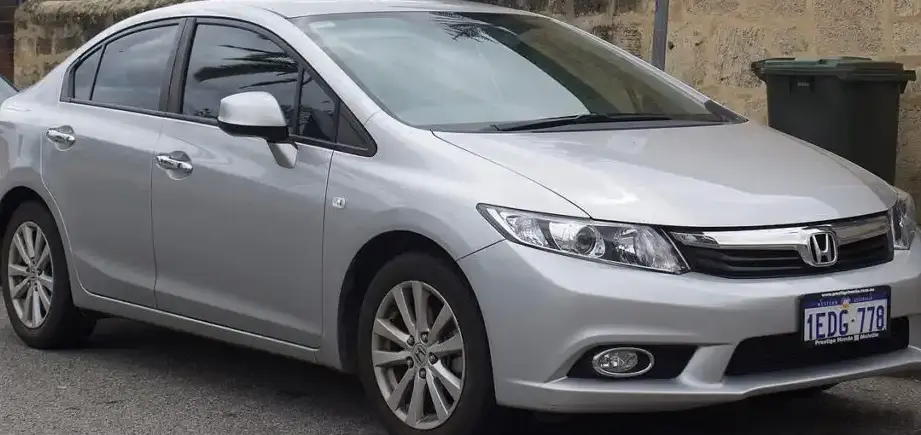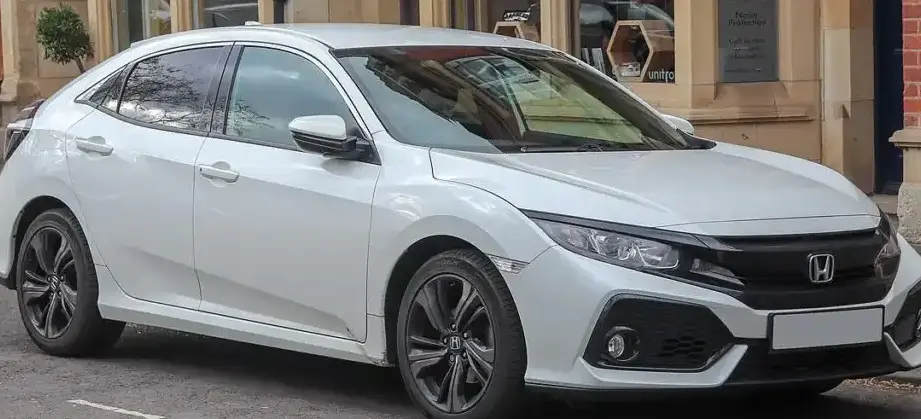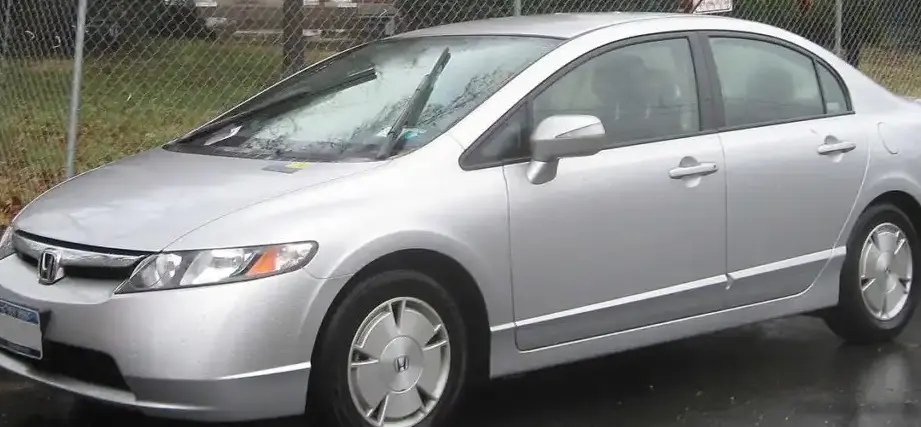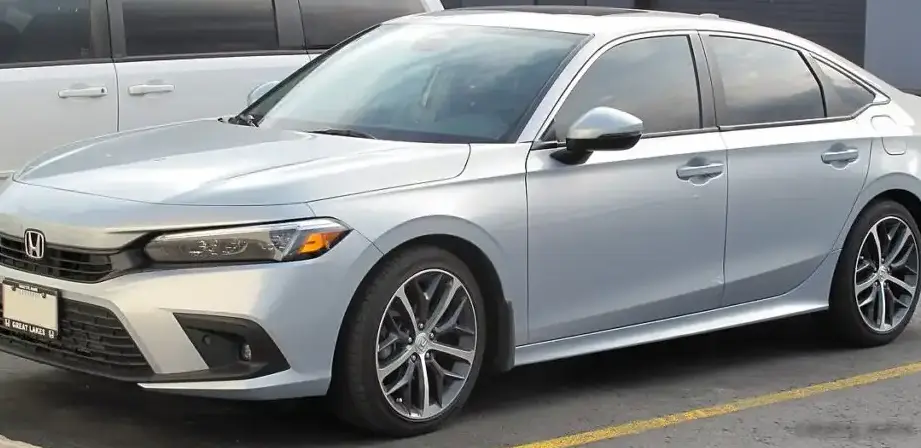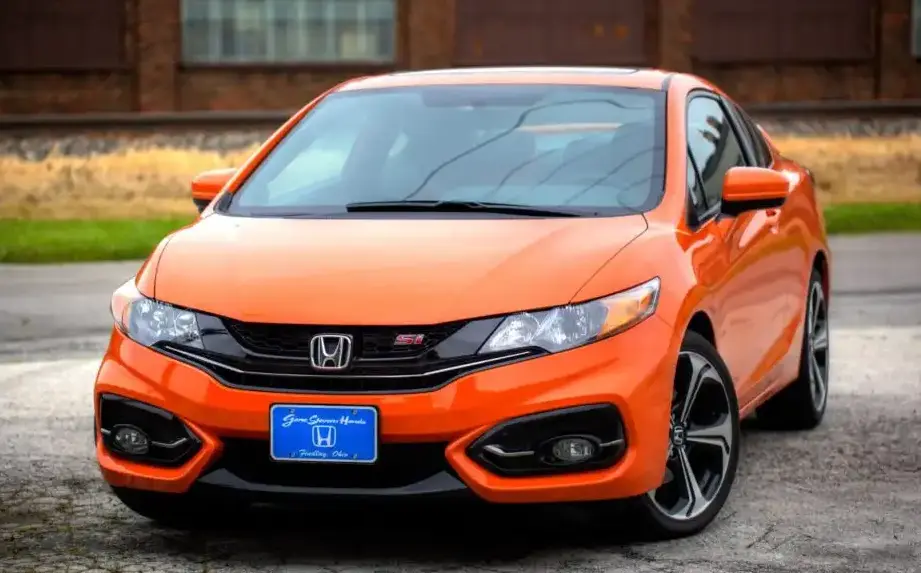
The Honda Civic IX Coupe (facelift, 2013-2015) 1.8 i-VTEC with a Continuously Variable Transmission (CVT) represented a key offering in Honda’s North American compact car lineup. Introduced as part of a mid-cycle refresh for the ninth-generation Civic, this variant aimed to balance fuel efficiency with adequate performance for everyday driving. Production spanned from November 2013 to September 2015, positioning it as a mainstream choice within the coupe body style, which was increasingly popular with younger buyers. This model sat within the broader Civic IX family, sharing its platform (FG/FK) with the sedan and hatchback versions, but offering a sportier, two-door aesthetic.
Technical Specifications
| Brand | Honda |
| Model | Civic |
| Generation | Civic IX Coupe (facelift 2013) |
| Type (Engine) | 1.8 i-VTEC (143 Hp) CVT |
| Start of production | November, 2013 |
| End of production | September, 2015 |
| Powertrain Architecture | Internal Combustion engine |
| Body type | Coupe |
| Seats | 5 |
| Doors | 2 |
| Fuel consumption (urban) | 7.8 l/100 km (30.2 US mpg) |
| Fuel consumption (extra urban) | 6 l/100 km (39.2 US mpg) |
| Fuel consumption (combined) | 7.1 l/100 km (33.1 US mpg) |
| Fuel Type | Petrol (Gasoline) |
| Emission standard | ULEV-2 |
| Weight-to-power ratio | 9 kg/Hp |
| Weight-to-torque ratio | 7.3 kg/Nm |
| Power | 143 Hp @ 6500 rpm |
| Torque | 175 Nm @ 4300 rpm (129.07 lb.-ft. @ 4300 rpm) |
| Maximum engine speed | 6700 rpm |
| Engine layout | Front, Transverse |
| Engine Model/Code | R18Z1 |
| Engine displacement | 1798 cm3 (109.72 cu. in.) |
| Number of cylinders | 4 |
| Engine configuration | Inline |
| Cylinder Bore | 81 mm (3.19 in.) |
| Piston Stroke | 87.3 mm (3.44 in.) |
| Compression ratio | 10.6:1 |
| Number of valves per cylinder | 4 |
| Fuel injection system | Multi-port manifold injection |
| Engine aspiration | Naturally aspirated |
| Valvetrain | SOHC, i-VTEC |
| Engine oil capacity | 3.7 l (3.91 US qt | 3.26 UK qt) |
| Coolant capacity | 5.6 l (5.92 US qt | 4.93 UK qt) |
| Kerb Weight | 1286-1326 kg (2835.14 – 2923.33 lbs.) |
| Max. weight | 1680-1720 kg (3703.77 – 3791.95 lbs.) |
| Max load | 394 kg (868.62 lbs.) |
| Trunk space (minimum) | 331 l (11.69 cu. ft.) |
| Fuel tank capacity | 50 l (13.21 US gal | 11 UK gal) |
| Length | 4519 mm (177.91 in.) |
| Width | 1752 mm (68.98 in.) |
| Height | 1397 mm (55 in.) |
| Wheelbase | 2621 mm (103.19 in.) |
| Front track | 1499 mm (59.02 in.) |
| Rear track | 1522 mm (59.92 in.) |
| Ride height (ground clearance) | 152 mm (5.98 in.) |
| Minimum turning circle | 10.8 m (35.43 ft.) |
| Drivetrain | Front wheel drive |
| Number of gears and type of gearbox | automatic transmission CVT |
| Front suspension | Independent, type McPherson with coil spring and anti-roll bar |
| Rear suspension | Independent multi-link spring suspension with stabilizer |
| Front brakes | Ventilated discs, 282 mm |
| Rear brakes | Drum, 201 mm |
| Assisting systems | ABS (Anti-lock braking system) |
| Steering type | Steering rack and pinion |
| Power steering | Electric Steering |
| Tires size | 205/55 R16; 215/45 R17 |
| Wheel rims size | 6.5J x 16; 7J x 17 |
INTRODUCTION
The 2013-2015 Honda Civic Coupe 1.8 i-VTEC CVT was a significant model for Honda in the North American market. Following criticisms of the previous generation’s interior and driving experience, the facelifted Civic aimed to address these concerns while maintaining the brand’s reputation for reliability and fuel efficiency. This particular configuration, pairing the 1.8-liter engine with a CVT, was positioned as the entry-level to mid-range offering within the coupe lineup, appealing to buyers prioritizing economy and ease of use over outright performance. It competed directly with other compact coupes like the Toyota Corolla Coupe and Hyundai Elantra Coupe.
Powertrain & Engine Architecture
At the heart of this Civic Coupe lies the R18Z1 engine, a 1.8-liter inline-four cylinder powerplant. This engine is a member of Honda’s R-series, known for its durability and relatively simple design. The R18Z1 utilizes a single overhead camshaft (SOHC) configuration with Honda’s intelligent Variable Valve Timing and Lift Electronic Control (i-VTEC) system. This system allows for variable valve timing and lift, optimizing engine performance and fuel efficiency across a wide range of engine speeds. Fuel delivery is managed by a multi-point fuel injection system. The engine produces 143 horsepower at 6500 rpm and 175 Nm (129 lb-ft) of torque at 4300 rpm. The engine is transversely mounted, driving the front wheels. Paired with the engine is a Continuously Variable Transmission (CVT). Honda’s CVT is designed to provide smooth, seamless acceleration and maximize fuel economy by keeping the engine operating in its most efficient range. Unlike traditional automatic transmissions with fixed gear ratios, a CVT uses a belt and pulley system to provide an infinite number of gear ratios within its operating range.
Driving Characteristics
The 1.8L i-VTEC CVT combination in the Civic Coupe delivers a comfortable and predictable driving experience. While not particularly sporty, the engine provides adequate power for everyday commuting and highway merging. The CVT contributes to smooth acceleration, but it can sometimes feel less responsive than a traditional automatic transmission, particularly during quick acceleration maneuvers. The CVT is programmed to mimic gear changes to provide a more familiar feel for drivers accustomed to conventional automatics. Compared to the available manual transmission or the higher-output 2.4-liter engine option, this variant offers less spirited performance. However, it excels in fuel economy, making it an attractive option for those prioritizing efficiency. The steering is light and precise, and the suspension provides a comfortable ride, absorbing most road imperfections effectively.
Equipment & Trim Levels
The 1.8 i-VTEC CVT Civic Coupe typically came standard with features such as air conditioning, power windows and locks, a rearview camera, Bluetooth connectivity, and a basic audio system. Higher trim levels, such as the EX and EX-L, added features like alloy wheels, a sunroof, upgraded audio systems, leather upholstery, and heated front seats. Interior upholstery was typically cloth on the base models, with leather options available on higher trims. The dashboard layout was relatively straightforward, with a focus on usability and ergonomics. Optional extras included navigation systems and premium sound systems.
Chassis & Braking
The Civic Coupe utilizes a McPherson strut front suspension and an independent multi-link rear suspension. This setup provides a good balance of ride comfort and handling. The front suspension incorporates a stabilizer bar to reduce body roll during cornering. Braking duties are handled by ventilated discs at the front and drum brakes at the rear. Anti-lock Braking System (ABS) is standard. The brake system provides adequate stopping power for everyday driving, but it’s not designed for high-performance applications. The chassis is relatively lightweight, contributing to the car’s fuel efficiency and agility.
Market Reception & Comparison
The 2013-2015 Honda Civic Coupe 1.8 i-VTEC CVT received generally positive reviews from automotive critics. It was praised for its fuel efficiency, comfortable ride, and Honda’s reputation for reliability. However, some critics noted that the engine lacked the power and excitement of the 2.4-liter option. Compared to the 2.4-liter Civic Coupe, the 1.8L CVT model offered significantly better fuel economy but less acceleration. The 1.8L was also more affordable, making it a more accessible option for budget-conscious buyers. In terms of reliability, the R18Z1 engine and Honda’s CVT have proven to be generally reliable, although regular maintenance is crucial for long-term durability.
Legacy
The Honda Civic IX Coupe 1.8 i-VTEC CVT remains a popular choice in the used car market due to its affordability, fuel efficiency, and Honda’s reputation for reliability. The R18Z1 engine is known for its longevity, and the CVT, while requiring proper maintenance (fluid changes are critical), has proven to be reasonably durable. These cars are often sought after by first-time car buyers or those looking for a dependable and economical daily driver. While not a performance icon, this Civic Coupe variant represents a practical and well-rounded option in the compact coupe segment, continuing to offer value and dependability years after its production ended.