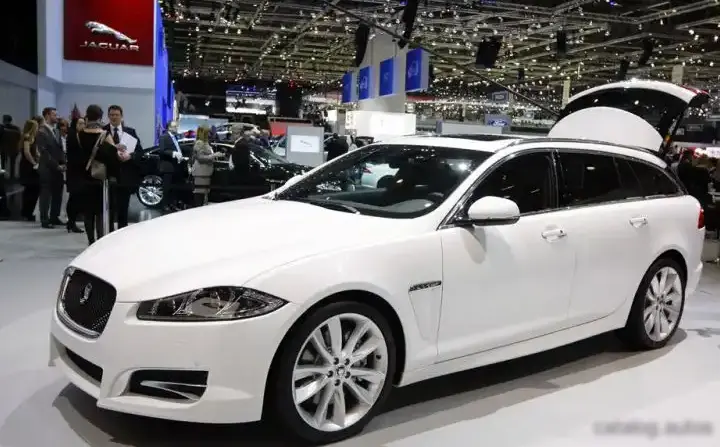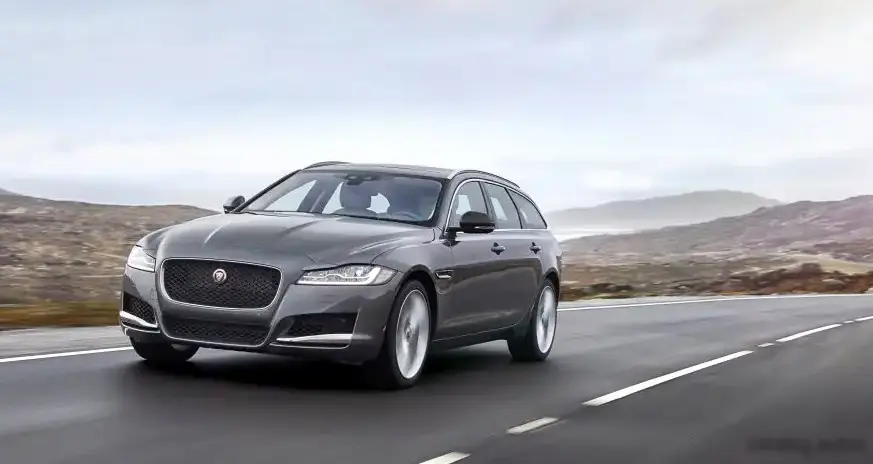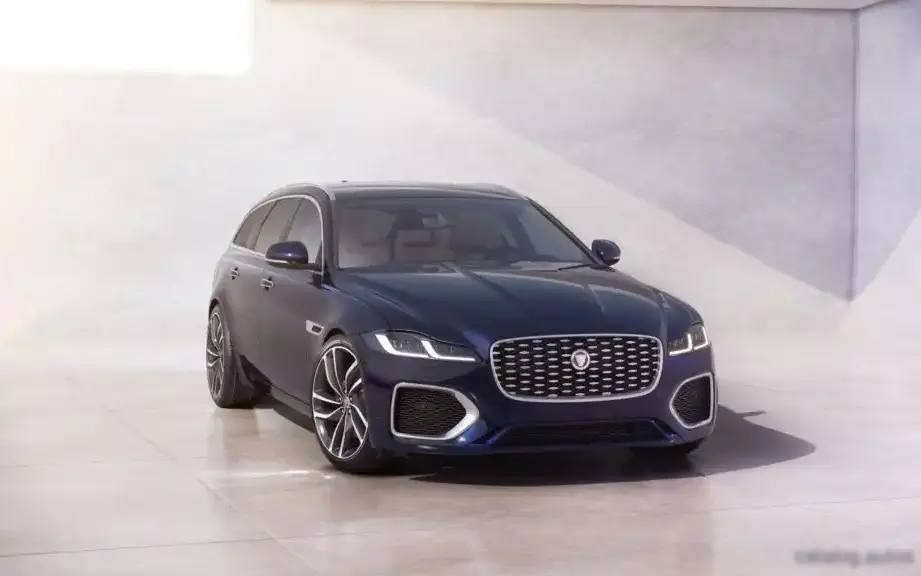
The Jaguar XF Sportbrake (X260, facelift 2020) 2.0i (250 Hp) Automatic represents a compelling blend of practicality and performance within the Jaguar lineup. Introduced in October 2020 as part of the X260’s mid-life refresh, this variant offered a more accessible entry point into the XF Sportbrake range, appealing to buyers seeking a luxurious estate car with a spirited driving experience. Production continued through 2024, positioning it as a key model during a period of increasing demand for premium wagons. This specific configuration sat in the mid-range of the XF Sportbrake offerings, bridging the gap between the entry-level diesel models and the higher-performance P300 and P400 variants.
| Brand | Jaguar |
| Model | XF |
| Generation | XF Sportbrake (X260, facelift 2020) |
| Type (Engine) | 2.0i (250 Hp) Automatic |
| Start of production | October, 2020 |
| End of production | 2024 |
| Powertrain Architecture | Internal Combustion engine |
| Body type | Station wagon (estate) |
| Seats | 5 |
| Doors | 5 |
| Combined fuel consumption (WLTP) | 8.3-9.1 l/100 km |
| Combined fuel consumption (US mpg) | 28.3 – 25.8 |
| CO2 emissions (WLTP) | 188-205 g/km |
| Fuel Type | Petrol (Gasoline) |
| Acceleration 0 – 100 km/h | 7.1 sec |
| Acceleration 0 – 62 mph | 7.1 sec |
| Acceleration 0 – 60 mph | 6.7 sec |
| Maximum speed | 241 km/h (149.75 mph) |
| Emission standard | Euro 6d |
| Weight-to-power ratio | 6.9 kg/Hp, 144.8 Hp/tonne |
| Weight-to-torque ratio | 4.7 kg/Nm, 211.5 Nm/tonne |
| Power | 250 Hp @ 5500 rpm |
| Power per litre | 125.2 Hp/l |
| Torque | 365 Nm @ 1300-4500 rpm (269.21 lb.-ft. @ 1300-4500 rpm) |
| Engine layout | Front, Longitudinal |
| Engine Model/Code | Ingenium / PT204 |
| Engine displacement | 1997 cm3 (121.86 cu. in.) |
| Number of cylinders | 4 |
| Engine configuration | Inline |
| Cylinder Bore | 83 mm (3.27 in.) |
| Piston Stroke | 92.29 mm (3.63 in.) |
| Compression ratio | 10.5:1 |
| Number of valves per cylinder | 4 |
| Fuel injection system | Direct injection |
| Engine aspiration | Turbocharger, Intercooler |
| Engine oil capacity | 7 l (7.4 US qt | 6.16 UK qt) |
| Kerb Weight | 1726 kg (3805.18 lbs.) |
| Trunk (boot) space – minimum | 745 l (26.31 cu. ft.) |
| Trunk (boot) space – maximum | 1724 l (60.88 cu. ft.) |
| Fuel tank capacity | 74 l (19.55 US gal | 16.28 UK gal) |
| Permitted trailer load with brakes (12%) | 1900 kg (4188.78 lbs.) |
| Permitted trailer load without brakes | 750 kg (1653.47 lbs.) |
| Length | 4964 mm (195.43 in.) |
| Width with mirrors folded | 1982 mm (78.03 in.) |
| Width including mirrors | 2089 mm (82.24 in.) |
| Height | 1494 mm (58.82 in.) |
| Wheelbase | 2960 mm (116.54 in.) |
| Front track | 1602 mm (63.07 in.) |
| Rear (Back) track | 1604 mm (63.15 in.) |
| Front overhang | 847 mm (33.35 in.) |
| Rear overhang | 1157 mm (45.55 in.) |
| Drag coefficient (Cd) | 0.30 |
| Minimum turning circle (turning diameter) | 11.56 m (37.93 ft.) |
| Drivetrain Architecture | Rear wheel drive |
| Number of gears and type of gearbox | 8 gears, automatic transmission ZF |
| Front suspension | Double wishbone |
| Rear suspension | Independent coil spring |
| Front brakes | Ventilated discs, 325-350 mm |
| Rear brakes | Ventilated discs, 325 mm |
Powertrain & Engine Architecture
At the heart of the XF Sportbrake 2.0i Automatic lies Jaguar’s Ingenium engine family, specifically the PT204 2.0-liter turbocharged inline-four. This engine, a cornerstone of Jaguar Land Rover’s modular engine strategy, is characterized by its lightweight construction, featuring a cylinder head integrated directly onto the cylinder block. The PT204 utilizes direct fuel injection, operating at pressures up to 200 bar, and a single twin-scroll turbocharger to deliver both responsive performance and improved fuel efficiency. The engine produces 250 horsepower at 5500 rpm and 365 Nm (269.21 lb-ft) of torque between 1300 and 4500 rpm. The engine incorporates variable valve timing and a sophisticated engine management system to optimize combustion and reduce emissions. Paired with this engine is a ZF 8HP80 eight-speed automatic transmission, known for its smooth shifts and efficiency. This transmission offers a wide range of gear ratios, contributing to both acceleration and fuel economy. The transmission is electronically controlled and features a manual shift mode for driver engagement.
Driving Characteristics
The 2.0i Automatic powertrain delivers a refined and capable driving experience. While not as overtly sporty as the higher-powered XF variants, it provides ample performance for everyday driving and long-distance cruising. Acceleration from 0-60 mph takes approximately 6.7 seconds, and the car feels responsive in most situations. The eight-speed automatic transmission contributes to a smooth and seamless power delivery, with well-chosen gear ratios that keep the engine within its optimal torque band. Compared to the manual transmission versions of the same engine, the automatic offers greater convenience, particularly in urban traffic. However, some drivers may find the automatic slightly less engaging than the manual. The rear-wheel-drive configuration provides a balanced handling characteristic, contributing to a confident and enjoyable driving experience.
Equipment & Trim Levels
The XF Sportbrake 2.0i Automatic typically came equipped with a generous level of standard features. These included leather upholstery, a touchscreen infotainment system with navigation, Apple CarPlay and Android Auto compatibility, automatic climate control, and a suite of driver-assistance systems such as lane departure warning and autonomous emergency braking. Optional extras included a panoramic sunroof, premium audio systems, adaptive cruise control, and a head-up display. Trim levels varied depending on the market, but generally offered increasing levels of luxury and technology. Interior finishes ranged from aluminum trim to wood veneers, and buyers could choose from a variety of exterior colors.
Chassis & Braking
The XF Sportbrake utilizes a sophisticated chassis design, featuring double wishbone suspension at the front and an independent coil spring setup at the rear. This configuration provides a comfortable ride while maintaining good handling characteristics. The car’s weight distribution is optimized for balanced handling. Braking duties are handled by ventilated discs all around, with larger discs available on higher trim levels. The braking system is assisted by ABS (Anti-lock Braking System) and electronic brake-force distribution. The steering is electric power-assisted, providing a precise and responsive feel.
Market Reception & Comparison
The Jaguar XF Sportbrake 2.0i Automatic was generally well-received by automotive critics. It was praised for its stylish design, comfortable interior, and refined driving experience. Fuel economy was considered competitive for its class, with combined fuel consumption ranging from 8.3 to 9.1 l/100 km (28.3 – 25.8 US mpg). Compared to the more powerful XF variants, the 2.0i offered a more affordable entry point into the XF Sportbrake range, making it an attractive option for buyers who prioritized fuel efficiency and value. However, some critics noted that the 2.0-liter engine lacked the outright performance of the larger engines. Compared to rivals such as the Audi A6 Avant and BMW 5 Series Touring, the XF Sportbrake offered a distinctive British character and a luxurious interior.
Legacy
The Ingenium engine family, including the PT204, has proven to be a reliable and durable powertrain. While long-term reliability data is still accumulating, early indications suggest that the 2.0i engine is generally robust. The ZF 8HP80 transmission is also known for its reliability and longevity. In the used car market, the XF Sportbrake 2.0i Automatic represents a good value proposition, offering a blend of luxury, practicality, and performance at a competitive price point. Regular maintenance, including oil changes and adherence to the manufacturer’s recommended service intervals, is crucial for ensuring the long-term health of this powertrain.