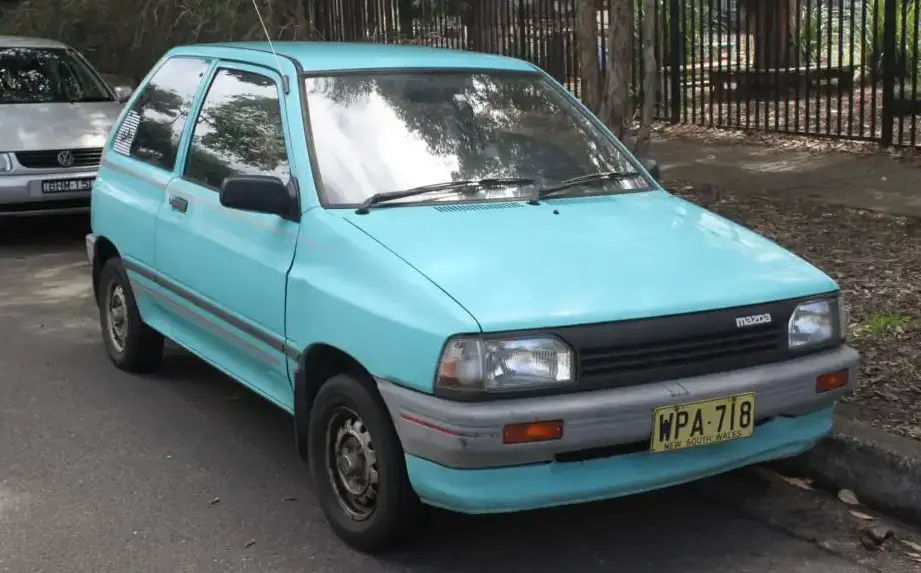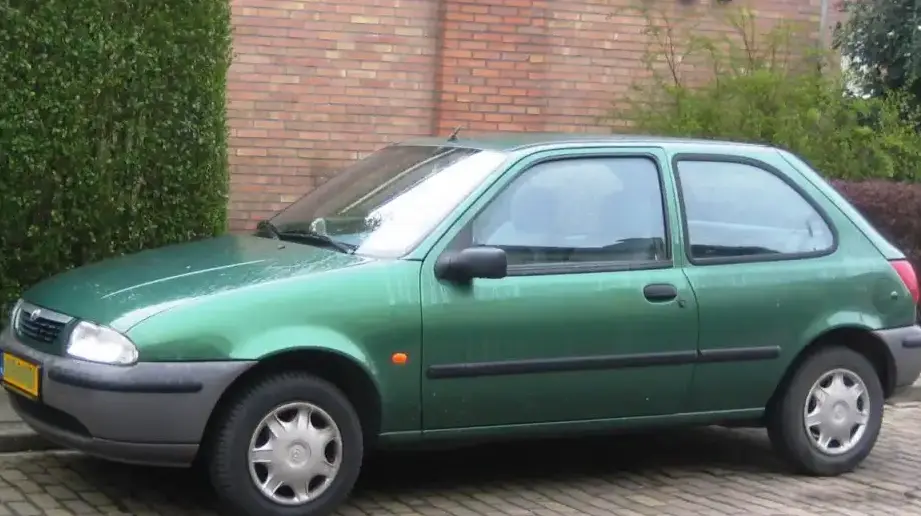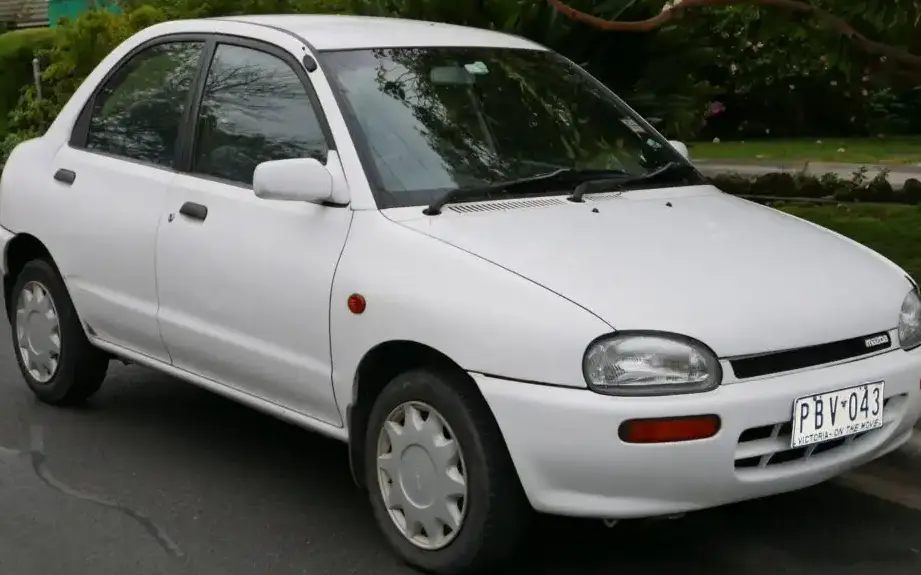
The Mazda 121 II, known as the Mazda Metro in some markets, was a supermini produced by Mazda from 1990 to 1996. This second generation (DB chassis code) represented a significant departure from its predecessor, adopting a more rounded and modern aesthetic. The 1.3 16V variant, producing 54 horsepower, was a key model in the lineup, particularly in European and Asian markets, offering an entry-level option focused on affordability and fuel efficiency. It was built on the shared platform with the Ford Fiesta Mk III, a result of the joint venture between the two manufacturers.
Technical Specifications
| Brand | Mazda |
| Model | 121 |
| Generation | 121 II (DB) |
| Type (Engine) | 1.3 16V (54 Hp) |
| Start of production | 1990 |
| End of production | 1996 |
| Powertrain Architecture | Internal Combustion engine |
| Body type | Sedan |
| Seats | 5 |
| Doors | 4 |
| Fuel consumption (urban) | 10 l/100 km (23.5 US mpg) |
| Fuel consumption (extra urban) | 5 l/100 km (47 US mpg) |
| Fuel consumption (combined) | 6.7 l/100 km (35.1 US mpg) |
| Fuel Type | Petrol (Gasoline) |
| Acceleration 0 – 100 km/h | 13.7 sec |
| Acceleration 0 – 62 mph | 13.7 sec |
| Acceleration 0 – 60 mph | 13 sec |
| Maximum speed | 150 km/h (93.21 mph) |
| Weight-to-power ratio | 15.2 kg/Hp |
| Weight-to-torque ratio | 8.5 kg/Nm |
| Power | 54 Hp @ 5500 rpm |
| Power per litre | 40.8 Hp/l |
| Torque | 97 Nm @ 3000 rpm (71.54 lb.-ft. @ 3000 rpm) |
| Engine displacement | 1324 cm3 (80.8 cu. in.) |
| Number of cylinders | 4 |
| Engine configuration | Inline |
| Cylinder Bore | 71 mm (2.8 in.) |
| Piston Stroke | 83.6 mm (3.29 in.) |
| Compression ratio | 9.4:1 |
| Number of valves per cylinder | 4 |
| Fuel injection system | Single-point injection |
| Engine aspiration | Naturally aspirated engine |
| Valvetrain | OHC |
| Kerb Weight | 820 kg (1807.79 lbs.) |
| Max. weight | 1335 kg (2943.17 lbs.) |
| Max load | 515 kg (1135.38 lbs.) |
| Trunk (boot) space – minimum | 290 l (10.24 cu. ft.) |
| Fuel tank capacity | 43 l (11.36 US gal | 9.46 UK gal) |
| Length | 3810 mm (150 in.) |
| Width | 1655 mm (65.16 in.) |
| Height | 1470 mm (57.87 in.) |
| Wheelbase | 2390 mm (94.09 in.) |
| Front track | 1420 mm (55.91 in.) |
| Rear (Back) track | 1400 mm (55.12 in.) |
| Drivetrain Architecture | Front wheel drive |
| Number of gears and type of gearbox | 5 gears, manual transmission |
| Front suspension | Wishbone |
| Rear suspension | Spring Strut |
| Front brakes | Disc |
| Rear brakes | Drum |
| Assisting systems | ABS (Anti-lock braking system) |
| Steering type | Steering rack and pinion |
| Tires size | 165/70 R13 |
| Wheel rims size | 4.5J x 13 ET45 |
Powertrain & Engine Architecture
The heart of the 121 II 1.3 16V was the Mazda B6 engine, specifically the B6-ZE variant. This 1.3-liter inline-four cylinder engine featured a single overhead camshaft (SOHC) and utilized a multi-point fuel injection system. While the “16V” designation suggests a dual overhead cam setup, this was not the case; it refers to the four valves per cylinder. The engine produced 54 horsepower at 5500 rpm and 97 Nm (71.54 lb-ft) of torque at 3000 rpm. The engine’s design prioritized fuel efficiency and smooth operation over outright performance. The five-speed manual transmission was the standard offering, providing adequate gearing for everyday driving. The engine’s relatively simple design contributed to its reliability, but also limited its potential for significant power upgrades.
Driving Characteristics
The 1.3 16V 121 II offered a predictable, if uninspiring, driving experience. Acceleration was modest, taking approximately 13.7 seconds to reach 62 mph. The engine felt strained at higher speeds, and overtaking required careful planning. The five-speed manual transmission was well-matched to the engine’s characteristics, allowing drivers to keep the engine in its optimal power band. Compared to the more powerful 1.6-liter versions, the 1.3 felt noticeably slower, but it offered a lighter steering feel and better fuel economy. The suspension provided a comfortable ride, absorbing bumps and imperfections in the road reasonably well, though it wasn’t particularly sporty.
Equipment & Trim Levels
The 1.3 16V typically represented the entry-level trim in the 121 II range. Standard equipment generally included power steering, central locking, and basic instrumentation. Interior upholstery was typically cloth, and the dashboard featured a functional, if somewhat basic, design. Optional extras included a sunroof, upgraded audio system, and alloy wheels. The focus was on providing a practical and affordable vehicle, so luxury features were kept to a minimum. The trim level was often simply designated as “L” or a similar base designation, depending on the specific market.
Chassis & Braking
The 121 II utilized a front-wheel-drive layout with a relatively simple chassis design. The front suspension employed independent wishbones, while the rear suspension featured a torsion beam setup. Braking was handled by disc brakes at the front and drum brakes at the rear. Anti-lock Braking System (ABS) was available as an option, enhancing safety. The relatively light weight of the vehicle (around 820 kg or 1808 lbs) helped to compensate for the modest engine output, contributing to acceptable handling and braking performance. Stabilizer bars were present, but were relatively thin compared to those found on higher-performance models.
Market Reception & Comparison
The Mazda 121 II 1.3 16V was generally well-received as an affordable and reliable supermini. Critics praised its fuel efficiency and ease of driving, but noted its lack of performance. Compared to rivals like the Ford Fiesta, Peugeot 205, and Renault Clio, the 121 II offered a competitive package in terms of price and running costs. The 1.6-liter versions of the 121 II offered significantly more performance, but at a higher price point. The 1.3 16V appealed to buyers who prioritized economy and practicality over sporty driving dynamics. Its fuel economy of around 35.1 US mpg combined made it an attractive option for commuters.
Legacy
The Mazda 121 II, particularly the 1.3 16V variant, has developed a reputation for reliability and affordability in the used car market. The B6 engine is known for its durability, and routine maintenance is relatively straightforward. While not a particularly exciting vehicle, it remains a practical and economical choice for those seeking a basic, dependable supermini. Parts availability is generally good, and the car’s simple design makes it relatively easy to repair. Today, well-maintained examples are becoming increasingly sought after by enthusiasts looking for a classic, affordable, and reliable vehicle.