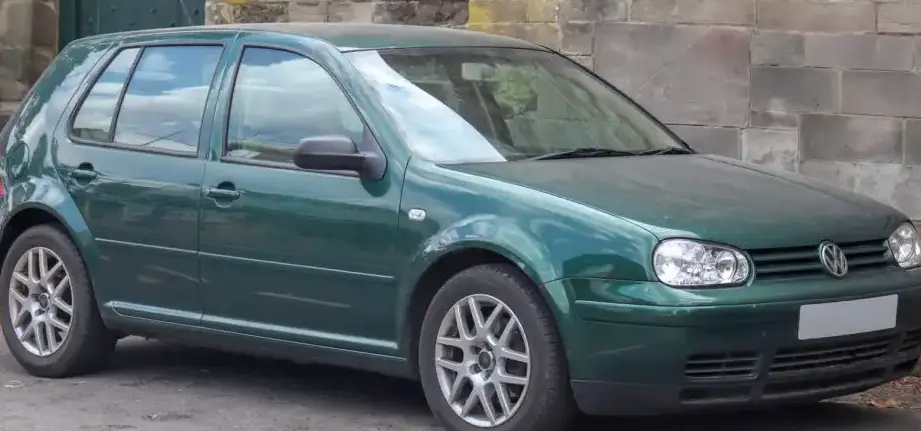
The Volkswagen Golf IV 2.0 (115 hp) 4motion, produced between 1998 and 2003, represents a significant iteration of Volkswagen’s iconic hatchback. Positioned as a mid-range offering within the Golf IV lineup (the 1HX0/A3 platform), this variant combined a potent 2.0-liter gasoline engine with Volkswagen’s 4motion all-wheel-drive system and a five-speed manual transmission. It aimed to provide a blend of performance, practicality, and all-weather capability, appealing to drivers seeking a more engaging and secure driving experience than the base models offered. This model was primarily sold in Europe, where the demand for compact, all-wheel-drive vehicles was substantial, though limited numbers were also available in other markets.
Technical Specifications
| Brand | Volkswagen |
| Model | Golf |
| Generation | Golf IV |
| Type (Engine) | 2.0 (115 Hp) 4motion |
| Start of production | 1998 |
| End of production | 2003 |
| Powertrain Architecture | Internal Combustion engine |
| Body type | Hatchback |
| Seats | 5 |
| Doors | 3-5 |
| Fuel consumption (combined) | 8.6 l/100 km |
| Fuel consumption (US mpg) | 27.4 US mpg |
| Fuel consumption (UK mpg) | 32.8 UK mpg |
| Fuel consumption (km/l) | 11.6 km/l |
| Fuel Type | Petrol (Gasoline) |
| Acceleration 0 – 100 km/h | 11 sec |
| Acceleration 0 – 62 mph | 11 sec |
| Acceleration 0 – 60 mph | 10.5 sec |
| Maximum speed | 192 km/h (119.3 mph) |
| Weight-to-power ratio | 11 kg/Hp |
| Hp/tonne | 90.7 Hp/tonne |
| Weight-to-torque ratio | 7.5 kg/Nm |
| Nm/tonne | 134.1 Nm/tonne |
| Power | 115 Hp @ 5200 rpm |
| Power per litre | 58 Hp/l |
| Torque | 170 Nm @ 2400 rpm (125.39 lb.-ft. @ 2400 rpm) |
| Engine layout | Front, Transverse |
| Engine Model/Code | APK, AQY, AZJ |
| Engine displacement | 1984 cm3 (121.07 cu. in.) |
| Number of cylinders | 4 |
| Engine configuration | Inline |
| Cylinder Bore | 82.5 mm (3.25 in.) |
| Piston Stroke | 92.8 mm (3.65 in.) |
| Compression ratio | 10:1 |
| Number of valves per cylinder | 2 |
| Fuel injection system | Multi-port manifold injection |
| Engine aspiration | Naturally aspirated engine |
| Valvetrain | OHC |
| Engine oil capacity | 4 l (4.23 US qt | 3.52 UK qt) |
| Coolant capacity | 5.5 l (5.81 US qt | 4.84 UK qt) |
| Kerb Weight | 1268 kg (2795.46 lbs.) |
| Max. weight | 1810 kg (3990.37 lbs.) |
| Max load | 542 kg (1194.91 lbs.) |
| Trunk (boot) space – minimum | 245 l (8.65 cu. ft.) |
| Trunk (boot) space – maximum | 1099 l (38.81 cu. ft.) |
| Fuel tank capacity | 62 l (16.38 US gal | 13.64 UK gal) |
| Length | 4149 mm (163.35 in.) |
| Width | 1735 mm (68.31 in.) |
| Height | 1440 mm (56.69 in.) |
| Wheelbase | 2518 mm (99.13 in.) |
| Front track | 1513 mm (59.57 in.) |
| Rear (Back) track | 1487 mm (58.54 in.) |
| Drive wheel | All wheel drive (4×4) |
| Number of gears | 5 gears, manual transmission |
| Front suspension | Wishbone |
| Rear suspension | Coil spring |
| Front brakes | Ventilated discs |
| Rear brakes | Disc |
| Assisting systems | ABS (Anti-lock braking system) |
| Steering type | Steering rack and pinion |
| Power steering | Hydraulic Steering |
| Tires size | 195/65 R15 V |
| Wheel rims size | 6J x 15 |
Powertrain & Engine Architecture
The heart of the Golf IV 2.0 4motion is the 1.8L inline-four cylinder engine, typically identified by engine codes APK, AQY, or AZJ. This engine utilizes a naturally aspirated, multi-port fuel injection system. The engine’s overhead camshaft (OHC) configuration, with two valves per cylinder, was a common design for Volkswagen at the time, prioritizing reliability and ease of maintenance over outright performance. The 4motion system employs a viscous coupling to distribute power between the front and rear axles, providing enhanced traction in slippery conditions. The five-speed manual transmission offered precise gear changes and contributed to the car’s engaging driving experience. The engine’s torque curve is relatively flat, providing usable power across a broad RPM range, though it doesn’t offer the peaky power delivery of some higher-performance engines.
Driving Characteristics
The Golf IV 2.0 4motion with a manual transmission delivers a balanced driving experience. Acceleration from 0-60 mph takes around 10.5 seconds, and top speed is approximately 119 mph. While not a sports car, the 115 hp engine provides adequate power for everyday driving and overtaking maneuvers. The 4motion system significantly improves grip, particularly on wet or loose surfaces, enhancing stability and confidence. Compared to the base 1.6L Golf IV, the 2.0L offers noticeably more power and responsiveness. Compared to the more powerful VR6 variants, the 2.0L 4motion prioritizes fuel efficiency and affordability, making it a more practical choice for many drivers. The gear ratios are well-matched to the engine’s characteristics, providing good acceleration in each gear.
Equipment & Trim Levels
The Golf IV 2.0 4motion typically came equipped with features such as power windows, central locking, and an anti-lock braking system (ABS). Interior upholstery was generally cloth, with options for upgraded materials. Dashboard configuration was standard for the Golf IV range, featuring a straightforward layout with easy-to-read gauges. Optional extras included air conditioning, a sunroof, alloy wheels, and a CD stereo system. Trim levels varied depending on the market, but generally offered a step up in features and comfort compared to the base models.
Chassis & Braking
The Golf IV 2.0 4motion utilizes a wishbone front suspension and a coil spring rear suspension. The suspension setup is tuned for a balance between comfort and handling. Braking duties are handled by ventilated discs at the front and solid discs at the rear. The ABS system provides enhanced braking control, particularly in emergency situations. The chassis is relatively lightweight, contributing to the car’s agility and responsiveness. Stabilizer bars are fitted to both the front and rear axles to reduce body roll during cornering.
Market Reception & Comparison
The Golf IV 2.0 4motion was generally well-received by automotive critics. It was praised for its all-weather capability, comfortable ride, and practical interior. Fuel economy was considered reasonable for a vehicle of its class, averaging around 27.4 US mpg. Compared to other trims in the Golf IV lineup, the 2.0L 4motion offered a compelling combination of performance and value. It was often seen as a more sensible alternative to the more expensive VR6 models, while still providing a significant upgrade over the base 1.6L engine. Reliability was generally good, although some owners reported issues with the cooling system and electrical components.
Legacy
The Golf IV 2.0 4motion has proven to be a durable and reliable vehicle. Today, it remains a popular choice in the used car market, particularly among those seeking an affordable and practical all-wheel-drive hatchback. The engine and transmission are known for their longevity, although regular maintenance is essential to ensure continued reliability. Parts availability is generally good, making it relatively easy to keep these cars on the road. The Golf IV 2.0 4motion represents a high point in Volkswagen’s history, combining German engineering with a practical and versatile design.