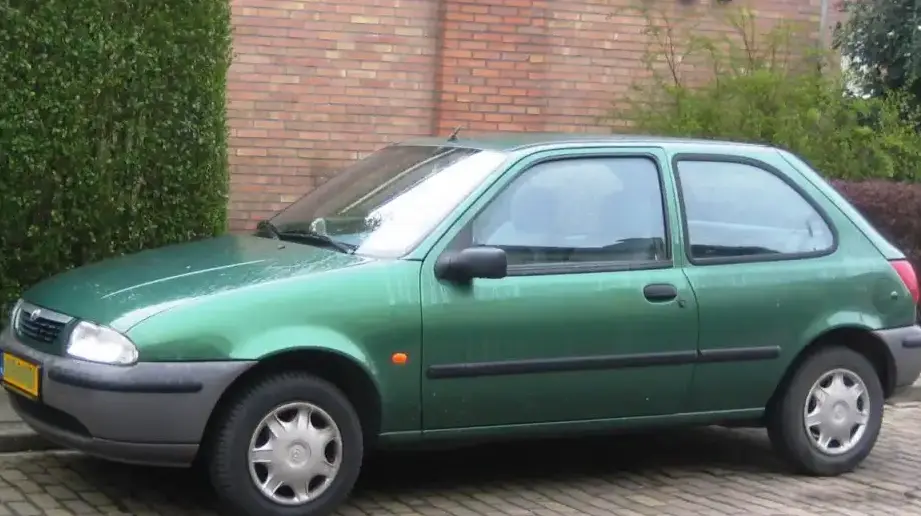
The Mazda 121 III, known as the Mazda Metro in some markets, represents the third generation of Mazda’s subcompact hatchback. Produced between 1996 and 2000 (depending on the market), the JASM and JBSM chassis codes denote variations primarily related to regional specifications and minor equipment differences. This generation was a collaborative effort with Ford, sharing its platform with the Ford Fiesta Mark V. The 1.3-liter, 50 horsepower variant occupied the entry-level position in the 121 III lineup, aimed at buyers prioritizing affordability and fuel economy over outright performance. It was a common sight in Europe and Asia, where subcompact cars were – and continue to be – highly popular due to their practicality and low running costs.
Technical Specifications
| Brand | Mazda |
| Model | 121 |
| Generation | 121 III (JASM, JBSM) |
| Type (Engine) | 1.3 (50 Hp) |
| Start of production | 1996 |
| End of production | 2000 |
| Powertrain Architecture | Internal Combustion engine |
| Body type | Hatchback |
| Seats | 5 |
| Doors | 3/5 |
| Fuel Type | Petrol (Gasoline) |
| Acceleration 0 – 100 km/h | 19 sec |
| Acceleration 0 – 62 mph | 19 sec |
| Acceleration 0 – 60 mph | 18.1 sec |
| Maximum speed | 143 km/h (88.86 mph) |
| Weight-to-power ratio | 18.6 kg/Hp, 53.8 Hp/tonne |
| Weight-to-torque ratio | 9.6 kg/Nm, 104.3 Nm/tonne |
| Power | 50 Hp @ 4500 rpm |
| Power per litre | 38.5 Hp/l |
| Torque | 97 Nm @ 2000 rpm (71.54 lb.-ft. @ 2000 rpm) |
| Engine layout | Front, Transverse |
| Engine displacement | 1299 cm3 (79.27 cu. in.) |
| Number of cylinders | 4 |
| Engine configuration | Inline |
| Cylinder Bore | 74 mm (2.91 in.) |
| Piston Stroke | 75.5 mm (2.97 in.) |
| Compression ratio | 9.5:1 |
| Number of valves per cylinder | 2 |
| Fuel injection system | Single-point injection |
| Engine aspiration | Naturally aspirated engine |
| Valvetrain | OHC |
| Kerb Weight | 930 kg (2050.3 lbs.) |
| Max. weight | 1435 kg (3163.63 lbs.) |
| Max load | 505 kg (1113.33 lbs.) |
| Trunk (boot) space – minimum | 250 l (8.83 cu. ft.) |
| Fuel tank capacity | 42 l (11.1 US gal | 9.24 UK gal) |
| Length | 3828 mm (150.71 in.) |
| Width | 1634 mm (64.33 in.) |
| Height | 1330 mm (52.36 in.) |
| Wheelbase | 2446 mm (96.3 in.) |
| Front track | 1429 mm (56.26 in.) |
| Rear (Back) track | 1384 mm (54.49 in.) |
| Drivetrain Architecture | The Internal combustion engine (ICE) drives the front wheels of the vehicle. |
| Drive wheel | Front wheel drive |
| Number of gears and type of gearbox | 5 gears, manual transmission |
| Front suspension | Spring Strut |
| Rear suspension | Coil spring |
| Front brakes | Disc |
| Rear brakes | Drum |
| Assisting systems | ABS (Anti-lock braking system) |
| Steering type | Steering rack and pinion |
| Tires size | 165/70 R13 |
| Wheel rims size | 13 |
Powertrain & Engine Architecture
The heart of the 121 III 1.3 was the Mazda B3 engine, a relatively simple, naturally aspirated inline-four cylinder. This engine utilized a single-point fuel injection system, a cost-saving measure common in entry-level vehicles of the era. The overhead camshaft (OHC) valvetrain operated two valves per cylinder. While not particularly powerful, the B3 was known for its reliability and relatively low fuel consumption. The 50 horsepower output was achieved at 4500 rpm, and peak torque of 97 Nm (71.54 lb-ft) arrived at 2000 rpm. This engine was paired exclusively with a five-speed manual transmission in most markets, though a four-speed automatic was available in some regions, further reducing performance. The engine’s design prioritized durability and ease of maintenance over high-performance characteristics.
Driving Characteristics
The 1.3-liter 121 III was not a performance car. Acceleration was leisurely, taking approximately 19 seconds to reach 62 mph (100 km/h). The engine felt strained at higher speeds, and overtaking required careful planning. The five-speed manual transmission helped to keep the engine in its optimal power band, but the overall experience was geared towards urban commuting and economical driving. The automatic transmission, when equipped, further dulled performance, resulting in even slower acceleration and a less engaging driving experience. The car’s light weight (around 930 kg or 2050 lbs) did help to mitigate the lack of power to some extent, making it feel reasonably nimble in city traffic.
Equipment & Trim Levels
The 1.3-liter 121 III typically represented the base trim level. Standard equipment generally included power steering, central locking, and basic instrumentation. Interior upholstery was typically cloth, and the dashboard featured a simple, functional design. Options were limited, but could include air conditioning, electric front windows, and a radio/cassette player. The focus was on providing essential features at an affordable price point. Higher trim levels, often featuring the 1.5 or 1.8-liter engines, offered more luxurious appointments such as alloy wheels, upgraded interior trim, and additional convenience features.
Chassis & Braking
The 121 III utilized a relatively simple chassis design. Front suspension consisted of MacPherson strut coil springs, while the rear employed a torsion beam setup. This configuration provided a comfortable ride, but didn’t offer particularly sporty handling. Brakes were disc on the front wheels and drum brakes on the rear, a common setup for vehicles in this price range. Anti-lock Braking System (ABS) was available as an option, enhancing safety. The relatively light weight of the vehicle helped to compensate for the modest braking performance.
Market Reception & Comparison
The Mazda 121 III 1.3 was generally well-received as an affordable and reliable city car. Critics praised its fuel efficiency and ease of driving, but noted its lack of power and somewhat basic interior. Compared to its siblings, such as the 1.5 and 1.8-liter models, the 1.3 offered significantly less performance but at a lower purchase price. The 1.5-liter engine provided a noticeable improvement in acceleration and overall drivability, while the 1.8-liter offered even more power but came with a higher price tag and increased fuel consumption. The 1.3 was often seen as a sensible choice for first-time car buyers or those seeking a low-cost, economical vehicle.
Legacy
The Mazda 121 III 1.3, while not a particularly exciting vehicle, proved to be a durable and reliable runabout. The B3 engine is known for its longevity, and many examples are still on the road today. In the used car market, these vehicles are typically very affordable, making them attractive to budget-conscious buyers. However, potential buyers should be aware of the age-related issues common to older vehicles, such as rust and wear and tear on suspension components. The 121 III represents a significant chapter in Mazda’s history, demonstrating their ability to produce practical and affordable vehicles that appealed to a wide range of customers.