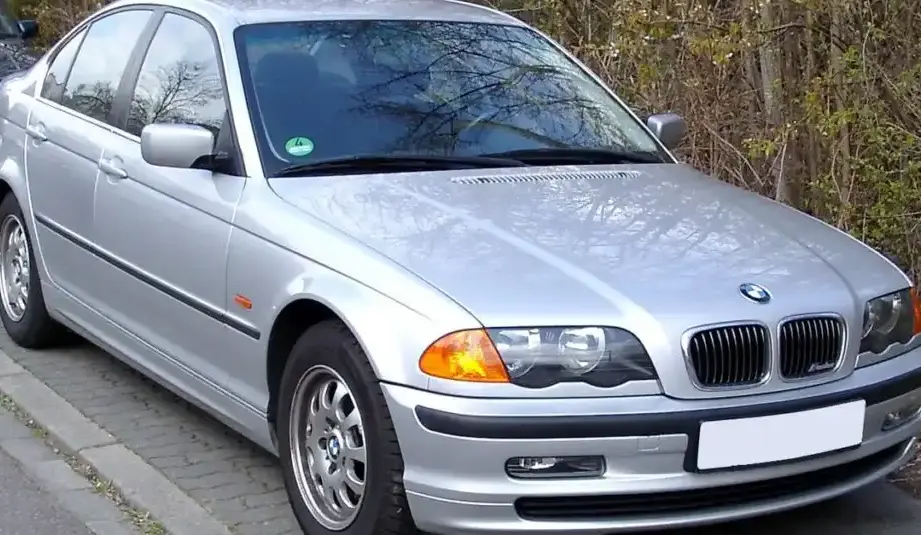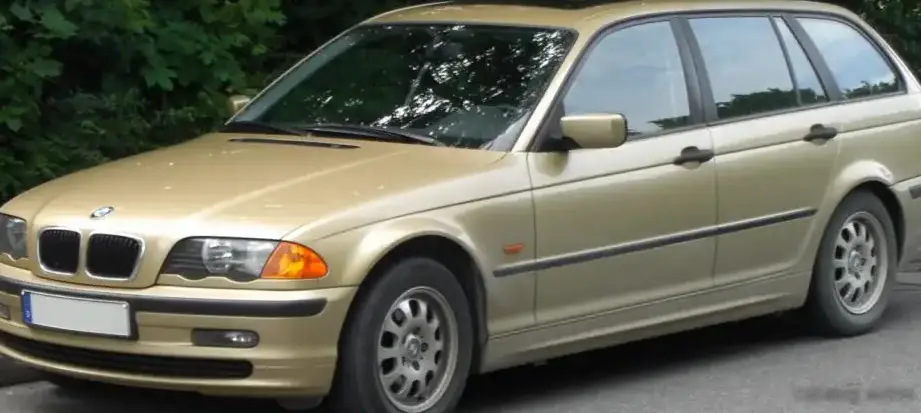
The BMW 3 Series Touring (E46) 320i, produced between 1999 and 2001, represents BMW’s entry point into the performance-oriented wagon segment during that generation. Part of the E46 chassis code family – which also included the sedan, coupe, and convertible – the 320i Touring offered a practical and relatively affordable way to experience the BMW driving experience with added cargo capacity. This variant occupied the lower-mid range of the E46 Touring lineup, positioned below the more powerful 323i, 328i, and the diesel-powered 320d and 330d models. It was primarily marketed in Europe and other regions where wagons held significant market share, offering a blend of practicality, efficiency, and the brand’s renowned handling characteristics.
Technical Specifications
| Brand | BMW |
| Model | 3 Series |
| Generation | 3 Series Touring (E46) |
| Type (Engine) | 320i (150 Hp) |
| Start of production | 1999 |
| End of production | 2001 |
| Powertrain Architecture | Internal Combustion engine |
| Body type | Station wagon (estate) |
| Seats | 5 |
| Doors | 5 |
| Fuel consumption (economy) – urban | 12.5 l/100 km (18.8 US mpg) |
| Fuel consumption (economy) – extra urban | 6.9 l/100 km (34.1 US mpg) |
| Fuel Type | Petrol (Gasoline) |
| Acceleration 0 – 100 km/h | 10.2 sec |
| Acceleration 0 – 62 mph | 10.2 sec |
| Acceleration 0 – 60 mph | 9.7 sec |
| Maximum speed | 214 km/h (132.97 mph) |
| Weight-to-power ratio | 9.5 kg/Hp |
| Weight-to-torque ratio | 7.5 kg/Nm |
| Power | 150 Hp @ 5900 rpm |
| Power per litre | 75.3 Hp/l |
| Torque | 190 Nm @ 4200 rpm (140.14 lb.-ft. @ 4200 rpm) |
| Engine layout | Front, Longitudinal |
| Engine Model/Code | M52B20 |
| Engine displacement | 1991 cm3 (121.5 cu. in.) |
| Number of cylinders | 6 |
| Engine configuration | Inline |
| Cylinder Bore | 80 mm (3.15 in.) |
| Piston Stroke | 66 mm (2.6 in.) |
| Compression ratio | 11:1 |
| Number of valves per cylinder | 4 |
| Fuel injection system | Multi-port manifold injection |
| Engine aspiration | Naturally aspirated engine |
| Valvetrain | DOHC |
| Engine oil capacity | 6.5 l (6.87 US qt | 5.72 UK qt) |
| Coolant | 8.4 l (8.88 US qt | 7.39 UK qt) |
| Kerb Weight | 1425 kg (3141.59 lbs.) |
| Max. weight | 1965 kg (4332.08 lbs.) |
| Max load | 540 kg (1190.5 lbs.) |
| Trunk (boot) space – minimum | 435 l (15.36 cu. ft.) |
| Trunk (boot) space – maximum | 1345 l (47.5 cu. ft.) |
| Fuel tank capacity | 63 l (16.64 US gal | 13.86 UK gal) |
| Length | 4478 mm (176.3 in.) |
| Width | 1739 mm (68.46 in.) |
| Height | 1409 mm (55.47 in.) |
| Wheelbase | 2725 mm (107.28 in.) |
| Front track | 1481 mm (58.31 in.) |
| Rear (Back) track | 1488 mm (58.58 in.) |
| Drivetrain Architecture | Rear wheel drive |
| Drive wheel | Rear wheel drive |
| Number of gears and type of gearbox | 5 gears, manual transmission |
| Front suspension | Wishbone |
| Rear suspension | Coil spring |
| Front brakes | Ventilated discs |
| Rear brakes | Disc |
| Assisting systems | ABS (Anti-lock braking system) |
| Steering type | Steering rack and pinion |
| Power steering | Hydraulic Steering |
| Tires size | 195/65 R15 |
| Wheel rims size | 15 |
Powertrain & Engine Architecture
The heart of the 320i Touring was the M52B20, a 2.0-liter inline-six cylinder engine. This engine was a descendant of BMW’s long-respected M50 and M52 families, known for their smooth power delivery and robust construction. The M52B20 featured a cast iron block with an aluminum cylinder head, dual overhead camshafts (DOHC), and four valves per cylinder. Fuel delivery was handled by a multi-port fuel injection system, providing precise control over the air-fuel mixture. The engine produced 150 horsepower at 5900 rpm and 190 Nm (140 lb-ft) of torque at 4200 rpm. The 5-speed manual transmission was standard, offering a direct and engaging driving experience. The engine’s longitudinal mounting and rear-wheel-drive configuration were hallmarks of the classic BMW layout.
Driving Characteristics
The 320i Touring, with its 150 hp and manual transmission, offered a balanced driving experience. Acceleration from 0-60 mph took approximately 9.7 seconds, and it reached a top speed of 133 mph. While not as quick as the higher-powered 323i or 328i models, the 320i provided sufficient power for everyday driving and comfortable highway cruising. The manual gearbox allowed for precise control, and the rear-wheel-drive setup contributed to the car’s balanced handling. Compared to the automatic transmission option (available in other markets), the manual version felt more responsive and engaging. The 320i’s suspension provided a comfortable ride without sacrificing handling precision, making it a versatile vehicle for both commuting and spirited driving.
Equipment & Trim Levels
The 320i Touring typically came standard with features such as power windows, power locks, and air conditioning. Interior upholstery was usually cloth, although leather options were available. The dashboard layout was typical of the E46 generation, with a driver-focused design and intuitive controls. Optional extras included a sunroof, upgraded audio system, heated front seats, and automatic climate control. Trim levels were relatively simple, with most customization coming through individual options rather than distinct packages. The focus was on providing a well-equipped base vehicle that could be tailored to the buyer’s preferences.
Chassis & Braking
The E46 Touring chassis featured a MacPherson strut front suspension and a multi-link rear suspension, providing a good balance of ride comfort and handling precision. The 320i typically came equipped with ventilated disc brakes at the front and solid disc brakes at the rear. Anti-lock braking system (ABS) was standard. The suspension was tuned to provide a comfortable ride while maintaining BMW’s signature handling characteristics. Stabilizer bars were fitted front and rear to reduce body roll during cornering.
Market Reception & Comparison
The 320i Touring was generally well-received by automotive critics as a practical and enjoyable wagon. It was praised for its handling, comfortable ride, and fuel efficiency. Compared to the more powerful 323i and 328i models, the 320i offered a more affordable entry point into the E46 Touring range. However, some critics noted that the 320i’s engine lacked the outright performance of its siblings. The 320d diesel model offered comparable fuel economy with slightly more torque, appealing to drivers prioritizing efficiency. The 320i’s reliability was generally good, although like all BMWs of this era, it required regular maintenance to prevent issues.
Legacy
The E46 320i Touring has become a popular choice among enthusiasts and used car buyers. The M52B20 engine is known for its durability and relatively simple maintenance requirements. While parts availability is generally good, preventative maintenance is crucial to avoid common issues such as oil leaks and cooling system failures. Today, well-maintained examples of the 320i Touring are sought after for their blend of practicality, driving enjoyment, and classic BMW styling. It represents a sweet spot in the E46 lineup, offering a balance of performance, affordability, and reliability that continues to appeal to a wide range of drivers.