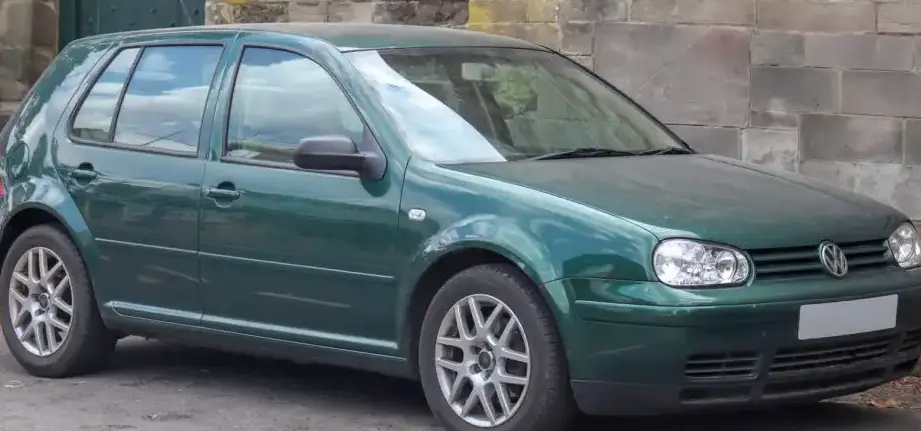
The Volkswagen Golf IV 2.3 V5 20V 4motion, produced between 1998 and 2000, represents a unique offering within the fourth generation Golf (Mk IV) lineup. Positioned as a mid-range to premium variant, it combined the unusual five-cylinder engine with Volkswagen’s 4motion all-wheel-drive system and a six-speed manual transmission. This configuration aimed to provide a blend of performance, practicality, and all-weather capability, appealing to buyers seeking something beyond the standard Golf models. The Golf IV itself, built on the 1HX0/A3 platform, was a significant step forward for Volkswagen, known for its refined interior, improved build quality, and modern technology for its time.
Technical Specifications
| Brand | Volkswagen |
| Model | Golf |
| Generation | Golf IV |
| Type (Engine) | 2.3 V5 20V (150 Hp) 4motion |
| Start of production | 1998 |
| End of production | 2000 |
| Powertrain Architecture | Internal Combustion engine |
| Body type | Hatchback |
| Seats | 5 |
| Doors | 3-5 |
| Fuel consumption (urban) | 13.2 l/100 km (17.8 US mpg, 21.4 UK mpg, 7.6 km/l) |
| Fuel consumption (extra urban) | 7.2 l/100 km (32.7 US mpg, 39.2 UK mpg, 13.9 km/l) |
| Fuel consumption (combined) | 10 l/100 km (23.5 US mpg, 28.2 UK mpg, 10 km/l) |
| Fuel Type | Petrol (Gasoline) |
| Acceleration 0 – 100 km/h | 9 sec |
| Acceleration 0 – 62 mph | 9 sec |
| Acceleration 0 – 60 mph | 8.6 sec |
| Maximum speed | 211 km/h (131.11 mph) |
| Weight-to-power ratio | 9 kg/Hp, 110.5 Hp/tonne |
| Weight-to-torque ratio | 6.6 kg/Nm, 151.1 Nm/tonne |
| Power | 150 Hp @ 6000 rpm |
| Power per litre | 64.5 Hp/l |
| Torque | 205 Nm @ 3200 rpm (151.2 lb.-ft. @ 3200 rpm) |
| Engine layout | Front, Transverse |
| Engine Model/Code | AQN |
| Engine displacement | 2324 cm3 (141.82 cu. in.) |
| Number of cylinders | 5 |
| Engine configuration | V-engine |
| Cylinder Bore | 81 mm (3.19 in.) |
| Piston Stroke | 90.2 mm (3.55 in.) |
| Compression ratio | 10:1 |
| Number of valves per cylinder | 2 |
| Fuel injection system | Multi-port manifold injection |
| Engine aspiration | Naturally aspirated engine |
| Valvetrain | DOHC |
| Engine oil capacity | 4.6 l (4.86 US qt | 4.05 UK qt) |
| Coolant | 8.5 l (8.98 US qt | 7.48 UK qt) |
| Kerb Weight | 1357 kg (2991.67 lbs.) |
| Max. weight | 1870 kg (4122.64 lbs.) |
| Max load | 513 kg (1130.97 lbs.) |
| Trunk (boot) space – minimum | 245 l (8.65 cu. ft.) |
| Trunk (boot) space – maximum | 1185 l (41.85 cu. ft.) |
| Fuel tank capacity | 62 l (16.38 US gal | 13.64 UK gal) |
| Length | 4149 mm (163.35 in.) |
| Width | 1735 mm (68.31 in.) |
| Height | 1439 mm (56.65 in.) |
| Wheelbase | 2518 mm (99.13 in.) |
| Front track | 1513 mm (59.57 in.) |
| Rear (Back) track | 1487 mm (58.54 in.) |
| Drive wheel | All wheel drive (4×4) |
| Number of gears and type of gearbox | 6 gears, manual transmission |
| Front suspension | Wishbone |
| Rear suspension | Coil spring |
| Front brakes | Ventilated discs |
| Rear brakes | Disc |
| Assisting systems | ABS (Anti-lock braking system) |
| Steering type | Steering rack and pinion |
| Power steering | Hydraulic Steering |
| Tires size | 195/65 R15 |
| Wheel rims size | 6J x 15 |
Powertrain & Engine Architecture
The heart of the Golf IV 2.3 V5 4motion is the AQN engine code, a 2.3-liter, naturally aspirated V5 engine. This engine is notable for its unusual configuration – five cylinders arranged in a V-shape. This design aimed to offer a smoother power delivery than a four-cylinder while being more compact and lighter than a traditional V6. The engine features a dual overhead camshaft (DOHC) valvetrain with two valves per cylinder, and utilizes multi-port fuel injection. The 20-valve configuration (5 cylinders x 4 valves) contributes to its relatively high specific output. The 4motion system is a viscous coupling-based all-wheel-drive system, providing full-time all-wheel drive without relying on electronic sensors or computers. The six-speed manual transmission was specifically chosen to handle the engine’s torque and provide a more engaging driving experience.
Driving Characteristics
The 150 horsepower and 151.2 lb.-ft. of torque delivered by the 2.3 V5 engine, combined with the 4motion system, resulted in a capable and confident driving experience. Acceleration from 0-60 mph took approximately 8.6 seconds, and top speed was around 131 mph. While not a sports car, the Golf IV V5 4motion offered brisk performance for everyday driving. The 4motion system provided excellent traction, particularly in inclement weather, making it a practical choice for regions with snow or rain. The six-speed manual transmission allowed drivers to keep the engine in its optimal power band, enhancing responsiveness. Compared to the base Golf models with smaller engines, the V5 offered significantly more power and refinement. However, it didn’t match the performance of the more expensive Golf GTI or R32 models.
Equipment & Trim Levels
The Golf IV 2.3 V5 4motion typically came well-equipped, reflecting its position as a mid-to-premium trim level. Standard features often included power windows and locks, air conditioning, a CD player, and alloy wheels. Interior upholstery was typically cloth, but leather options were available. The dashboard layout was typical of the Mk IV Golf, with a functional and ergonomic design. Optional extras could include a sunroof, upgraded audio systems, and heated seats. The 4motion badge was a prominent feature, signifying the all-wheel-drive capability.
Chassis & Braking
The Golf IV’s chassis featured independent suspension at all four wheels, with a wishbone setup at the front and a coil spring setup at the rear. The V5 4motion model typically had slightly stiffer suspension components compared to the base models to handle the increased weight and power. Braking was handled by ventilated discs at the front and solid discs at the rear, with ABS (Anti-lock Braking System) as standard. The braking system was adequate for the car’s performance, providing confident stopping power.
Market Reception & Comparison
The Golf IV 2.3 V5 4motion received generally positive reviews, with critics praising its unique engine, all-wheel-drive capability, and refined interior. However, the V5 engine’s fuel economy was a common criticism, being noticeably lower than the four-cylinder models. Compared to the Golf GTI, the V5 4motion offered a more comfortable ride and all-weather traction, but lacked the GTI’s outright performance. The 1.9 TDI diesel models were also popular, offering superior fuel economy and comparable performance, but with a different driving character.
Legacy
The Volkswagen Golf IV 2.3 V5 4motion remains a relatively uncommon but sought-after variant among enthusiasts. The V5 engine, while not known for being the most reliable, is generally durable with proper maintenance. The 4motion system is highly regarded for its robustness and effectiveness. Today, these cars are often found in good condition, appealing to those looking for a unique and capable classic hatchback. Parts availability is generally good, although some V5-specific components may be harder to find. The Golf IV V5 4motion represents a distinctive chapter in Volkswagen’s history, offering a blend of practicality, performance, and all-weather capability that set it apart from its siblings.