Technical Specifications
| Brand | BMW |
| Model | 3 Series |
| Generation | 3 Series Touring (E46) |
| Type (Engine) | 320i (150 Hp) Automatic |
| Start of production | 1999 |
| End of production | 2001 |
| Powertrain Architecture | Internal Combustion engine |
| Body type | Station wagon (estate) |
| Seats | 5 |
| Doors | 5 |
| Fuel consumption (urban) | 14.6 l/100 km (16.1 US mpg, 19.3 UK mpg, 6.8 km/l) |
| Fuel consumption (extra urban) | 7.5 l/100 km (31.4 US mpg, 37.7 UK mpg, 13.3 km/l) |
| Fuel Type | Petrol (Gasoline) |
| Acceleration 0 – 100 km/h | 11 sec |
| Acceleration 0 – 62 mph | 11 sec |
| Acceleration 0 – 60 mph | 10.5 sec |
| Maximum speed | 208 km/h (129.25 mph) |
| Weight-to-power ratio | 9.5 kg/Hp, 105.3 Hp/tonne |
| Weight-to-torque ratio | 7.5 kg/Nm, 133.3 Nm/tonne |
| Power | 150 Hp @ 5900 rpm |
| Power per litre | 75.3 Hp/l |
| Torque | 190 Nm @ 4200 rpm (140.14 lb.-ft. @ 4200 rpm) |
| Engine layout | Front, Longitudinal |
| Engine Model/Code | M52B20 |
| Engine displacement | 1991 cm3 (121.5 cu. in.) |
| Number of cylinders | 6 |
| Engine configuration | Inline |
| Cylinder Bore | 80 mm (3.15 in.) |
| Piston Stroke | 66 mm (2.6 in.) |
| Compression ratio | 11:1 |
| Number of valves per cylinder | 4 |
| Fuel injection system | Multi-port manifold injection |
| Engine aspiration | Naturally aspirated engine |
| Valvetrain | DOHC |
| Engine oil capacity | 6.5 l (6.87 US qt | 5.72 UK qt) |
| Coolant | 8.4 l (8.88 US qt | 7.39 UK qt) |
| Kerb Weight | 1425 kg (3141.59 lbs.) |
| Max. weight | 1965 kg (4332.08 lbs.) |
| Max load | 540 kg (1190.5 lbs.) |
| Trunk (boot) space – minimum | 435 l (15.36 cu. ft.) |
| Trunk (boot) space – maximum | 1345 l (47.5 cu. ft.) |
| Fuel tank capacity | 63 l (16.64 US gal | 13.86 UK gal) |
| Length | 4478 mm (176.3 in.) |
| Width | 1739 mm (68.46 in.) |
| Height | 1409 mm (55.47 in.) |
| Wheelbase | 2725 mm (107.28 in.) |
| Front track | 1481 mm (58.31 in.) |
| Rear (Back) track | 1488 mm (58.58 in.) |
| Drivetrain Architecture | Rear wheel drive |
| Number of gears and type of gearbox | 5 gears, automatic transmission |
| Front suspension | Wishbone |
| Rear suspension | Coil spring |
| Front brakes | Ventilated discs |
| Rear brakes | Disc |
| Assisting systems | ABS (Anti-lock braking system) |
| Steering type | Steering rack and pinion |
| Power steering | Hydraulic Steering |
| Tires size | 195/65 R15 |
| Wheel rims size | 15 |
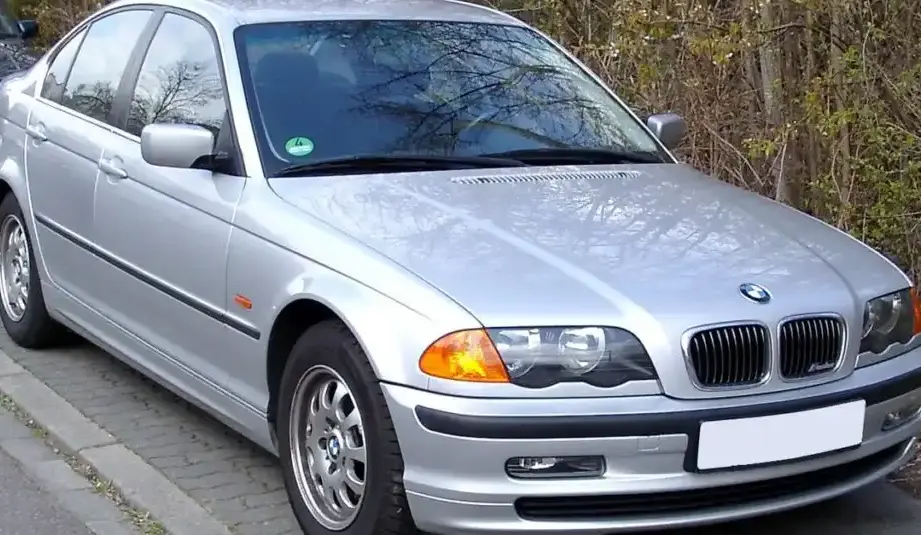
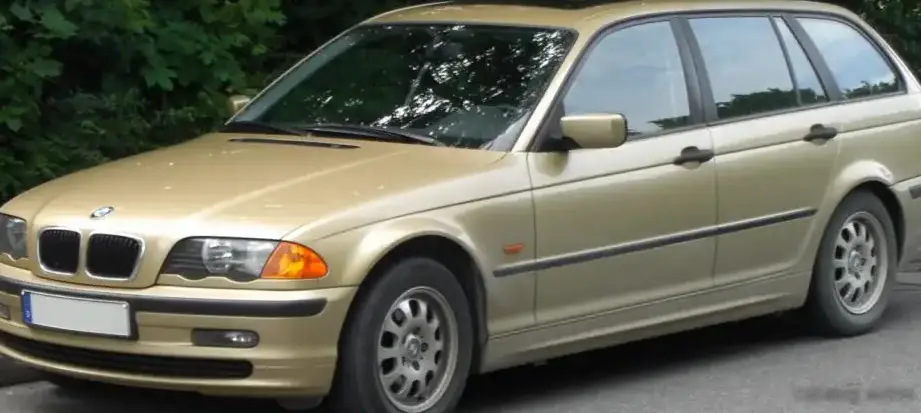
The BMW 3 Series Touring (E46) 320i Automatic, produced between 1999 and 2001, represents a compelling blend of practicality and BMW’s renowned driving dynamics within the E46 generation. As a station wagon (estate) variant of the popular 3 Series, it aimed to offer the sporting character of the sedan while significantly increasing cargo capacity and versatility. This particular configuration, pairing the 2.0-liter M52B20 engine with a 5-speed automatic transmission, occupied a mid-range position in the E46 Touring lineup, appealing to buyers seeking a comfortable and efficient daily driver without sacrificing the BMW badge’s prestige. It served as a more accessible entry point into the E46 Touring range compared to the higher-performance 323i, 328i, and diesel variants.
Powertrain & Engine Architecture
At the heart of the 320i Touring Automatic lies the M52B20, a 2.0-liter inline-six cylinder engine. This engine, a hallmark of BMW’s engineering prowess in the 1990s, is renowned for its smooth power delivery and inherent balance. The M52 featured a cast iron block with an aluminum cylinder head, incorporating double overhead camshafts (DOHC) and four valves per cylinder. Fuel delivery was managed by a multi-port fuel injection system, ensuring precise fuel metering for optimal combustion. The engine produced 150 horsepower at 5,900 rpm and 190 Nm (140 lb-ft) of torque at 4,200 rpm. Paired with this engine was a 5-speed automatic transmission, offering convenient shifting for everyday driving. This transmission, while not as sporty as the available manual gearbox, provided a comfortable and refined driving experience. The automatic transmission’s gear ratios were tuned for fuel efficiency and smooth acceleration, prioritizing usability over outright performance.
Driving Characteristics
The 320i Touring Automatic delivered a comfortable and composed driving experience. While not as quick as the 323i or 328i models, it offered sufficient power for most driving situations. Acceleration from 0 to 60 mph took approximately 10.5 seconds, and the car had a top speed of 129.25 mph. The automatic transmission, while smooth, did result in some power loss compared to the manual version. The gear changes were generally well-timed, but lacked the responsiveness of a manual gearbox. The Touring’s suspension, tuned for comfort, provided a compliant ride, absorbing bumps and imperfections in the road effectively. However, this did come at the expense of some body roll during cornering. Compared to the more powerful variants, the 320i Automatic felt less eager to rev, but its torque delivery made it a capable and relaxed cruiser.
Equipment & Trim Levels
The 320i Touring Automatic typically came equipped with a respectable level of standard features. These included power windows, power locks, air conditioning, and an AM/FM radio. Interior upholstery was typically cloth, although leather options were available. Dashboard trim was often wood or metallic accents. Optional extras included a sunroof, heated front seats, automatic climate control, and a premium sound system. The specific trim level could influence the standard equipment, with higher trims offering more luxurious appointments. The Touring body style itself added a level of practicality, with a spacious cargo area accessible through a rear tailgate.
Chassis & Braking
The E46 Touring utilized a MacPherson strut front suspension and a multi-link rear suspension, providing a good balance of ride comfort and handling. The 320i models typically featured ventilated disc brakes at the front and solid disc brakes at the rear. Anti-lock braking system (ABS) was standard, enhancing safety and control during emergency braking. The steering was a rack-and-pinion system with hydraulic power assistance, offering precise and responsive steering feel. The 320i Touring’s chassis was designed to accommodate the increased weight of the station wagon body style, with reinforced components to maintain structural rigidity.
Market Reception & Comparison
The 320i Touring Automatic was generally well-received by automotive critics as a practical and comfortable option within the E46 range. It was praised for its spacious interior, smooth ride, and fuel efficiency. However, some critics noted that the automatic transmission detracted from the overall driving experience compared to the manual version. Compared to the 323i and 328i Touring models, the 320i offered a more affordable entry point into the E46 Touring lineup, but at the expense of performance. The 320i also offered better fuel economy than the higher-output variants, making it a more economical choice for daily commuting.
Legacy
The M52B20 engine, found in the 320i Touring Automatic, is known for its reliability and durability. With proper maintenance, these engines can easily exceed 200,000 miles. The automatic transmission, while not as robust as some other BMW transmissions, is also generally reliable. Today, the E46 Touring 320i Automatic represents a relatively affordable entry point into BMW ownership. It’s a popular choice for those seeking a practical and reliable station wagon with the BMW badge. Well-maintained examples are becoming increasingly sought after by enthusiasts, appreciating for their classic BMW character and versatility. Common maintenance items include checking for oil leaks, maintaining the cooling system, and addressing any issues with the suspension components.