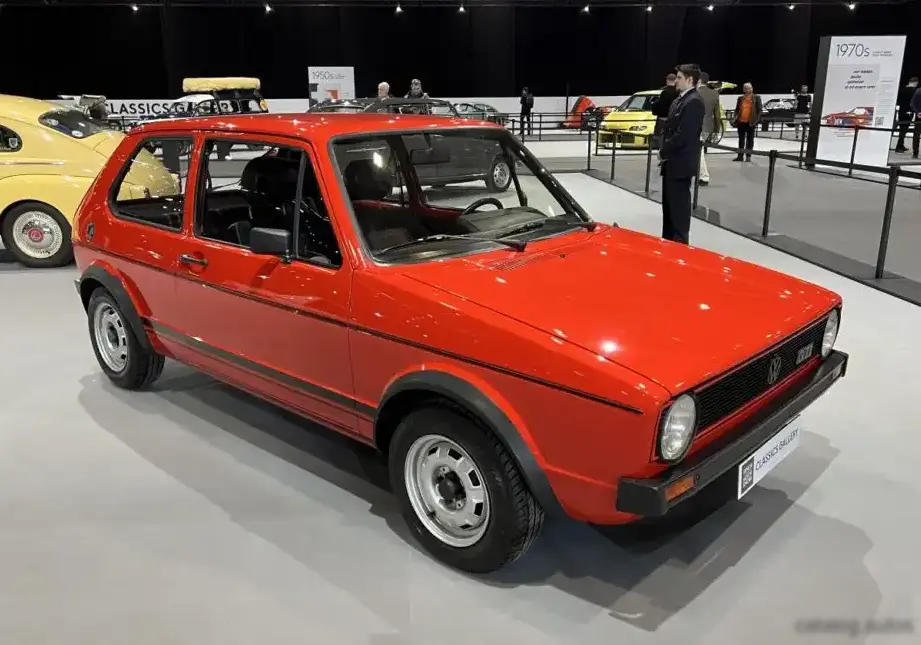
The Volkswagen Golf IV 2.3 VR5 Automatic, produced between 1999 and 2003, represents a unique offering within the fourth generation Golf (Mk IV) lineup. Positioned as a premium variant, it combined the distinctive five-cylinder engine with the convenience of an automatic transmission. This model occupied a niche between the more economical four-cylinder options and the performance-focused GTI and R32, appealing to buyers seeking a blend of refinement, power, and ease of driving. The Golf IV itself, built on the 1HX0/A3 platform, was a significant step forward for Volkswagen, known for its build quality, sophisticated engineering, and relatively spacious interior.
Technical Specifications
| Brand | Volkswagen |
| Model | Golf |
| Generation | Golf IV |
| Type (Engine) | 2.3 VR5 (170 Hp) Automatic |
| Start of production | 1999 |
| End of production | 2003 |
| Powertrain Architecture | Internal Combustion engine |
| Body type | Hatchback |
| Seats | 5 |
| Doors | 3-5 |
| Fuel consumption (urban) | 13.7 l/100 km (17.2 US mpg, 20.6 UK mpg, 7.3 km/l) |
| Fuel consumption (extra urban) | 7.2 l/100 km (32.7 US mpg, 39.2 UK mpg, 13.9 km/l) |
| Fuel consumption (combined) | 9.6 l/100 km (24.5 US mpg, 29.4 UK mpg, 10.4 km/l) |
| Fuel Type | Petrol (Gasoline) |
| Acceleration 0 – 100 km/h | 8.9 sec |
| Acceleration 0 – 62 mph | 8.9 sec |
| Acceleration 0 – 60 mph | 8.5 sec |
| Maximum speed | 220 km/h (136.7 mph) |
| Weight-to-power ratio | 7.3 kg/Hp, 136.1 Hp/tonne |
| Weight-to-torque ratio | 5.7 kg/Nm, 176.1 Nm/tonne |
| Power | 170 Hp @ 6200 rpm |
| Power per litre | 73.1 Hp/l |
| Torque | 220 Nm @ 3300 rpm (162.26 lb.-ft. @ 3300 rpm) |
| Engine layout | Front, Transverse |
| Engine Model/Code | AGZ |
| Engine displacement | 2324 cm3 (141.82 cu. in.) |
| Number of cylinders | 5 |
| Engine configuration | V-engine |
| Cylinder Bore | 81 mm (3.19 in.) |
| Piston Stroke | 90.2 mm (3.55 in.) |
| Compression ratio | 10.8:1 |
| Number of valves per cylinder | 4 |
| Fuel injection system | Multi-port manifold injection |
| Engine aspiration | Naturally aspirated engine |
| Valvetrain | DOHC |
| Engine oil capacity | 3.9 l (4.12 US qt | 3.43 UK qt) |
| Coolant capacity | 5 l (5.28 US qt | 4.4 UK qt) |
| Kerb Weight | 1249 kg (2753.57 lbs.) |
| Max. weight | 1770 kg (3902.18 lbs.) |
| Max load | 521 kg (1148.61 lbs.) |
| Trunk (boot) space – minimum | 330 l (11.65 cu. ft.) |
| Trunk (boot) space – maximum | 1184 l (41.81 cu. ft.) |
| Fuel tank capacity | 55 l (14.53 US gal | 12.1 UK gal) |
| Length | 4149 mm (163.35 in.) |
| Width | 1735 mm (68.31 in.) |
| Height | 1444 mm (56.85 in.) |
| Wheelbase | 2511 mm (98.86 in.) |
| Front track | 1513 mm (59.57 in.) |
| Rear (Back) track | 1494 mm (58.82 in.) |
| Drivetrain Architecture | The Internal combustion engine (ICE) drives the front wheels of the vehicle. |
| Drive wheel | Front wheel drive |
| Number of gears and type of gearbox | 5 gears, automatic transmission |
| Front suspension | Wishbone |
| Rear suspension | Coil spring |
| Front brakes | Ventilated discs |
| Rear brakes | Disc |
| Assisting systems | ABS (Anti-lock braking system) |
| Steering type | Steering rack and pinion |
| Power steering | Hydraulic Steering |
| Tires size | 205/55 R16 W |
| Wheel rims size | 16 |
Powertrain & Engine Architecture
The heart of the Golf IV 2.3 VR5 Automatic is the AGZ engine code, a 2.3-liter naturally aspirated V5 engine. This engine is notable for its relatively compact design, achieved by arranging the five cylinders in a V-configuration at a 15-degree angle. This layout allowed it to fit into the Golf’s engine bay without requiring significant modifications. The engine utilizes multi-port fuel injection and a double overhead camshaft (DOHC) valvetrain, contributing to its smooth power delivery. The automatic transmission paired with this engine is a five-speed unit, designed to provide comfortable and convenient shifting. While not known for its sportiness, this transmission was reliable and well-suited to the engine’s torque characteristics.
Driving Characteristics
The 170 horsepower and 162 lb-ft of torque produced by the VR5 engine, when coupled with the five-speed automatic, resulted in a comfortable and capable driving experience. Acceleration from 0-60 mph took approximately 8.5 seconds, making it noticeably quicker than the base 1.8-liter models. However, it wasn’t as responsive as the manual transmission versions or the more powerful GTI. The automatic transmission’s gear ratios were tuned for fuel efficiency and smooth cruising, rather than aggressive acceleration. In real-world driving, the VR5 Automatic offered ample power for everyday use, including highway merging and overtaking, but lacked the engaging feel of a manual gearbox.
Equipment & Trim Levels
The Golf IV 2.3 VR5 Automatic typically came with a generous level of standard equipment. This included power windows, power locks, air conditioning, and an upgraded audio system. Interior upholstery was usually a comfortable cloth, with options for leather available. Higher trim levels could add features like alloy wheels, a sunroof, and upgraded interior trim. The dashboard layout was typical of the Mk IV Golf, featuring a clean and functional design. Optional extras included features like heated seats, automatic climate control, and a navigation system.
Chassis & Braking
The Golf IV 2.3 VR5 Automatic utilized a standard Golf IV chassis, featuring independent wishbone suspension at the front and a coil spring rear suspension. The braking system consisted of ventilated discs at the front and solid discs at the rear, equipped with ABS (Anti-lock Braking System) as standard. The suspension was tuned for a balance between comfort and handling, providing a relatively smooth ride without sacrificing too much stability. Stabilizer bars were fitted to both the front and rear axles to reduce body roll during cornering.
Market Reception & Comparison
The Golf IV 2.3 VR5 Automatic received generally positive reviews from automotive critics. It was praised for its refined engine, comfortable ride, and well-equipped interior. However, some critics noted that the automatic transmission dulled the engine’s performance and that the VR5 wasn’t as sporty as other Golf variants. Compared to the 1.8T models, the VR5 offered more torque but slightly lower fuel economy. Against the GTI, it lacked the same level of performance and handling prowess but provided a more comfortable and refined driving experience. Fuel economy averaged around 24.5 US mpg combined, which was reasonable for its class.
Legacy
The Volkswagen Golf IV 2.3 VR5 Automatic has developed a loyal following among enthusiasts. The AGZ engine is known for its durability and relatively simple maintenance requirements. While not as common as other Golf IV variants, the VR5 Automatic remains a sought-after model, particularly among those who appreciate its unique engine and comfortable driving characteristics. In the used car market, well-maintained examples command a premium price. Common issues include those associated with aging rubber components and occasional sensor failures, but overall, the powertrain is considered reliable. The VR5 engine’s distinctive sound and smooth power delivery continue to appeal to drivers seeking a unique and refined Volkswagen experience.