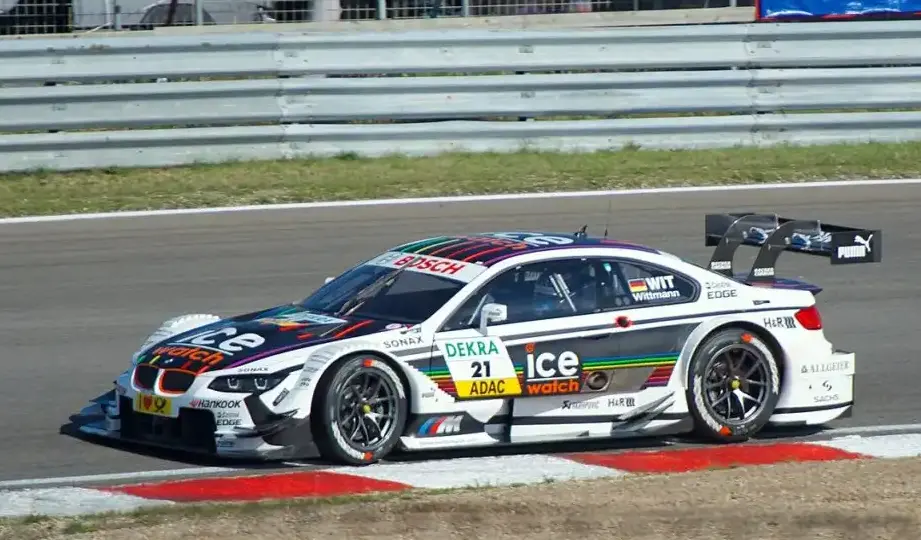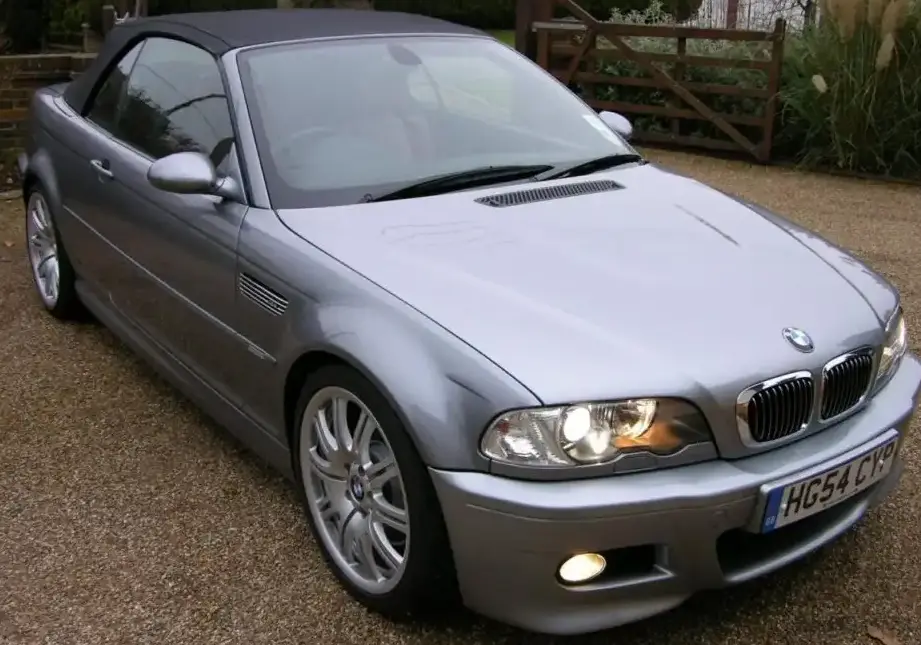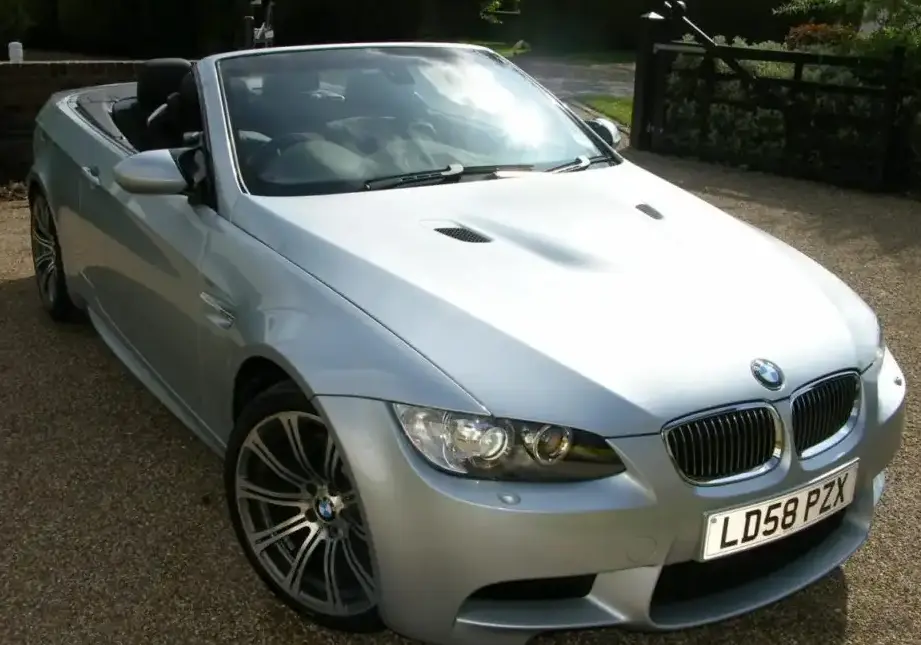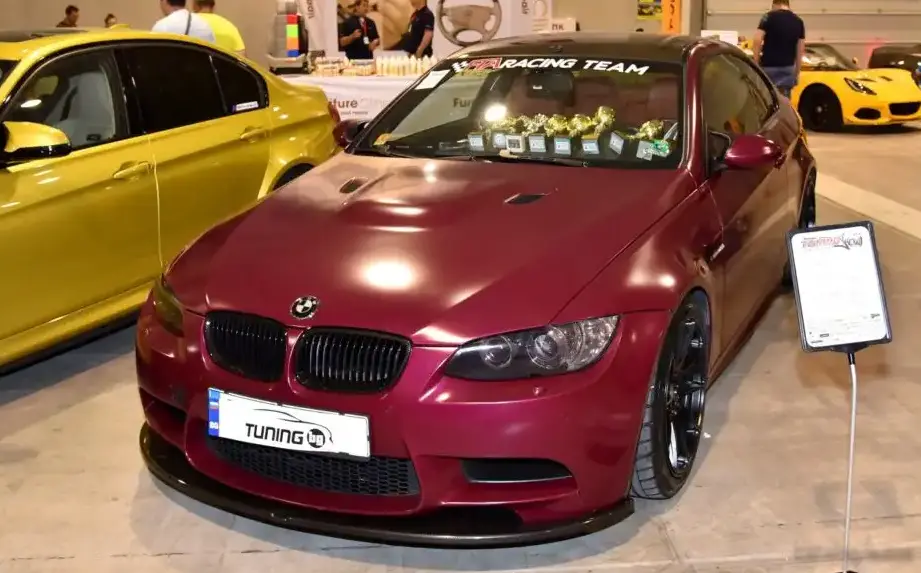
The BMW M3 Coupe (E92) with the 4.0-liter V8 engine and M DCT (M Double Clutch Transmission) represents a high-performance iteration of the E92 generation M3, produced from March 2008 to February 2010. Positioned as the flagship coupe within the M3 lineup during its production run, it offered a significant step up in power and driving experience compared to earlier E92 models. The E92 M3, built on the BMW E90 platform, aimed to blend track-focused performance with a degree of everyday usability, appealing to enthusiasts seeking a thrilling yet refined driving experience.
Technical Specifications
| Brand | BMW |
| Model | M3 |
| Generation | M3 Coupe (E92) |
| Type (Engine) | 4.0 V8 (420 Hp) M DCT |
| Start of production | March, 2008 |
| End of production | February, 2010 |
| Powertrain Architecture | Internal Combustion engine |
| Body type | Coupe |
| Seats | 4 |
| Doors | 2 |
| Fuel consumption (economy) – urban (NEDC) | 17 l/100 km (13.8 US mpg, 16.6 UK mpg, 5.9 km/l) |
| Fuel consumption (economy) – extra urban (NEDC) | 9 l/100 km (26.1 US mpg, 31.4 UK mpg, 11.1 km/l) |
| Fuel consumption (economy) – combined (NEDC) | 11.9 l/100 km (19.8 US mpg, 23.7 UK mpg, 8.4 km/l) |
| CO2 emissions (NEDC) | 285 g/km |
| Fuel Type | Petrol (Gasoline) |
| Acceleration 0 – 100 km/h | 4.6 sec |
| Acceleration 0 – 62 mph | 4.6 sec |
| Acceleration 0 – 60 mph | 4.4 sec |
| Acceleration 0 – 200 km/h | 14.9 sec |
| Maximum speed | 250 km/h (155.34 mph), Electronically limited |
| Emission standard | Euro 4 |
| Weight-to-power ratio | 3.8 kg/Hp, 262.5 Hp/tonne |
| Weight-to-torque ratio | 4 kg/Nm, 250 Nm/tonne |
| Power | 420 Hp @ 8300 rpm |
| Power per litre | 105 Hp/l |
| Torque | 400 Nm @ 3900 rpm (295.02 lb.-ft. @ 3900 rpm) |
| Maximum engine speed | 8400 rpm |
| Engine layout | Front, Longitudinal |
| Engine Model/Code | S65B40A |
| Engine displacement | 3999 cm3 (244.03 cu. in.) |
| Number of cylinders | 8 |
| Engine configuration | V-engine |
| Cylinder Bore | 92 mm (3.62 in.) |
| Piston Stroke | 75.2 mm (2.96 in.) |
| Compression ratio | 12:1 |
| Number of valves per cylinder | 4 |
| Fuel injection system | Multi-port manifold injection |
| Engine aspiration | Naturally aspirated engine |
| Valvetrain | Double-VANOS |
| Engine oil capacity | 8.8 l (9.3 US qt | 7.74 UK qt) |
| Coolant | 11.4 l (12.05 US qt | 10.03 UK qt) |
| Kerb Weight | 1600 kg (3527.4 lbs.) |
| Max. weight | 2080 kg (4585.62 lbs.) |
| Max load | 480 kg (1058.22 lbs.) |
| Trunk (boot) space – minimum | 430 l (15.19 cu. ft.) |
| Fuel tank capacity | 63 l (16.64 US gal | 13.86 UK gal) |
| Max. roof load | 75 kg (165.35 lbs.) |
| Length | 4615 mm (181.69 in.) |
| Width | 1804 mm (71.02 in.) |
| Width including mirrors | 1976 mm (77.8 in.) |
| Height | 1418 mm (55.83 in.) |
| Wheelbase | 2761 mm (108.7 in.) |
| Front track | 1538-1540 mm (60.55 – 60.63 in.) |
| Rear (Back) track | 1539 mm (60.59 in.) |
| Front overhang | 805 mm (31.69 in.) |
| Rear overhang | 1049 mm (41.3 in.) |
| Drag coefficient (Cd) | 0.31 |
| Minimum turning circle | 11.7 m (38.39 ft.) |
| Drivetrain Architecture | The Internal combustion engine (ICE) drives the rear wheels of the vehicle. |
| Drive wheel | Rear wheel drive |
| Number of gears and type of gearbox | 7 gears, automatic transmission M DCT |
| Front suspension | Spring Strut, Transverse stabilizer |
| Rear suspension | Independent multi-link spring suspension with stabilizer |
| Front brakes | Ventilated discs, 360×30 mm |
| Rear brakes | Ventilated discs, 350×24 mm |
| Assisting systems | ABS (Anti-lock braking system) |
| Steering type | Steering rack and pinion |
| Power steering | Hydraulic Steering |
| Tires size | Front wheel tires: 245/40 R18; 245/35 R19 Rear wheel tires: 265/40 R18; 265/35 R19 |
| Wheel rims size | Front wheel rims: 8.5J x 18; 8.5J x 19 Rear wheel rims: 9.5J x 18; 9.5J x 19 |
Powertrain & Engine Architecture
At the heart of the E92 M3 is the S65B40A 4.0-liter naturally aspirated V8 engine. This engine, a significant departure from the inline-six engines traditionally used in M3s, produces 420 horsepower at 8,300 rpm and 295 lb-ft of torque at 3,900 rpm. The S65 features individual throttle bodies, a high 12:1 compression ratio, and BMW’s Double-VANOS variable valve timing system for both intake and exhaust valves, optimizing performance across the rev range. Fuel is delivered via multi-port fuel injection. The engine’s architecture is a 90-degree V8, providing a balanced and smooth power delivery. Paired with the engine is the 7-speed M DCT (M Double Clutch Transmission), a dual-clutch automated manual transmission. This transmission offers both fully automatic operation and manual gear changes via steering wheel-mounted paddles, providing rapid and precise shifts. The M DCT features a Drivelogic system with eleven selectable shift programs, allowing drivers to tailor the transmission’s behavior to their preferences and driving conditions.
Driving Characteristics
The combination of the high-revving V8 and the M DCT transmission delivers a thrilling driving experience. Acceleration from 0 to 60 mph takes approximately 4.4 seconds, and the car is electronically limited to a top speed of 155 mph. The M DCT provides incredibly quick gear changes, both upshifts and downshifts, contributing to the car’s responsiveness. Compared to manual transmission E92 M3s, the M DCT offers slightly quicker acceleration due to the elimination of driver shift time. However, some purists preferred the engagement of the manual gearbox. The power delivery is linear and predictable, with a strong pull throughout the rev range. The engine eagerly responds to throttle inputs, making it a rewarding engine to drive on both the street and the track. The gear ratios are well-chosen, providing strong acceleration in all gears.
Equipment & Trim Levels
The E92 M3 Coupe came well-equipped as standard. Interior features included sport seats upholstered in leather, a multi-function steering wheel, automatic climate control, and a premium sound system. Optional extras were plentiful, including carbon fiber interior trim, upgraded leather upholstery, a navigation system, and a driver assistance package. The Competition Package, introduced later in the production run, added stiffer springs, dampers, and anti-roll bars, along with a revised electronic damping control system and a louder exhaust system, further enhancing the car’s track performance. Exterior options included various wheel designs and paint colors.
Chassis & Braking
The E92 M3 features a sophisticated chassis designed to maximize handling performance. The front suspension utilizes a spring-strut design with a transverse stabilizer bar, while the rear suspension employs an independent multi-link setup, also with a stabilizer bar. The car is equipped with ventilated disc brakes at all four corners, providing ample stopping power. The front brakes measure 360x30mm, while the rear brakes are 350x24mm. ABS (Anti-lock Braking System) is standard. The steering is a rack-and-pinion system with hydraulic power assistance, providing precise and communicative steering feel.
Market Reception & Comparison
The E92 M3 was widely praised by automotive critics for its performance, handling, and overall driving experience. The V8 engine was particularly lauded for its responsiveness and sound. The M DCT transmission received positive reviews for its speed and smoothness. Compared to other high-performance coupes of the time, such as the Porsche 911, the M3 offered a compelling combination of performance and practicality. Fuel economy, however, was a concern, with combined fuel consumption rated at around 19.8 US mpg. Reliability was generally good, although some owners reported issues with oil leaks and cooling system components.
Legacy
The E92 M3, particularly the V8-powered models, has become a highly sought-after car in the used car market. The S65 engine is known for its durability and potential for modification. While maintenance costs can be higher than those of more mainstream vehicles, the E92 M3 offers a unique and rewarding driving experience that continues to appeal to enthusiasts. The car represents a significant milestone in M3 history, marking the transition to a V8 engine and showcasing BMW’s engineering prowess. Well-maintained examples are expected to hold their value for years to come, cementing their status as modern classics.