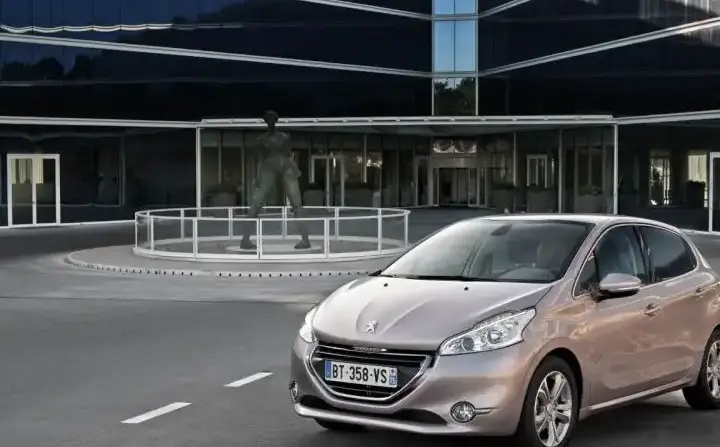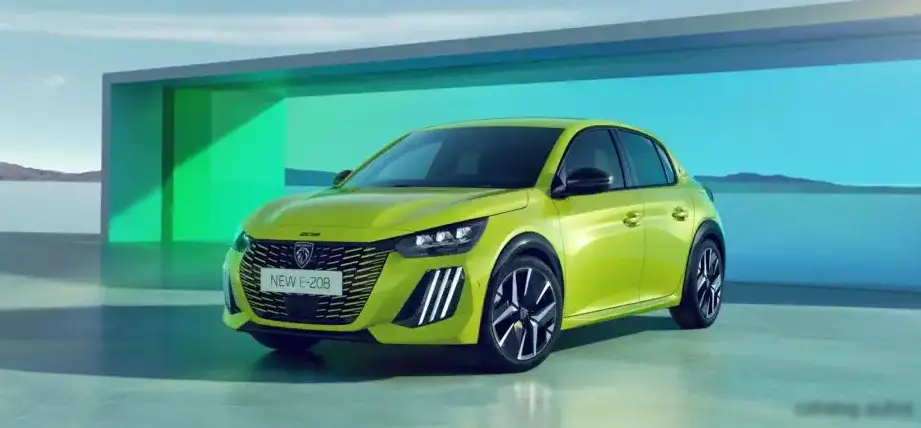
The Peugeot 208 II Phase II (2023) 1.2 (145 hp) Mild Hybrid e-DCS represents a significant evolution of Peugeot’s popular subcompact hatchback. Introduced in March 2025, this variant builds upon the success of the second-generation 208, incorporating mild hybrid technology to enhance fuel efficiency and reduce emissions. Positioned as a mid-range offering within the 208 lineup, it bridges the gap between the entry-level PureTech gasoline models and the fully electric e-208. This model is primarily targeted towards European markets, where demand for fuel-efficient and environmentally conscious vehicles is high, though its design and technology reflect Peugeot’s global ambitions.
Technical Specifications
| Brand | Peugeot |
| Model | 208 |
| Generation | 208 II (Phase II, 2023) |
| Type (Engine) | 1.2 (145 Hp) Mild Hybrid e-DCS |
| Start of production | March, 2025 |
| Powertrain Architecture | MHEV (Mild Hybrid Electric Vehicle) |
| Body type | Hatchback |
| Seats | 5 |
| Doors | 5 |
| Combined fuel consumption (WLTP) | 4.6-4.7 l/100 km (51.1 – 50 US mpg, 61.4 – 60.1 UK mpg, 21.7 – 21.3 km/l) |
| CO2 emissions (WLTP) | 102-106 g/km |
| Fuel Type | Petrol (Gasoline) |
| Acceleration 0 – 100 km/h | 8.1 sec |
| Acceleration 0 – 62 mph | 8.1 sec |
| Acceleration 0 – 60 mph | 7.7 sec |
| Maximum speed | 210 km/h (130.49 mph) |
| Emission standard | Euro 6e |
| Weight-to-power ratio | 8.5 kg/Hp, 118.1 Hp/tonne |
| Weight-to-torque ratio | 5.3 kg/Nm, 187.3 Nm/tonne |
| Gross battery capacity | 0.432 kWh |
| Battery voltage | 48 V |
| Battery technology | Lithium-ion (Li-Ion) |
| Battery weight | 13 kg (28.66 lbs) |
| Battery location | Below the floor, under the front seats |
| Electric motor power | 29 Hp @ 4264 rpm (55 Nm @ 750-2499 rpm / 40.57 lb.-ft. @ 750-2499 rpm) |
| Electric motor location | Integrated into the transmission |
| Electric motor type | Synchronous |
| System power | 145 Hp |
| Power | 136 Hp @ 5500 rpm |
| Power per litre | 113.4 Hp/l |
| Torque | 230 Nm @ 1750 rpm (169.64 lb.-ft. @ 1750 rpm) |
| Engine layout | Front, Transverse |
| Engine Model/Code | EB2LTD |
| Engine displacement | 1199 cm3 (73.17 cu. in.) |
| Number of cylinders | 3 |
| Engine configuration | Inline |
| Number of valves per cylinder | 4 |
| Fuel injection system | Direct injection |
| Engine aspiration | Turbocharger, Intercooler |
| Engine oil capacity | 3.5 l (3.7 US qt | 3.08 UK qt) |
| Kerb Weight | 1228 kg (2707.28 lbs) |
| Max. weight | 1690 kg (3725.81 lbs) |
| Max load | 462 kg (1018.54 lbs) |
| Trunk (boot) space – minimum | 352 l (12.43 cu. ft.) |
| Trunk (boot) space – maximum | 1163 l (41.07 cu. ft.) |
| Fuel tank capacity | 44 l (11.62 US gal | 9.68 UK gal) |
| Permitted trailer load with brakes (12%) | 1200 kg (2645.55 lbs) |
| Length | 4055 mm (159.65 in) |
| Width | 1745 mm (68.7 in) |
| Width with mirrors folded | 1765 mm (69.49 in) |
| Width including mirrors | 1960 mm (77.17 in) |
| Height | 1430 mm (56.3 in) |
| Wheelbase | 2540 mm (100 in) |
| Front track | 1500 mm (59.06 in) |
| Rear (Back) track | 1500 mm (59.06 in) |
| Front overhang | 825 mm (32.48 in) |
| Rear overhang | 690 mm (27.17 in) |
| Minimum turning circle | 10.4 m (34.12 ft) |
| Drivetrain Architecture | Front wheel drive. MHEV. ICE and electric motor drive the front wheels. |
| Drive wheel | Front wheel drive |
| Number of gears and type of gearbox | 6 gears, automatic transmission e-DCS |
| Front suspension | Independent type McPherson |
| Rear suspension | Elastic beam |
| Front brakes | Disc, 283×26 mm |
| Rear brakes | Disc, 249×10 mm |
| Assisting systems | ABS (Anti-lock braking system) |
| Steering type | Steering rack and pinion |
| Power steering | Electric Steering |
| Tires size | 195/55 R16 H; 205/45 R17 H |
| Wheel rims size | 16; 17 |
INTRODUCTION
The Peugeot 208 II Phase II 1.2 (145 hp) Mild Hybrid e-DCS is a front-wheel-drive hatchback that represents a key component of Peugeot’s strategy to offer a diverse range of powertrain options. Launched as part of the Phase II refresh of the 208 model, it utilizes the 1HX0/A3 platform shared with other Stellantis vehicles like the Opel/Vauxhall Corsa and the Fiat 500. The introduction of the mild hybrid system aimed to improve fuel economy and lower CO2 emissions without the higher cost and range limitations of a full hybrid or electric vehicle. This variant is positioned as a practical and efficient choice for urban and suburban drivers.
Powertrain & Engine Architecture
At the heart of this 208 variant lies the EB2LTD, a 1.2-liter, three-cylinder turbocharged gasoline engine. This engine produces 136 hp, coupled with a 48-volt electric motor that adds an additional 29 hp, resulting in a combined system output of 145 hp. The engine employs direct fuel injection and a turbocharger with an intercooler to optimize performance and efficiency. The electric motor is seamlessly integrated with the six-speed e-DCS (Dual Clutch System) automatic transmission. This transmission is specifically tuned to work in conjunction with the mild hybrid system, allowing for smooth transitions between gasoline and electric power. The 48V battery, utilizing Lithium-ion technology, is relatively small at 0.432 kWh and is located under the front seats, minimizing intrusion into passenger or cargo space. The mild hybrid system primarily provides torque assist during acceleration and enables regenerative braking to recapture energy, improving overall fuel economy.
Driving Characteristics
The 1.2L 145 hp Mild Hybrid e-DCS offers a balanced driving experience. While not as overtly sporty as some of the higher-powered 208 variants, it provides adequate acceleration for everyday driving, achieving 0-60 mph in approximately 7.7 seconds. The e-DCS transmission offers quick and smooth gear changes, enhancing responsiveness. The electric motor provides a noticeable boost during initial acceleration, making it feel more lively in urban environments. Compared to the standard 1.2 PureTech models without the hybrid system, the mild hybrid version offers improved fuel economy and a slightly more refined driving experience. The gear ratios are optimized for efficiency, prioritizing fuel savings over outright performance. Compared to the manual transmission options, the e-DCS provides greater convenience, particularly in stop-and-go traffic, but may slightly diminish overall fuel economy.
Equipment & Trim Levels
The 1.2 (145 hp) Mild Hybrid e-DCS typically comes equipped with a generous level of standard features. These often include a touchscreen infotainment system with Apple CarPlay and Android Auto compatibility, automatic climate control, and a suite of advanced driver-assistance systems (ADAS) such as lane departure warning, automatic emergency braking, and speed limit recognition. Interior upholstery is typically cloth, with options for upgraded materials available. Higher trim levels may add features like a panoramic sunroof, premium audio system, and leather-wrapped steering wheel. Exterior styling elements often include unique badging to denote the mild hybrid powertrain.
Chassis & Braking
The 208 II utilizes a McPherson strut front suspension and an elastic beam rear suspension. This setup provides a good balance between ride comfort and handling. The chassis is relatively lightweight, contributing to the car’s agility. Braking duties are handled by disc brakes on all four wheels, with the front discs measuring 283x26mm and the rear discs measuring 249x10mm. Anti-lock Braking System (ABS) is standard, along with Electronic Stability Control (ESC). The suspension is tuned to provide a comfortable ride, but it may not be as firm or sporty as some competitors.
Market Reception & Comparison
The Peugeot 208 II Phase II 1.2 (145 hp) Mild Hybrid e-DCS has been generally well-received by automotive critics. It’s praised for its fuel efficiency, comfortable ride, and stylish design. Compared to the non-hybrid 1.2 PureTech models, the mild hybrid version offers a noticeable improvement in fuel economy, making it an attractive option for cost-conscious buyers. Compared to the fully electric e-208, it offers a lower purchase price but lacks the zero-emission capability. Its main competitors include the Renault Clio E-Tech, the Volkswagen Polo, and the Opel/Vauxhall Corsa Hybrid.
Legacy
The Peugeot 208 II Phase II 1.2 (145 hp) Mild Hybrid e-DCS represents a step towards greater electrification in the Peugeot lineup. While it’s still relatively early to assess its long-term reliability, the EB2LTD engine has proven to be generally durable. The mild hybrid system, being less complex than full hybrid or electric powertrains, is expected to be relatively reliable. On the used car market, these models are likely to hold their value well due to their fuel efficiency and the growing demand for hybrid vehicles. The integration of mild hybrid technology in the 208 demonstrates Peugeot’s commitment to reducing emissions and offering a wider range of powertrain options to meet the evolving needs of consumers.