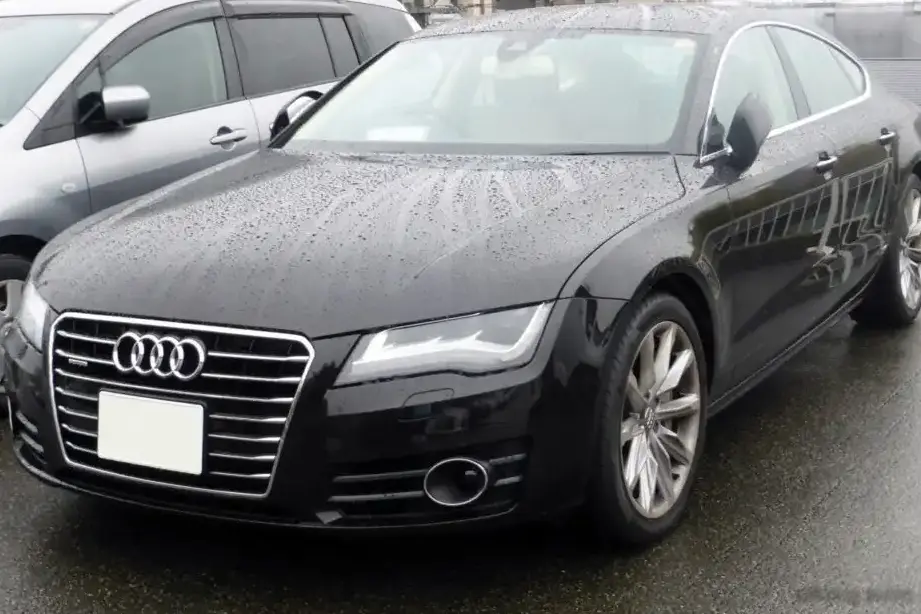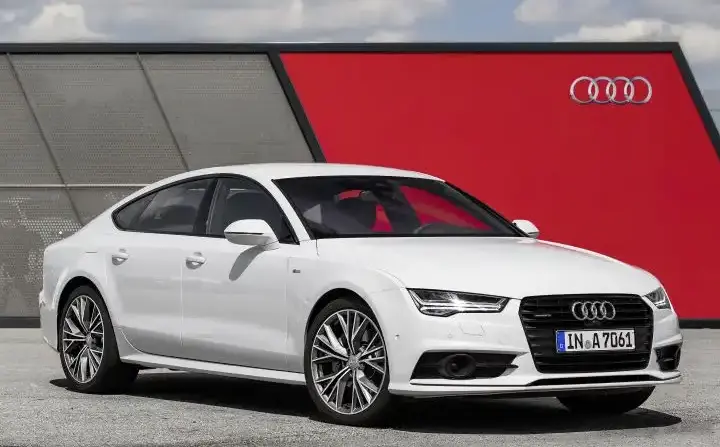
The Audi A7 Sportback (C7, facelift) 3.0 TDI V6 quattro Tiptronic represents a sophisticated blend of performance, luxury, and efficiency within the Audi A7 range. Produced from 2015 to 2017, this variant occupied a prominent position in the A7 lineup, offering a compelling alternative to the petrol-powered models and serving as a step up from the lower-powered diesel options. It’s built on the Volkswagen Group’s MLB platform (specifically the A6/A7 generation, 4H chassis code), sharing its underpinnings with other Audi, Volkswagen, and Porsche models. The facelift introduced in 2014 brought revised styling, updated technology, and refinements to the engine range, solidifying the A7’s appeal in the premium large car segment.
Technical Specifications
| Brand | Audi |
| Model | A7 |
| Generation | A7 Sportback (C7, facelift 2014) |
| Type (Engine) | 3.0 TDI V6 (240 Hp) quattro Tiptronic |
| Start of production | 2015 |
| End of production | 2017 |
| Powertrain Architecture | Internal Combustion engine |
| Body type | Liftback |
| Seats | 5 |
| Doors | 5 |
| Fuel consumption (economy) – urban (EPA) | 9.4 l/100 km (25 US mpg, 30.1 UK mpg, 10.6 km/l) |
| Fuel consumption (economy) – extra urban (EPA) | 6.2 l/100 km (37.9 US mpg, 45.6 UK mpg, 16.1 km/l) |
| Fuel consumption (economy) – combined (EPA) | 7.8 l/100 km (30.2 US mpg, 36.2 UK mpg, 12.8 km/l) |
| Fuel Type | Diesel |
| Acceleration 0 – 60 mph | 5.6 sec |
| Maximum speed | 210 km/h (130.49 mph), Electronically limited |
| Emission standard | ULEV II |
| Weight-to-power ratio | 8.2 kg/Hp, 121.5 Hp/tonne |
| Weight-to-torque ratio | 3.4 kg/Nm, 293.5 Nm/tonne |
| Power | 240 Hp @ 3500 rpm |
| Power per litre | 80.9 Hp/l |
| Torque | 580 Nm @ 1750 rpm (427.79 lb.-ft. @ 1750 rpm) |
| Engine layout | Front, Longitudinal |
| Engine Model/Code | CPNB |
| Engine displacement | 2967 cm3 (181.06 cu. in.) |
| Number of cylinders | 6 |
| Engine configuration | V-engine |
| Cylinder Bore | 83 mm (3.27 in.) |
| Piston Stroke | 91.4 mm (3.6 in.) |
| Compression ratio | 16.8:1 |
| Number of valves per cylinder | 4 |
| Fuel injection system | Diesel Commonrail |
| Engine aspiration | Turbocharger, Intercooler |
| Valvetrain | DOHC |
| Engine oil capacity | 6.4 l (6.76 US qt | 5.63 UK qt) |
| Coolant | 12 l (12.68 US qt | 10.56 UK qt) |
| Kerb Weight | 1976 kg (4356.33 lbs.) |
| Trunk (boot) space – minimum | 535 l (18.89 cu. ft.) |
| Trunk (boot) space – maximum | 1390 l (49.09 cu. ft.) |
| Fuel tank capacity | 73 l (19.28 US gal | 16.06 UK gal) |
| AdBlue tank | 19 l (5.02 US gal | 4.18 UK gal) |
| Length | 4984 mm (196.22 in.) |
| Width including mirrors | 2139 mm (84.21 in.) |
| Height | 1420 mm (55.91 in.) |
| Wheelbase | 2912 mm (114.65 in.) |
| Front track | 1644 mm (64.72 in.) |
| Rear (Back) track | 1635 mm (64.37 in.) |
| Ride height (ground clearance) | 112 mm (4.41 in.) |
| Drag coefficient (Cd) | 0.29 |
| Minimum turning circle (turning diameter) | 11.9 m (39.04 ft.) |
| Drivetrain Architecture | The Internal combustion engine (ICE) drives permanently the four wheels of the vehicle. |
| Drive wheel | All wheel drive (4×4) |
| Number of gears and type of gearbox | 8 gears, automatic transmission Tiptronic |
| Front suspension | Coil spring, Independent multi-link suspension, Transverse stabilizer |
| Rear suspension | Independent on trapezoidal lever, Transverse stabilizer, Coil spring |
| Front brakes | Ventilated discs, 345 mm |
| Rear brakes | Ventilated discs, 330 mm |
| Assisting systems | ABS (Anti-lock braking system) |
| Steering type | Steering rack and pinion |
| Power steering | Electric Steering |
| Tires size | 255/40 R19; 265/35 R20 |
| Wheel rims size | 8.5J x 19; 9J x 20 |
INTRODUCTION
The Audi A7 Sportback (C7, facelift) 3.0 TDI V6 quattro Tiptronic, produced between 2015 and 2017, is a five-door coupe that combines elegant design with practical functionality. Positioned as a premium offering, it aimed to attract buyers seeking a luxurious and capable grand tourer. The “facelift” designation refers to the mid-cycle refresh of the C7 generation, which included styling updates, technological enhancements, and revisions to the engine lineup. This particular variant, with its 3.0-liter TDI engine and Tiptronic automatic transmission, represented a sweet spot in the range, balancing performance with fuel efficiency and offering a comfortable driving experience. It was a key model for Audi in the European market, where diesel engines were – and continue to be – highly popular.
Powertrain & Engine Architecture
At the heart of the A7 3.0 TDI lies the CPNB engine code, a 3.0-liter V6 turbocharged diesel engine. This engine is a member of Audi’s modular engine family, known for its robust construction and advanced technology. It utilizes a common rail direct injection system, delivering fuel at extremely high pressure for optimized combustion. The engine features a single turbocharger with variable geometry turbine (VGT) technology, allowing for quick response and broad torque delivery. The valvetrain employs double overhead camshafts (DOHC) with four valves per cylinder, maximizing airflow and contributing to the engine’s power output. The eight-speed Tiptronic automatic transmission is a torque converter type, offering smooth and responsive gear changes. It allows for both fully automatic operation and manual gear selection via steering wheel-mounted paddles or the gear selector. The transmission is designed to handle the engine’s substantial 580 Nm (427.79 lb-ft) of torque.
Driving Characteristics
The 3.0 TDI with the Tiptronic transmission delivers a refined and effortless driving experience. Acceleration from 0 to 60 mph takes a respectable 5.6 seconds, and the electronically limited top speed of 210 km/h (130.49 mph) provides ample performance for highway cruising. The Tiptronic transmission is well-matched to the engine’s characteristics, providing smooth upshifts and downshifts. While not as overtly sporty as the manual transmission options or the higher-output petrol variants, the 3.0 TDI offers a broad torque curve, making it feel responsive in everyday driving situations. The quattro all-wheel-drive system provides excellent traction and stability, particularly in adverse weather conditions. The gear ratios are tuned for a balance of acceleration and fuel economy, with higher gears designed for relaxed cruising at highway speeds.
Equipment & Trim Levels
The A7 3.0 TDI quattro Tiptronic typically came well-equipped as standard. Interior features included leather upholstery, power-adjustable front seats with memory function, a multi-function steering wheel, and a high-resolution infotainment system with navigation. Standard safety features included ABS, electronic stability control, and multiple airbags. Optional extras included features such as a Bang & Olufsen sound system, adaptive cruise control, a head-up display, and various interior trim options. The A7’s interior was known for its high-quality materials and meticulous attention to detail, creating a luxurious and comfortable cabin environment.
Chassis & Braking
The A7 Sportback features a sophisticated chassis designed to deliver a comfortable ride and precise handling. The front suspension utilizes a multi-link setup with coil springs and a transverse stabilizer bar, while the rear suspension employs an independent trapezoidal link design with coil springs and a stabilizer bar. This configuration provides excellent wheel control and minimizes body roll. The braking system consists of ventilated discs on all four wheels, providing ample stopping power. Front brakes measure 345mm, while rear brakes are 330mm. ABS (Anti-lock Braking System) is standard, enhancing braking performance and stability.
Market Reception & Comparison
The Audi A7 3.0 TDI quattro Tiptronic was generally well-received by automotive critics. It was praised for its refined engine, comfortable ride, and luxurious interior. Compared to the petrol-powered A7 variants, the TDI offered significantly better fuel economy. Against other diesel-powered competitors, such as the BMW 6 Series Gran Coupe and the Mercedes-Benz CLS, the A7 was often lauded for its elegant design and advanced technology. The Tiptronic transmission, while smooth, was sometimes criticized for not being as engaging as a manual gearbox. However, its ease of use and convenience made it a popular choice for many buyers. Reliability was generally good, although, like all modern diesel engines, it was susceptible to issues with the diesel particulate filter (DPF) if not driven on longer journeys regularly.
Legacy
The Audi A7 Sportback (C7) 3.0 TDI V6 quattro Tiptronic remains a desirable used car today. The 3.0 TDI engine is known for its durability and relatively low maintenance costs, provided it has been properly maintained. The Tiptronic transmission is also generally reliable. However, potential buyers should be aware of the potential for DPF issues and ensure that the car has a full service history. The A7’s combination of style, luxury, and efficiency continues to appeal to buyers seeking a sophisticated and capable grand tourer. It represents a high point in Audi’s design and engineering prowess, and its enduring popularity is a testament to its quality and appeal.