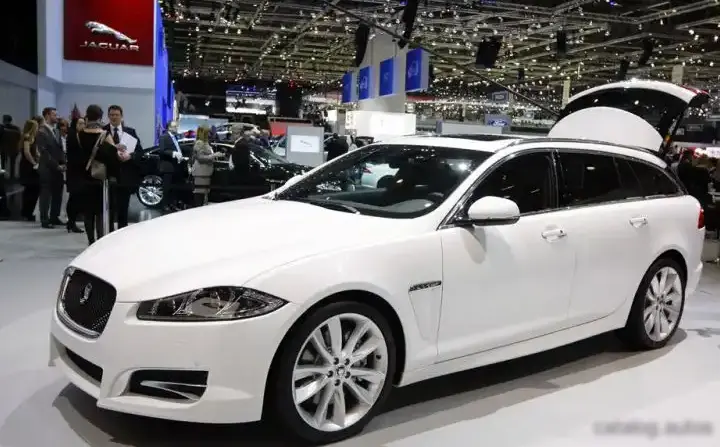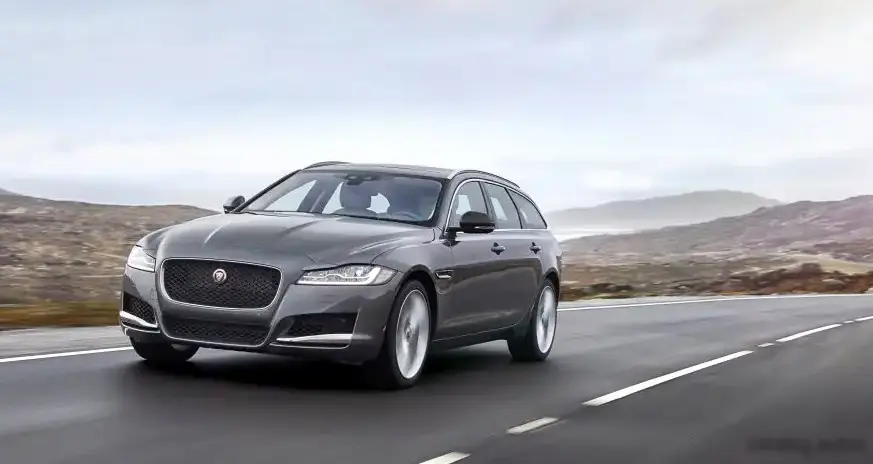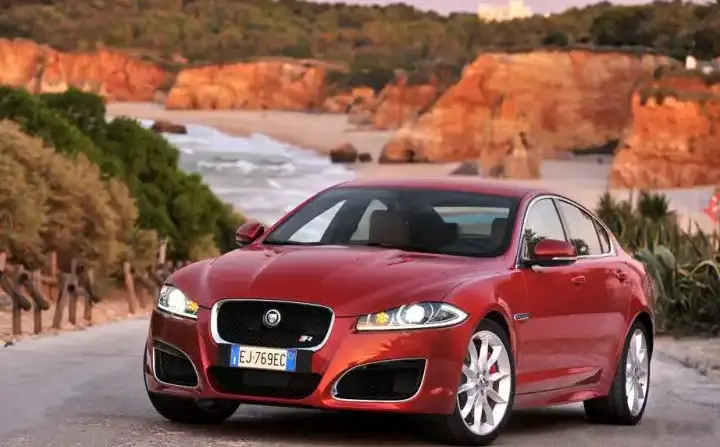
The Jaguar XF (X250) facelift, introduced in 2011 and continuing through 2015, represented a significant refresh of Jaguar’s mid-size luxury sedan. Among the engine options available, the 5.0-liter supercharged V8 producing 470 horsepower paired with an eight-speed automatic transmission stands as the performance flagship of the range. This variant aimed to deliver a blend of British luxury, exhilarating performance, and sophisticated technology, competing directly with established German rivals like the BMW 5 Series and Mercedes-Benz E-Class.
Technical Specifications
| Brand | Jaguar |
| Model | XF |
| Generation | XF (X250, facelift 2011) |
| Type (Engine) | 5.0 V8 (470 Hp) Automatic |
| Start of production | 2011 |
| End of production | 2015 |
| Powertrain Architecture | Internal Combustion engine |
| Body type | Sedan |
| Seats | 5 |
| Doors | 4 |
| Fuel consumption (economy) – urban (EPA) | 15.7 l/100 km (15 US mpg, 18 UK mpg, 6.4 km/l) |
| Fuel consumption (economy) – extra urban (EPA) | 10.2 l/100 km (23.1 US mpg, 27.7 UK mpg, 9.8 km/l) |
| Fuel consumption (economy) – combined (EPA) | 13.1 l/100 km (18 US mpg, 21.6 UK mpg, 7.6 km/l) |
| Fuel Type | Petrol (Gasoline) |
| Acceleration 0 – 60 mph | 4.9 sec |
| Maximum speed | 250 km/h (155.34 mph), Electronically limited |
| Weight-to-power ratio | 4 kg/Hp, 250.7 Hp/tonne |
| Weight-to-torque ratio | 3.3 kg/Nm, 306.7 Nm/tonne |
| Power | 470 Hp @ 6000-6500 rpm |
| Power per litre | 94 Hp/l |
| Torque | 575 Nm @ 2000-5500 rpm (424.1 lb.-ft. @ 2000-5500 rpm) |
| Engine layout | Front, Longitudinal |
| Engine Model/Code | AJ133S, 508PS |
| Engine displacement | 5000 cm3 (305.12 cu. in.) |
| Number of cylinders | 8 |
| Engine configuration | V-engine |
| Cylinder Bore | 92.5 mm (3.64 in.) |
| Piston Stroke | 93 mm (3.66 in.) |
| Compression ratio | 9.5:1 |
| Number of valves per cylinder | 4 |
| Fuel injection system | Direct injection |
| Engine aspiration | Supercharger, Intercooler |
| Valvetrain | DOHC |
| Engine oil capacity | 7.25 l (7.66 US qt | 6.38 UK qt) |
| Coolant | 12.3 l (13 US qt | 10.82 UK qt) |
| Kerb Weight | 1875 kg (4133.67 lbs.) |
| Trunk (boot) space – minimum | 500 l (17.66 cu. ft.) |
| Trunk (boot) space – maximum | 923 l (32.6 cu. ft.) |
| Fuel tank capacity | 69.6 l (18.39 US gal | 15.31 UK gal) |
| Length | 4961 mm (195.31 in.) |
| Width | 1877 mm (73.9 in.) |
| Width including mirrors | 2053 mm (80.83 in.) |
| Height | 1460 mm (57.48 in.) |
| Wheelbase | 2909 mm (114.53 in.) |
| Front track | 1559 mm (61.38 in.) |
| Rear (Back) track | 1571 mm (61.85 in.) |
| Drag coefficient (Cd) | 0.29 |
| Minimum turning circle (turning diameter) | 11.5 m (37.73 ft.) |
| Drivetrain Architecture | The Internal combustion engine (ICE) drives the rear wheels of the vehicle. |
| Drive wheel | Rear wheel drive |
| Number of gears and type of gearbox | 8 gears, automatic transmission |
| Front suspension | Coil spring, Double wishbone, Transverse stabilizer |
| Rear suspension | Independent multi-link spring suspension with stabilizer |
| Front brakes | Ventilated discs, 380 mm |
| Rear brakes | Ventilated discs, 376 mm |
| Assisting systems | ABS (Anti-lock braking system) |
| Steering type | Steering rack and pinion |
| Power steering | Hydraulic Steering |
| Tires size | Front wheel tires: 255/35 R20Rear wheel tires: 285/30 R20 |
| Wheel rims size | Front wheel rims: 8.5J x 20Rear wheel rims: 9.5J x 20 |
INTRODUCTION
The 2011-2015 Jaguar XF facelift, equipped with the 5.0-liter supercharged V8 and an eight-speed automatic transmission, represented the pinnacle of performance for the XF line. Positioned as the top-tier trim, it offered a significant step up in power and refinement compared to the 2.0-liter turbocharged four-cylinder and 3.0-liter V6 diesel options. Built on the X250 platform (shared with the XJ luxury sedan), the XF aimed to blend sporting dynamics with Jaguar’s traditional emphasis on luxury and craftsmanship. This model year saw updates to the exterior styling, interior technology, and powertrain refinement, solidifying the XF’s position as a serious contender in the executive sedan segment.
Powertrain & Engine Architecture
At the heart of this XF variant lies the Jaguar AJ133S 5.0-liter supercharged V8 engine. This engine, a descendant of Jaguar’s long-standing V8 tradition, utilizes a Roots-type supercharger with an intercooler to deliver substantial power and torque. The engine features direct fuel injection, a double overhead camshaft (DOHC) valvetrain with four valves per cylinder, and a compression ratio of 9.5:1. The eight-speed automatic transmission, sourced from ZF, provides smooth and responsive gear changes. This transmission is known for its efficiency and ability to adapt to driving conditions. The transmission’s gear ratios are tuned to maximize both acceleration and fuel economy, with closer ratios in the lower gears for quicker response and taller ratios for highway cruising.
Driving Characteristics
The 5.0-liter V8 XF delivers a truly exhilarating driving experience. The 470 horsepower and 424 lb.-ft. of torque provide effortless acceleration, with a 0-60 mph time of just 4.9 seconds. The supercharger provides instant throttle response, eliminating any noticeable turbo lag. The eight-speed automatic transmission shifts quickly and smoothly, contributing to the car’s overall refinement. Compared to the naturally aspirated V8 or the diesel variants, this model offers a significantly more potent and engaging driving experience. While the diesel models prioritized fuel economy, and the lower-powered gasoline engines offered a balance, the supercharged V8 was purely focused on performance. The rear-wheel-drive configuration contributes to a balanced chassis and engaging handling characteristics.
Equipment & Trim Levels
The 5.0 V8 XF typically came generously equipped. Standard features included leather upholstery, heated and ventilated front seats, a premium sound system, a touchscreen infotainment system, and a panoramic sunroof. Optional extras included adaptive cruise control, blind-spot monitoring, rear-seat entertainment, and upgraded interior trim materials. The interior design emphasized luxury and craftsmanship, with high-quality materials and meticulous attention to detail. The dashboard layout was driver-focused, with intuitive controls and a clear instrument cluster.
Chassis & Braking
The XF’s chassis features a double wishbone front suspension and an independent multi-link rear suspension, both incorporating stabilizer bars to minimize body roll. The suspension is tuned to provide a comfortable ride while maintaining good handling characteristics. Braking duties are handled by ventilated discs on all four wheels, with larger discs at the front to provide increased stopping power. The XF also incorporates an anti-lock braking system (ABS) and electronic stability control to enhance safety. The steering is hydraulic, providing a direct and responsive feel.
Market Reception & Comparison
Critics generally praised the 5.0 V8 XF for its performance, luxury, and refinement. However, fuel economy was often cited as a drawback, with combined fuel consumption averaging around 18 US mpg. Compared to the 3.0-liter V6 diesel, the V8 offered significantly more power but consumed considerably more fuel. The V8 also carried a higher price tag, making it the most expensive XF variant. Despite the fuel economy concerns, the 5.0 V8 XF was well-regarded as a compelling alternative to its German rivals, offering a unique blend of British style and performance.
Legacy
The 5.0-liter supercharged V8 engine proved to be a robust and reliable powerplant when properly maintained. While the complexity of the supercharger and direct injection system requires diligent servicing, the engine itself is generally considered durable. In the used car market, the 5.0 V8 XF remains a desirable option for those seeking a high-performance luxury sedan. However, potential buyers should be aware of the higher maintenance costs associated with the V8 engine and the importance of a thorough pre-purchase inspection. The XF’s combination of performance, luxury, and distinctive styling has ensured its place as a modern classic among Jaguar enthusiasts.