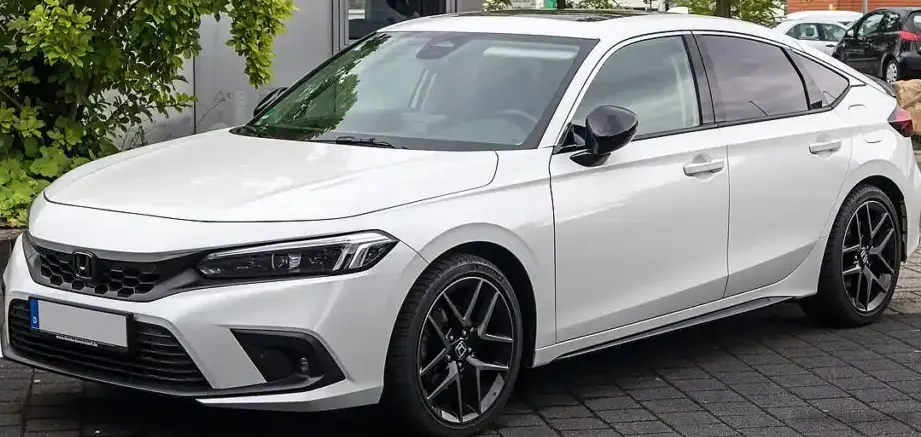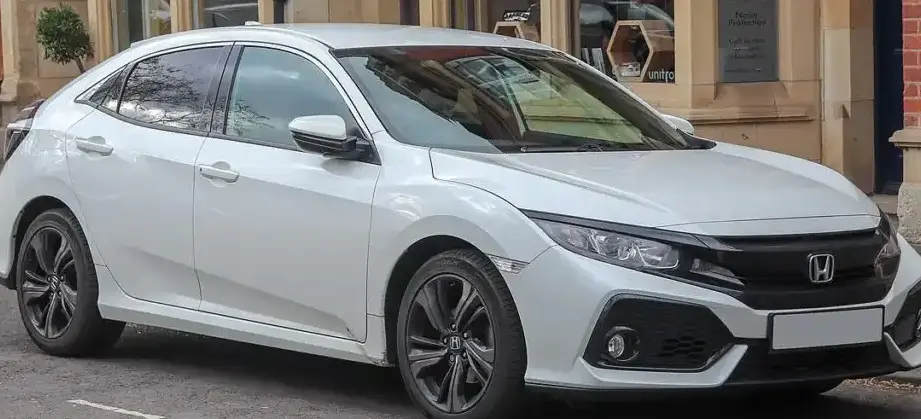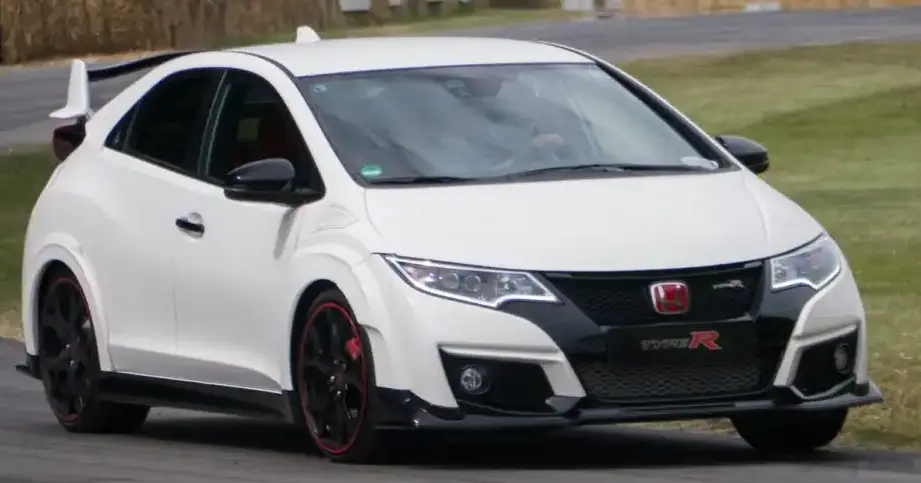
The Honda Civic Type R (FK2), produced from 2015 to 2017, represented a significant return to form for Honda’s high-performance hatchback. This generation, exclusive to the European and Japanese markets, marked the first time a Civic Type R was offered with a turbocharged engine. Built on the Honda Civic Hatchback platform (FK2), it aimed to deliver a more mature and refined driving experience compared to its predecessors, while still maintaining the Type R’s reputation for engaging handling and potent performance. The 2.0-liter (310 hp) variant was the sole engine option available during its production run, establishing itself as the flagship performance model within the Civic range.
Technical Specifications
| Brand | Honda |
| Model | Civic Type R |
| Generation | Civic Type R (FK2) |
| Type (Engine) | 2.0 (310 Hp) |
| Start of production | 2015 |
| End of production | 2017 |
| Powertrain Architecture | Internal Combustion engine |
| Body type | Hatchback |
| Seats | 4 |
| Doors | 5 |
| Fuel consumption (urban) | 9.4 l/100 km (25 US mpg) |
| Fuel consumption (extra urban) | 6.1 l/100 km (38.6 US mpg) |
| Fuel consumption (combined) | 7.3 l/100 km (32.2 US mpg) |
| CO2 emissions | 170 g/km |
| Fuel Type | Petrol (Gasoline) |
| Acceleration 0 – 100 km/h | 5.7 sec |
| Acceleration 0 – 62 mph | 5.7 sec |
| Acceleration 0 – 60 mph | 5.4 sec |
| Maximum speed | 270 km/h (167.77 mph) |
| Emission standard | Euro 6b |
| Weight-to-power ratio | 4.5 kg/Hp |
| Weight-to-torque ratio | 3.5 kg/Nm |
| Power | 310 Hp @ 6500 rpm |
| Torque | 400 Nm @ 2500-4500 rpm (295.02 lb.-ft.) |
| Engine layout | Front, Transverse |
| Engine Model/Code | K20C1 |
| Engine displacement | 1996 cm3 (121.8 cu. in.) |
| Number of cylinders | 4 |
| Engine configuration | Inline |
| Cylinder Bore | 86 mm (3.39 in.) |
| Piston Stroke | 85.9 mm (3.38 in.) |
| Compression ratio | 9.8:1 |
| Number of valves per cylinder | 4 |
| Fuel injection system | Direct injection |
| Engine aspiration | Turbocharger, Intercooler |
| Engine oil capacity | 5.4 l (5.71 US qt | 4.75 UK qt) |
| Coolant capacity | 6.52 l (6.89 US qt | 5.74 UK qt) |
| Kerb Weight | 1382 kg (3046.79 lbs.) |
| Trunk (boot) space – minimum | 498 l (17.59 cu. ft.) |
| Trunk (boot) space – maximum | 1214 l (42.87 cu. ft.) |
| Fuel tank capacity | 50 l (13.21 US gal | 11 UK gal) |
| Length | 4390 mm (172.83 in.) |
| Width | 1878 mm (73.94 in.) |
| Height | 1466 mm (57.72 in.) |
| Wheelbase | 2594 mm (102.13 in.) |
| Front track | 1605 mm (63.19 in.) |
| Rear track | 1528 mm (60.16 in.) |
| Ride height (ground clearance) | 118 mm (4.65 in.) |
| Drag coefficient (Cd) | 0.30 |
| Minimum turning circle | 12.6 m (41.34 ft.) |
| Drivetrain Architecture | Front wheel drive |
| Number of gears | 6 gears, manual transmission |
| Front brakes | Ventilated discs |
| Rear brakes | Disc |
| Tires size | 235/35 R19 |
| Wheel rims size | 19 |
Powertrain & Engine Architecture
The heart of the FK2 Type R is the K20C1 2.0-liter inline-four engine. This engine represented a departure from the naturally aspirated K20Z4 found in previous Civic Type Rs. The K20C1 utilizes a single-scroll turbocharger, direct injection, and a sophisticated valve train with both intake and exhaust variable timing. Peak power of 310 hp is achieved at 6,500 rpm, while a robust 295 lb-ft of torque is available from 2,500 to 4,500 rpm. This broad torque curve provides strong acceleration throughout the rev range. The engine’s internal components were strengthened to handle the increased pressures from the turbocharger, including forged pistons and connecting rods. The sole transmission option was a close-ratio six-speed manual gearbox, designed for precise and engaging shifts. This transmission was a key element in delivering the Type R’s renowned driving experience.
Driving Characteristics
The FK2 Type R delivers a noticeably different driving experience compared to its predecessors. The turbocharger provides a significant boost in mid-range power, resulting in strong acceleration. While the naturally aspirated engines of earlier Type Rs required higher revs to deliver peak performance, the K20C1 offers readily available torque, making it more accessible in everyday driving situations. The six-speed manual transmission is precise and offers short throws, encouraging spirited driving. The chassis is well-balanced, and the steering is responsive, providing excellent feedback to the driver. Compared to potential higher-output variants (had they been offered), the 310 hp model strikes a balance between performance and usability. Some enthusiasts felt a higher power output would have further enhanced the driving experience, but the existing setup provided ample power for both track days and daily commutes.
Equipment & Trim Levels
The FK2 Type R was relatively well-equipped, focusing on performance-oriented features. Standard equipment included sport seats with enhanced bolstering, a leather-wrapped steering wheel, and a unique Type R instrument cluster. The interior featured aluminum pedals and red accents, emphasizing the car’s sporty character. Infotainment systems varied depending on the market, but generally included a touchscreen display with navigation and connectivity options. Optional extras included a premium audio system, parking sensors, and a sunroof. The trim level was essentially singular, with limited options for customization beyond the available accessories.
Chassis & Braking
The FK2 Type R features a sophisticated suspension system designed to maximize handling performance. The front suspension utilizes MacPherson struts with adaptive dampers, while the rear features a multi-link setup. The dampers are electronically controlled, allowing the driver to adjust the suspension settings to suit their driving style and road conditions. Braking duties are handled by ventilated discs at all four corners, providing ample stopping power. The braking system is also equipped with ABS and electronic brake-force distribution. Compared to standard Civic models, the Type R benefits from a thicker stabilizer bar and stiffer springs, further enhancing its handling capabilities.
Market Reception & Comparison
The FK2 Type R was generally well-received by automotive critics. It was praised for its powerful engine, engaging handling, and refined interior. However, some critics noted that the turbocharger slightly diminished the raw, visceral feel of previous Type Rs. Compared to other hot hatchbacks of the time, such as the Volkswagen Golf GTI and the Ford Focus ST, the Type R offered a more focused and track-oriented driving experience. Fuel economy was respectable for a high-performance car, averaging around 32.2 US mpg in combined driving. Reliability was generally good, although some owners reported minor issues with the turbocharger and cooling system.
Legacy
The FK2 Type R marked a turning point for the Civic Type R, introducing turbocharging and a more sophisticated driving experience. It laid the groundwork for the subsequent FK8 generation, which further refined the Type R formula. Today, the FK2 remains a sought-after performance car, particularly among enthusiasts who appreciate its unique blend of power, handling, and practicality. The K20C1 engine has proven to be relatively reliable, and well-maintained examples command a premium in the used car market. The FK2 Type R is remembered as a significant milestone in the evolution of Honda’s iconic hot hatchback.