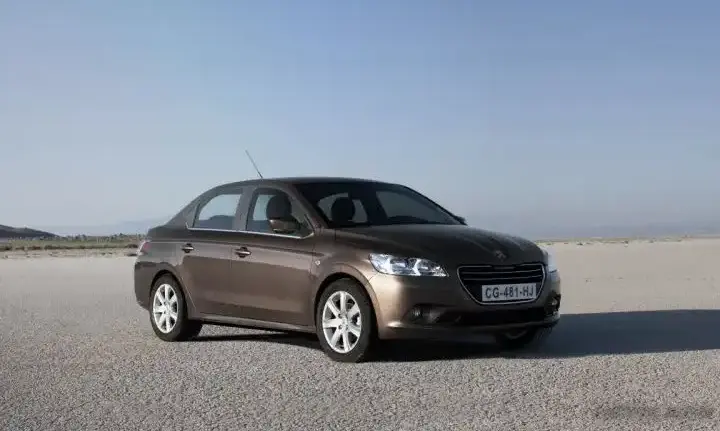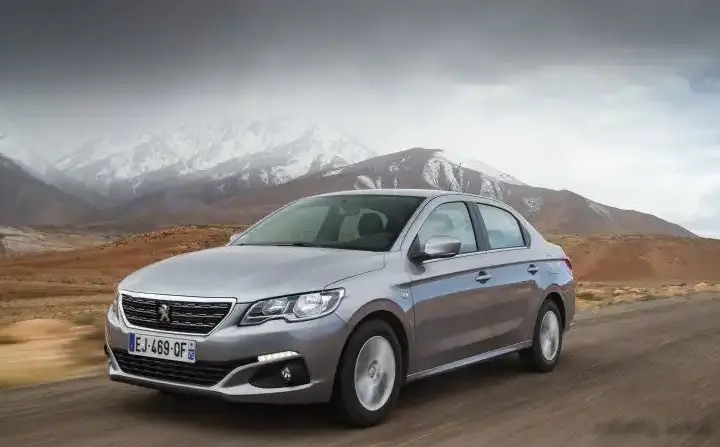
The Peugeot 301, specifically the 1.6 VTi variant introduced with the 2017 facelift, represents a key offering in Peugeot’s entry-level sedan lineup, primarily targeted towards markets outside of Europe where compact sedans retain significant popularity. Production of this iteration began in 2017 and continued alongside other engine options within the broader 301 range. Positioned as a mid-range trim, the 1.6 VTi aimed to balance affordability with a more refined driving experience than the base engine options, while remaining accessible to budget-conscious buyers. It was designed to compete with similar offerings from Renault, Citroën, and other manufacturers in emerging markets.
Technical Specifications
| Brand | Peugeot |
| Model | 301 |
| Generation | 301 (facelift 2017) |
| Type (Engine) | 1.6 VTi (115 Hp) |
| Start of production | 2017 |
| Powertrain Architecture | Internal Combustion engine |
| Body type | Sedan |
| Seats | 5 |
| Doors | 4 |
| Fuel consumption (urban) | 8.7 l/100 km (27 US mpg, 32.5 UK mpg, 11.5 km/l) |
| Fuel consumption (extra urban) | 5 l/100 km (47 US mpg, 56.5 UK mpg, 20 km/l) |
| Fuel consumption (combined) | 6.4 l/100 km (36.8 US mpg, 44.1 UK mpg, 15.6 km/l) |
| CO2 emissions | 148 g/km |
| Fuel Type | Petrol (Gasoline) |
| Acceleration 0 – 100 km/h | 10.3 sec |
| Acceleration 0 – 62 mph | 10.3 sec |
| Acceleration 0 – 60 mph | 9.8 sec |
| Maximum speed | 188 km/h (116.82 mph) |
| Emission standard | Euro 6 |
| Weight-to-power ratio | 9.5 kg/Hp, 105.5 Hp/tonne |
| Weight-to-torque ratio | 7.3 kg/Nm, 137.6 Nm/tonne |
| Power | 115 Hp @ 6050 rpm |
| Power per litre | 72.5 Hp/l |
| Torque | 150 Nm @ 4000 rpm (110.63 lb.-ft. @ 4000 rpm) |
| Engine layout | Front, Transverse |
| Engine Model/Code | NFP EC5 |
| Engine displacement | 1587 cm3 (96.84 cu. in.) |
| Number of cylinders | 4 |
| Engine configuration | Inline |
| Cylinder Bore | 78.5 mm (3.09 in.) |
| Piston Stroke | 82 mm (3.23 in.) |
| Number of valves per cylinder | 4 |
| Fuel injection system | Multi-port manifold injection |
| Engine aspiration | Naturally aspirated engine |
| Valvetrain | DOHC |
| Engine oil capacity | 3.25 l (3.43 US qt | 2.86 UK qt) |
| Kerb Weight | 1090 kg (2403.04 lbs.) |
| Max. weight | 1524 kg (3359.84 lbs.) |
| Max load | 434 kg (956.81 lbs.) |
| Trunk (boot) space – minimum | 506 l (17.87 cu. ft.) |
| Trunk (boot) space – maximum | 1332 l (47.04 cu. ft.) |
| Fuel tank capacity | 50 l (13.21 US gal | 11 UK gal) |
| Permitted trailer load with brakes (12%) | 750 kg (1653.47 lbs.) |
| Permitted trailer load without brakes | 580 kg (1278.68 lbs.) |
| Permitted towbar download | 55 kg (121.25 lbs.) |
| Length | 4445 mm (175 in.) |
| Width | 1748 mm (68.82 in.) |
| Width including mirrors | 1953 mm (76.89 in.) |
| Height | 1466 mm (57.72 in.) |
| Wheelbase | 2652 mm (104.41 in.) |
| Front track | 1501 mm (59.09 in.) |
| Rear (Back) track | 1478 mm (58.19 in.) |
| Front overhang | 819 mm (32.24 in.) |
| Rear overhang | 974 mm (38.35 in.) |
| Ride height (ground clearance) | 165 mm (6.5 in.) |
| Drivetrain Architecture | The Internal combustion engine (ICE) drives the front wheels of the vehicle. |
| Drive wheel | Front wheel drive |
| Number of gears and type of gearbox | 5 gears, manual transmission |
| Front suspension | Independent type McPherson |
| Rear suspension | Torsion |
| Front brakes | Ventilated discs, 266 mm |
| Rear brakes | Drum |
| Assisting systems | ABS (Anti-lock braking system) |
| Steering type | Steering rack and pinion |
| Power steering | Electric Steering |
| Tires size | 185/65 R15; 195/55 R16 |
| Wheel rims size | 15; 16 |
Powertrain & Engine Architecture
The 1.6 VTi engine, designated NFP EC5, is a naturally aspirated, inline-four cylinder gasoline engine. It features a double overhead camshaft (DOHC) valvetrain and multi-point fuel injection. This engine is part of Peugeot’s EC family of engines, known for their relatively simple design and focus on fuel efficiency. The 1.6L displacement provides a reasonable balance between power and economy. The engine’s 115 horsepower output at 6050 rpm and 150 Nm (110.63 lb-ft) of torque at 4000 rpm are delivered through a 5-speed manual transmission. While an automatic transmission was offered on other 301 variants, the 1.6 VTi was primarily paired with the manual gearbox in most markets.
Driving Characteristics
The 1.6 VTi equipped 301 offers a comfortable, if not particularly sporty, driving experience. Acceleration from 0-60 mph takes approximately 9.8 seconds, and 0-100 km/h in 10.3 seconds. The engine provides adequate power for everyday driving situations, but it can feel strained when fully loaded or during overtaking maneuvers. The 5-speed manual transmission is well-matched to the engine’s characteristics, offering smooth gear changes. Compared to the lower-powered 1.2-liter engine options, the 1.6 VTi provides noticeably more responsive performance. However, it lacks the torque of the diesel variants, making it less suitable for long-distance highway driving or frequent hill climbs.
Equipment & Trim Levels
The 1.6 VTi trim typically included features such as air conditioning, power windows, central locking, and a basic audio system with USB connectivity. Higher trim levels added features like alloy wheels, fog lights, a more advanced audio system with Bluetooth, and sometimes even a rear parking sensor. Interior upholstery was generally cloth, with options for upgraded materials on higher-spec models. Safety features included ABS brakes, front airbags, and seatbelt pre-tensioners. The overall interior design was functional and straightforward, prioritizing practicality over luxury.
Chassis & Braking
The Peugeot 301 utilizes a McPherson strut front suspension and a torsion beam rear suspension. This setup provides a comfortable ride quality, although it doesn’t offer the same level of handling precision as more sophisticated suspension systems. The front brakes are ventilated discs, while the rear brakes are drums. This configuration is typical for vehicles in this price segment. The steering is electrically assisted, providing light and easy steering feel. The 185/65 R15 or 195/55 R16 tires offer adequate grip for everyday driving conditions.
Market Reception & Comparison
The Peugeot 301 1.6 VTi was generally well-received as a practical and affordable sedan. Critics praised its comfortable ride, spacious interior, and reasonable fuel economy. However, some reviewers noted its lack of refinement and relatively basic interior appointments. Compared to the diesel variants, the 1.6 VTi offered lower fuel economy but a quieter and smoother driving experience. It also provided a more accessible price point than the higher-powered engine options. In terms of reliability, the 1.6 VTi engine has proven to be generally dependable, with few reported major issues.
Legacy
The Peugeot 301 1.6 VTi remains a popular choice in the used car market, particularly in regions where compact sedans are in high demand. Its relatively simple mechanical design and proven reliability make it an attractive option for budget-conscious buyers. While it may not offer the latest technology or the most exciting driving experience, it provides a comfortable, practical, and affordable mode of transportation. The NFP EC5 engine, while not a performance powerhouse, has earned a reputation for durability and ease of maintenance, ensuring that the 301 1.6 VTi will likely remain on the roads for years to come.