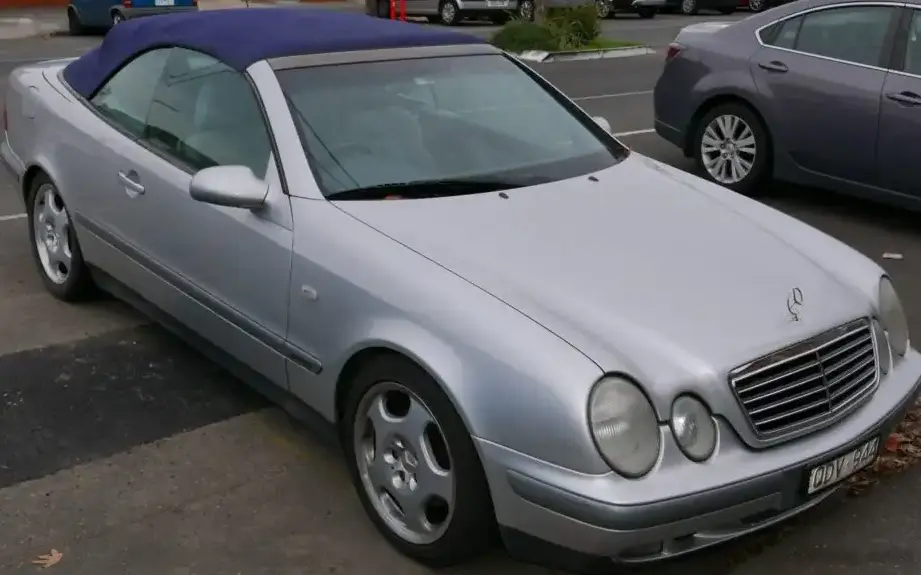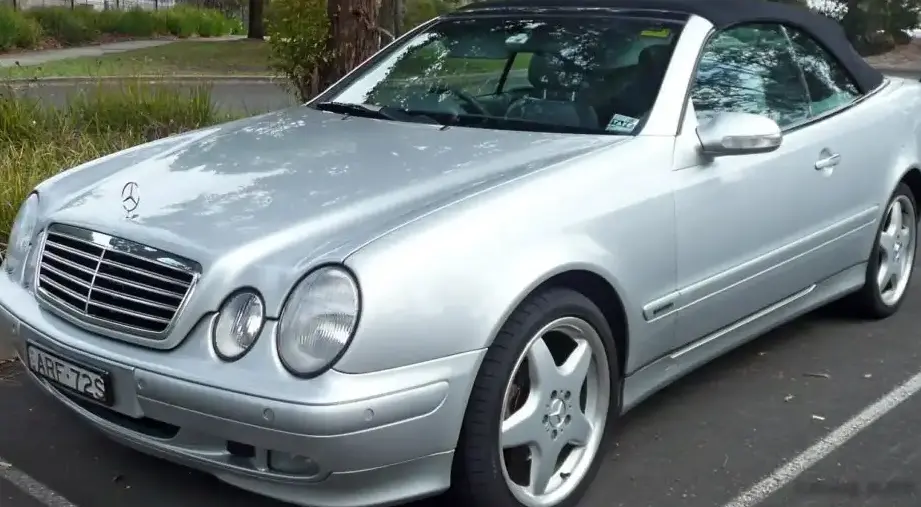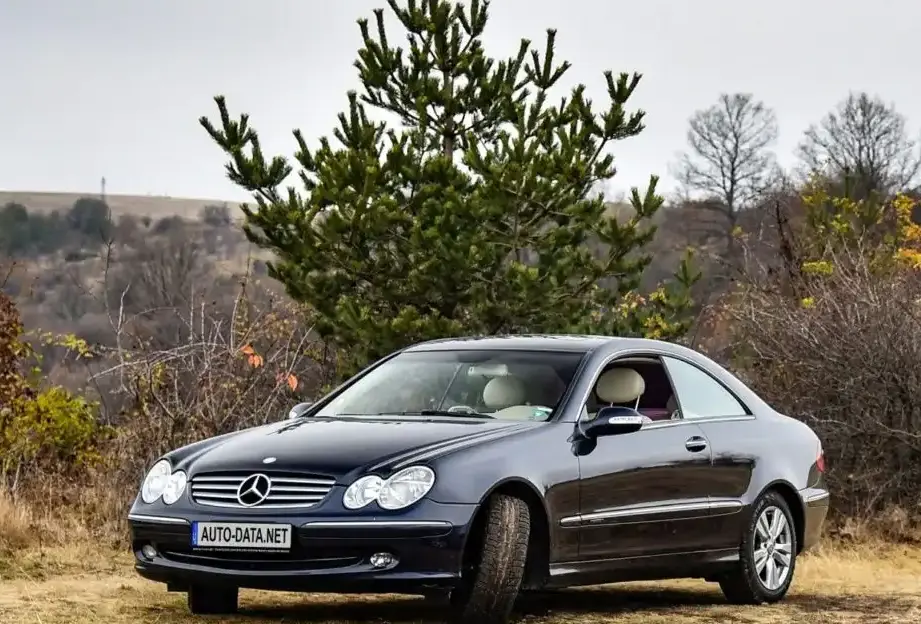
The Mercedes-Benz CLK 500, produced from February 2002 to May 2004, represented the performance pinnacle of the C209 CLK-Class coupe and convertible range. Positioned as the flagship model, it offered a substantial upgrade in power and refinement compared to the more common CLK 320 and CLK 240 variants. The C209 generation CLK, built on the W203 C-Class platform, aimed to blend the sporting character of a coupe with Mercedes-Benz’s renowned luxury and build quality. The CLK 500 specifically targeted buyers seeking a grand touring experience with genuine performance credentials, offering a compelling alternative to rivals like the BMW 6 Series and Audi TT.
Technical Specifications
| Brand | Mercedes-Benz |
| Model | CLK |
| Generation | CLK (C209) |
| Type | CLK 500 V8 (306 Hp) 5G-TRONIC |
| Start of production | February, 2002 |
| End of production | May, 2004 |
| Powertrain Architecture | Internal Combustion engine |
| Body type | Coupe |
| Seats | 4 |
| Doors | 2 |
| Fuel consumption (urban) | 16.9 l/100 km (13.9 US mpg, 16.7 UK mpg, 5.9 km/l) |
| Fuel consumption (extra urban) | 8.4 l/100 km (28 US mpg, 33.6 UK mpg, 11.9 km/l) |
| Fuel consumption (combined) | 11.5 l/100 km (20.5 US mpg, 24.6 UK mpg, 8.7 km/l) |
| CO2 emissions | 276 g/km |
| Fuel Type | Petrol (Gasoline) |
| Acceleration 0 – 100 km/h | 6 sec |
| Acceleration 0 – 62 mph | 6 sec |
| Acceleration 0 – 60 mph | 5.7 sec |
| Maximum speed | 250 km/h (155.34 mph) – Electronically limited |
| Emission standard | Euro 4 |
| Weight-to-power ratio | 5.2 kg/Hp, 193.1 Hp/tonne |
| Weight-to-torque ratio | 3.4 kg/Nm, 290.2 Nm/tonne |
| Power | 306 Hp @ 5600 rpm |
| Power per litre | 61.6 Hp/l |
| Torque | 460 Nm @ 2700-4250 rpm (339.28 lb.-ft. @ 2700-4250 rpm) |
| Maximum engine speed | 6000 rpm |
| Engine layout | Front, Longitudinal |
| Engine Model/Code | M 113.968 |
| Engine displacement | 4966 cm3 (303.04 cu. in.) |
| Number of cylinders | 8 |
| Engine configuration | V-engine |
| Cylinder Bore | 97 mm (3.82 in.) |
| Piston Stroke | 84 mm (3.31 in.) |
| Compression ratio | 10:1 |
| Number of valves per cylinder | 3 |
| Fuel injection system | Multi-port manifold injection |
| Engine aspiration | Naturally aspirated engine |
| Valvetrain | SOHC |
| Engine oil capacity | 7.5 l (7.93 US qt | 6.6 UK qt) |
| Coolant capacity | 11.5 l (12.15 US qt | 10.12 UK qt) |
| Kerb Weight | 1585 kg (3494.33 lbs.) |
| Max. weight | 2115 kg (4662.78 lbs.) |
| Max load | 530 kg (1168.45 lbs.) |
| Trunk (boot) space (minimum) | 435 l (15.36 cu. ft.) |
| Fuel tank capacity | 62 l (16.38 US gal | 13.64 UK gal) |
| Max. roof load | 100 kg (220.46 lbs.) |
| Permitted trailer load (with brakes) | 1500 kg (3306.93 lbs.) |
| Permitted trailer load (without brakes) | 750 kg (1653.47 lbs.) |
| Length | 4638 mm (182.6 in.) |
| Width | 1740 mm (68.5 in.) |
| Width including mirrors | 1991 mm (78.39 in.) |
| Height | 1415 mm (55.71 in.) |
| Wheelbase | 2715 mm (106.89 in.) |
| Front track | 1497 mm (58.94 in.) |
| Rear track | 1478 mm (58.19 in.) |
| Front overhang | 840 mm (33.07 in.) |
| Rear overhang | 1083 mm (42.64 in.) |
| Drag coefficient (Cd) | 0.28 |
| Minimum turning circle | 10.76 m (35.3 ft.) |
| Drivetrain | Rear wheel drive |
| Number of gears | 5 |
| Gearbox type | Automatic transmission |
| Front suspension | Independent type McPherson, Transverse stabilizer |
| Rear suspension | Independent multi-link suspension, Transverse stabilizer |
| Front brakes | Ventilated discs, 345×30 mm |
| Rear brakes | Ventilated discs, 300×22 mm |
| Assisting systems | ABS (Anti-lock braking system) |
| Steering type | Steering rack and pinion |
| Power steering | Hydraulic Steering |
| Front tires | 225/45 R17 |
| Rear tires | 245/40 R17 |
| Front wheel rims | 7.5J x 17 |
| Rear wheel rims | 8.5J x 17 |
Powertrain & Engine Architecture
The heart of the CLK 500 is the M113.968 5.0-liter naturally aspirated V8 engine. This engine, a cornerstone of Mercedes-Benz’s performance offerings in the early 2000s, features a three-valve-per-cylinder (two intake, one exhaust) SOHC design and multi-port fuel injection. The engine’s robust construction and relatively simple design (compared to later forced-induction engines) contributed to its reliability. The 5G-TRONIC automatic transmission, a five-speed unit, was specifically calibrated to handle the V8’s substantial torque output. This transmission offered smooth shifts and a ‘Comfort’ and ‘Sport’ mode, allowing drivers to tailor the driving experience. The transmission’s gear ratios were optimized for both comfortable cruising and responsive acceleration.
Driving Characteristics
The CLK 500 delivered a distinctly different driving experience compared to the four and six-cylinder CLK models. The V8 provided effortless acceleration, with 0-60 mph times consistently around 5.7 seconds. While not a track-focused sports car, the CLK 500 offered ample power for overtaking and confident highway cruising. The 5G-TRONIC transmission, while smooth, wasn’t as quick-shifting as some contemporary dual-clutch transmissions. However, the Sport mode provided more aggressive shift points and a more engaging driving experience. The weight distribution, though front-heavy, was well-managed by the independent suspension, resulting in predictable handling.
Equipment & Trim Levels
The CLK 500 came standard with a generous array of features, befitting its flagship status. Leather upholstery, automatic climate control, power-adjustable seats, and a premium sound system were all standard. Common optional extras included a sunroof, navigation system, bi-xenon headlights, and upgraded interior trim options. The interior design was typical of Mercedes-Benz at the time, emphasizing luxury and comfort with high-quality materials and a refined aesthetic.
Chassis & Braking
The CLK 500 utilized a McPherson strut front suspension and a multi-link rear suspension, providing a comfortable ride while maintaining good handling characteristics. Braking duties were handled by ventilated disc brakes on all four wheels, providing ample stopping power. ABS (Anti-lock Braking System) was standard. The CLK 500’s chassis was reinforced compared to the lower-spec models to handle the increased power and torque of the V8 engine.
Market Reception & Comparison
Critics generally praised the CLK 500 for its powerful engine, luxurious interior, and comfortable ride. However, some noted that the handling wasn’t as sharp as some of its rivals, such as the BMW 6 Series. Fuel economy was also a concern, with combined fuel consumption averaging around 20.5 US mpg. Compared to the CLK 320, the 500 offered a significant performance boost but came at a higher price point and with increased running costs. The CLK 500 was positioned as a more mature and refined alternative to the more overtly sporty coupes on the market.
Legacy
The M113 V8 engine, found in the CLK 500, is generally regarded as a robust and reliable powerplant when properly maintained. Common issues include occasional oil leaks and sensor failures, but major engine failures are relatively rare. Today, the CLK 500 represents an affordable entry point into the world of V8-powered Mercedes-Benz coupes. Well-maintained examples are sought after by enthusiasts who appreciate the combination of performance, luxury, and classic Mercedes-Benz styling. The car’s relative simplicity compared to modern vehicles makes it a popular choice for those who enjoy DIY maintenance and repairs.