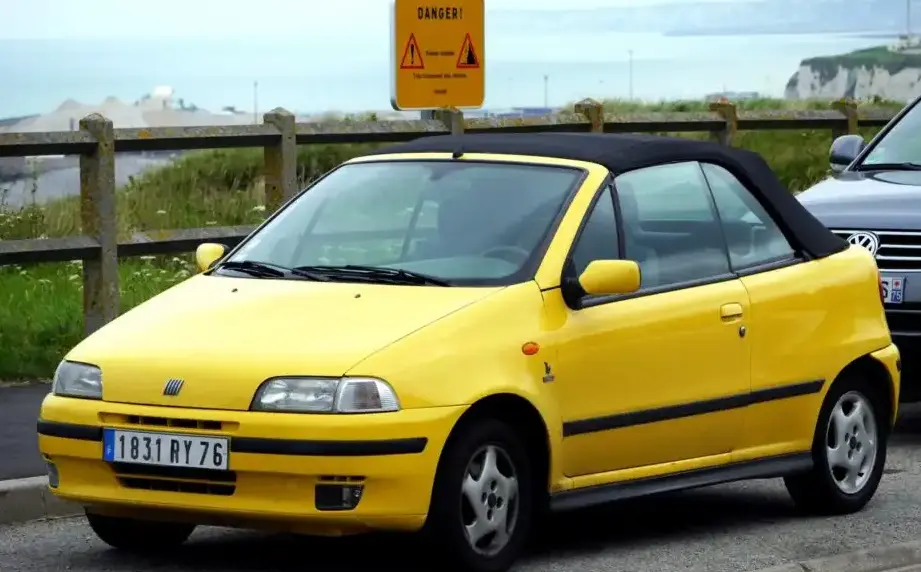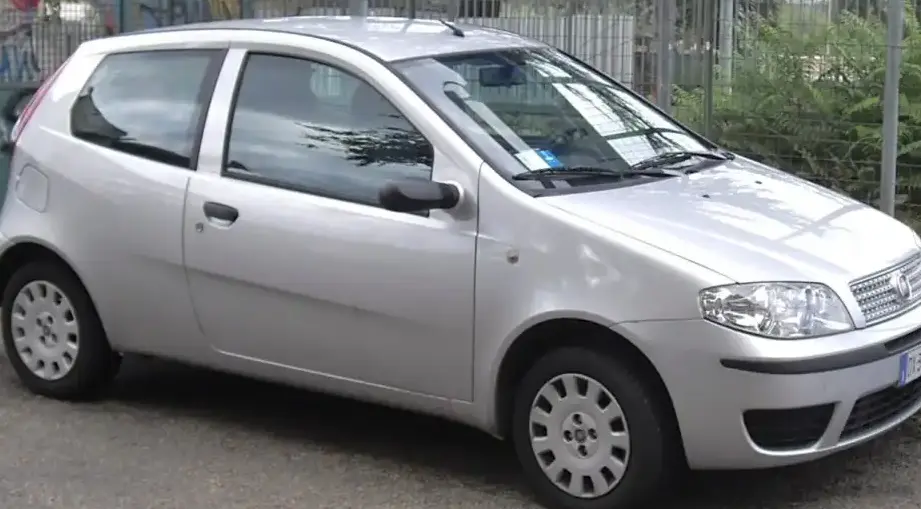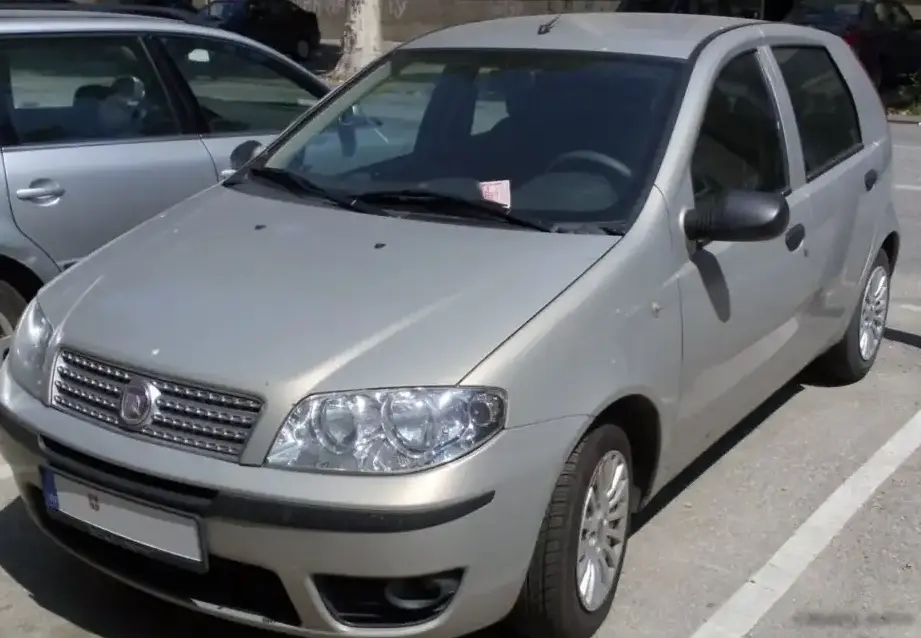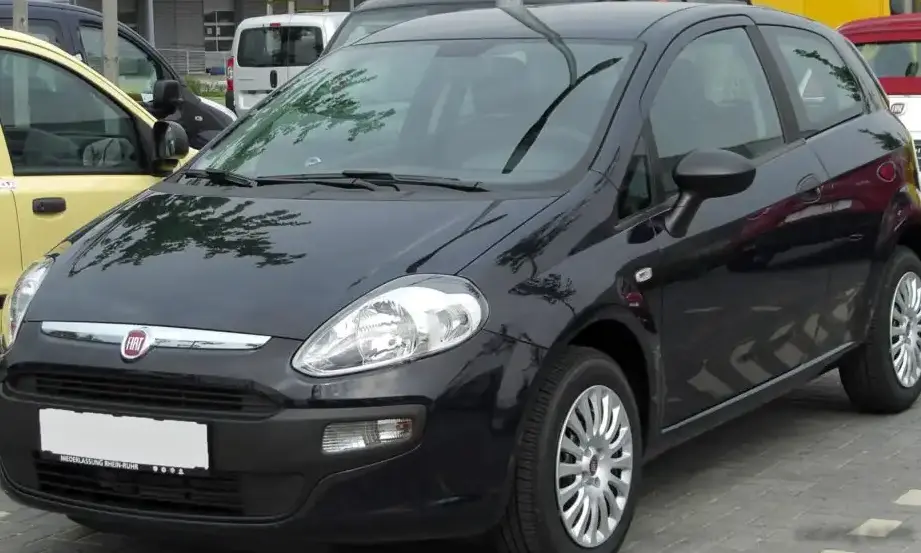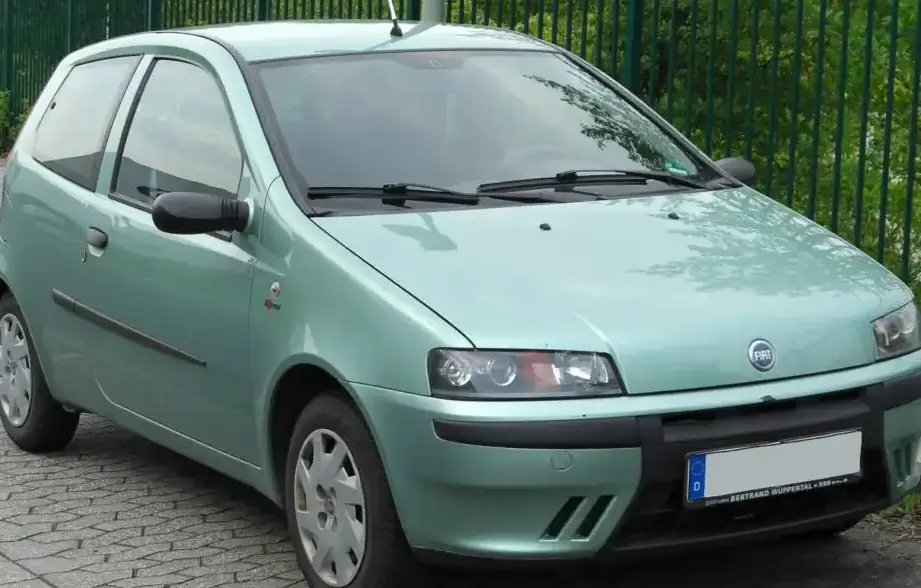
The Fiat Punto II (188) 3-door 1.9 JTD, produced from 2001 to 2003, represented a significant offering in the European subcompact hatchback market. Positioned as an economical and practical choice, this variant utilized Fiat’s advanced diesel technology to deliver a balance of fuel efficiency and reasonable performance. It was part of the 188 series, the second generation of the Punto, which aimed to modernize the brand’s small car offering and compete with rivals like the Renault Clio, Peugeot 206, and Volkswagen Polo. The 1.9 JTD model specifically targeted buyers seeking low running costs and a capable, if not overtly sporty, driving experience.
Technical Specifications
| Brand | Fiat |
| Model | Punto |
| Generation | Punto II (188) 3dr |
| Type (Engine) | 1.9 JTD (85 Hp) |
| Start of production | 2001 |
| End of production | 2003 |
| Powertrain Architecture | Internal Combustion engine |
| Body type | Hatchback |
| Seats | 5 |
| Doors | 3 |
| Fuel consumption (urban) | 7.2 l/100 km (32.7 US mpg) |
| Fuel consumption (extra urban) | 4.2 l/100 km (56 US mpg) |
| Fuel consumption (combined) | 5.3 l/100 km (44.4 US mpg) |
| Fuel Type | Diesel |
| Acceleration 0 – 100 km/h | 11.9 sec |
| Acceleration 0 – 62 mph | 11.9 sec |
| Acceleration 0 – 60 mph | 11.3 sec |
| Maximum speed | 173 km/h (107.5 mph) |
| Emission standard | Euro 3 |
| Weight-to-power ratio | 12.2 kg/Hp |
| Weight-to-torque ratio | 5.3 kg/Nm |
| Power | 85 Hp @ 3500 rpm |
| Torque | 196 Nm @ 1500 rpm (144.56 lb.-ft. @ 1500 rpm) |
| Engine layout | Front, Transverse |
| Engine Model/Code | 188 A7.000 |
| Engine displacement | 1910 cm3 (116.56 cu. in.) |
| Number of cylinders | 4 |
| Engine configuration | Inline |
| Cylinder Bore | 82 mm (3.23 in.) |
| Piston Stroke | 90.4 mm (3.56 in.) |
| Compression ratio | 18.5:1 |
| Number of valves per cylinder | 2 |
| Fuel injection system | Diesel Commonrail |
| Engine aspiration | Turbocharger, Intercooler |
| Engine oil capacity | 4.3 l (4.54 US qt | 3.78 UK qt) |
| Coolant capacity | 6.2 l (6.55 US qt | 5.46 UK qt) |
| Kerb Weight | 1040 kg (2292.81 lbs.) |
| Max. weight | 1550 kg (3417.17 lbs.) |
| Max load | 510 kg (1124.36 lbs.) |
| Trunk (boot) space – minimum | 264 l (9.32 cu. ft.) |
| Trunk (boot) space – maximum | 1080 l (38.14 cu. ft.) |
| Fuel tank capacity | 49 l (12.94 US gal | 10.78 UK gal) |
| Length | 3800 mm (149.61 in.) |
| Width | 1660 mm (65.35 in.) |
| Height | 1480 mm (58.27 in.) |
| Wheelbase | 2460 mm (96.85 in.) |
| Front track | 1396 mm (54.96 in.) |
| Rear track | 1386 mm (54.57 in.) |
| Drag coefficient (Cd) | 0.32 |
| Minimum turning circle | 10.5 m (34.45 ft.) |
| Drivetrain Architecture | Front wheel drive |
| Number of gears | 5 |
| Gearbox type | Manual transmission |
| Front suspension | Independent type McPherson |
| Rear suspension | Torsion |
| Front brakes | Ventilated discs |
| Rear brakes | Drum |
| Assisting systems | ABS (Anti-lock braking system) |
| Steering type | Steering rack and pinion |
| Power steering | Electric |
| Tires size | 185/60 R14 |
| Wheel rims size | 6J x 14 |
Powertrain & Engine Architecture
The heart of the Punto II 1.9 JTD was the 188A7.000 engine, a 1910cc inline-four cylinder diesel. This engine was a product of Fiat’s collaboration with Common Rail Diesel technology, offering improved refinement and efficiency compared to earlier diesel designs. The engine featured a turbocharger with an intercooler, boosting power output to 85 horsepower at 3500 rpm and a substantial 196 Nm (144.56 lb-ft) of torque at just 1500 rpm. The common rail direct injection system allowed for precise fuel delivery, contributing to both performance and reduced emissions. The engine’s 18.5:1 compression ratio was typical for a direct injection diesel, maximizing combustion efficiency. The 5-speed manual transmission was the only gearbox option available with this engine, prioritizing fuel economy over rapid acceleration.
Driving Characteristics
The 1.9 JTD Punto offered a distinctly different driving experience compared to the petrol-powered versions. While not particularly quick – 0-60 mph took around 11.3 seconds – the engine’s strong low-end torque made it feel responsive in everyday driving situations. The gearing was optimized for fuel efficiency, meaning the engine didn’t rev particularly high. This resulted in a relaxed cruising experience, but required frequent downshifts when overtaking or climbing hills. Compared to the more powerful (and often more expensive) petrol variants, the 1.9 JTD prioritized usability and economy over outright performance. The manual transmission, while not sporty, was light and easy to use.
Equipment & Trim Levels
The 1.9 JTD trim level in the Punto II range typically fell into the mid-range category. Standard equipment included central locking, power steering, and an ABS anti-lock braking system. Interior appointments were functional rather than luxurious, with durable cloth upholstery and a straightforward dashboard layout. Optional extras included air conditioning, electric windows, and a radio/CD player. The 3-door body style emphasized a slightly sportier aesthetic compared to the 5-door version, appealing to younger buyers or those prioritizing a more compact footprint.
Chassis & Braking
The Punto II utilized a McPherson strut independent suspension setup at the front, providing a reasonable level of comfort and handling. The rear suspension employed a torsion beam, a cost-effective solution that offered adequate stability. Braking was handled by ventilated discs at the front and drum brakes at the rear. The electric power steering provided light and easy steering, making it well-suited for urban driving. The relatively lightweight construction of the Punto (around 1040 kg or 2293 lbs) helped to offset the modest power output of the 1.9 JTD engine.
Market Reception & Comparison
The Fiat Punto II 1.9 JTD was generally well-received by automotive critics for its fuel efficiency and practicality. It was praised for its strong torque delivery and low running costs, making it an attractive option for budget-conscious buyers. However, some reviewers noted the engine could be somewhat noisy and lacked the refinement of some competitors. Compared to the petrol-powered Puntos, the 1.9 JTD offered significantly better fuel economy, but at the expense of outright performance. Against rivals like the Peugeot 206 HDi and Volkswagen Polo TDI, the Punto offered a competitive package, often at a lower price point.
Legacy
The 1.9 JTD engine proved to be a robust and reliable unit, and many examples are still on the road today. While age and mileage inevitably take their toll, the engine is generally known for its durability. Common issues include wear and tear on the turbocharger and potential problems with the fuel injection system. In the used car market, the Punto II 1.9 JTD remains a popular choice for those seeking an affordable and economical runabout. Its simplicity and relatively low maintenance costs continue to appeal to buyers looking for a practical and dependable vehicle.