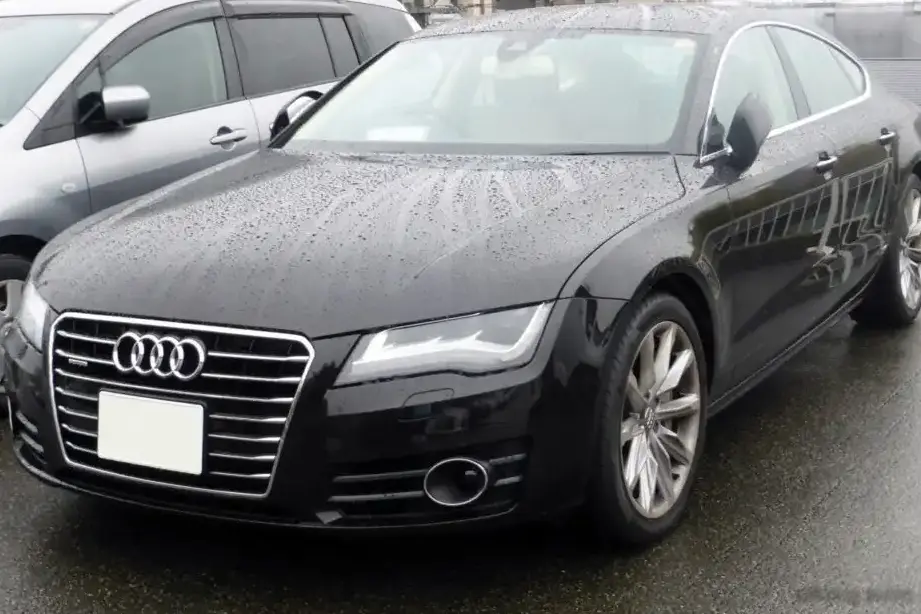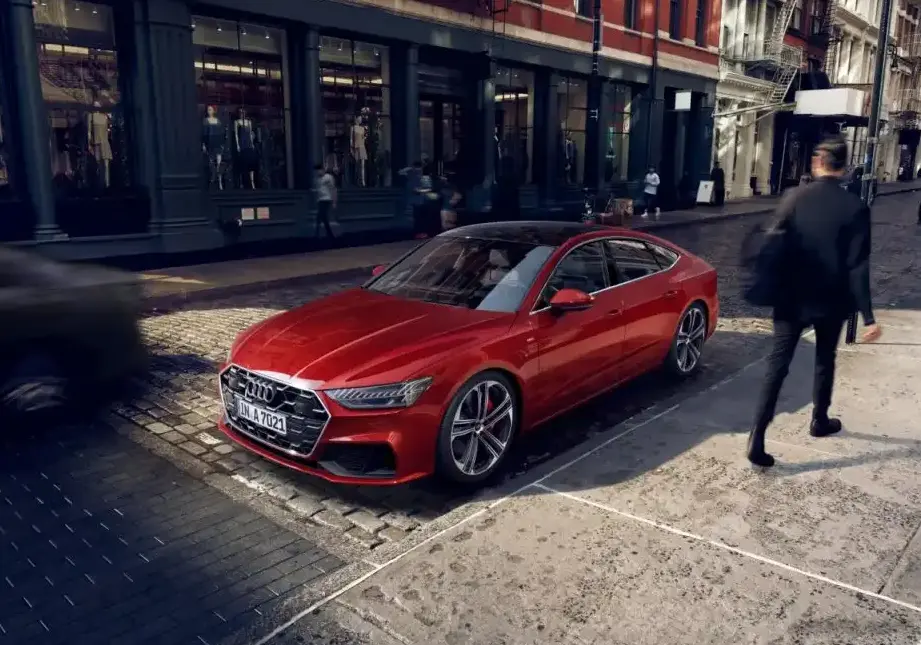
The Audi A7 Sportback (C8) facelift 40 TDI, produced from June 2023 to March 2025, represents a refined iteration of Audi’s luxury liftback. This variant, powered by a 2.0-liter turbocharged diesel engine producing 204 horsepower, occupies a key position in the A7 lineup, offering a balance between performance, efficiency, and technology. It’s positioned as a more accessible entry point into the A7 range compared to the higher-output 50 TDI and 55 TFSI models, targeting buyers prioritizing fuel economy and comfortable long-distance cruising. The “ultra” designation signifies Audi’s advanced quattro all-wheel-drive system with a focus on efficiency, and the S tronic transmission provides quick and smooth gear changes.
Technical Specifications
| Brand | Audi |
| Model | A7 |
| Generation | A7 Sportback (C8, facelift 2023) |
| Type (Engine) | 40 TDI (204 Hp) Mild Hybrid quattro ultra S tronic |
| Start of production | June, 2023 |
| End of production | March, 2025 |
| Powertrain Architecture | MHEV (Mild Hybrid Electric Vehicle) |
| Body type | Liftback |
| Seats | 5 |
| Doors | 5 |
| Combined fuel consumption (WLTP) | 5.5-6.3 l/100 km (42.8 – 37.3 US mpg, 51.4 – 44.8 UK mpg, 18.2 – 15.9 km/l) |
| CO2 emissions (WLTP) | 143-166 g/km |
| Fuel Type | Diesel |
| Acceleration 0 – 100 km/h | 7.6 sec |
| Acceleration 0 – 62 mph | 7.6 sec |
| Acceleration 0 – 60 mph | 7.2 sec |
| Maximum speed | 245 km/h (152.24 mph) |
| Emission standard | Euro 6e |
| Weight-to-power ratio | 8.7 kg/Hp, 115.6 Hp/tonne |
| Weight-to-torque ratio | 4.4 kg/Nm, 226.6 Nm/tonne |
| Net (usable) battery capacity | 0.15 kWh |
| Battery voltage | 12 V |
| Battery technology | Lithium-ion (Li-Ion) |
| Battery location | Under the front hood |
| Recuperation output | 6 kW |
| Electric motor power | 3 Hp |
| Electric motor Torque | 60 Nm (44.25 lb.-ft.) |
| Electric motor location | Front, Longitudinal |
| Power | 204 Hp @ 3800-4200 rpm |
| Torque | 400 Nm @ 1750-3250 rpm (295.02 lb.-ft. @ 1750-3250 rpm) |
| Engine layout | Front, Longitudinal |
| Engine Model/Code | EA288evo |
| Engine displacement | 1968 cm3 (120.09 cu. in.) |
| Number of cylinders | 4 |
| Engine configuration | Inline |
| Cylinder Bore | 81 mm (3.19 in.) |
| Piston Stroke | 95.5 mm (3.76 in.) |
| Compression ratio | 15.5:1 |
| Number of valves per cylinder | 4 |
| Fuel injection system | Diesel Commonrail |
| Engine aspiration | Turbocharger, Intercooler |
| Valvetrain | DOHC |
| Engine oil capacity | 5.5 l (5.81 US qt | 4.84 UK qt) |
| Coolant | 12.1 l (12.79 US qt | 10.65 UK qt) |
| Kerb Weight | 1765 kg (3891.16 lbs.) |
| Max. weight | 2435 kg (5368.26 lbs.) |
| Max load | 670 kg (1477.1 lbs.) |
| Trunk (boot) space – minimum | 535 l (18.89 cu. ft.) |
| Trunk (boot) space – maximum | 1390 l (49.09 cu. ft.) |
| Fuel tank capacity | 63 l (16.64 US gal | 13.86 UK gal) |
| AdBlue tank | 22 l (5.81 US gal | 4.84 UK gal) |
| Max. roof load | 90 kg (198.42 lbs.) |
| Permitted trailer load with brakes (8%) | 2000 kg (4409.25 lbs.) |
| Permitted trailer load with brakes (12%) | 2000 kg (4409.25 lbs.) |
| Permitted trailer load without brakes | 750 kg (1653.47 lbs.) |
| Permitted towbar download | 95 kg (209.44 lbs.) |
| Length | 4969 mm (195.63 in.) |
| Width | 1908 mm (75.12 in.) |
| Width including mirrors | 2118 mm (83.39 in.) |
| Height | 1422 mm (55.98 in.) |
| Wheelbase | 2926 mm (115.2 in.) |
| Front track | 1651 mm (65 in.) |
| Rear (Back) track | 1637 mm (64.45 in.) |
| Front overhang | 927 mm (36.5 in.) |
| Rear overhang | 1116 mm (43.94 in.) |
| Drag coefficient (Cd) | 0.26 |
| Minimum turning circle (turning diameter) | 12.4 m (40.68 ft.) |
| Approach angle | 12.2° |
| Departure angle | 16.7° |
| Drivetrain Architecture | ICE and electric motor drive front wheels, rear wheels engaged via clutch |
| Drive wheel | All wheel drive (4×4) |
| Number of gears and type of gearbox | 7 gears, automatic transmission S tronic |
| Front suspension | Independent multi-link suspension |
| Rear suspension | Independent multi-link suspension |
| Front brakes | Ventilated discs, 318 mm |
| Rear brakes | Disc, 300 mm |
| Tires size | 225/55 R18; 245/45 R19; 255/40 R20; 255/35 R21 |
| Wheel rims size | 8J x 18; 8.5J x 19; 8.5J x 20; 8.5J x 21 |
INTRODUCTION
The Audi A7 Sportback (C8) facelift 40 TDI, launched in mid-2023, builds upon the foundation of the C8 generation, which debuted in 2018. This model represents a mid-cycle refresh, incorporating updated styling, enhanced technology, and refined powertrain options. The 40 TDI variant, equipped with a 2.0-liter turbocharged diesel engine and a mild-hybrid system, is a key offering in Audi’s lineup, designed to appeal to buyers seeking a blend of luxury, efficiency, and all-weather capability. It slots below the more powerful 50 TDI and 55 TFSI models, providing a more accessible entry point into the A7 Sportback range. The vehicle is built on the Volkswagen Group’s MLB Evo platform (1HX0/A3), shared with other Audi, Porsche, and Volkswagen models.
Powertrain & Engine Architecture
At the heart of the A7 40 TDI lies the EA288evo 2.0-liter inline-four cylinder diesel engine. This engine utilizes a common-rail direct injection system, delivering fuel at extremely high pressures for optimized combustion. The turbocharger, coupled with an intercooler, enhances power output and efficiency. The engine produces 204 horsepower at 3800-4200 rpm and 400 Nm (295 lb-ft) of torque between 1750-3250 rpm. The mild-hybrid system, a 48-volt setup, incorporates a belt starter generator (BSG) that assists the engine during acceleration and allows for extended coasting with the engine switched off, improving fuel economy. The engine features a DOHC (Double Overhead Camshaft) valvetrain with four valves per cylinder. The engine is paired with Audi’s seven-speed S tronic dual-clutch transmission, known for its rapid and smooth gear changes. This transmission efficiently transfers power to all four wheels via Audi’s quattro all-wheel-drive system.
Driving Characteristics
The A7 40 TDI offers a comfortable and refined driving experience. While not as overtly sporty as the higher-powered variants, the 204 hp engine provides ample power for everyday driving and highway cruising. The S tronic transmission contributes to brisk acceleration, with a 0-60 mph time of around 7.2 seconds. The quattro all-wheel-drive system provides excellent traction in all weather conditions. The gear ratios are tuned for a balance between fuel efficiency and responsiveness. Compared to the 50 TDI, the 40 TDI feels less urgent in acceleration, but the difference is often negligible in real-world driving scenarios. The mild-hybrid system provides a subtle boost during acceleration and contributes to a smoother overall driving experience. The suspension is tuned for comfort, absorbing bumps and imperfections in the road effectively.
Equipment & Trim Levels
The A7 40 TDI typically comes well-equipped as standard. Key features include Audi’s Virtual Cockpit digital instrument cluster, a touchscreen infotainment system with navigation, leather upholstery, tri-zone automatic climate control, and a suite of driver-assistance systems such as adaptive cruise control, lane departure warning, and automatic emergency braking. Optional extras include upgraded leather packages, a Bang & Olufsen sound system, a head-up display, and matrix LED headlights. Trim levels vary by market, but generally offer increasing levels of luxury and technology. The base trim provides a comprehensive set of features, while higher trims add cosmetic enhancements and additional convenience features.
Chassis & Braking
The A7 40 TDI utilizes an independent multi-link suspension setup at both the front and rear axles, providing a comfortable and controlled ride. The suspension is tuned to balance handling and comfort, offering a stable and predictable driving experience. The braking system consists of ventilated discs at the front (318mm) and solid discs at the rear (300mm). ABS (Anti-lock Braking System) and electronic stability control are standard features. The steering is an electric power-assisted rack and pinion system, providing precise and responsive steering feel.
Market Reception & Comparison
The A7 40 TDI has been generally well-received by automotive critics. It’s praised for its refined driving experience, luxurious interior, and fuel efficiency. Compared to the higher-output A7 variants, the 40 TDI offers a more affordable entry point into the A7 range, making it an attractive option for buyers prioritizing value. Fuel economy is a strong point, with combined WLTP figures ranging from 5.5 to 6.3 l/100 km. Reliability is generally good, although diesel engines can be more complex to maintain than gasoline engines. Compared to competitors such as the BMW 5 Series and Mercedes-Benz E-Class, the A7 40 TDI offers a compelling combination of style, technology, and driving dynamics.
Legacy
The EA288 engine family, including the version used in the A7 40 TDI, has proven to be a durable and reliable powertrain. While early versions of the EA288 had some issues with diesel particulate filter (DPF) clogging, later iterations, like the evo version, have addressed these concerns. The S tronic transmission is also known for its reliability, provided it’s serviced according to Audi’s recommendations. In the used car market, the A7 40 TDI is likely to hold its value reasonably well, particularly well-maintained examples with a full service history. Its blend of luxury, efficiency, and all-wheel-drive capability makes it a desirable option for buyers seeking a premium executive car.