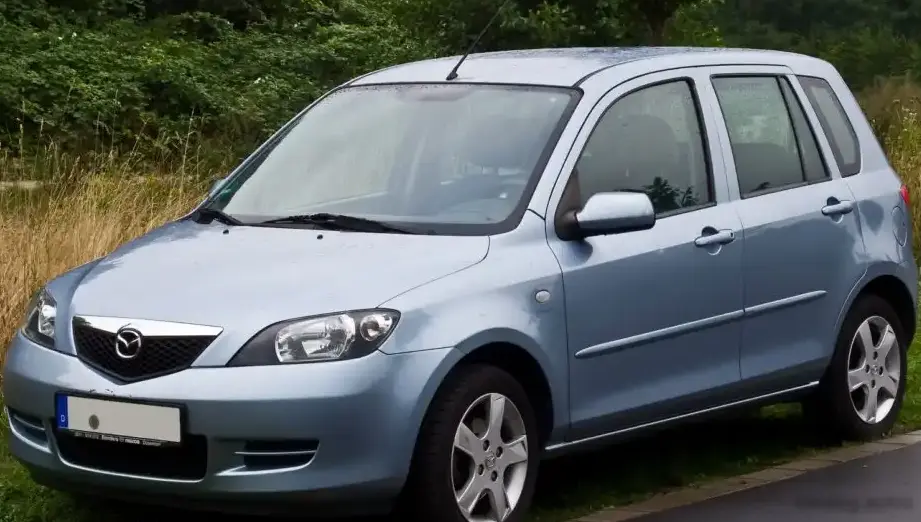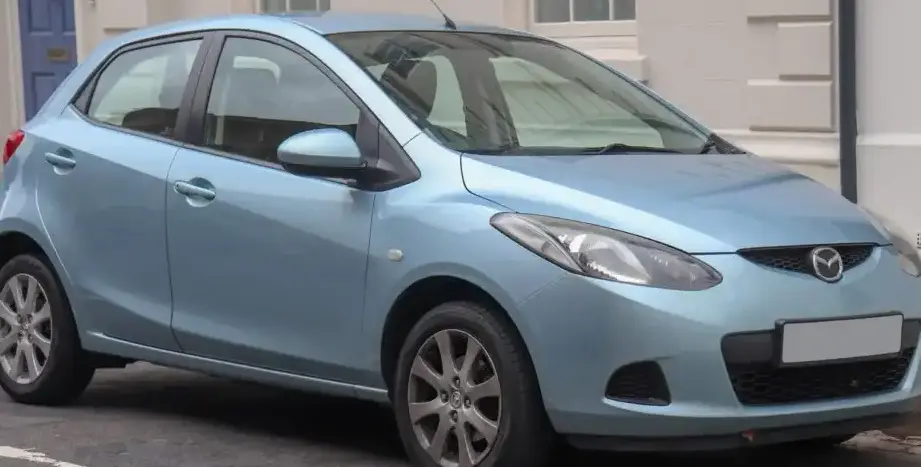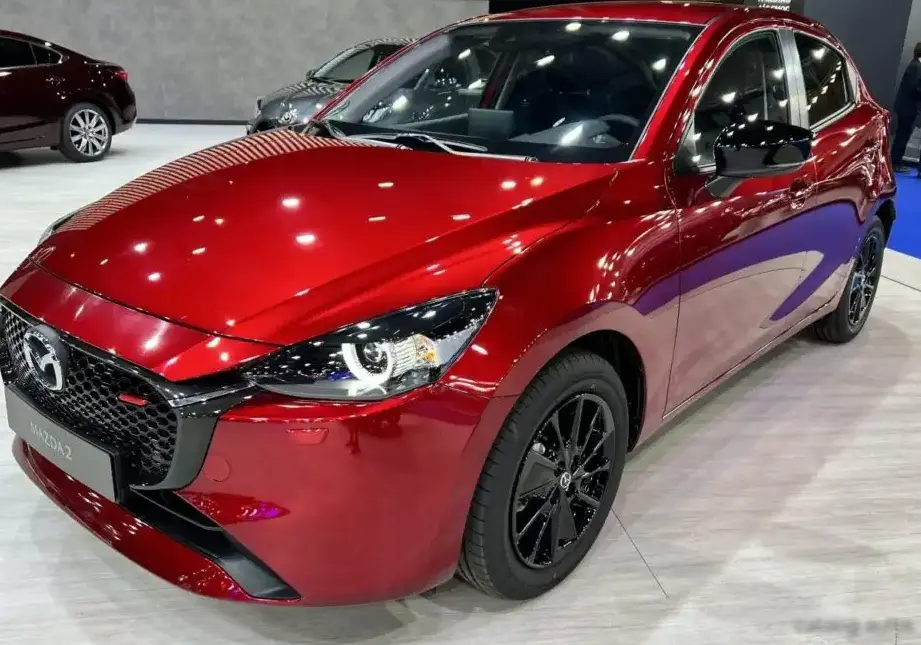
The Mazda 2 III (DJ), particularly the facelifted version introduced in 2019, represented Mazda’s continued refinement of the subcompact hatchback segment. The 1.5 Skyactiv-G (112 Hp) Activematic variant, produced from 2019 through March 2022, was a key offering within the DJ generation, designed to balance fuel efficiency with everyday usability. This model occupied a middle ground in the Mazda 2 lineup, offering a more accessible entry point than the higher-performance variants while providing a more refined experience than the base engine options. It was primarily marketed in Europe and Asia, where the demand for fuel-efficient and compact city cars is high.
Technical Specifications
| Brand | Mazda |
| Model | 2 |
| Generation | 2 III (DJ, facelift 2019) |
| Type (Engine) | 1.5 Skyactiv-G (112 Hp) Activematic |
| Start of production | 2019 |
| End of production | March, 2022 |
| Powertrain Architecture | Internal Combustion engine |
| Body type | Hatchback |
| Seats | 5 |
| Doors | 5 |
| Fuel consumption (urban) | 6.5 l/100 km (36.2 US mpg, 43.5 UK mpg, 15.4 km/l) |
| Fuel consumption (extra urban) | 4.6 l/100 km (51.1 US mpg, 61.4 UK mpg, 21.7 km/l) |
| Fuel consumption (combined) | 5.3 l/100 km (44.4 US mpg, 53.3 UK mpg, 18.9 km/l) |
| Fuel Type | Petrol (Gasoline) |
| Weight-to-power ratio | 9.6 kg/Hp, 104.7 Hp/tonne |
| Weight-to-torque ratio | 7.4 kg/Nm, 134.6 Nm/tonne |
| Power | 112 Hp @ 6000 rpm |
| Power per litre | 74.9 Hp/l |
| Torque | 144 Nm @ 4000 rpm (106.21 lb.-ft. @ 4000 rpm) |
| Engine layout | Front, Transverse |
| Engine displacement | 1496 cm3 (91.29 cu. in.) |
| Number of cylinders | 4 |
| Engine configuration | Inline |
| Cylinder Bore | 74.5 mm (2.93 in.) |
| Piston Stroke | 85.8 mm (3.38 in.) |
| Compression ratio | 13:1 |
| Number of valves per cylinder | 4 |
| Fuel injection system | Direct injection |
| Engine aspiration | Naturally aspirated engine |
| Valvetrain | DOHC, S-VT |
| Engine oil capacity | 4.2 l (4.44 US qt | 3.7 UK qt) |
| Coolant | 5.6 l (5.92 US qt | 4.93 UK qt) |
| Kerb Weight | 1070 kg (2358.95 lbs.) |
| Trunk (boot) space – minimum | 250 l (8.83 cu. ft.) |
| Fuel tank capacity | 44 l (11.62 US gal | 9.68 UK gal) |
| Permitted trailer load with brakes (12%) | 900 kg (1984.16 lbs.) |
| Permitted trailer load without brakes | 500 kg (1102.31 lbs.) |
| Permitted towbar download | 50 kg (110.23 lbs.) |
| Length | 4065 mm (160.04 in.) |
| Width | 1695 mm (66.73 in.) |
| Height | 1495 mm (58.86 in.) |
| Wheelbase | 2570 mm (101.18 in.) |
| Front track | 1495 mm (58.86 in.) |
| Rear (Back) track | 1485 mm (58.46 in.) |
| Ride height (ground clearance) | 143 mm (5.63 in.) |
| Minimum turning circle (turning diameter) | 9.4 m (30.84 ft.) |
| Drivetrain Architecture | The Internal combustion engine (ICE) drives the front wheels of the vehicle. |
| Drive wheel | Front wheel drive |
| Number of gears and type of gearbox | 6 gears, automatic transmission Activematic |
| Front suspension | Independent type McPherson |
| Rear suspension | Torsion |
| Front brakes | Ventilated discs, 258 mm |
| Rear brakes | Drum, 200 mm |
| Assisting systems | ABS (Anti-lock braking system) |
| Steering type | Steering rack and pinion |
| Power steering | Electric Steering |
| Tires size | 185/65 R15; 185/60 R16 |
| Wheel rims size | 5.5J x 155; 5.5J x 16 |
Powertrain & Engine Architecture
At the heart of the 2019 Mazda 2 1.5 Skyactiv-G Activematic lies the PE-VPH engine, a 1.5-liter inline-four cylinder gasoline engine. This engine is a cornerstone of Mazda’s Skyactiv technology, emphasizing high compression (13:1) and optimized combustion for improved efficiency and power. The engine utilizes direct injection, delivering fuel directly into the combustion chamber for precise control and reduced emissions. The DOHC (Double Overhead Camshaft) valvetrain, coupled with Mazda’s S-VT (Sequential Valve Timing) system, further enhances engine performance across the rev range. The Activematic transmission is a six-speed automatic, designed to provide smooth and responsive shifting. It’s not a traditional torque-converter automatic, but rather a continuously variable transmission (CVT) with a torque converter, offering a balance between efficiency and driving feel.
Driving Characteristics
The 112 hp output, combined with the Activematic transmission, delivers a comfortable and predictable driving experience. Acceleration is adequate for city driving and highway merging, though it won’t provide the sporty feel of the higher-output engine options. The Activematic transmission is programmed for fuel efficiency, meaning it prioritizes higher gears at lower speeds. This can sometimes result in a slight delay in response when accelerating quickly. Compared to the manual transmission versions of the 1.5L engine, the Activematic sacrifices some responsiveness for ease of use. The gear ratios are tuned to maximize fuel economy, which is a key selling point for this variant.
Equipment & Trim Levels
The 1.5 Skyactiv-G Activematic typically came equipped with a respectable level of standard features. These generally included air conditioning, power windows and mirrors, a basic audio system with USB connectivity, and safety features like ABS, stability control, and multiple airbags. Higher trim levels, often denoted by names like “Sport” or “Comfort,” added features such as alloy wheels, a touchscreen infotainment system, Bluetooth connectivity, and automatic climate control. Interior upholstery was typically cloth, with options for upgraded materials on higher trims.
Chassis & Braking
The Mazda 2’s chassis is designed for nimble handling and a comfortable ride. The front suspension utilizes an independent McPherson strut setup, while the rear employs a torsion beam axle. This configuration provides a good balance between ride quality and handling precision. The braking system features ventilated discs on the front wheels and drum brakes on the rear, which was typical for this weight class and price point. The electric power steering provides light and responsive steering feel, making it easy to maneuver in tight city streets.
Market Reception & Comparison
The 1.5 Skyactiv-G Activematic variant of the Mazda 2 was generally well-received by automotive critics. It was praised for its fuel efficiency, comfortable ride, and well-equipped interior. However, some reviewers noted that the engine lacked the punch of the higher-output options, and the Activematic transmission could feel somewhat sluggish at times. Compared to the 1.5L manual transmission version, the Activematic offered greater convenience but slightly reduced performance and fuel economy. Against competitors like the Volkswagen Polo, Ford Fiesta, and Toyota Yaris, the Mazda 2 stood out for its stylish design, engaging driving dynamics, and premium interior feel.
Legacy
The PE-VPH engine and Activematic transmission pairing in the Mazda 2 have proven to be relatively reliable. While some owners have reported minor issues with the transmission, such as occasional hesitation, these are generally not widespread or severe. The Skyactiv engine is known for its durability and longevity, provided it is properly maintained. In the used car market, the 2019-2022 Mazda 2 1.5 Skyactiv-G Activematic remains a popular choice for buyers seeking a fuel-efficient, reliable, and stylish subcompact hatchback. Its combination of practicality, affordability, and Mazda’s reputation for quality ensures its continued appeal for years to come.