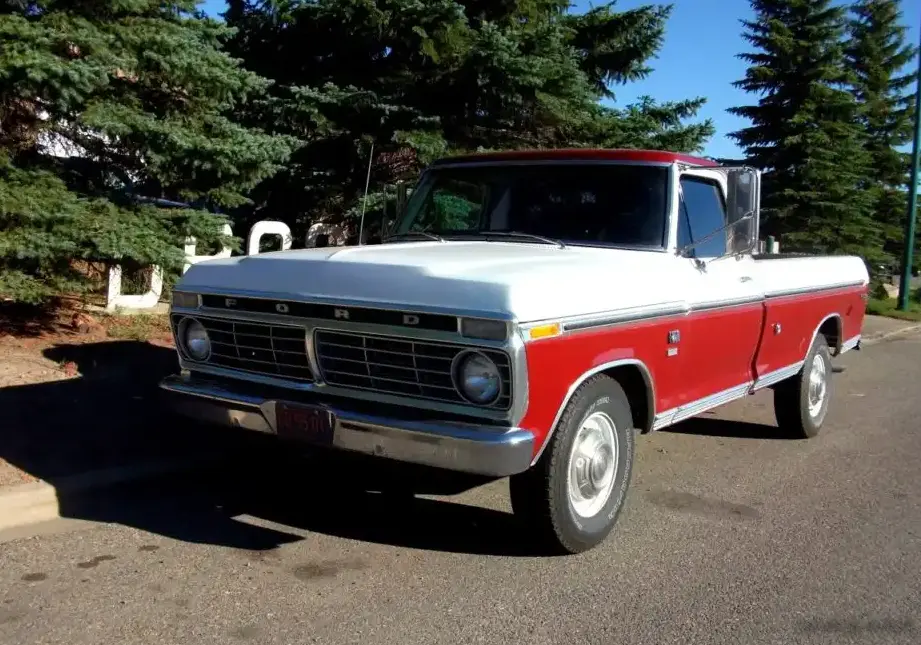
The Ford F-250 VI Regular Cab, specifically equipped with the 4.9-liter (300 cubic inch) inline-six engine producing 118 horsepower and a four-wheel-drive (4×4) drivetrain, represents a significant workhorse offering from Ford during the 1972-1974 model years. This variant occupied the entry-level position within the F-250 range, catering to buyers prioritizing durability and capability over outright performance. It was part of the sixth generation of the F-Series, known for its robust construction and increasing refinement compared to earlier iterations. This particular configuration was aimed at those needing a heavy-duty pickup for tasks like farming, ranching, or light commercial use, where a balance of cost and functionality was paramount.
Technical Specifications
| Brand | Ford |
| Model | F-Series F-250 |
| Generation | F-Series F-250 VI Regular Cab |
| Type (Engine) | 4.9 300 Six (118 Hp) 4×4 |
| Start of production | December, 1972 |
| End of production | 1974 |
| Powertrain Architecture | Internal Combustion engine |
| Body type | Pick-up |
| Seats | 3 |
| Doors | 2 |
| Fuel Type | Petrol (Gasoline) |
| Power | 118 Hp |
| Power per litre | 24 Hp/l |
| Engine layout | Front, Longitudinal |
| Engine displacement | 4916 cm3 / 299.99 cu. in. |
| Number of cylinders | 6 |
| Engine configuration | Inline |
| Cylinder Bore | 101.6 mm / 4 in. |
| Piston Stroke | 101.09 mm / 3.98 in. |
| Fuel injection system | Carburettor |
| Engine aspiration | Naturally aspirated engine |
| Max. weight | 3493 kg / 7700.75 lbs. |
| Trunk (boot) space – minimum | 1852-2070 l / 65.4 – 73.1 cu. ft. |
| Length | 5215 mm / 205.31 in. |
| Wheelbase | 3378 mm / 132.99 in. |
| Wading depth | 681 mm / 26.81 in. |
| Drivetrain Architecture | The Internal combustion engine (ICE) drives the rear wheels permanently, and the front wheels are driven through an electrically or mechanically operated clutch if necessary. |
| Drive wheel | All wheel drive (4×4) |
| Number of gears and type of gearbox | 4 gears, manual transmission |
| Front suspension | Independent coil spring |
| Rear suspension | Leaf spring |
| Front brakes | Disc |
| Rear brakes | Drum |
| Steering type | Worm-reduction unit |
| Power steering | Electric Steering |
| Tires size | 235/85 R16.5 |
| Wheel rims size | 6J x 16.5 |
Powertrain & Engine Architecture
The heart of this F-250 variant is the 4.9-liter (299 cubic inch) inline-six engine, often referred to as the “300 Six.” This engine, designated internally as the 300 I6, was renowned for its exceptional durability and longevity. It featured a cast-iron block and cylinder head, a simple overhead valve (OHV) valvetrain, and a single two-barrel carburetor. The carburetor provided fuel delivery, and while not offering the efficiency of modern fuel injection, it was reliable and relatively easy to maintain. The engine’s robust design and low compression ratio contributed to its ability to withstand high mileage and demanding conditions. The four-speed manual transmission was the standard offering, providing a direct mechanical connection to the drivetrain. This transmission was chosen for its simplicity and ability to handle the engine’s torque output in heavy-duty applications.
Driving Characteristics
The 118 horsepower and approximately 220 lb-ft of torque produced by the 4.9-liter engine translated to a utilitarian driving experience. Acceleration was modest, and the truck was not designed for speed. However, the engine’s low-end torque provided adequate pulling power for towing and hauling. The four-speed manual transmission allowed the driver to select appropriate gears for varying loads and terrain. The 4×4 system, typically engaged via a transfer case, provided enhanced traction in off-road conditions or slippery surfaces. Compared to the optional V8 engines available in the F-250 lineup, this inline-six version offered significantly less power, but it also delivered better fuel economy and a simpler mechanical layout. The V8s, while providing more performance, came with increased complexity and maintenance requirements.
Equipment & Trim Levels
The F-250 VI Regular Cab with the 4.9-liter engine was typically offered in a basic trim level. Standard features included a vinyl bench seat, a simple dashboard with basic gauges, and a functional interior designed for durability rather than luxury. Options were available, such as upgraded upholstery, a radio, and a heater. However, this variant was generally geared towards buyers who prioritized functionality and affordability. The absence of extensive trim and features kept the cost down, making it an attractive option for those needing a reliable work truck.
Chassis & Braking
The F-250 chassis was built for heavy-duty use. It featured a robust ladder frame construction, designed to withstand significant loads and stresses. The front suspension utilized independent coil springs, providing a relatively comfortable ride for a truck of this size. The rear suspension employed leaf springs, which were well-suited for carrying heavy payloads. Braking duties were handled by disc brakes at the front and drum brakes at the rear. While adequate for the truck’s weight and intended use, the braking system was not particularly sophisticated by modern standards. Power steering was available as an option, making maneuvering the large truck easier, especially in tight spaces.
Market Reception & Comparison
The 1972-1974 Ford F-250 with the 4.9-liter engine and 4×4 drivetrain was well-received by buyers seeking a dependable and affordable work truck. Critics acknowledged its durability and capability, but also noted its lack of refinement and modest performance. Compared to the V8-powered F-250 models, this variant offered a lower price point and better fuel economy, making it a popular choice for those who didn’t require the extra power. Its simplicity also meant lower maintenance costs and a reduced risk of mechanical failures.
Legacy
The 4.9-liter inline-six engine gained a legendary reputation for its longevity and reliability. Many examples of this engine are still in service today, often having accumulated hundreds of thousands of miles. The F-250 from this era remains a sought-after vehicle among collectors and enthusiasts who appreciate its rugged construction and classic styling. In the used car market, these trucks are valued for their simplicity, durability, and potential for restoration. While not offering the modern amenities and performance of contemporary pickups, the 1972-1974 Ford F-250 with the 4.9-liter engine represents a bygone era of robust and dependable work trucks.