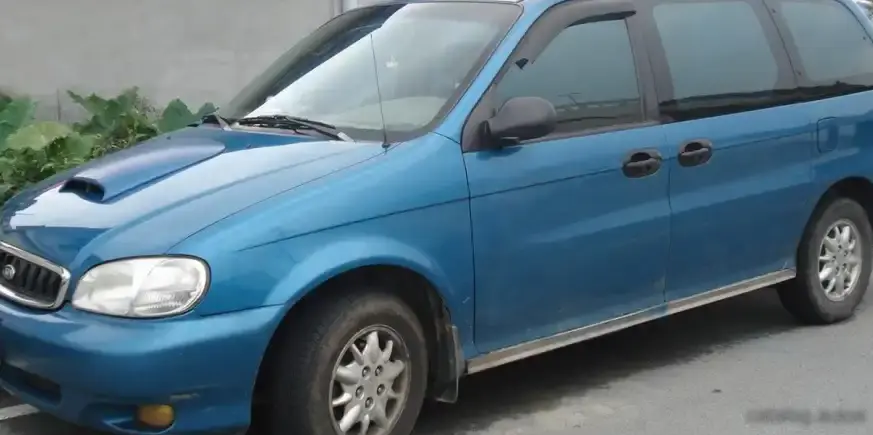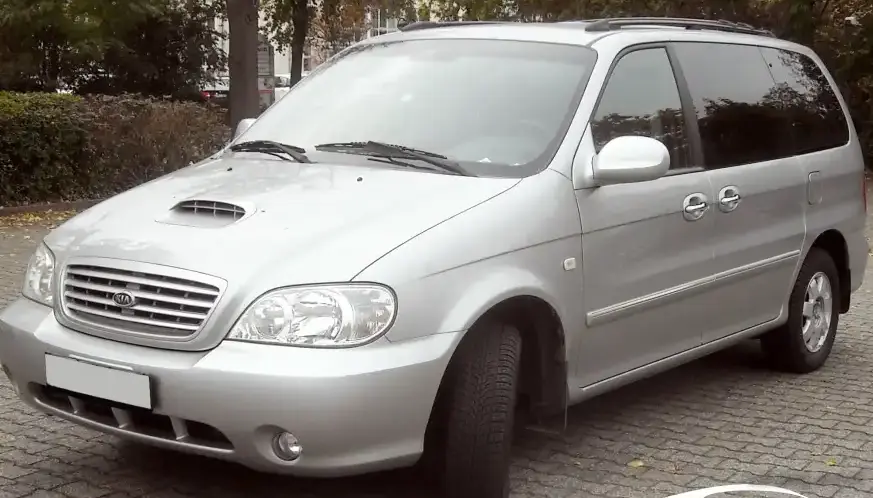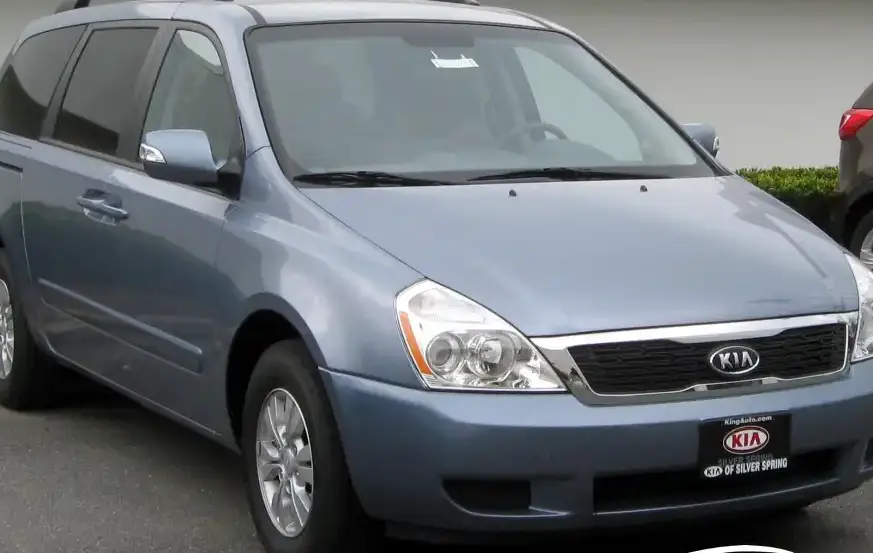
The Kia Carnival II, specifically the facelifted VQ model produced from 2010 to 2012, represented a significant step forward for Kia in the minivan segment. This iteration of the Carnival, sold primarily in markets outside of North America, aimed to provide a comfortable and practical family vehicle with a focus on value. The 2.7-liter V6 engine paired with a four-speed automatic transmission was a popular configuration, offering a balance between performance and fuel efficiency within the Carnival lineup. It sat as a mid-range offering, positioned above the base models with smaller engines and below the potentially available diesel variants in some markets.
Technical Specifications
| Brand | Kia |
| Model | Carnival |
| Generation | Carnival II (VQ, facelift 2010) |
| Type (Engine) | 2.7 V6 16V (189 Hp) Automatic |
| Start of production | 2010 |
| End of production | 2012 |
| Powertrain Architecture | Internal Combustion engine |
| Body type | Minivan |
| Seats | 7 |
| Doors | 5 |
| Fuel consumption (urban) | 12.3 l/100 km (19.1 US mpg, 23 UK mpg, 8.1 km/l) |
| Fuel consumption (extra urban) | 7 l/100 km (33.6 US mpg, 40.4 UK mpg, 14.3 km/l) |
| Fuel consumption (combined) | 9 l/100 km (26.1 US mpg, 31.4 UK mpg, 11.1 km/l) |
| Fuel Type | Petrol (Gasoline) |
| Acceleration 0 – 100 km/h | 12.9 sec |
| Acceleration 0 – 62 mph | 12.9 sec |
| Acceleration 0 – 60 mph | 12.3 sec |
| Maximum speed | 197 km/h (122.41 mph) |
| Emission standard | Euro 4 |
| Weight-to-power ratio | 10.8 kg/Hp, 92.6 Hp/tonne |
| Weight-to-torque ratio | 8.2 kg/Nm, 122.1 Nm/tonne |
| Power | 189 Hp @ 6000 rpm |
| Power per litre | 71.2 Hp/l |
| Torque | 249 Nm @ 4000 rpm (183.65 lb.-ft. @ 4000 rpm) |
| Engine layout | Front, Transverse |
| Engine Model/Code | Mu / G6EA |
| Engine displacement | 2656 cm3 (162.08 cu. in.) |
| Number of cylinders | 6 |
| Engine configuration | V-engine |
| Cylinder Bore | 86.7 mm (3.41 in.) |
| Piston Stroke | 75 mm (2.95 in.) |
| Compression ratio | 10.4:1 |
| Number of valves per cylinder | 4 |
| Fuel injection system | Multi-port manifold injection |
| Engine aspiration | Naturally aspirated engine |
| Valvetrain | DOHC |
| Engine oil capacity | 4.5 l (4.76 US qt | 3.96 UK qt) |
| Coolant capacity | 10.7 l (11.31 US qt | 9.41 UK qt) |
| Kerb Weight | 2040 kg (4497.43 lbs.) |
| Max. weight | 2785 kg (6139.87 lbs.) |
| Max load | 745 kg (1642.44 lbs.) |
| Trunk (boot) space – minimum | 364 l (12.85 cu. ft.) |
| Trunk (boot) space – maximum | 3440 l (121.48 cu. ft.) |
| Fuel tank capacity | 80 l (21.13 US gal | 17.6 UK gal) |
| Length | 4810 mm (189.37 in.) |
| Width | 1985 mm (78.15 in.) |
| Height | 1760 mm (69.29 in.) |
| Wheelbase | 2890 mm (113.78 in.) |
| Front track | 1685 mm (66.34 in.) |
| Rear (Back) track | 1685 mm (66.34 in.) |
| Drag coefficient (Cd) | 0.34 |
| Minimum turning circle | 11 m (36.09 ft.) |
| Drivetrain Architecture | The Internal combustion engine (ICE) drives the front wheels of the vehicle. |
| Drive wheel | Front wheel drive |
| Number of gears and type of gearbox | 4 gears, automatic transmission |
| Front suspension | Independent type McPherson |
| Rear suspension | Dependent spring suspension with transverse stabilizer |
| Front brakes | Ventilated discs |
| Rear brakes | Drum |
| Assisting systems | ABS (Anti-lock braking system) |
| Steering type | Steering rack and pinion |
| Tires size | 225/70 R16; 235/60 R17 |
| Wheel rims size | 16; 17 |
Powertrain & Engine Architecture
The heart of this Carnival variant is the Kia Mu engine, specifically the G6EA code. This 2.7-liter V6 is a naturally aspirated engine utilizing a 60-degree V-angle. It features a dual overhead camshaft (DOHC) valvetrain with four valves per cylinder, contributing to its respectable power output for its displacement. Fuel delivery is managed by a multi-port fuel injection system, a common setup for engines of this era. The engine’s design prioritized smooth operation and reliability over outright performance. The four-speed automatic transmission, while not the most modern, was chosen for its simplicity and cost-effectiveness. It provided relatively smooth shifts, but lacked the efficiency and responsiveness of more advanced transmissions found in later models.
Driving Characteristics
The 189 horsepower and 249 Nm (183.65 lb-ft) of torque delivered by the 2.7L V6 and four-speed automatic resulted in adequate, but not exhilarating, performance. Acceleration from 0-60 mph took around 12.3 seconds, making it suitable for everyday driving and family transportation. The automatic transmission’s gear ratios were tuned for comfort and fuel economy, rather than aggressive acceleration. Compared to potential manual transmission versions or higher-output engines (if offered in certain markets), this configuration felt less sporty and responsive. However, it offered a more relaxed driving experience, particularly in urban environments. The transmission’s shift points were designed to keep the engine within its optimal torque band for smooth cruising.
Equipment & Trim Levels
The 2.7 V6 Automatic Carnival typically came with a reasonable level of standard equipment. This included air conditioning, power windows and locks, a basic audio system, and standard safety features like ABS. Higher trim levels, often denoted by different names depending on the market, added features such as alloy wheels, upgraded audio systems, a sunroof, and leather upholstery. Interior upholstery was generally cloth in the base trims, with leather options available on higher-spec models. Dashboard configurations were relatively straightforward, prioritizing functionality and ease of use.
Chassis & Braking
The Carnival II utilized a front-engine, front-wheel-drive layout. The front suspension employed an independent McPherson strut setup, providing a comfortable ride and reasonable handling. The rear suspension featured a dependent spring suspension with a transverse stabilizer, which helped to reduce body roll during cornering. Braking duties were handled by ventilated discs at the front and drum brakes at the rear. While adequate for the vehicle’s weight and intended use, the rear drum brakes were a cost-saving measure and didn’t offer the same stopping power as disc brakes on all four wheels.
Market Reception & Comparison
The Kia Carnival II, and specifically the 2.7 V6 Automatic variant, was generally well-received as a practical and affordable family minivan. Critics praised its spacious interior, comfortable ride, and value for money. However, some noted that the engine lacked the refinement and power of some competitors, and the four-speed automatic transmission felt dated compared to newer offerings. Fuel economy was considered average for its class. Compared to diesel variants, the petrol engine offered a quieter and smoother driving experience, but at the cost of fuel efficiency. Against competitors like the Toyota Sienna or Honda Odyssey (not widely available in all markets where the Carnival was sold), the Carnival offered a more budget-friendly option.
Legacy
The 2.7-liter Mu V6 engine, while not known for being exceptionally groundbreaking, proved to be a relatively reliable powertrain when properly maintained. Common issues included occasional oil leaks and sensor failures, but these were generally not major concerns. The four-speed automatic transmission also proved durable, although it could exhibit some wear and tear over time. In the used car market, the Carnival II 2.7 V6 Automatic remains a popular choice for budget-conscious buyers seeking a spacious and practical family vehicle. Its affordability and relatively simple mechanical design make it an attractive option for those looking for a reliable and easy-to-maintain minivan.