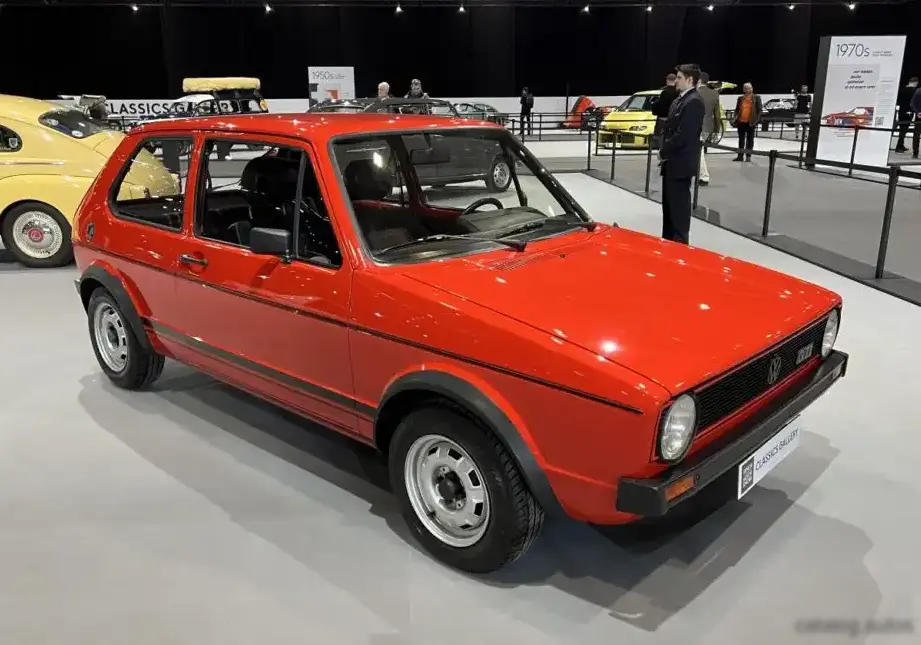
The Volkswagen Golf IV Variant 2.0i 4motion, produced between April 2000 and June 2001, represents a compelling blend of practicality, performance, and all-weather capability within the fourth generation Golf lineup. Positioned as a mid-range offering in the Variant (estate) body style, it catered to buyers seeking a versatile family vehicle with enhanced traction. This model occupied a space between the more economical base engines and the higher-performance GTI variants, offering a balance of features and driving experience. It was primarily sold in the European market, where station wagons held a significant share of the family car segment.
Technical Specifications
| Brand | Volkswagen |
| Model | Golf |
| Generation | Golf IV Variant |
| Type (Engine) | 2.0 i (116 Hp) 4motion |
| Start of production | April, 2000 |
| End of production | June, 2001 |
| Powertrain Architecture | Internal Combustion engine |
| Body type | Station wagon (estate) |
| Seats | 5 |
| Doors | 5 |
| Fuel consumption (urban) | 11.7 l/100 km (20.1 US mpg) |
| Fuel consumption (extra urban) | 7 l/100 km (33.6 US mpg) |
| Fuel Type | Petrol (Gasoline) |
| Acceleration 0 – 100 km/h | 12 sec |
| Acceleration 0 – 62 mph | 12 sec |
| Acceleration 0 – 60 mph | 11.4 sec |
| Maximum speed | 192 km/h (119.3 mph) |
| Weight-to-power ratio | 11.9 kg/Hp |
| Weight-to-torque ratio | 8.3 kg/Nm |
| Power | 116 Hp @ 5400 rpm |
| Torque | 166 Nm @ 3600 rpm (122.44 lb.-ft. @ 3600 rpm) |
| Engine layout | Front, Transverse |
| Engine Model/Code | APK, AQY, AZJ |
| Engine displacement | 1984 cm3 (121.07 cu. in.) |
| Number of cylinders | 4 |
| Engine configuration | Inline |
| Cylinder Bore | 82.5 mm (3.25 in.) |
| Piston Stroke | 92.8 mm (3.65 in.) |
| Compression ratio | 10:1 |
| Number of valves per cylinder | 2 |
| Fuel injection system | Multi-port manifold injection |
| Engine aspiration | Naturally aspirated engine |
| Valvetrain | OHC |
| Engine oil capacity | 4 l (4.23 US qt | 3.52 UK qt) |
| Coolant | 5 l (5.28 US qt | 4.4 UK qt) |
| Kerb Weight | 1385 kg (3053.4 lbs.) |
| Max. weight | 1920 kg (4232.88 lbs.) |
| Max load | 535 kg (1179.47 lbs.) |
| Trunk (boot) space – minimum | 360 l (12.71 cu. ft.) |
| Trunk (boot) space – maximum | 1370 l (48.38 cu. ft.) |
| Fuel tank capacity | 62 l (16.38 US gal | 13.64 UK gal) |
| Length | 4397 mm (173.11 in.) |
| Width | 1735 mm (68.31 in.) |
| Height | 1473 mm (57.99 in.) |
| Wheelbase | 2518 mm (99.13 in.) |
| Front track | 1513 mm (59.57 in.) |
| Rear (Back) track | 1487 mm (58.54 in.) |
| Drive wheel | All wheel drive (4×4) |
| Number of gears | 5 gears, manual transmission |
| Front suspension | Spring Strut |
| Rear suspension | Coil spring |
| Front brakes | Ventilated discs |
| Rear brakes | Disc |
| Assisting systems | ABS (Anti-lock braking system) |
| Steering type | Steering rack and pinion |
| Power steering | Hydraulic Steering |
| Tires size | 195/65 R15 |
| Wheel rims size | 6J x 15 |
Powertrain & Engine Architecture
The heart of the Golf IV Variant 2.0i 4motion is the 1.8-liter inline-four cylinder gasoline engine, identified by engine codes APK, AQY, or AZJ depending on specific calibration and market. This engine belongs to Volkswagen’s EA827 family, known for its relatively simple and robust design. It utilizes a multi-port fuel injection system, delivering fuel directly into the intake ports, and a single overhead camshaft (OHC) operating two valves per cylinder. The 2.0-liter displacement provides a noticeable step up in power compared to the base 1.4 and 1.6-liter engines offered in the Golf IV range. The engine’s 116 horsepower at 5400 rpm and 166 Nm (122 lb-ft) of torque at 3600 rpm are respectable figures for its time, providing adequate performance for everyday driving and highway cruising. The engine is transversely mounted, a common layout for front-wheel-drive and all-wheel-drive Volkswagen models. The 4motion system utilizes a viscous coupling to distribute power between the front and rear axles, providing enhanced traction in slippery conditions. The standard transmission for this variant was a five-speed manual, although an optional four-speed automatic transmission was also available.
Driving Characteristics
The 2.0i 4motion variant offers a balanced driving experience. While not a sports car, the engine provides sufficient power for confident acceleration and overtaking maneuvers. The five-speed manual transmission allows for precise control, while the optional automatic provides convenience, albeit with a slight reduction in responsiveness. The 4motion all-wheel-drive system significantly improves traction, particularly on wet or loose surfaces. Compared to the front-wheel-drive Golf IV variants, the 2.0i 4motion exhibits reduced understeer and enhanced stability. However, the added weight of the 4motion system and the more powerful engine do result in slightly higher fuel consumption compared to the base models. The gear ratios are tuned for a balance of fuel efficiency and usable power, with a relatively tall fifth gear for relaxed highway cruising.
Equipment & Trim Levels
The Golf IV Variant 2.0i 4motion typically came equipped with a reasonable level of standard features. This included power windows, central locking, power steering, and an anti-lock braking system (ABS). Interior upholstery was typically cloth, with options for upgraded materials. Dashboard configuration was consistent with other Golf IV variants, featuring a straightforward layout with easy-to-read gauges. Optional extras included air conditioning, a sunroof, alloy wheels, and a radio/cassette player (or CD player in later models). The trim level could vary depending on the market, but generally, the 2.0i 4motion sat in the mid-range of the Golf IV Variant lineup, offering a step up in features and performance compared to the base models.
Chassis & Braking
The Golf IV Variant 2.0i 4motion utilizes a MacPherson strut front suspension and a multi-link rear suspension, providing a comfortable ride and good handling characteristics. The suspension is tuned to balance ride comfort with body control. Braking duties are handled by ventilated discs at the front and solid discs at the rear. The ABS system helps to prevent wheel lockup during hard braking, enhancing safety. Stabilizer bars are fitted to both the front and rear axles to reduce body roll during cornering. The chassis is reinforced to accommodate the added weight and stresses associated with the 4motion system.
Market Reception & Comparison
The Golf IV Variant 2.0i 4motion was generally well-received by automotive critics. It was praised for its practicality, comfortable ride, and enhanced traction. However, some critics noted that the engine could feel slightly underpowered when fully loaded or driving uphill. Compared to the more powerful GTI variants, the 2.0i 4motion offered a more refined and fuel-efficient driving experience. Compared to the 1.9 TDI diesel variants, the 2.0i 4motion provided quicker acceleration but at the expense of fuel economy. The 4motion system added a premium to the price, making it a more expensive option than the front-wheel-drive variants.
Legacy
The Golf IV Variant 2.0i 4motion has proven to be a relatively reliable vehicle over the long term. The EA827 engine is known for its durability, and the 4motion system is generally robust. However, like all vehicles of this age, regular maintenance is essential to prevent issues. Common maintenance items include timing belt replacement, oil changes, and inspection of the suspension components. Today, the Golf IV Variant 2.0i 4motion remains a popular choice in the used car market, particularly among buyers seeking a practical and reliable estate car with all-wheel-drive capability. Its blend of practicality, performance, and durability has ensured its continued relevance in the automotive landscape.