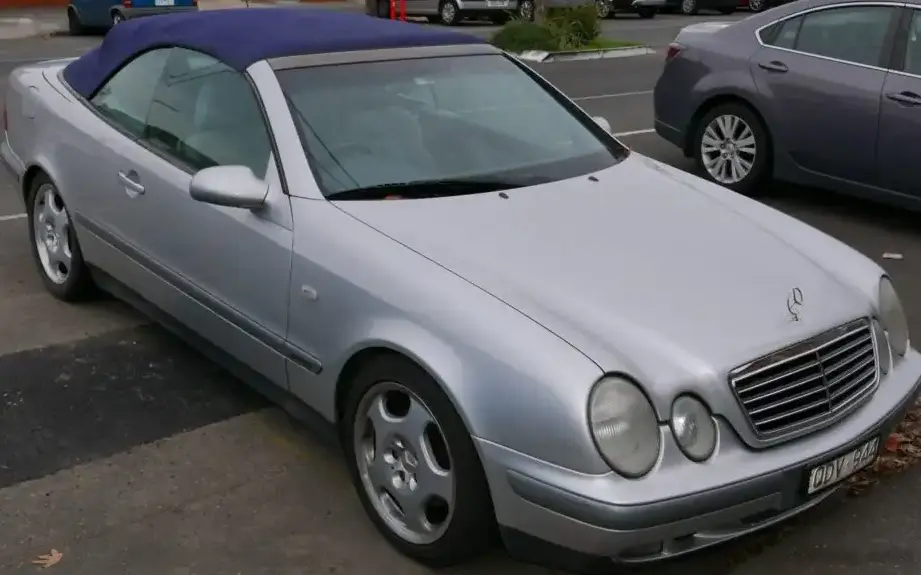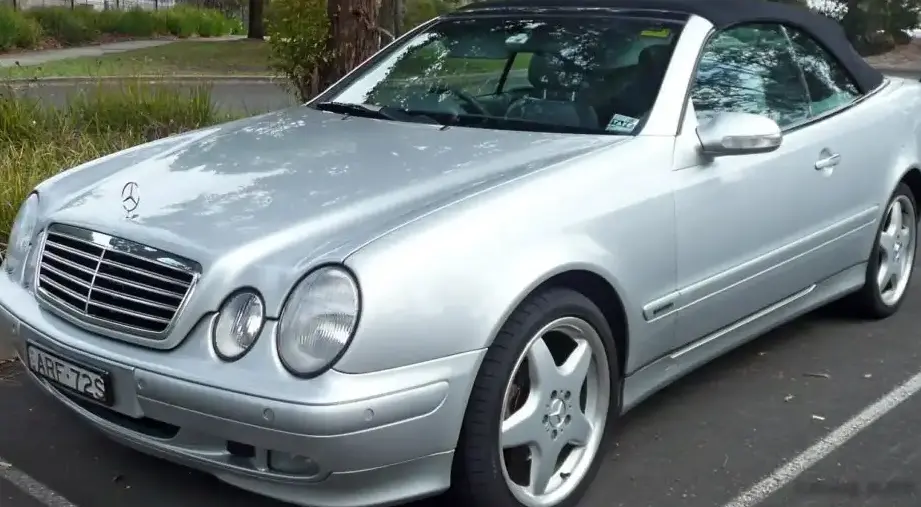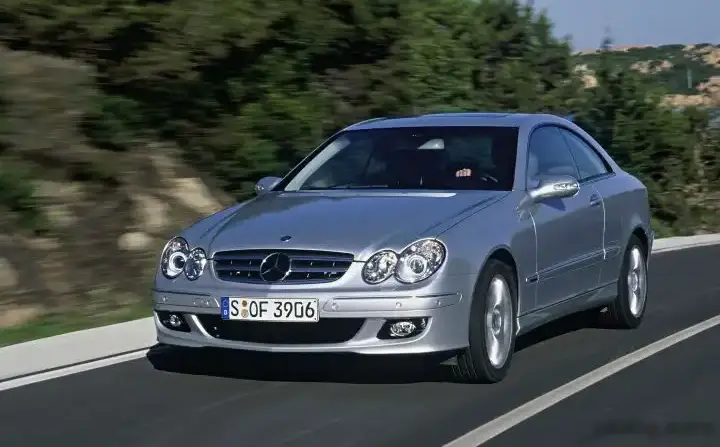
The Mercedes-Benz CLK 500, produced from 2005 to 2006 as part of the C209 facelift generation, represented the performance pinnacle of the CLK coupe and convertible range. Positioned as the flagship model, it offered a substantial upgrade in power and refinement compared to the more common CLK 320 and CLK 280 variants. This model year saw a significant refresh of the C209 platform, introducing styling updates and technological enhancements. The CLK 500 aimed to deliver a grand touring experience, blending Mercedes-Benz luxury with potent V8 performance.
Technical Specifications
| Brand | Mercedes-Benz |
| Model | CLK |
| Generation | CLK (C209, facelift 2005) |
| Type | CLK 500 (306 Hp) 7G-TRONIC |
| Start of production | 2005 |
| End of production | 2006 |
| Powertrain Architecture | Internal Combustion engine |
| Body type | Coupe |
| Seats | 4 |
| Doors | 2 |
| Fuel consumption (urban) | 16-16.8 l/100 km (14.7 – 14 US mpg, 17.7 – 16.8 UK mpg, 6.3 – 6 km/l) |
| Fuel consumption (extra urban) | 8-8.2 l/100 km (29.4 – 28.7 US mpg, 35.3 – 34.4 UK mpg, 12.5 – 12.2 km/l) |
| Fuel consumption (combined) | 10.9-11.4 l/100 km (21.6 – 20.6 US mpg, 25.9 – 24.8 UK mpg, 9.2 – 8.8 km/l) |
| CO2 emissions | 260 g/km |
| Fuel Type | Petrol (Gasoline) |
| Acceleration 0 – 100 km/h | 5.9 sec |
| Acceleration 0 – 62 mph | 5.9 sec |
| Acceleration 0 – 60 mph | 5.6 sec |
| Maximum speed | 250 km/h (155.34 mph) – Electronically limited |
| Emission standard | Euro 4 |
| Weight-to-power ratio | 5.2 kg/Hp |
| Weight-to-torque ratio | 3.4 kg/Nm |
| Power | 306 Hp @ 5600 rpm |
| Torque | 460 Nm @ 2700-4250 rpm (339.28 lb.-ft. @ 2700-4250 rpm) |
| Engine layout | Front, Longitudinal |
| Engine Model/Code | M 113.968 |
| Engine displacement | 4966 cm3 (303.04 cu. in.) |
| Number of cylinders | 8 |
| Engine configuration | V-engine |
| Cylinder Bore | 97 mm (3.82 in.) |
| Piston Stroke | 84 mm (3.31 in.) |
| Compression ratio | 10:1 |
| Number of valves per cylinder | 4 |
| Fuel injection system | Multi-port manifold injection |
| Engine aspiration | Naturally aspirated |
| Valvetrain | DOHC |
| Engine oil capacity | 7.5 l (7.93 US qt | 6.6 UK qt) |
| Coolant capacity | 11.5 l (12.15 US qt | 10.12 UK qt) |
| Kerb Weight | 1585 kg (3494.33 lbs.) |
| Max. weight | 2115 kg (4662.78 lbs.) |
| Max load | 530 kg (1168.45 lbs.) |
| Trunk (boot) space (minimum) | 435 l (15.36 cu. ft.) |
| Fuel tank capacity | 62 l (16.38 US gal | 13.64 UK gal) |
| Max. roof load | 100 kg (220.46 lbs.) |
| Permitted trailer load (with brakes) | 1500 kg (3306.93 lbs.) |
| Permitted trailer load (without brakes) | 750 kg (1653.47 lbs.) |
| Length | 4652 mm (183.15 in.) |
| Width | 1740 mm (68.5 in.) |
| Width including mirrors | 1991 mm (78.39 in.) |
| Height | 1415 mm (55.71 in.) |
| Wheelbase | 2715 mm (106.89 in.) |
| Front track | 1497 mm (58.94 in.) |
| Rear track | 1478 mm (58.19 in.) |
| Drag coefficient (Cd) | 0.28 |
| Minimum turning circle | 10.76 m (35.3 ft.) |
| Drivetrain | Rear wheel drive |
| Gearbox | 7 gears, automatic transmission 7G-TRONIC |
| Front suspension | Independent type McPherson, Transverse stabilizer |
| Rear suspension | Independent multi-link suspension, Transverse stabilizer |
| Front brakes | Ventilated discs |
| Rear brakes | Ventilated discs |
| Assisting systems | ABS (Anti-lock braking system) |
| Steering type | Steering rack and pinion |
| Power steering | Hydraulic |
| Tires size (Front) | 225/45 R 17 |
| Tires size (Rear) | 245/40 R 17 |
| Wheel rims size (Front) | 7.5 J x 17 |
| Wheel rims size (Rear) | 8.5 J x 17 |
Powertrain & Engine Architecture
The heart of the CLK 500 is the M113.968 5.0-liter naturally aspirated V8 engine. This engine, a staple of Mercedes-Benz performance models in the early 2000s, features a three-valve-per-cylinder design (two intake, one exhaust) and multi-port fuel injection. The engine produces 306 horsepower at 5600 rpm and 460 Nm (339 lb-ft) of torque between 2700 and 4250 rpm. The 7G-TRONIC automatic transmission, a seven-speed unit, was standard. This transmission offered smoother shifts and improved fuel efficiency compared to the older five-speed automatic it replaced. The transmission’s gear ratios were tuned to balance performance with comfortable cruising, providing quick downshifts for overtaking and efficient higher gears for highway driving.
Driving Characteristics
The CLK 500 delivered a distinctly different driving experience compared to the four-cylinder and V6-powered CLK models. The V8 provided effortless acceleration, with a 0-60 mph time of around 5.6 seconds. While not a dedicated sports car, the CLK 500 offered a satisfying level of performance for a grand tourer. The 7G-TRONIC transmission contributed to a refined driving experience, with smooth and almost imperceptible gear changes. Compared to the manual transmission options available on the CLK 320, the 7G-TRONIC prioritized comfort and ease of use over outright driver engagement. The heavier V8 engine did slightly impact handling balance, but the well-tuned suspension minimized body roll and provided a comfortable ride.
Equipment & Trim Levels
The CLK 500 came standard with a comprehensive list of features, befitting its flagship status. These included leather upholstery, wood trim, automatic climate control, a premium sound system, and power-adjustable seats. Optional extras included a panoramic sunroof, upgraded audio systems, and various driver assistance features. The interior design was typical of Mercedes-Benz at the time, emphasizing luxury and comfort. The dashboard layout was clean and functional, with intuitive controls. The CLK 500 was generally offered with a limited number of customization options, focusing on enhancing the existing luxury appointments.
Chassis & Braking
The CLK 500 utilized a McPherson strut front suspension and a multi-link rear suspension, providing a good balance of ride comfort and handling. Stabilizer bars were fitted to both axles to reduce body roll. The braking system consisted of ventilated disc brakes on all four wheels, providing ample stopping power. ABS (Anti-lock Braking System) was standard. The suspension was tuned to accommodate the increased weight of the V8 engine, offering a slightly firmer ride compared to the lighter CLK models. The steering was hydraulically assisted, providing a responsive and precise feel.
Market Reception & Comparison
The CLK 500 was generally well-received by automotive critics, who praised its powerful engine, refined transmission, and luxurious interior. However, some reviewers noted that its fuel economy was relatively poor, and its handling was not as sharp as some of its competitors. Compared to the CLK 320, the CLK 500 offered a significant performance upgrade, but at a higher price point. The CLK 500 also competed with other grand tourers, such as the BMW 6 Series and the Porsche 911, but offered a more comfortable and luxurious experience.
Legacy
The M113 V8 engine used in the CLK 500 is known for its reliability and durability, provided it receives regular maintenance. While the engine is relatively complex, it is generally considered to be robust and long-lasting. The 7G-TRONIC transmission has also proven to be reliable, although some units may require fluid changes and occasional servicing. Today, the CLK 500 is a sought-after model among Mercedes-Benz enthusiasts, offering a blend of performance, luxury, and classic styling. Well-maintained examples command a premium in the used car market, appealing to those seeking a comfortable and capable grand tourer with a distinctive V8 soundtrack.