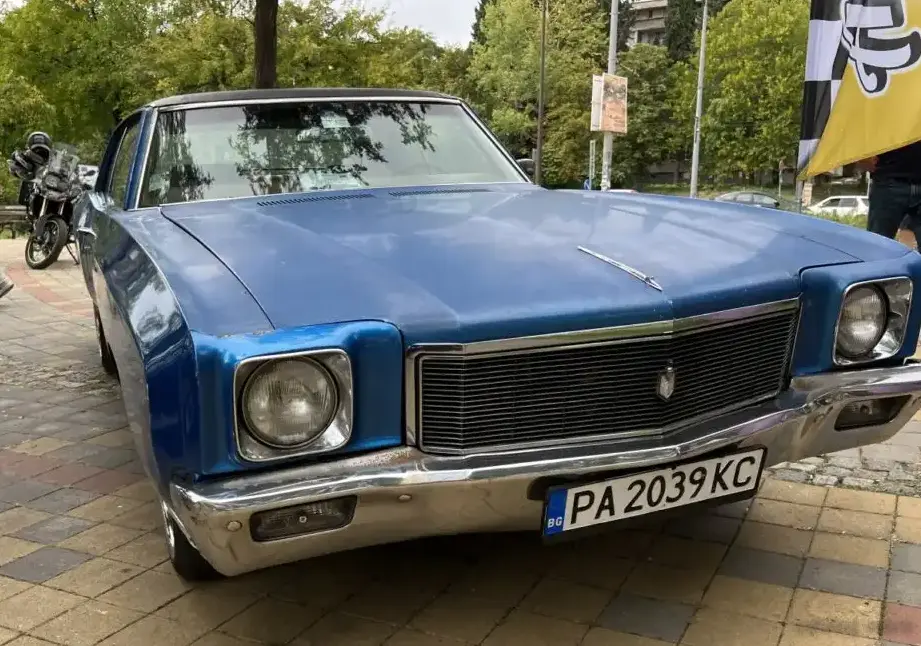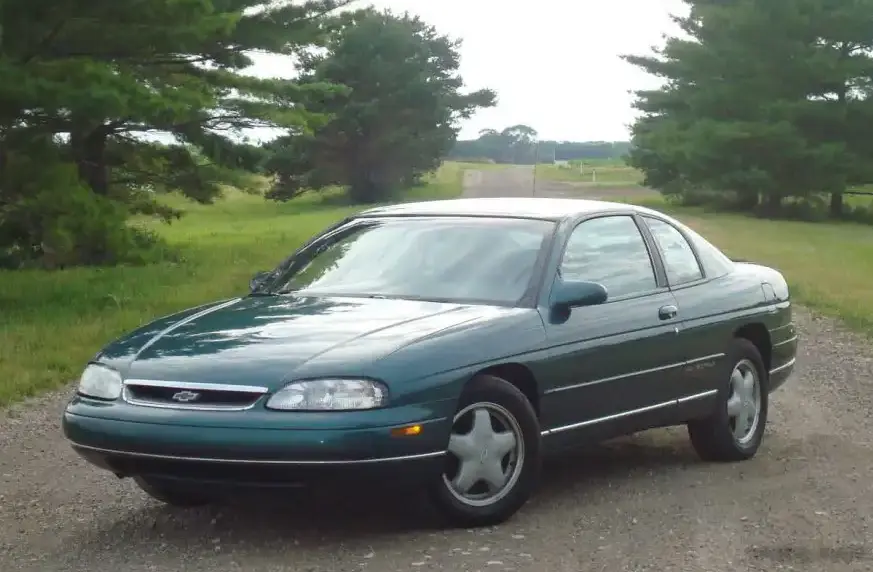
The Chevrolet Monte Carlo VI (1W), produced from 1999 to 2004, represented a significant shift for the iconic nameplate. Moving away from its traditional rear-wheel-drive layout, the sixth generation Monte Carlo adopted a front-wheel-drive configuration based on the GM W-body platform, shared with models like the Buick Regal and Pontiac Grand Prix. The 3.4 i V6 (182 Hp) variant occupied a middle ground in the lineup, offering a balance between affordability and performance, aimed at buyers seeking a comfortable and stylish coupe without the expense of the higher-trim LS or SS models. This version was a mainstay of the Monte Carlo range during its production run, appealing to a broad customer base.
Technical Specifications
| Brand | Chevrolet |
| Model | Monte Carlo |
| Generation | Monte Carlo VI (1W) |
| Type (Engine) | 3.4 i V6 (182 Hp) |
| Start of production | 1999 |
| End of production | 2004 |
| Powertrain Architecture | Internal Combustion engine |
| Body type | Coupe |
| Seats | 5 |
| Doors | 2 |
| Fuel consumption (urban) | 11.2 l/100 km (21 US mpg) |
| Fuel consumption (extra urban) | 7.4 l/100 km (31.8 US mpg) |
| Fuel consumption (combined) | 9.1 l/100 km (25.8 US mpg) |
| Fuel Type | Petrol (Gasoline) |
| Acceleration 0 – 100 km/h | 10 sec |
| Acceleration 0 – 62 mph | 10 sec |
| Acceleration 0 – 60 mph | 9.5 sec |
| Maximum speed | 180 km/h (111.85 mph) |
| Weight-to-power ratio | 8.5 kg/Hp |
| Weight-to-torque ratio | 5.5 kg/Nm |
| Power | 182 Hp @ 5200 rpm |
| Torque | 279 Nm @ 4000 rpm (205.78 lb.-ft. @ 4000 rpm) |
| Engine layout | Front, Transverse |
| Engine Model/Code | LA1 |
| Engine displacement | 3350 cm3 (204.43 cu. in.) |
| Number of cylinders | 6 |
| Engine configuration | V-engine |
| Cylinder Bore | 92 mm (3.62 in.) |
| Piston Stroke | 84 mm (3.31 in.) |
| Compression ratio | 9.6:1 |
| Number of valves per cylinder | 2 |
| Fuel injection system | Multi-port manifold injection |
| Engine aspiration | Naturally aspirated engine |
| Engine oil capacity | 4.1 l (4.33 US qt | 3.61 UK qt) |
| Coolant capacity | 10.7 l (11.31 US qt | 9.41 UK qt) |
| Kerb Weight | 1540 kg (3395.12 lbs.) |
| Trunk (boot) space (minimum) | 447 l (15.79 cu. ft.) |
| Fuel tank capacity | 64 l (16.91 US gal | 14.08 UK gal) |
| Length | 5027 mm (197.91 in.) |
| Width | 1847 mm (72.72 in.) |
| Height | 1402 mm (55.2 in.) |
| Wheelbase | 2807 mm (110.51 in.) |
| Front track | 1575 mm (62.01 in.) |
| Rear track | 1560 mm (61.42 in.) |
| Drivetrain Architecture | Front wheel drive |
| Number of gears | 4 |
| Gearbox type | Automatic transmission |
| Front suspension | Coil spring |
| Rear suspension | Coil spring |
| Front brakes | Ventilated discs |
| Rear brakes | Disc |
| Assisting systems | ABS (Anti-lock braking system) |
| Steering type | Steering rack and pinion |
| Power steering | Hydraulic Steering |
| Tires size | 225/60 R16 |
| Wheel rims size | 6.5J x 16 |
Powertrain & Engine Architecture
The heart of the 3.4 i variant was the LA1 engine, a 3.4-liter (204.43 cubic inches) 60-degree V6. This engine utilized a cast iron block with aluminum cylinder heads, a common configuration for GM’s V6 engines of the era. The LA1 featured a multi-port fuel injection system, delivering fuel directly to each intake port for improved efficiency and power delivery. The valvetrain employed two valves per cylinder, operated by a single overhead camshaft. The 4L60-E four-speed automatic transmission was the sole transmission option for this trim. This transmission was known for its smooth shifting characteristics, but wasn’t particularly sporty or fuel-efficient compared to later designs. The engine’s 9.6:1 compression ratio was a compromise between performance and the ability to run on readily available 87-octane gasoline.
Driving Characteristics
The 182 horsepower and 205 lb-ft of torque produced by the 3.4L V6, when paired with the 4L60-E automatic, resulted in respectable, though not exhilarating, performance. Acceleration from 0-60 mph took around 9.5 seconds, making it competitive with other mid-size coupes of the time. The automatic transmission’s gear ratios were tuned for comfortable cruising rather than aggressive acceleration. Compared to the higher-output 3.8L V6 found in the LS and SS trims, the 3.4L felt noticeably less powerful, especially during highway passing maneuvers. However, the 3.4L offered a smoother and more relaxed driving experience, particularly in city traffic. The front-wheel-drive configuration provided good traction in most conditions, but lacked the balanced handling of a rear-wheel-drive platform.
Equipment & Trim Levels
The 3.4 i V6 Monte Carlo typically came standard with features like air conditioning, power windows and locks, a CD player, and cloth upholstery. Optional extras included leather seats, a sunroof, upgraded sound systems, and alloy wheels. The interior design was generally straightforward and functional, with a focus on comfort. The dashboard featured analog gauges and a simple center console. The trim level sat between the base model and the more luxurious LS trim, offering a good balance of features and price.
Chassis & Braking
The Monte Carlo VI utilized an independent front suspension with coil springs and a multi-link rear suspension, also with coil springs. This suspension setup provided a comfortable ride, but wasn’t particularly sporty. The front brakes were ventilated discs, while the rear brakes were solid discs. Anti-lock brakes (ABS) were standard equipment. The steering was rack-and-pinion with hydraulic power assist. The suspension was tuned for a softer ride, prioritizing comfort over handling precision. Stabilizer bars were included at both the front and rear to reduce body roll during cornering, but were relatively thin compared to those found on the SS model.
Market Reception & Comparison
The 3.4 i V6 Monte Carlo was generally well-received by critics as a comfortable and stylish coupe. However, some reviewers noted that the engine lacked the power to truly exploit the car’s potential. Fuel economy was considered average for the class, with combined figures around 25.8 US mpg. Compared to the 3.8L V6 models, the 3.4L offered better fuel economy but significantly less performance. Reliability was generally good, although the 4L60-E transmission was known to have some potential issues if not properly maintained. The 3.4L engine itself was considered relatively robust and long-lasting.
Legacy
Today, the Chevrolet Monte Carlo VI 3.4 i V6 (182 Hp) is a relatively affordable and accessible classic car. The LA1 engine is known for its durability, and parts are generally readily available. While not a high-performance machine, it remains a comfortable and stylish cruiser. The 4L60-E transmission requires regular fluid changes to maintain reliability. The 3.4L variant is often seen as a good entry point into Monte Carlo ownership, offering a balance of affordability, comfort, and reliability. It represents a transitional period for the Monte Carlo, moving away from its traditional rear-wheel-drive roots and embracing a more modern, front-wheel-drive platform.