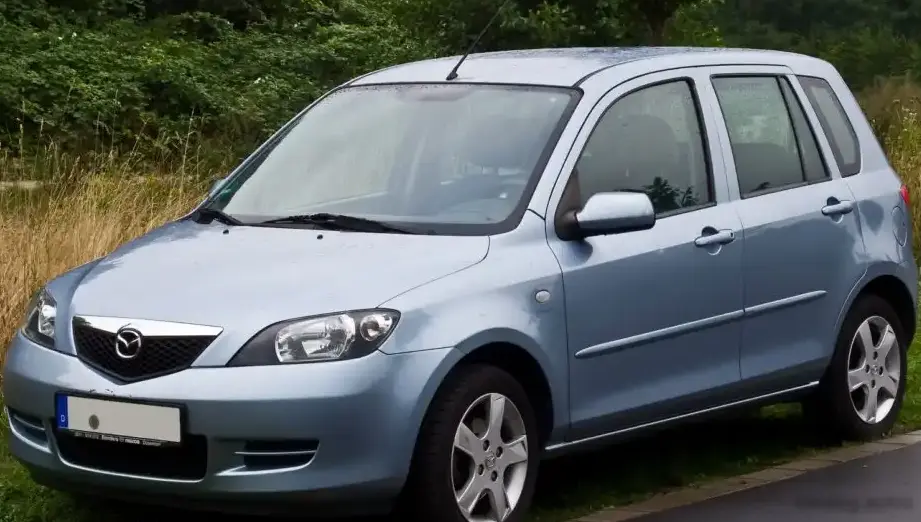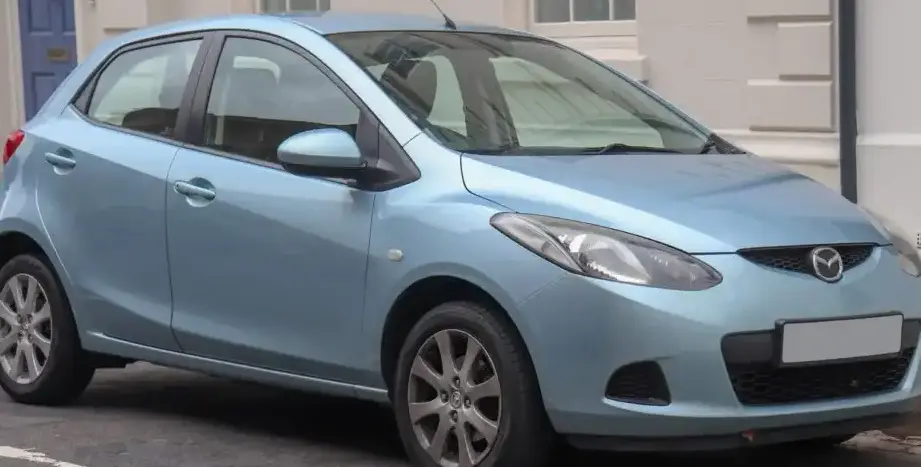
The Mazda 2 III Sedan (DL), specifically the facelifted version introduced in 2019 with the 1.3-liter Skyactiv-G engine producing 93 horsepower paired with an Activematic automatic transmission, represents an entry point into Mazda’s compact sedan lineup. Produced from 2019 through March 2022, this variant was primarily aimed at markets seeking fuel efficiency and ease of driving, particularly in regions where manual transmissions are less popular. It falls within the third generation of the Mazda 2 (DY/DE series), which debuted in 2014, and benefited from the 2019 facelift that brought styling updates and minor technological enhancements.
Technical Specifications
| Brand | Mazda |
| Model | 2 |
| Generation | III Sedan (DL, facelift 2019) |
| Type (Engine) | 1.3 Skyactiv-G (93 Hp) Activematic |
| Start of production | 2019 |
| End of production | March, 2022 |
| Powertrain Architecture | Internal Combustion engine |
| Body type | Sedan |
| Seats | 5 |
| Doors | 4 |
| Fuel Type | Petrol (Gasoline) |
| Weight-to-power ratio | 11.5 kg/Hp, 86.9 Hp/tonne |
| Weight-to-torque ratio | 8.7 kg/Nm, 115 Nm/tonne |
| Power | 93 Hp @ 5800 rpm |
| Power per litre | 71.6 Hp/l |
| Torque | 123 Nm @ 4000 rpm (90.72 lb.-ft. @ 4000 rpm) |
| Engine layout | Front, Transverse |
| Engine displacement | 1299 cm3 (79.27 cu. in.) |
| Number of cylinders | 4 |
| Engine configuration | Inline |
| Cylinder Bore | 71 mm (2.8 in.) |
| Piston Stroke | 82 mm (3.23 in.) |
| Compression ratio | 12:1 |
| Number of valves per cylinder | 4 |
| Fuel injection system | Direct injection |
| Engine oil capacity | 4.2 l (4.44 US qt | 3.7 UK qt) |
| Coolant | 5.2 l (5.49 US qt | 4.58 UK qt) |
| Kerb Weight | 1070 kg (2358.95 lbs.) |
| Fuel tank capacity | 35 l (9.25 US gal | 7.7 UK gal) |
| Length | 4340 mm (170.87 in.) |
| Width | 1695 mm (66.73 in.) |
| Height | 1470 mm (57.87 in.) |
| Wheelbase | 2570 mm (101.18 in.) |
| Front track | 1495 mm (58.86 in.) |
| Rear (Back) track | 1485 mm (58.46 in.) |
| Ride height (ground clearance) | 143 mm (5.63 in.) |
| Minimum turning circle (turning diameter) | 9.4 m (30.84 ft.) |
| Drivetrain Architecture | The Internal combustion engine (ICE) drives the front wheels of the vehicle. |
| Drive wheel | Front wheel drive |
| Number of gears and type of gearbox | 6 gears, automatic transmission Activematic |
| Front suspension | Independent type McPherson |
| Rear suspension | Torsion |
| Front brakes | Ventilated discs |
| Rear brakes | Drum |
| Assisting systems | ABS (Anti-lock braking system) |
| Steering type | Steering rack and pinion |
| Power steering | Electric Steering |
| Tires size | 185/65 R15 |
| Wheel rims size | 5.5J x 15 |
Powertrain & Engine Architecture
At the heart of this Mazda 2 variant lies the 1.3-liter Skyactiv-G inline-four cylinder engine. This engine is a key component of Mazda’s Skyactiv technology, designed to maximize fuel efficiency and reduce emissions. The engine utilizes direct injection, a high compression ratio of 12:1, and optimized combustion chamber design. The Skyactiv-G engines are known for their responsiveness and relatively smooth operation despite their small displacement. The Activematic transmission is a six-speed automatic, utilizing a torque converter and electronically controlled shifts. While not offering the sportiness of a manual transmission, it provides smooth and convenient gear changes, catering to drivers prioritizing comfort and ease of use. The engine code is specific to regional markets, but generally falls within the PE-VPH family.
Driving Characteristics
The 93 horsepower and 123 Nm (90.72 lb-ft) of torque delivered by this powertrain configuration results in a driving experience focused on efficiency rather than outright performance. Acceleration is adequate for city driving and highway merging, but it won’t provide a particularly exhilarating experience. The Activematic transmission is tuned for fuel economy, meaning shifts are often conservative and prioritize smoothness over aggressive downshifts. Compared to the more powerful 1.5-liter Skyactiv-G variants, or even the diesel options available in some markets, this 1.3L automatic feels noticeably less responsive. The gear ratios are optimized for maintaining low engine speeds at cruising speeds, contributing to good fuel economy. However, this can also result in the engine feeling strained when climbing hills or accelerating quickly.
Equipment & Trim Levels
The 1.3 Skyactiv-G Activematic trim typically served as the entry-level or mid-range offering in the Mazda 2 Sedan lineup. Standard equipment generally included air conditioning, power windows and locks, a basic audio system with USB connectivity, and safety features like ABS and multiple airbags. Higher trim levels added features such as alloy wheels, a touchscreen infotainment system, automatic climate control, and advanced safety technologies like lane departure warning. Interior upholstery was typically cloth, with options for upgraded materials in higher trims. The dashboard layout was functional and straightforward, prioritizing usability over elaborate design.
Chassis & Braking
The Mazda 2 Sedan utilizes a front-wheel-drive layout with an independent McPherson strut suspension in the front and a torsion beam suspension in the rear. This setup provides a good balance of ride comfort and handling. The front brakes are ventilated discs, offering adequate stopping power, while the rear brakes are drums, a cost-saving measure common in entry-level vehicles. The steering is electrically assisted, providing light and easy steering feel. Stabilizer bars are present on both axles, helping to reduce body roll during cornering. The relatively light weight of the vehicle (1070 kg / 2358.95 lbs) contributes to its nimble handling characteristics.
Market Reception & Comparison
The 1.3-liter Skyactiv-G Activematic variant of the Mazda 2 Sedan was generally well-received by critics as a practical and fuel-efficient option. It was praised for its comfortable ride, easy-to-use transmission, and Mazda’s reputation for reliability. However, it was often criticized for its lack of power and somewhat uninspired driving dynamics compared to its more potent siblings. Fuel economy figures typically ranged from 5.5 to 6.5 liters per 100 kilometers (43-36 mpg), depending on driving conditions. Compared to the 1.5-liter variants, the 1.3L offered a more affordable price point but sacrificed performance. The diesel options, where available, provided superior fuel economy but came with a higher initial cost and potential maintenance concerns.
Legacy
The 1.3-liter Skyactiv-G engine, coupled with the Activematic transmission, has proven to be a relatively reliable powertrain. While not known for its blistering performance, it has a reputation for longevity and reasonable maintenance costs. In the used car market, this variant represents a good value proposition for buyers seeking a dependable and fuel-efficient compact sedan. Common maintenance items include regular oil changes, air filter replacements, and occasional transmission fluid checks. The Skyactiv technology, while innovative for its time, has become increasingly common in modern vehicles, solidifying Mazda’s commitment to efficiency and driving enjoyment.