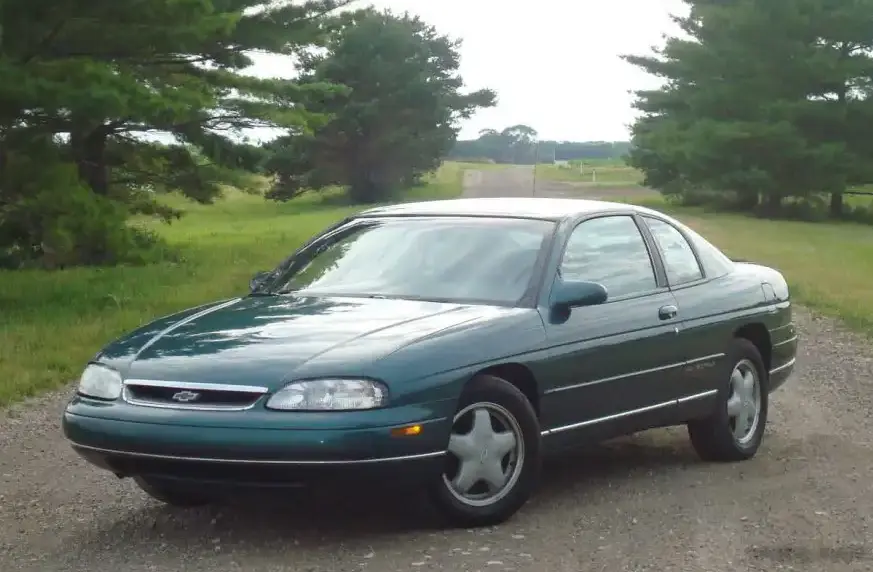
The Chevrolet Monte Carlo VI (1W) 3.8L i V6 SS, produced from 2004 to 2007, represented the final generation of Chevrolet’s iconic personal luxury coupe. Positioned as the performance-oriented trim of the sixth generation, the SS model aimed to recapture some of the Monte Carlo’s original spirit of sporty elegance. Built on the GM W-body platform, the 1W Monte Carlo was a front-wheel-drive coupe intended to appeal to buyers seeking a comfortable, stylish, and relatively affordable vehicle with a touch of performance. The SS variant, with its supercharged V6 engine, was the top-of-the-line offering, distinguishing itself from the base and LT trims.
Technical Specifications
| Brand | Chevrolet |
| Model | Monte Carlo |
| Generation | Monte Carlo VI (1W) |
| Type (Engine) | 3.8 i V6 SS (243 Hp) |
| Start of production | 2004 |
| End of production | 2007 |
| Powertrain Architecture | Internal Combustion engine |
| Body type | Coupe |
| Seats | 5 |
| Doors | 2 |
| Fuel consumption (urban) | 13.1 l/100 km (18 US mpg) |
| Fuel consumption (extra urban) | 8.4 l/100 km (28 US mpg) |
| Fuel consumption (combined) | 10.2 l/100 km (23.1 US mpg) |
| Fuel Type | Petrol (Gasoline) |
| Acceleration 0 – 100 km/h | 7 sec |
| Acceleration 0 – 62 mph | 7 sec |
| Acceleration 0 – 60 mph | 6.7 sec |
| Maximum speed | 220 km/h (136.7 mph) |
| Weight-to-power ratio | 6.6 kg/Hp |
| Weight-to-torque ratio | 4.2 kg/Nm |
| Power | 243 Hp @ 5200 rpm |
| Torque | 380 Nm @ 3600 rpm (280.27 lb.-ft. @ 3600 rpm) |
| Engine layout | Front, Transverse |
| Engine Model/Code | L67 |
| Engine displacement | 3791 cm3 (231.34 cu. in.) |
| Number of cylinders | 6 |
| Engine configuration | V-engine |
| Cylinder Bore | 96.5 mm (3.8 in.) |
| Piston Stroke | 86.4 mm (3.4 in.) |
| Compression ratio | 8.5:1 |
| Number of valves per cylinder | 2 |
| Fuel injection system | Multi-port manifold injection |
| Engine aspiration | Supercharger, Intercooler |
| Engine oil capacity | 4.2 l (4.44 US qt | 3.7 UK qt) |
| Coolant capacity | 11 l (11.62 US qt | 9.68 UK qt) |
| Kerb Weight | 1600 kg (3527.4 lbs.) |
| Trunk (boot) space | 454 l (16.03 cu. ft.) |
| Fuel tank capacity | 64 l (16.91 US gal | 14.08 UK gal) |
| Length | 5027 mm (197.91 in.) |
| Width | 1847 mm (72.72 in.) |
| Height | 1407 mm (55.39 in.) |
| Wheelbase | 2807 mm (110.51 in.) |
| Front track | 1575 mm (62.01 in.) |
| Rear track | 1560 mm (61.42 in.) |
| Drivetrain Architecture | Front wheel drive |
| Number of gears | 4 |
| Gearbox type | Automatic transmission |
| Front suspension | Coil spring |
| Rear suspension | Coil spring |
| Front brakes | Disc |
| Rear brakes | Disc |
| Tires size | 235/55 R17H |
| Wheel rims size | 7J x17 |
Powertrain & Engine Architecture
The heart of the Monte Carlo SS was the 3.8-liter (231 cubic inch) L67 V6 engine. This engine was a staple of General Motors’ performance offerings for many years, known for its robust construction and potential for modification. The L67 featured a cast iron block, aluminum cylinder heads, and a supercharger with an intercooler, boosting power output to 243 horsepower and 280 lb-ft of torque. Fuel delivery was handled by a multi-port fuel injection system. The engine’s 8.5:1 compression ratio was a compromise between performance and reliability. The engine was transversely mounted, driving the front wheels. The 4-speed automatic transmission (4T65E) was the sole transmission option for the SS model. While not known for being the most advanced automatic, it was generally considered durable and capable of handling the engine’s output. The transmission’s gear ratios were tuned for a balance of acceleration and highway cruising.
Driving Characteristics
The 3.8L supercharged V6 provided a noticeable performance boost compared to the base 3.4L V6 or the 3.5L V6 found in other Monte Carlo trims. The SS model could accelerate from 0-60 mph in around 6.7 seconds, making it a relatively quick car for its time and class. The supercharger provided instant torque, resulting in strong acceleration from a standstill and during passing maneuvers. However, the 4-speed automatic transmission limited the engine’s potential, as it lacked the extra gear found in more modern transmissions. The front-wheel-drive layout could exhibit some torque steer under hard acceleration. The suspension was tuned for comfort, but the SS model did benefit from a slightly firmer setup compared to the base trims, offering improved handling.
Equipment & Trim Levels
The Monte Carlo SS came standard with a number of features designed to enhance both comfort and style. These included leather upholstery, power-adjustable front seats, a premium sound system, and alloy wheels. Exterior styling cues included a unique front fascia, rear spoiler, and body-colored side moldings. Optional extras included a sunroof, upgraded sound system with a CD changer, and remote keyless entry. The interior generally featured a dark color scheme with metallic accents. The SS trim was positioned as the premium offering, and as such, it included a higher level of standard equipment than the base and LT models.
Chassis & Braking
The Monte Carlo VI utilized a traditional front-wheel-drive chassis with independent front suspension and a semi-independent twist-beam rear suspension. The front suspension featured coil springs and stabilizer bar, while the rear suspension also used coil springs. The SS model benefited from slightly stiffer springs and dampers compared to the lower trims. Braking duties were handled by disc brakes on all four wheels, providing adequate stopping power for the vehicle’s weight and performance. Anti-lock brakes (ABS) were standard equipment. The steering system was a rack-and-pinion setup, providing responsive steering feel.
Market Reception & Comparison
The Monte Carlo SS received mixed reviews from automotive critics. While the engine’s performance was generally praised, the 4-speed automatic transmission and front-wheel-drive layout were often criticized. Some reviewers felt that the car lacked the sporty handling characteristics of rear-wheel-drive competitors. Fuel economy was average for the class, with combined fuel consumption around 23 mpg. Compared to the base and LT models, the SS offered a significant performance upgrade, but it also came with a higher price tag. The SS was often compared to other personal luxury coupes, such as the Ford Montego and the Chrysler 300, but it generally offered a more affordable alternative.
Legacy
The Chevrolet Monte Carlo VI SS, while not a groundbreaking performance car, remains a popular choice among enthusiasts seeking an affordable and stylish coupe with a powerful engine. The L67 supercharged V6 is known for its durability and potential for modification, making it a favorite among tuners. The 4T65E transmission, while not the most sophisticated, is generally reliable. Today, well-maintained examples of the Monte Carlo SS can be found on the used car market at relatively affordable prices. The car represents a final chapter in the Monte Carlo’s long history, and it continues to be appreciated by those who value its unique blend of style, comfort, and performance.