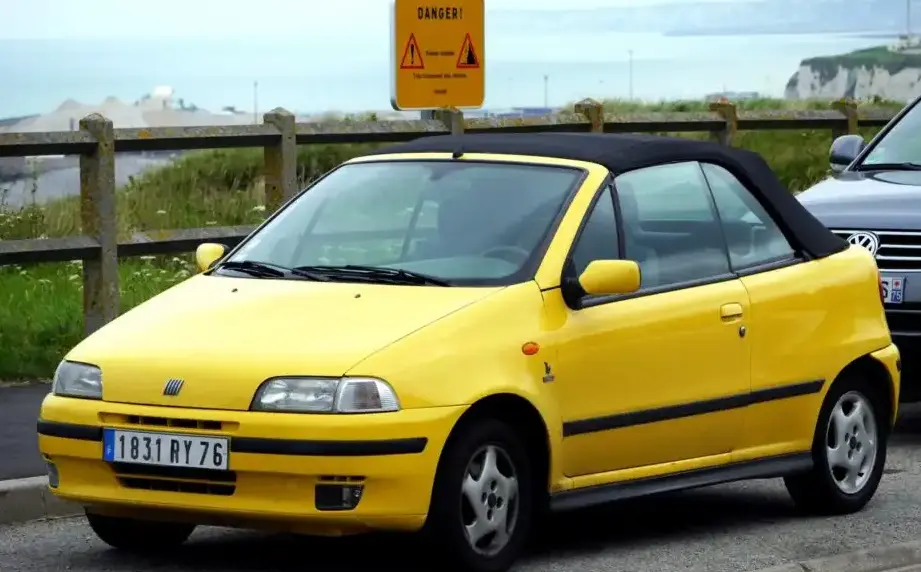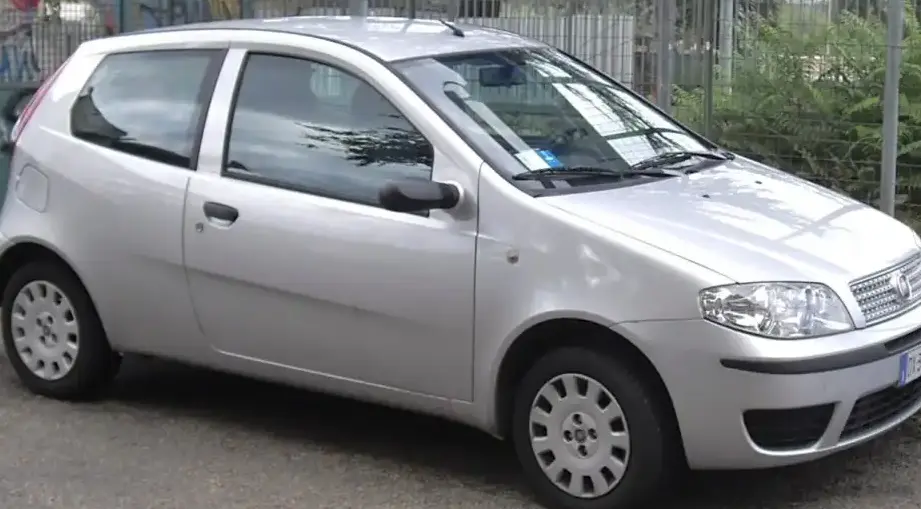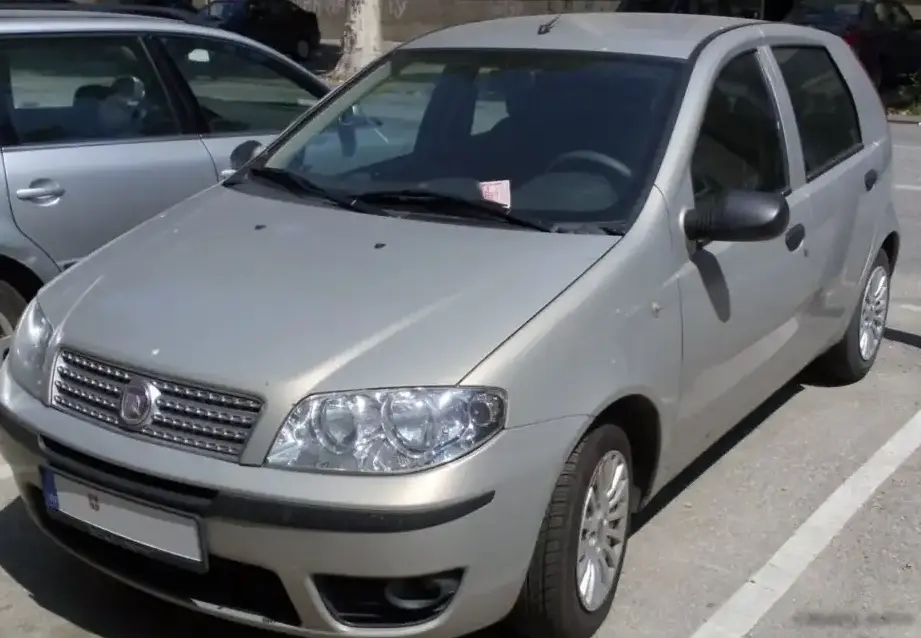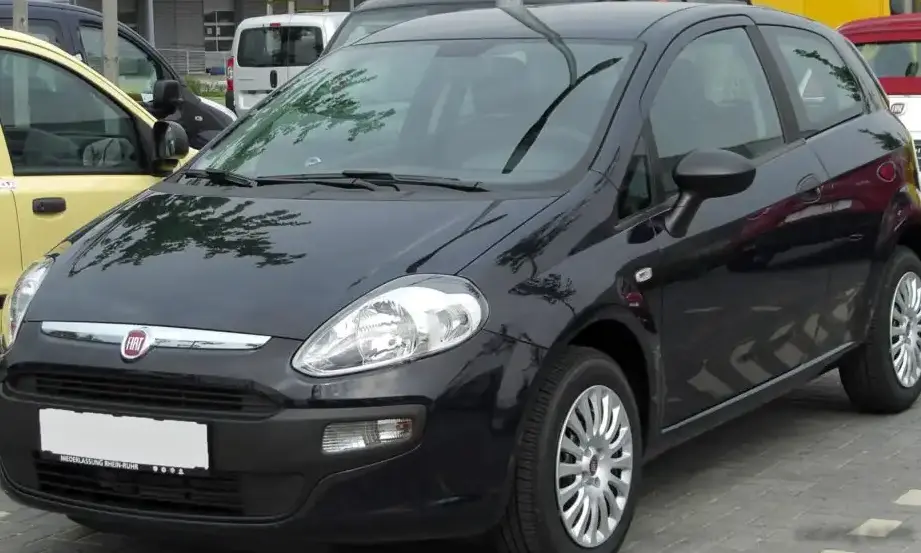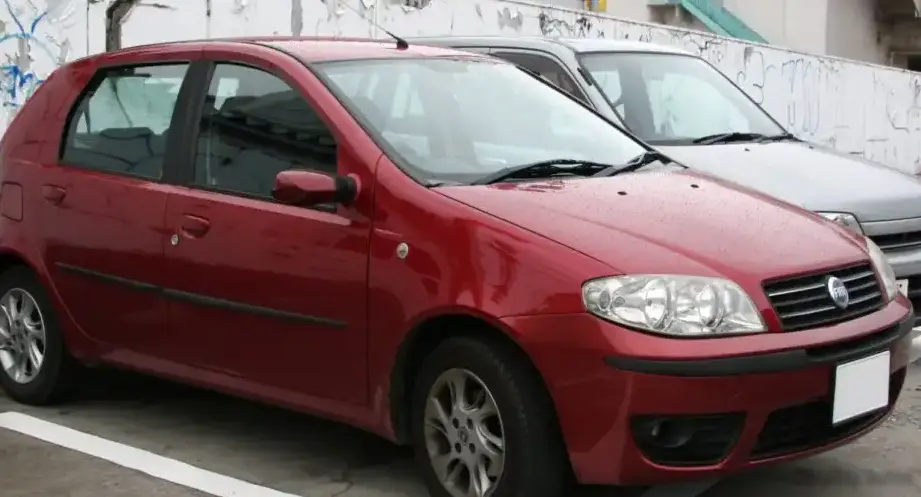
The Fiat Punto II, specifically the 5-door hatchback variant equipped with the 1.2-liter 80 horsepower engine and Continuously Variable Transmission (CVT), was produced from 2003 to 2007. This version represents a key offering within the 188 series, which underwent a significant facelift in 2003. Positioned as an entry-level to mid-range option, it aimed to provide affordable and economical transportation within the European market, particularly appealing to urban drivers and those seeking a practical, easy-to-drive vehicle. The Punto II, as a whole, was a significant model for Fiat, building upon the success of the original Punto and establishing a strong presence in the supermini segment.
Technical Specifications
| Brand | Fiat |
| Model | Punto |
| Generation | Punto II (188, facelift 2003) 5dr |
| Type (Engine) | 1.2 (80 Hp) CVT |
| Start of production | 2003 |
| End of production | 2007 |
| Powertrain Architecture | Internal Combustion engine |
| Body type | Hatchback |
| Seats | 5 |
| Doors | 5 |
| Fuel consumption (urban) | 8.4 l/100 km (28 US mpg, 33.6 UK mpg, 11.9 km/l) |
| Fuel consumption (extra urban) | 5.5 l/100 km (42.8 US mpg, 51.4 UK mpg, 18.2 km/l) |
| Fuel consumption (combined) | 6.5 l/100 km (36.2 US mpg, 43.5 UK mpg, 15.4 km/l) |
| Fuel Type | Petrol (Gasoline) |
| Acceleration 0 – 100 km/h | 12.6 sec |
| Acceleration 0 – 62 mph | 12.6 sec |
| Acceleration 0 – 60 mph | 12 sec |
| Maximum speed | 165 km/h (102.53 mph) |
| Weight-to-power ratio | 12.2 kg/Hp, 82.1 Hp/tonne |
| Weight-to-torque ratio | 8.6 kg/Nm, 116.9 Nm/tonne |
| Power | 80 Hp @ 5000 rpm |
| Power per litre | 64.4 Hp/l |
| Torque | 114 Nm @ 4000 rpm (84.08 lb.-ft. @ 4000 rpm) |
| Engine layout | Front, Transverse |
| Engine Model/Code | 188A5000 |
| Engine displacement | 1242 cm3 (75.79 cu. in.) |
| Number of cylinders | 4 |
| Engine configuration | Inline |
| Cylinder Bore | 70.8 mm (2.79 in.) |
| Piston Stroke | 78.9 mm (3.11 in.) |
| Compression ratio | 10.6:1 |
| Number of valves per cylinder | 4 |
| Fuel injection system | Multi-port manifold injection |
| Engine aspiration | Naturally aspirated engine |
| Engine oil capacity | 2.8 l (2.96 US qt | 2.46 UK qt) |
| Coolant | 4.2 l (4.44 US qt | 3.7 UK qt) |
| Kerb Weight | 975 kg (2149.51 lbs.) |
| Max. weight | 1485 kg (3273.86 lbs.) |
| Max load | 510 kg (1124.36 lbs.) |
| Trunk (boot) space – minimum | 297 l (10.49 cu. ft.) |
| Trunk (boot) space – maximum | 1080 l (38.14 cu. ft.) |
| Fuel tank capacity | 47 l (12.42 US gal | 10.34 UK gal) |
| Length | 3865 mm (152.17 in.) |
| Width | 1660 mm (65.35 in.) |
| Height | 1480 mm (58.27 in.) |
| Wheelbase | 2460 mm (96.85 in.) |
| Front track | 1398 mm (55.04 in.) |
| Rear (Back) track | 1392 mm (54.8 in.) |
| Drag coefficient (Cd) | 0.32 |
| Minimum turning circle | 10.5 m (34.45 ft.) |
| Drivetrain Architecture | Front wheel drive |
| Number of gears and type of gearbox | automatic transmission CVT (6) |
| Front suspension | Spring Strut |
| Rear suspension | Torsion |
| Front brakes | Disc |
| Rear brakes | Drum |
| Assisting systems | ABS (Anti-lock braking system) |
| Steering type | Steering rack and pinion |
| Power steering | Electric Steering |
| Tires size | 165/70 R14 |
| Wheel rims size | 14 |
Powertrain & Engine Architecture
The heart of this Punto variant is the 1.2-liter, naturally aspirated inline-four cylinder engine, designated as the 188A5000. This engine is a member of Fiat’s FIRE (Fully Integrated Robotized Engine) family, known for its simplicity and fuel efficiency. The engine utilizes a multi-port fuel injection system, delivering fuel directly into the intake ports. It features a single overhead camshaft (SOHC) operating four valves per cylinder. The 80 horsepower output is achieved at 5000 rpm, with a peak torque of 114 Nm (84 lb-ft) delivered at 4000 rpm. Paired with this engine is a six-speed Continuously Variable Transmission (CVT). This CVT, while offering smooth acceleration, differs significantly from traditional automatic transmissions, lacking fixed gear ratios and instead providing a seamless range of ratios.
Driving Characteristics
The 1.2L 80 hp CVT Punto offers a comfortable, if not particularly exhilarating, driving experience. The CVT prioritizes fuel efficiency and smooth acceleration over outright performance. Acceleration from 0 to 100 km/h (0-62 mph) takes approximately 12.6 seconds, and the top speed is around 165 km/h (102.5 mph). Compared to the more powerful 1.4-liter or even diesel variants, this version feels noticeably slower, especially when overtaking or climbing hills. The CVT’s programming often holds the engine at a consistent rpm, which can sometimes feel disconnected from the driver’s throttle input. However, this contributes to a quieter and more relaxed driving experience, particularly in urban environments. The gear ratios are optimized for fuel economy, making it a suitable choice for city commuting.
Equipment & Trim Levels
The 1.2 80 hp CVT Punto typically came equipped with a reasonable level of standard features. These included power steering, central locking, electric front windows, and an ABS anti-lock braking system. Interior upholstery was generally cloth, with a functional, if somewhat basic, dashboard layout. Optional extras could include air conditioning, alloy wheels, a radio/CD player, and upgraded interior trim. The trim level often dictated the availability of these options, with higher trims offering more features as standard. The focus was on providing a practical and affordable package, rather than luxurious appointments.
Chassis & Braking
The Punto II’s chassis utilizes a MacPherson strut suspension setup at the front and a torsion beam suspension at the rear. This configuration provides a good balance between ride comfort and handling. The front brakes are disc brakes, offering adequate stopping power, while the rear brakes are drum brakes, a cost-saving measure common in this segment. The electric power steering provides light and easy steering, making it ideal for maneuvering in tight spaces. Stabilizer bars were typically fitted to both the front and rear axles, helping to reduce body roll during cornering.
Market Reception & Comparison
The 1.2L 80 hp CVT Punto was generally well-received as an economical and practical city car. Critics praised its fuel efficiency and ease of driving, but noted its lack of outright performance. Compared to the 1.4-liter versions, it offered lower running costs but sacrificed acceleration and overall driving enjoyment. The diesel variants, while more expensive to purchase, provided superior fuel economy and torque. The CVT transmission was a point of contention for some, with some drivers preferring the more direct feel of a traditional manual gearbox. However, its smoothness and ease of use appealed to many, particularly those new to driving or those who primarily commute in urban traffic.
Legacy
The 1.2L 80 hp CVT Punto II remains a relatively common sight on European roads today, testament to its reliability and affordability. The FIRE engine is known for its durability, although regular maintenance is crucial to prevent issues. The CVT transmission, while generally reliable, can be more expensive to repair than a traditional automatic. In the used car market, these Puntos are typically priced very affordably, making them an attractive option for first-time buyers or those seeking a cheap and cheerful runabout. While not a performance icon, the 1.2L CVT Punto II played a significant role in providing accessible and economical transportation to a wide range of drivers.