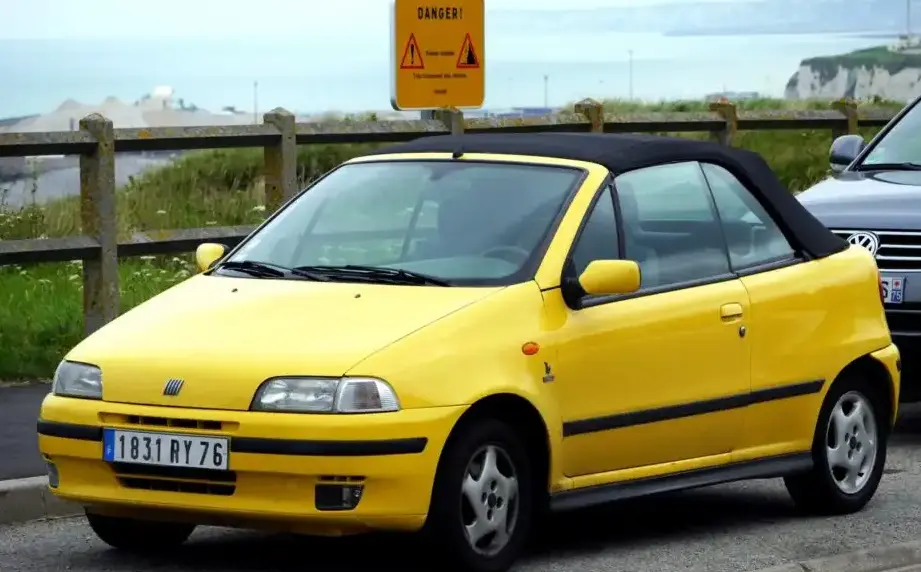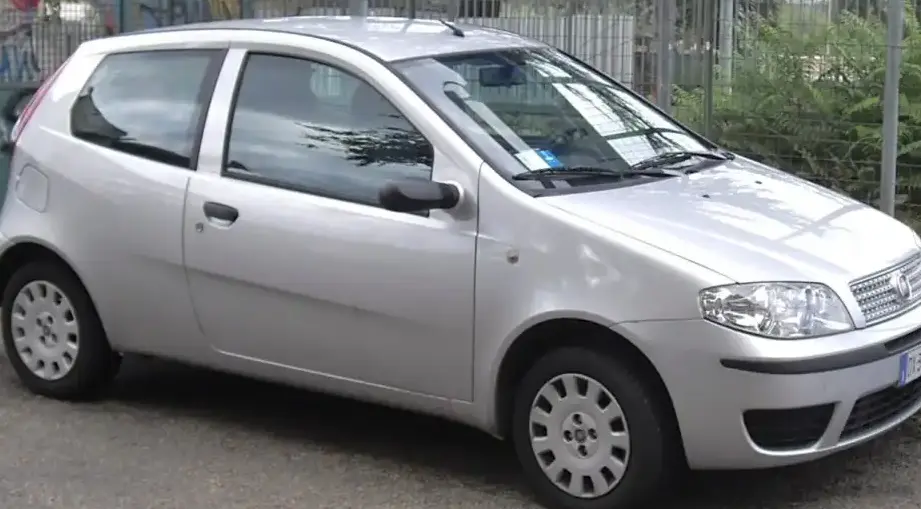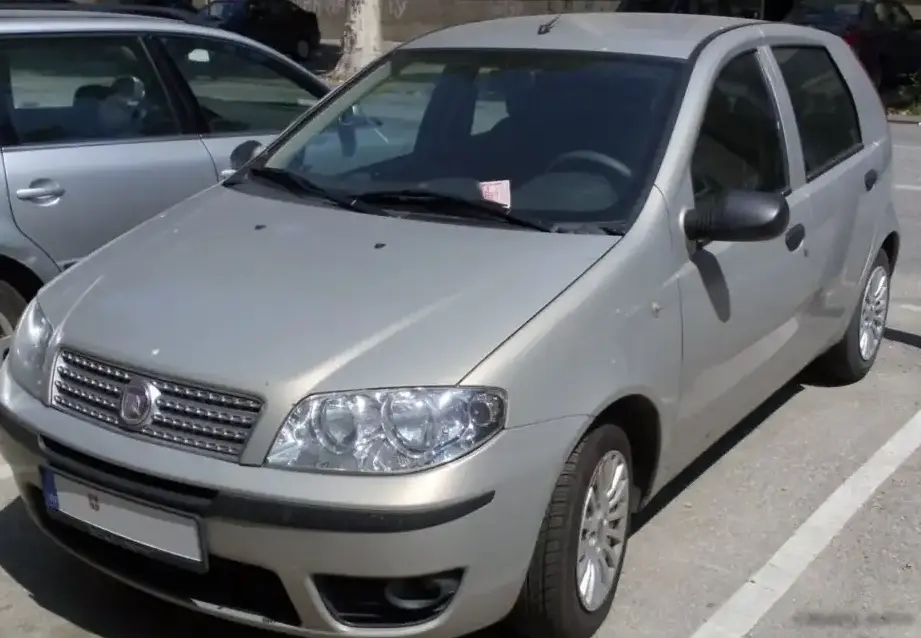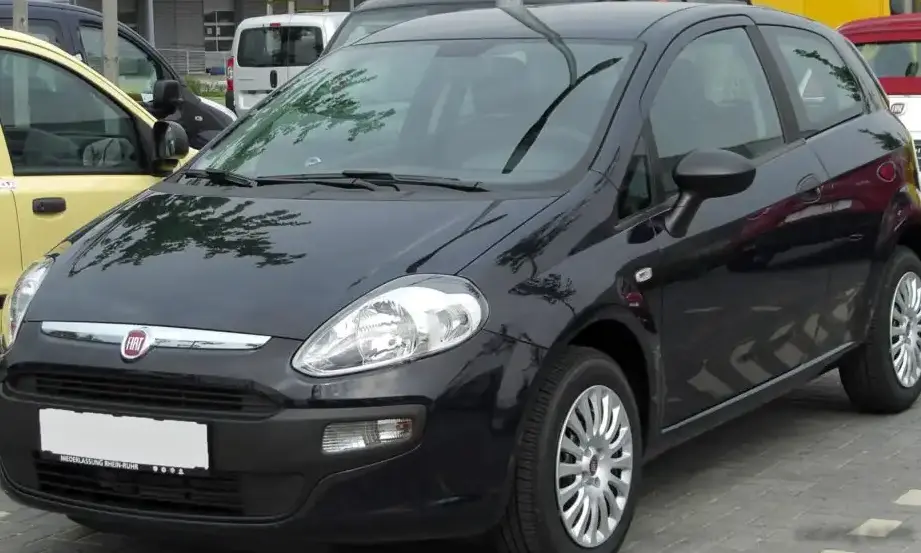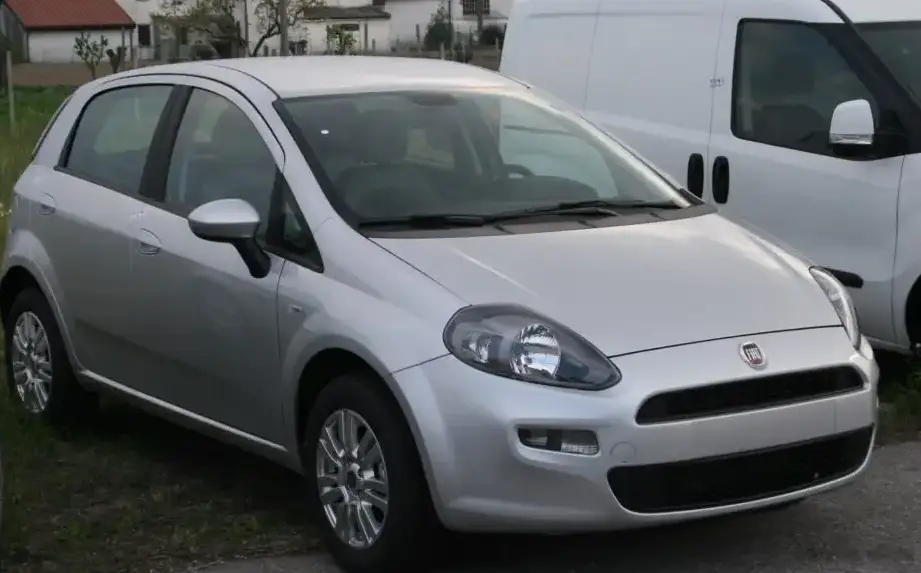
The Fiat Punto III (199) 0.9 TwinAir (85 hp) was a subcompact hatchback produced by Fiat from 2012 to 2014. It represented a significant effort by Fiat to offer a fuel-efficient and technologically advanced vehicle in the competitive European small car segment. This particular variant, powered by the innovative 0.9-liter TwinAir engine and paired with a five-speed manual transmission, occupied a key position in the Punto III lineup, aiming to balance affordability with reasonable performance and low running costs. It was part of the 199 series, the third generation of the Punto, which benefited from a redesigned chassis and updated interior compared to its predecessors.
Technical Specifications
| Brand | Fiat |
| Model | Punto |
| Generation | Punto III (199) |
| Type (Engine) | 0.9 TwinAir (85 Hp) |
| Start of production | 2012 |
| End of production | 2014 |
| Powertrain Architecture | Internal Combustion engine |
| Body type | Hatchback |
| Seats | 5 |
| Doors | 3-5 |
| Fuel consumption (urban) | 4.9 l/100 km (48 US mpg, 57.6 UK mpg, 20.4 km/l) |
| Fuel consumption (extra urban) | 3.8 l/100 km (61.9 US mpg, 74.3 UK mpg, 26.3 km/l) |
| Fuel consumption (combined) | 4.2 l/100 km (56 US mpg, 67.3 UK mpg, 23.8 km/l) |
| CO2 emissions | 98 g/km |
| Fuel Type | Petrol (Gasoline) |
| Acceleration 0 – 100 km/h | 12.7 sec |
| Acceleration 0 – 62 mph | 12.7 sec |
| Acceleration 0 – 60 mph | 12.1 sec |
| Maximum speed | 172 km/h (106.88 mph) |
| Emission standard | Euro 5 |
| Weight-to-power ratio | 12.6 kg/Hp, 79.1 Hp/tonne |
| Weight-to-torque ratio | 7.4 kg/Nm, 134.9 Nm/tonne |
| Power | 85 Hp @ 5500 rpm |
| Power per litre | 97.1 Hp/l |
| Torque | 145 Nm @ 2000 rpm (106.95 lb.-ft. @ 2000 rpm) |
| Engine layout | Front, Transverse |
| Engine Model/Code | 312A2000 |
| Engine displacement | 875 cm3 (53.4 cu. in.) |
| Number of cylinders | 2 |
| Engine configuration | Inline |
| Cylinder Bore | 80.5 mm (3.17 in.) |
| Piston Stroke | 86 mm (3.39 in.) |
| Compression ratio | 10:1 |
| Number of valves per cylinder | 4 |
| Fuel injection system | Multi-port manifold injection |
| Engine aspiration | Turbocharger, Intercooler |
| Valvetrain | SOHC |
| Engine oil capacity | 3.5 l (3.7 US qt | 3.08 UK qt) |
| Coolant | 5.4 l (5.71 US qt | 4.75 UK qt) |
| Kerb Weight | 1075 kg (2369.97 lbs.) |
| Max. weight | 1375 kg (3031.36 lbs.) |
| Max load | 300 kg (661.39 lbs.) |
| Trunk (boot) space – minimum | 275 l (9.71 cu. ft.) |
| Trunk (boot) space – maximum | 1030 l (36.37 cu. ft.) |
| Fuel tank capacity | 45 l (11.89 US gal | 9.9 UK gal) |
| Permitted trailer load with brakes (12%) | 1000 kg (2204.62 lbs.) |
| Permitted trailer load without brakes | 400 kg (881.85 lbs.) |
| Length | 4065 mm (160.04 in.) |
| Width | 1687 mm (66.42 in.) |
| Height | 1490 mm (58.66 in.) |
| Wheelbase | 2510 mm (98.82 in.) |
| Front track | 1473 mm (57.99 in.) |
| Rear (Back) track | 1466 mm (57.72 in.) |
| Drag coefficient (Cd) | 0.34 |
| Minimum turning circle (turning diameter) | 10.0 m (32.81 ft.) |
| Drivetrain Architecture | The Internal combustion engine (ICE) drives the front wheels of the vehicle. |
| Drive wheel | Front wheel drive |
| Number of gears and type of gearbox | 5 gears, manual transmission |
| Front suspension | Independent type McPherson |
| Rear suspension | Torsion |
| Front brakes | Ventilated discs |
| Rear brakes | Drum |
| Assisting systems | ABS (Anti-lock braking system) |
| Steering type | Steering rack and pinion |
| Power steering | Electric Steering |
| Tires size | 175/65 R15 |
| Wheel rims size | 15 |
Powertrain & Engine Architecture
The heart of the Punto III 0.9 TwinAir was the 312A2000 engine, a 0.9-liter turbocharged inline-two cylinder petrol engine. This engine was a key component of Fiat’s efforts to improve fuel efficiency and reduce emissions. The TwinAir engine featured multi-point fuel injection and a single turbocharger with an intercooler. The use of a two-cylinder configuration, while unusual, allowed for reduced internal friction and weight. The engine employed a single overhead camshaft (SOHC) valvetrain. The five-speed manual transmission was chosen for its efficiency and affordability, contributing to the car’s overall low running costs. The engine’s small displacement and turbocharging allowed it to deliver a respectable 85 horsepower and 145 Nm of torque, despite its size.
Driving Characteristics
The 0.9 TwinAir-equipped Punto III offered a unique driving experience. While not particularly quick – achieving 0-60 mph in around 12.1 seconds – the engine provided adequate performance for urban and suburban driving. The turbocharger provided a noticeable boost in power at higher RPMs, but the engine could feel somewhat strained when pushed hard, especially when fully loaded. The five-speed manual transmission was well-matched to the engine’s characteristics, with gear ratios optimized for fuel economy. Compared to higher-output Punto variants, such as those with larger displacement engines, the TwinAir model prioritized fuel efficiency over outright performance. The manual transmission offered a more engaging driving experience than the Dualogic automated manual transmission available on some Punto models.
Equipment & Trim Levels
The 0.9 TwinAir variant of the Punto III typically came with a reasonable level of standard equipment. This included air conditioning, power steering, ABS brakes, and a basic audio system. Interior upholstery was typically cloth, and the dashboard featured a functional, if somewhat basic, design. Optional extras included alloy wheels, a more advanced audio system with Bluetooth connectivity, and parking sensors. The trim level often sat in the lower-mid range of the Punto III lineup, offering a good balance of features and affordability. It was positioned above the base-level models but below the more luxurious and higher-performance variants.
Chassis & Braking
The Punto III utilized a McPherson strut independent suspension at the front and a torsion beam suspension at the rear. This setup provided a comfortable ride quality, suitable for everyday driving. The front brakes were ventilated discs, offering good stopping power, while the rear brakes were drums, a cost-saving measure common in this segment. The electric power steering provided light and easy steering, making it ideal for maneuvering in tight spaces. The chassis was designed to be lightweight, contributing to the car’s overall fuel efficiency. Stabilizer bars were included to reduce body roll during cornering.
Market Reception & Comparison
The Fiat Punto III 0.9 TwinAir received mixed reviews. Critics praised its fuel efficiency and low running costs, but some found the engine to be underpowered and somewhat noisy. Compared to other small hatchbacks on the market, such as the Volkswagen Polo or Ford Fiesta, the Punto offered a more affordable price point but lacked the refinement and driving dynamics of its rivals. The TwinAir engine’s fuel economy was a key selling point, often exceeding that of comparable engines in competing vehicles. Reliability was generally considered average, with some reports of issues with the turbocharger and fuel injection system.
Legacy
The Fiat Punto III 0.9 TwinAir represents an interesting chapter in Fiat’s history, showcasing their commitment to innovative engine technology. While the Punto itself has been discontinued, the TwinAir engine continued to be used in other Fiat and Alfa Romeo models for a period. In the used car market, the 0.9 TwinAir Punto III remains an affordable and fuel-efficient option for those seeking a small hatchback. However, potential buyers should be aware of the potential for turbocharger and fuel injection issues, and regular maintenance is crucial to ensure long-term reliability. The engine’s unique character and fuel efficiency have earned it a small but dedicated following among enthusiasts.