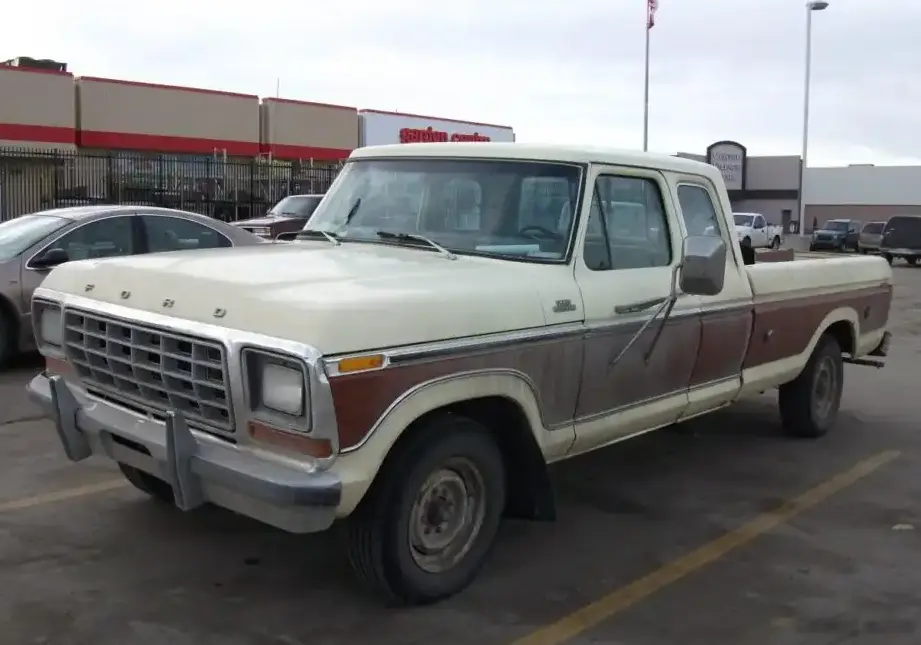
The Ford F-250 VI SuperCab, produced from 1975 to 1976, represented a significant iteration in Ford’s long-running F-Series pickup truck lineage. This generation, designated the sixth series, offered a larger cab configuration – the “SuperCab” – providing increased passenger space compared to the standard cab models. The 5.9L (360 cubic inch) V8 engine paired with an automatic transmission was a popular configuration, aimed at buyers needing a capable work truck with a degree of comfort. It occupied a middle ground in the F-250 lineup, positioned below the larger displacement 6.6L and 7.5L V8 options, but above the smaller 4.9L inline-six.
Technical Specifications
| Brand | Ford |
| Model | F-Series F-250 |
| Generation | F-Series F-250 VI SuperCab |
| Type (Engine) | 5.9 360 V8 (145 Hp) Automatic |
| Start of production | 1975 |
| End of production | 1976 |
| Powertrain Architecture | Internal Combustion engine |
| Body type | Pick-up |
| Seats | 6 |
| Doors | 2 |
| Fuel Type | Petrol (Gasoline) |
| Power | 145 Hp |
| Power per litre | 24.6 Hp/l |
| Engine displacement | 5899 cm3 / 359.98 cu. in. |
| Number of cylinders | 8 |
| Engine configuration | V-engine |
| Cylinder Bore | 102.87 mm / 4.05 in. |
| Piston Stroke | 88.9 mm / 3.5 in. |
| Number of valves per cylinder | 2 |
| Fuel injection system | Carburettor |
| Engine aspiration | Naturally aspirated engine |
| Max. weight | 3674 kg / 8099.78 lbs. |
| Trunk (boot) space – minimum | 1727-2084 l / 60.99 – 73.6 cu. ft. |
| Length | 5362-5773 mm / 211.1 – 227.28 in. |
| Wheelbase | 3531-3937 mm / 139.02 – 155 in. |
| Wading depth | 673-678 mm / 26.5 – 26.69 in. |
| Drivetrain Architecture | The Internal combustion engine (ICE) drives the rear wheels of the vehicle. |
| Drive wheel | Rear wheel drive |
| Number of gears and type of gearbox | automatic transmission Cruise-O-Matic |
| Front suspension | Independent coil spring |
| Rear suspension | Leaf spring |
| Front brakes | Disc |
| Rear brakes | Drum |
| Power steering | Electric Steering |
| Tires size | 215/85 R16.5 |
| Wheel rims size | 16.5 |
Powertrain & Engine Architecture
The heart of this F-250 variant was the 5.9-liter (360 cubic inch) Ford Windsor V8 engine. This engine, designated the 360 FE, was a robust and relatively simple design, utilizing a cast iron block and cylinder heads. It featured a two-valve per cylinder configuration and was equipped with a two-barrel carburetor for fuel delivery. The 360 FE was known for its low-end torque, making it suitable for hauling and towing, despite its modest 145 horsepower output. The engine was longitudinally mounted in the chassis, driving the rear wheels. The automatic transmission was a Ford Cruise-O-Matic, a three-speed unit known for its durability. While not offering the performance of more modern automatics, the Cruise-O-Matic was well-suited to the engine’s characteristics and the truck’s intended use.
Driving Characteristics
The 145 horsepower and automatic transmission combination resulted in a driving experience focused on utility rather than speed. Acceleration was adequate for everyday driving, but the truck felt strained when heavily loaded or attempting to climb steep hills. The Cruise-O-Matic transmission’s gear ratios were optimized for towing and hauling, prioritizing torque multiplication over quick acceleration. Compared to the available manual transmissions, the automatic offered greater convenience, particularly in stop-and-go traffic. However, it did result in a slight reduction in fuel economy and a less direct connection to the engine. The 360 V8 provided sufficient power for most tasks, but drivers accustomed to the larger engines in the F-250 lineup would have noticed a difference in responsiveness.
Equipment & Trim Levels
The F-250 SuperCab with the 5.9L V8 and automatic transmission typically fell into the mid-range of available trim levels. Standard features included a basic interior with vinyl upholstery, a simple dashboard layout, and manual windows and locks. The SuperCab configuration added extra rear seating, making it a more practical option for families or crews. Optional extras included air conditioning, an upgraded radio, and various exterior trim packages. The interior was functional and durable, designed to withstand the rigors of work truck use. While not luxurious, the SuperCab offered a noticeable improvement in passenger comfort compared to the standard cab models.
Chassis & Braking
The F-250 chassis was built for durability and load-carrying capacity. It featured a heavy-duty frame and a robust suspension system. The front suspension utilized independent coil springs, providing a relatively comfortable ride for a truck of this size. The rear suspension employed leaf springs, designed to handle heavy loads. Braking duties were handled by disc brakes on the front wheels and drum brakes on the rear. Power steering was standard, making it easier to maneuver the large truck. The tires, typically 215/85 R16.5, were chosen for their durability and load-carrying capacity. The overall chassis design prioritized strength and reliability over sporty handling.
Market Reception & Comparison
The F-250 with the 5.9L V8 and automatic transmission was generally well-received by buyers seeking a capable and comfortable work truck. Critics praised its durability and towing capacity, but noted its modest horsepower output. Compared to the larger engine options, the 360 V8 offered a more affordable price point and slightly better fuel economy. However, it lacked the sheer power of the 6.6L and 7.5L V8s. The automatic transmission was seen as a convenient feature, but some reviewers preferred the more direct feel of the manual transmissions. Overall, this configuration represented a good balance of performance, affordability, and convenience for many buyers.
Legacy
The 360 Windsor V8 engine and Cruise-O-Matic transmission proved to be remarkably durable powertrains. Many examples of these trucks are still on the road today, a testament to their robust construction. While not known for being particularly fuel-efficient by modern standards, the 360 V8 was relatively easy to maintain and repair. In the used car market, these F-250s are often sought after by collectors and enthusiasts who appreciate their classic styling and rugged dependability. The 5.9L automatic combination remains a popular choice for those seeking a vintage work truck that can still handle a variety of tasks. Parts availability is generally good, making it relatively easy to keep these trucks running for years to come.