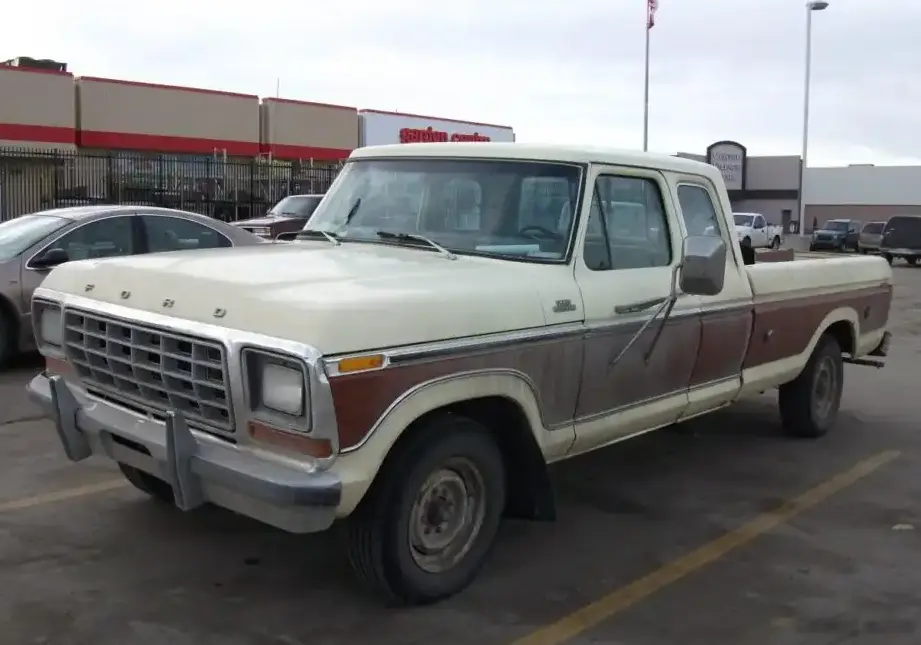
The Ford F-250 VI SuperCab, produced between 1977 and 1979, represented the sixth generation of Ford’s heavy-duty F-Series pickup trucks. This particular variant, equipped with the 6.6-liter (400 cubic inch) 400 V8 engine producing 169 horsepower and paired with a three-speed Cruise-O-Matic automatic transmission, occupied a middle ground in the F-250 lineup. It offered a balance between capability and affordability, aimed at buyers needing more than a half-ton truck but not requiring the full power of the larger engine options. The SuperCab designation indicated an extended cab configuration, providing additional passenger space compared to the standard cab models.
Technical Specifications
| Brand | Ford |
| Model | F-Series F-250 |
| Generation | F-Series F-250 VI SuperCab |
| Type (Engine) | 6.6 400 V8 (169 Hp) Automatic |
| Start of production | 1977 |
| End of production | 1979 |
| Powertrain Architecture | Internal Combustion engine |
| Body type | Pick-up |
| Seats | 6 |
| Doors | 2 |
| Fuel Type | Petrol (Gasoline) |
| Power | 169 Hp |
| Power per litre | 25.8 Hp/l |
| Engine displacement | 6555 cm3 / 400.01 cu. in. |
| Number of cylinders | 8 |
| Engine configuration | V-engine |
| Number of valves per cylinder | 2 |
| Fuel injection system | Carburettor |
| Engine aspiration | Naturally aspirated engine |
| Max. weight | 3674 kg / 8099.78 lbs. |
| Trunk (boot) space – minimum | 1727-2084 l / 60.99 – 73.6 cu. ft. |
| Fuel tank capacity | 73 l / 19.28 US gal | 16.06 UK gal |
| Length | 5362-5773 mm / 211.1 – 227.28 in. |
| Wheelbase | 3531-3937 mm / 139.02 – 155 in. |
| Wading depth | 673-678 mm / 26.5 – 26.69 in. |
| Drivetrain Architecture | The Internal combustion engine (ICE) drives the rear wheels of the vehicle. |
| Drive wheel | Rear wheel drive |
| Number of gears and type of gearbox | 4 gears, automatic transmission Cruise-O-Matic |
| Front suspension | Independent coil spring, Transverse stabilizer |
| Rear suspension | Transverse stabilizer, Leaf spring |
| Front brakes | Disc |
| Rear brakes | Drum |
| Power steering | Electric Steering |
| Tires size | 215/85 R16.5 |
| Wheel rims size | 6J x 16.5 |
Powertrain & Engine Architecture
The heart of this F-250 variant was the 400 cubic inch (6.6-liter) Ford 400 V8 engine. This engine, part of the 335-series Ford V8 family, was known for its robust construction and relatively high torque output for its displacement. The 169 horsepower figure was achieved through a two-barrel carburetor, a relatively simple fuel delivery system for the era. The engine featured a cast iron block and cylinder heads, and a hydraulic lifter valvetrain, contributing to its durability and reduced maintenance requirements. The Cruise-O-Matic automatic transmission was a three-speed unit, designed to provide smooth and reliable shifting. It was a common transmission choice for Ford trucks of this period, known for its durability, though not particularly fuel-efficient by modern standards.
Driving Characteristics
The 169 hp 400 V8, coupled with the automatic transmission, delivered adequate, but not exhilarating, performance. Acceleration was modest, particularly when hauling loads or climbing hills. The automatic transmission’s gear ratios were optimized for towing and hauling, prioritizing torque multiplication over rapid acceleration. Compared to the available 302 cubic inch (5.0L) V8, the 400 offered significantly more low-end torque, making it better suited for work applications. However, it lacked the higher-revving capability of the smaller engine. Compared to the larger 460 cubic inch (7.5L) V8, this engine was noticeably less powerful, but also more economical to operate. The automatic transmission, while convenient, did result in some power loss compared to the available manual transmissions.
Equipment & Trim Levels
The F-250 SuperCab with the 400 V8 and automatic transmission typically came with a fairly basic level of equipment. Standard features included a vinyl bench seat, basic instrumentation (speedometer, fuel gauge, temperature gauge), and a heater. The SuperCab configuration added a rear seat, increasing passenger capacity. Optional extras included air conditioning, a radio, upgraded interior trim, and various towing packages. The trim level was generally considered a step up from the base F-250, offering the extended cab as a primary benefit. The interior was functional and durable, designed to withstand the rigors of truck use.
Chassis & Braking
The F-250 chassis was built for heavy-duty use. It featured a robust frame and a solid rear axle. The front suspension utilized independent coil springs, providing a relatively comfortable ride for a truck of this size. A transverse stabilizer bar helped to reduce body roll during cornering. The rear suspension consisted of leaf springs, designed to handle heavy loads. Braking was accomplished via disc brakes on the front axle and drum brakes on the rear. Power steering was standard, making maneuvering the large truck easier. The tires, typically 215/85 R16.5, were designed for both on- and off-road use.
Market Reception & Comparison
The F-250 with the 400 V8 and automatic transmission was generally well-received by buyers who needed a capable truck without the expense of the larger engine options. Critics noted its adequate power and smooth automatic transmission, but also pointed out its relatively low fuel economy. Compared to the 302 V8, the 400 offered more towing capacity, while the 460 V8 provided significantly more power for those needing maximum capability. Reliability was generally good, with the 400 V8 being a proven and durable engine. However, the automatic transmission could be prone to issues if not properly maintained.
Legacy
The Ford F-250 VI SuperCab with the 400 V8 and automatic transmission remains a popular choice among classic truck enthusiasts. The 400 V8 engine is known for its durability and relatively simple design, making it easier to maintain and repair. While fuel economy is poor by modern standards, these trucks are valued for their ruggedness and classic styling. In the used car market, well-maintained examples command a reasonable price, particularly those with original features and low mileage. The combination of the SuperCab configuration and the 400 V8 engine makes this variant a versatile and capable classic truck.