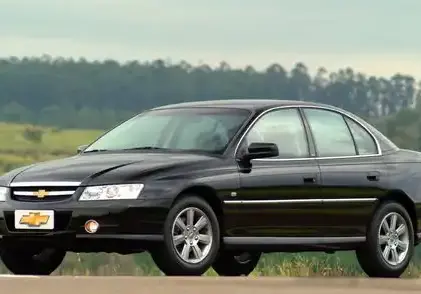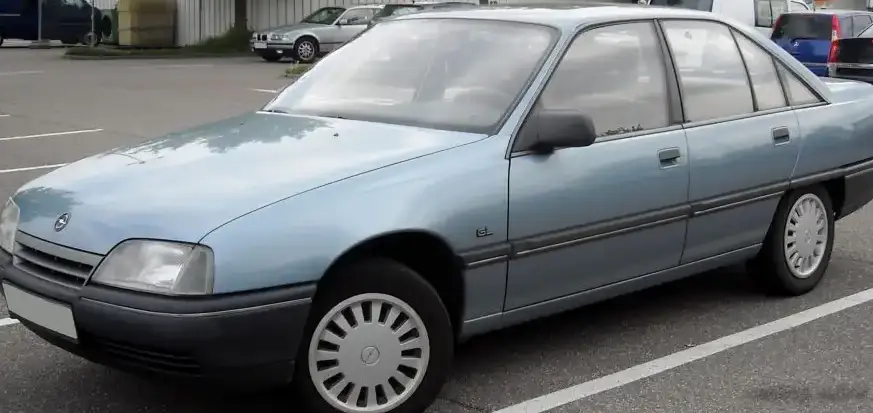
The Chevrolet Omega 3.0 i CD Automatic, produced between 1992 and 1998, represented a significant offering in the mid-size sedan segment, particularly within the Brazilian automotive market where it was primarily sold. Positioned as a more upscale and spacious alternative to domestic competitors, the Omega was based on the GM V80 platform, sharing underpinnings with the Opel Omega sold in Europe. The 3.0 i CD variant, equipped with a 3.0-liter inline-six engine and a four-speed automatic transmission, occupied a mid-range position within the Omega lineup, offering a balance of performance and comfort. It sat above the base 2.0 and 2.2-liter models, but below the more powerful 3.0 CD with a manual transmission and later, the V6-powered versions.
Technical Specifications
| Brand | Chevrolet |
| Model | Omega |
| Generation | Omega |
| Type (Engine) | 3.0 i CD (165 Hp) Automatic |
| Start of production | 1992 |
| End of production | 1998 |
| Powertrain Architecture | Internal Combustion engine |
| Body type | Sedan |
| Seats | 5 |
| Doors | 4 |
| Fuel consumption (combined) | 11 l/100 km (21.4 US mpg, 25.7 UK mpg, 9.1 km/l) |
| Fuel Type | Petrol (Gasoline) |
| Acceleration 0 – 100 km/h | 10 sec |
| Acceleration 0 – 62 mph | 10 sec |
| Acceleration 0 – 60 mph | 9.5 sec |
| Maximum speed | 210 km/h (130.49 mph) |
| Weight-to-power ratio | 8.8 kg/Hp, 113.8 Hp/tonne |
| Weight-to-torque ratio | 6.3 kg/Nm, 158.6 Nm/tonne |
| Power | 165 Hp @ 5800 rpm |
| Power per litre | 55.6 Hp/l |
| Torque | 230 Nm @ 4200 rpm (169.64 lb.-ft. @ 4200 rpm) |
| Engine layout | Front, Longitudinal |
| Engine displacement | 2969 cm3 (181.18 cu. in.) |
| Number of cylinders | 6 |
| Engine configuration | Inline |
| Cylinder Bore | 95 mm (3.74 in.) |
| Piston Stroke | 69.8 mm (2.75 in.) |
| Compression ratio | 9.2:1 |
| Number of valves per cylinder | 2 |
| Fuel injection system | Multi-port manifold injection |
| Engine aspiration | Naturally aspirated engine |
| Kerb Weight | 1450 kg (3196.7 lbs.) |
| Max. weight | 1985 kg (4376.18 lbs.) |
| Max load | 535 kg (1179.47 lbs.) |
| Trunk (boot) space – minimum | 520 l (18.36 cu. ft.) |
| Trunk (boot) space – maximum | 870 l (30.72 cu. ft.) |
| Fuel tank capacity | 75 l (19.81 US gal | 16.5 UK gal) |
| Length | 4740 mm (186.61 in.) |
| Width | 1760 mm (69.29 in.) |
| Height | 1420 mm (55.91 in.) |
| Wheelbase | 2730 mm (107.48 in.) |
| Front track | 1460 mm (57.48 in.) |
| Rear (Back) track | 1480 mm (58.27 in.) |
| Drivetrain Architecture | The Internal combustion engine (ICE) drives the rear wheels of the vehicle. |
| Drive wheel | Rear wheel drive |
| Number of gears and type of gearbox | 4 gears, automatic transmission |
| Front suspension | Coil spring |
| Rear suspension | Coil spring |
| Front brakes | Ventilated discs |
| Rear brakes | Disc |
| Assisting systems | ABS (Anti-lock braking system) |
| Steering type | Steering rack and pinion |
| Power steering | Hydraulic Steering |
| Tires size | 195/65 R15 V |
| Wheel rims size | 15 |
Powertrain & Engine Architecture
The heart of the Omega 3.0 i CD Automatic is the Chevrolet-sourced 3.0-liter (2969 cc) inline-six cylinder engine. This engine, internally designated as the C30NE, featured a cast iron block and an aluminum cylinder head. It utilized a multi-port fuel injection system, delivering fuel to each cylinder individually for improved efficiency and power delivery. The engine’s valvetrain employed two valves per cylinder (SOHC), a relatively simple design that contributed to its reliability. The four-speed automatic transmission, a GM 4L30-E, was chosen for its smoothness and ease of use, catering to drivers prioritizing comfort over outright performance. This transmission featured electronic control, optimizing shift points based on throttle position and vehicle speed. The engine’s longitudinal front-engine, rear-wheel-drive layout was a traditional configuration for the time, providing balanced handling characteristics.
Driving Characteristics
The 165 horsepower and 230 Nm (169.64 lb-ft) of torque produced by the 3.0-liter engine, coupled with the four-speed automatic, resulted in a comfortable, but not particularly sporty, driving experience. Acceleration from 0 to 60 mph took approximately 9.5 seconds, and the car had a top speed of around 130 mph. Compared to the manual transmission version of the 3.0-liter Omega, the automatic suffered a slight performance penalty due to the transmission’s inherent efficiency losses. The automatic’s gear ratios were tuned for smooth cruising and everyday drivability, rather than aggressive acceleration. While the manual offered more driver engagement, the automatic provided a more relaxed experience, particularly in city traffic. The rear-wheel-drive configuration offered a balanced feel, but lacked the all-weather capability of front-wheel-drive alternatives.
Equipment & Trim Levels
The 3.0 i CD Automatic trim level typically included features such as power windows, power locks, air conditioning, and a basic audio system. Upholstery was generally cloth, although leather options were available. The dashboard layout was functional and straightforward, with clearly marked gauges and controls. Optional extras included a sunroof, upgraded audio systems, and alloy wheels. The “CD” designation indicated the presence of a CD player, a relatively premium feature for the time. The Omega generally offered a higher level of standard equipment compared to many of its domestic competitors in Brazil.
Chassis & Braking
The Omega 3.0 i CD Automatic utilized a coil spring suspension system at both the front and rear, providing a comfortable ride quality. The front suspension featured independent components, while the rear suspension was a solid axle design. Braking duties were handled by ventilated discs at the front and solid discs at the rear. An Anti-lock Braking System (ABS) was standard, enhancing safety by preventing wheel lockup during hard braking. The steering system was a rack-and-pinion setup with hydraulic power assistance, providing precise and responsive steering feel. Tire size was typically 195/65 R15.
Market Reception & Comparison
The Chevrolet Omega 3.0 i CD Automatic was generally well-received by Brazilian automotive critics and consumers. It was praised for its spacious interior, comfortable ride, and relatively refined driving experience. However, some critics noted that the automatic transmission dulled the engine’s performance compared to the manual version. Fuel economy, at 11 l/100 km, was considered average for a vehicle of its size and engine displacement. Compared to the 2.0 and 2.2-liter Omega models, the 3.0 i CD offered significantly more power and a more luxurious feel. It competed primarily with the Ford Versailles and Volkswagen Santana, offering a compelling alternative in terms of space, comfort, and perceived quality.
Legacy
The Chevrolet Omega 3.0 i CD Automatic has developed a loyal following among enthusiasts in Brazil. The inline-six engine is known for its durability and relatively simple maintenance requirements. While parts availability can be a challenge due to the car’s age, the engine’s robust design ensures that many examples remain on the road today. The automatic transmission, while not as sporty as a manual, has also proven to be reliable. In the used car market, well-maintained examples of the 3.0 i CD Automatic command a premium due to their rarity and desirable combination of features. The Omega remains a popular choice for those seeking a comfortable, spacious, and relatively affordable classic sedan.