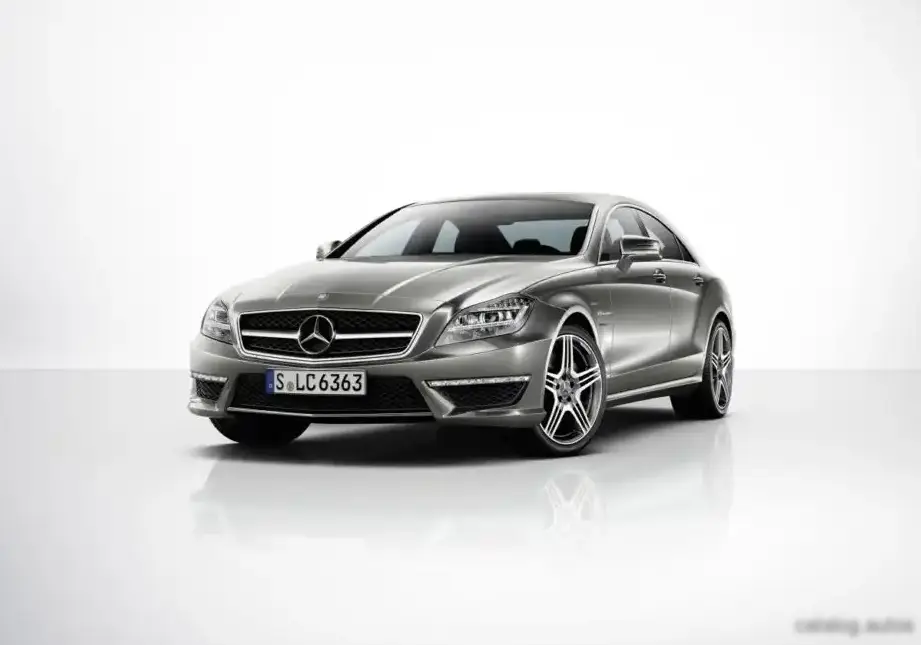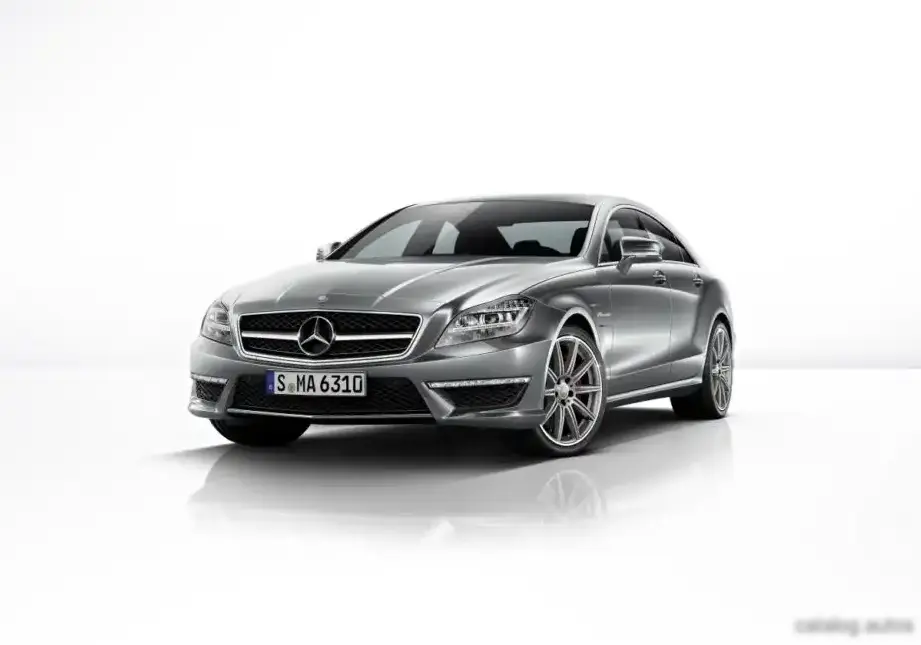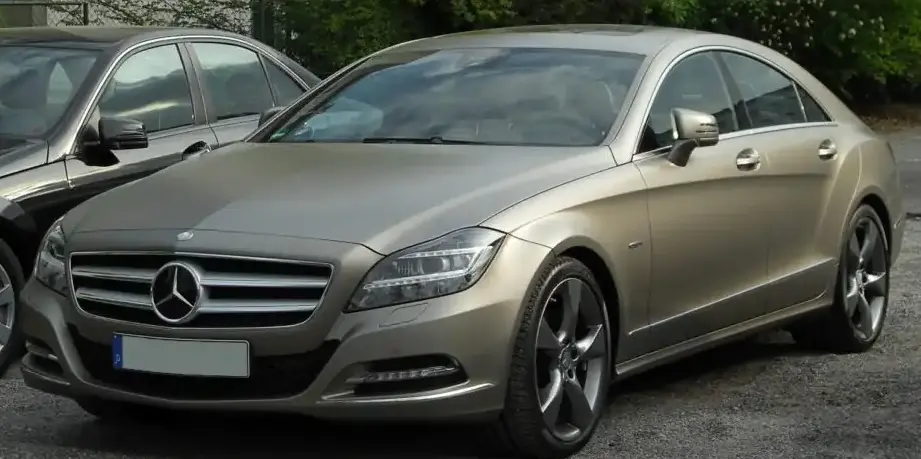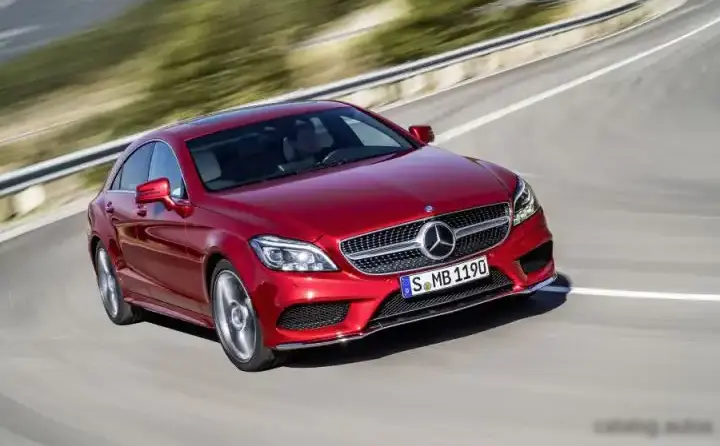
The Mercedes-Benz CLS 400 V6 4MATIC, produced from July 2014 to December 2017, represents a significant iteration of the C218 facelift generation of the CLS coupe. Positioned as a mid-range offering within the CLS lineup, it bridged the gap between the entry-level CLS 350 and the performance-oriented CLS 550 models. This variant aimed to deliver a blend of luxury, performance, and all-weather capability, appealing to buyers seeking a sophisticated grand tourer. The CLS, originally introduced in 2004, pioneered the four-door coupe segment, and the C218 facelift refined the design and technology, solidifying its position as a desirable luxury vehicle in the North American and European markets.
Technical Specifications
| Brand | Mercedes-Benz |
| Model | CLS |
| Generation | CLS coupe (C218 facelift, 2014) |
| Type | CLS 400 V6 (333 Hp) 4MATIC 7G-TRONIC PLUS |
| Start of production | July, 2014 |
| End of production | December, 2017 |
| Powertrain Architecture | Internal Combustion engine |
| Body type | Coupe |
| Seats | 4 |
| Doors | 4 |
| Fuel consumption (urban) | 10.2-10.3 l/100 km (23.1 – 22.8 US mpg) |
| Fuel consumption (extra urban) | 6.2-6.4 l/100 km (37.9 – 36.8 US mpg) |
| Fuel consumption (combined) | 7.8-7.9 l/100 km (30.2 – 29.8 US mpg) |
| CO2 emissions | 179-182 g/km |
| Fuel Type | Petrol (Gasoline) |
| Acceleration 0 – 100 km/h | 5.3 sec |
| Acceleration 0 – 60 mph | 5 sec |
| Maximum speed | 250 km/h (155.34 mph) |
| Emission standard | Euro 6 |
| Weight-to-power ratio | 5.3 kg/Hp |
| Weight-to-torque ratio | 3.7 kg/Nm |
| Power | 333 Hp @ 5250-6000 rpm |
| Torque | 480 Nm @ 1200-4000 rpm (354.03 lb.-ft.) |
| Engine layout | Front, Longitudinal |
| Engine Model/Code | M 276.850 |
| Engine displacement | 3498 cm3 (213.46 cu. in.) |
| Number of cylinders | 6 |
| Engine configuration | V-engine |
| Cylinder Bore | 92.9 mm (3.66 in.) |
| Piston Stroke | 86 mm (3.39 in.) |
| Compression ratio | 10.5:1 |
| Number of valves per cylinder | 4 |
| Fuel injection system | Direct injection |
| Engine aspiration | BiTurbo, Intercooler |
| Valvetrain | DOHC |
| Engine oil capacity | 6.5 l (6.87 US qt | 5.72 UK qt) |
| Coolant capacity | 9.6 l (10.14 US qt | 8.45 UK qt) |
| Kerb Weight | 1760 kg (3880.14 lbs.) |
| Max. weight | 2320 kg (5114.72 lbs.) |
| Max load | 560 kg (1234.59 lbs.) |
| Trunk space (minimum) | 520 l (18.36 cu. ft.) |
| Fuel tank capacity | 59 l (15.59 US gal | 12.98 UK gal) |
| Length | 4937 mm (194.37 in.) |
| Width | 1881 mm (74.06 in.) |
| Width including mirrors | 2075 mm (81.69 in.) |
| Height | 1418 mm (55.83 in.) |
| Wheelbase | 2874 mm (113.15 in.) |
| Front track | 1596 mm (62.83 in.) |
| Rear track | 1626 mm (64.02 in.) |
| Gearbox | 7 gears, automatic transmission G-TRONIC PLUS |
Powertrain & Engine Architecture
The CLS 400 4MATIC utilized Mercedes-Benz’s M276.850 3.5-liter V6 engine. This engine is a naturally aspirated design, but features twin turbochargers – one small turbocharger for quick response at low engine speeds and a larger turbocharger for higher power output at higher RPMs. This configuration delivers a broad torque curve and contributes to the engine’s smooth power delivery. The engine employs direct fuel injection, enhancing efficiency and reducing emissions. The valvetrain is a double overhead camshaft (DOHC) design with four valves per cylinder, optimizing airflow for improved performance. The engine is paired with Mercedes-Benz’s 7G-TRONIC PLUS seven-speed automatic transmission, known for its smooth and responsive shifts. This transmission features a torque converter lock-up clutch to improve fuel efficiency at cruising speeds. The 4MATIC all-wheel-drive system distributes power between the front and rear axles, providing enhanced traction and stability in various driving conditions.
Driving Characteristics
The CLS 400 4MATIC offered a refined and comfortable driving experience. The 333 horsepower and 354 lb-ft of torque provided ample power for both highway cruising and spirited driving. Acceleration from 0 to 60 mph was achieved in approximately 5 seconds, making it a relatively quick vehicle for its class. The 7G-TRONIC PLUS transmission contributed to smooth gear changes, and the all-wheel-drive system provided confident handling in all weather conditions. Compared to the CLS 550 with its larger V8 engine, the CLS 400 offered a more balanced driving experience, prioritizing comfort and efficiency over outright performance. The gear ratios were tuned for a blend of acceleration and fuel economy, with a relatively tall final drive ratio to reduce engine RPM at highway speeds. While not as engaging as a manual transmission, the 7G-TRONIC PLUS offered manual shift modes for drivers who desired more control.
Equipment & Trim Levels
The CLS 400 4MATIC came standard with a comprehensive list of features, including leather upholstery, power-adjustable front seats with memory function, dual-zone automatic climate control, a premium sound system, and a navigation system. Standard safety features included adaptive cruise control, lane-keeping assist, and automatic emergency braking. Optional extras included a panoramic sunroof, ventilated front seats, a rear-seat entertainment system, and a more powerful audio system. Interior trim options included various wood veneers and aluminum accents. The dashboard layout was typical of Mercedes-Benz, with a focus on elegance and functionality. The instrument cluster featured analog gauges with a digital display in between, providing information on vehicle speed, engine RPM, and other vital parameters.
Chassis & Braking
The CLS 400 4MATIC featured a sophisticated suspension system designed to provide a comfortable ride and precise handling. The front suspension utilized a multi-link design with coil springs and a stabilizer bar, while the rear suspension employed a multi-link setup with coil springs and a stabilizer bar. Air suspension was available as an option, further enhancing ride comfort and allowing the driver to adjust the vehicle’s ride height. The braking system consisted of ventilated discs on all four wheels, providing ample stopping power. Anti-lock brakes (ABS), electronic stability control (ESC), and traction control were standard features, enhancing safety and stability. The steering system was a rack-and-pinion design with electric power steering, offering precise and responsive steering feel.
Market Reception & Comparison
The CLS 400 4MATIC was generally well-received by automotive critics. It was praised for its stylish design, luxurious interior, and refined driving experience. The engine was considered to be a good balance of power and efficiency, and the all-wheel-drive system provided added confidence in inclement weather. Compared to the CLS 350, the CLS 400 offered a noticeable performance upgrade. Compared to the CLS 550, it provided a more fuel-efficient and affordable option. Fuel economy figures were respectable for a vehicle of its size and performance, averaging around 30 mpg combined. Reliability was generally good, although some owners reported minor issues with the infotainment system and electronic components.
Legacy
The M276 engine family, including the one used in the CLS 400 4MATIC, has proven to be relatively reliable over the long term, with proper maintenance. The 7G-TRONIC PLUS transmission is also known for its durability. In the used car market, the C218 CLS 400 4MATIC remains a desirable option for buyers seeking a stylish and luxurious coupe. Its blend of performance, comfort, and all-weather capability continues to appeal to a wide range of drivers. While newer CLS models have been introduced, the C218 generation, particularly the 400 4MATIC variant, holds a place as a well-rounded and sophisticated grand tourer.