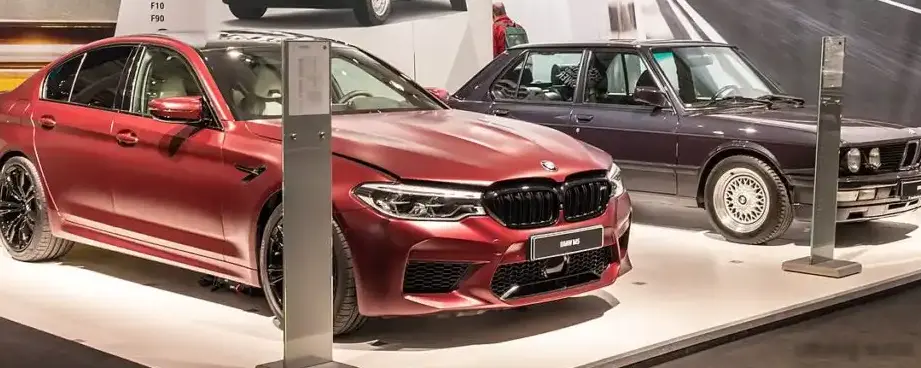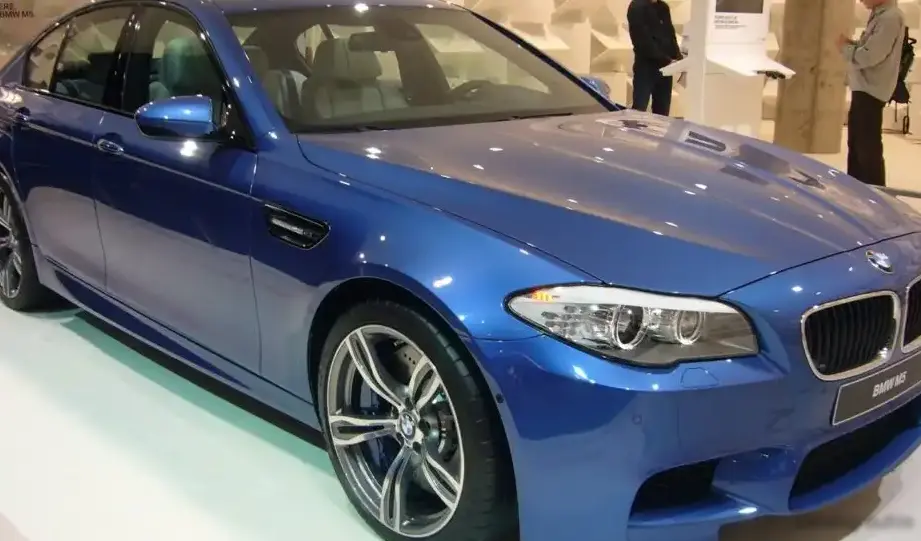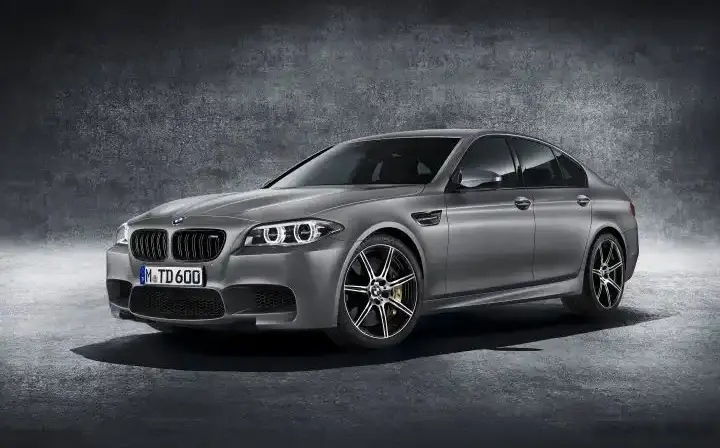
The BMW M5 (F10M LCI), specifically the variant equipped with the 4.4-liter V8 engine producing 560 horsepower and paired with the 7-speed M Dual Clutch Transmission (M DCT), represents a significant evolution of the iconic high-performance sedan. Produced from July 2013 to December 2016, this facelifted version of the F10 M5 addressed some criticisms of the previous model while further enhancing its performance and refinement. It sits at the pinnacle of the F10 M5 range, offering the highest output and most advanced transmission technology available. The LCI (Life Cycle Impulse) brought styling updates, interior enhancements, and engine tweaks to maintain the M5’s competitive edge in the high-performance luxury sedan segment.
Technical Specifications
| Brand | BMW |
| Model | M5 |
| Generation | M5 (F10M LCI, facelift 2013) |
| Type (Engine) | 4.4 V8 (560 Hp) M DCT |
| Start of production | July, 2013 |
| End of production | December, 2016 |
| Powertrain Architecture | Internal Combustion engine |
| Body type | Sedan |
| Seats | 5 |
| Doors | 4 |
| Fuel consumption (economy) – urban (NEDC) | 13.9 l/100 km (16.9 US mpg, 20.3 UK mpg, 7.2 km/l) |
| Fuel consumption (economy) – extra urban (NEDC) | 7.6 l/100 km (30.9 US mpg, 37.2 UK mpg, 13.2 km/l) |
| Fuel consumption (economy) – combined (NEDC) | 9.9 l/100 km (23.8 US mpg, 28.5 UK mpg, 10.1 km/l) |
| CO2 emissions (NEDC) | 231 g/km |
| Fuel Type | Petrol (Gasoline) |
| Acceleration 0 – 100 km/h | 4.3 sec |
| Acceleration 0 – 62 mph | 4.3 sec |
| Acceleration 0 – 60 mph | 4.1 sec |
| Acceleration 0 – 200 km/h | 12.9 sec |
| Maximum speed | 250 km/h (155.34 mph), Electronically limited |
| Emission standard | Euro 6 |
| Weight-to-power ratio | 3.3 kg/Hp, 299.5 Hp/tonne |
| Weight-to-torque ratio | 2.8 kg/Nm, 363.6 Nm/tonne |
| Power | 560 Hp @ 6000-7000 rpm |
| Power per litre | 127.4 Hp/l |
| Torque | 680 Nm @ 1500-5750 rpm (501.54 lb.-ft. @ 1500-5750 rpm) |
| Maximum engine speed | 7200 rpm |
| Engine layout | Front, Longitudinal |
| Engine Model/Code | S63B44B |
| Engine displacement | 4395 cm3 (268.2 cu. in.) |
| Number of cylinders | 8 |
| Engine configuration | V-engine |
| Cylinder Bore | 89 mm (3.5 in.) |
| Piston Stroke | 88.3 mm (3.48 in.) |
| Compression ratio | 10:1 |
| Number of valves per cylinder | 4 |
| Fuel injection system | Direct injection |
| Engine aspiration | Twin-power turbo, Intercooler |
| Valvetrain | Double-VANOS, VALVETRONIC |
| Engine oil capacity | 8.4 l (8.88 US qt | 7.39 UK qt) |
| Coolant | 18.5 l (19.55 US qt | 16.28 UK qt) |
| Kerb Weight | 1870 kg (4122.64 lbs.) |
| Max. weight | 2410 kg (5313.14 lbs.) |
| Max load | 540 kg (1190.5 lbs.) |
| Trunk (boot) space – minimum | 520 l (18.36 cu. ft.) |
| Fuel tank capacity | 80 l (21.13 US gal | 17.6 UK gal) |
| Max. roof load | 100 kg (220.46 lbs.) |
| Permitted trailer load with brakes (8%) | 2000 kg (4409.25 lbs.) |
| Permitted trailer load with brakes (12%) | 2000 kg (4409.25 lbs.) |
| Permitted trailer load without brakes | 750 kg (1653.47 lbs.) |
| Permitted towbar download | 90 kg (198.42 lbs.) |
| Length | 4910 mm (193.31 in.) |
| Width | 1891 mm (74.45 in.) |
| Width including mirrors | 2119 mm (83.43 in.) |
| Height | 1467 mm (57.76 in.) |
| Wheelbase | 2964 mm (116.69 in.) |
| Front track | 1627 mm (64.06 in.) |
| Rear (Back) track | 1582 mm (62.28 in.) |
| Front overhang | 836 mm (32.91 in.) |
| Rear overhang | 1110 mm (43.7 in.) |
| Ride height (ground clearance) | 117 mm (4.61 in.) |
| Drag coefficient (Cd) | 0.33 |
| Minimum turning circle (turning diameter) | 12.6 m (41.34 ft.) |
| Drivetrain Architecture | The Internal combustion engine (ICE) drives the rear wheels of the vehicle. |
| Drive wheel | Rear wheel drive |
| Number of gears and type of gearbox | 7 gears, automatic transmission M DCT |
| Front suspension | Coil spring, Double wishbone, Transverse stabilizer |
| Rear suspension | Independent multi-link spring suspension with stabilizer |
| Front brakes | Ventilated discs, 400×36 mm |
| Rear brakes | Ventilated discs, 396×24 mm |
| Assisting systems | ABS (Anti-lock braking system) |
| Steering type | Steering rack and pinion |
| Power steering | Hydraulic Steering |
| Tires size | Front wheel tires: 265/40 R19; 265/35 R20Rear wheel tires: 295/35 R19; 295/30 R20 |
| Wheel rims size | Front wheel rims: 9J x 19; 9J x 20Rear wheel rims: 10J x 19; 10J x 20 |
INTRODUCTION
The F10M LCI M5 represented a return to form for BMW’s performance sedan. While the previous F10 M5 (2011-2013) was lauded for its naturally aspirated V8, some critics found it lacking the raw edge of previous M5 generations. The LCI addressed this with revisions to the engine, suspension, and steering, alongside subtle styling updates. This 560-horsepower variant, coupled with the M DCT, was positioned as the top-tier offering, aimed at enthusiasts seeking the ultimate driving experience. It competed directly with rivals like the Porsche Panamera Turbo, Audi RS7, and Mercedes-Benz E63 AMG.
Powertrain & Engine Architecture
At the heart of the F10M LCI M5 lies the S63B44B engine, a 4.4-liter twin-turbocharged V8. This engine builds upon the earlier S63Tu engine, incorporating improvements to the turbocharger design, fuel injection system, and cooling system. Direct injection is employed for precise fuel delivery, and the engine features BMW’s Double-VANOS variable valve timing and VALVETRONIC variable valve lift technologies. These systems optimize engine breathing and efficiency across the rev range. The M DCT transmission is a 7-speed dual-clutch automated manual transmission, offering incredibly fast and precise gear changes. It features a multi-plate wet clutch and allows for both fully automatic operation and manual gear selection via steering wheel-mounted paddles. The transmission’s programming is tailored for performance, with quicker shift times and more aggressive gear changes in Sport and Sport+ modes.
Driving Characteristics
The 560 hp and 680 lb-ft of torque delivered by the S63B44B engine, combined with the M DCT’s rapid shifts, result in exhilarating acceleration. The car launches from 0-60 mph in around 4.1 seconds and reaches 100 km/h (62 mph) in 4.3 seconds. The M DCT transmission contributes significantly to this performance, providing seamless gear changes and minimizing power interruption. Compared to the earlier naturally aspirated M5, the LCI model offers a broader torque curve and more readily accessible power. While some purists missed the high-revving nature of the previous engine, the twin-turbo V8 provides a more muscular and responsive driving experience. The gear ratios are optimized for both acceleration and high-speed cruising, making it a capable grand tourer as well as a track weapon.
Equipment & Trim Levels
The M5 LCI came standard with a comprehensive list of features, including Merino leather upholstery, power-adjustable heated front seats, a premium sound system, and a navigation system. The LCI facelift brought updated interior trim options and a revised iDrive infotainment system. Optional extras included carbon fiber trim, a head-up display, active suspension, and a driver assistance package. The Competition Package, introduced later in the production run, further enhanced performance with stiffer springs, dampers, and anti-roll bars, as well as a more aggressive exhaust note. The interior typically featured a dark headliner, M-specific badging, and unique instrument cluster graphics.
Chassis & Braking
The F10M LCI M5 features a sophisticated chassis designed to handle the engine’s immense power. It utilizes a lightweight aluminum suspension with coil springs, double wishbones at the front, and an independent multi-link setup at the rear. A transverse stabilizer bar helps to reduce body roll during cornering. The braking system consists of ventilated discs at all four corners, with larger rotors and calipers compared to the standard 5 Series. The M5 also incorporates BMW’s Dynamic Stability Control (DSC) system, which helps to maintain stability and control in challenging driving conditions. The DSC system can be partially or fully disabled for track use.
Market Reception & Comparison
The F10M LCI M5 was widely praised by automotive journalists for its performance, handling, and refinement. The twin-turbo V8 engine was lauded for its power and responsiveness, and the M DCT transmission was commended for its speed and precision. Critics noted that the LCI revisions addressed some of the criticisms of the earlier model, resulting in a more engaging and rewarding driving experience. Compared to the standard 5 Series, the M5 offered a significantly more focused and dynamic driving experience. Against its rivals, the M5 was often praised for its balanced handling and comfortable ride. Fuel economy, while not a primary concern for M5 buyers, was respectable for a car of its performance, averaging around 23.8 US mpg in combined driving.
Legacy
The F10M LCI M5 has established itself as a highly desirable performance sedan in the used car market. The S63B44B engine, while complex, has proven to be relatively reliable with proper maintenance. Common issues include oil leaks, cooling system failures, and turbocharger wear, but these are typically addressed with preventative maintenance. The M DCT transmission is also generally reliable, but requires regular fluid changes. The LCI model, with its performance enhancements and refined driving experience, is particularly sought after by enthusiasts. As a modern classic, the F10M LCI M5 represents a high point in BMW’s M car lineage, offering a compelling blend of performance, luxury, and technology.