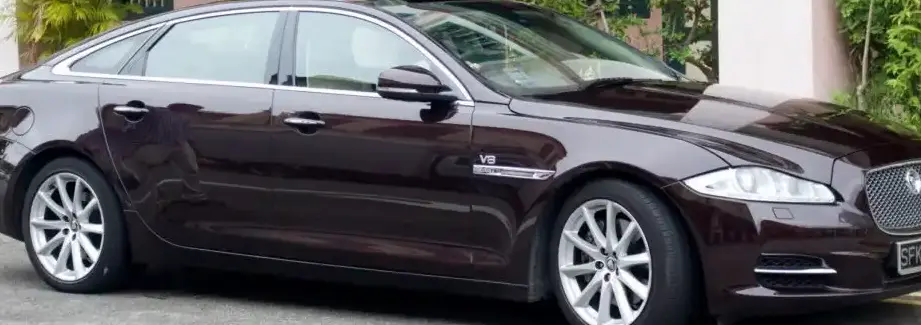
The Jaguar XJ Long (X351) 3.0d V6, produced from 2012 to 2015, represents a sophisticated blend of luxury and performance within the XJ lineage. This variant, positioned as a mid-to-upper trim level, offered a longer wheelbase for enhanced rear passenger comfort, making it a popular choice for chauffeur-driven executives and those prioritizing spaciousness. It falls within the X351 generation, which marked a significant departure from previous XJ models with its all-aluminum body construction, contributing to reduced weight and improved fuel efficiency. The 3.0d V6 model aimed to provide a balance between the performance of the supercharged gasoline engines and the fuel economy of the smaller diesel options.
Technical Specifications
| Brand | Jaguar |
| Model | XJ |
| Generation | XJ Long (X351) |
| Type (Engine) | 3.0d V6 (275 Hp) Automatic 8-speed |
| Start of production | 2012 |
| End of production | 2015 |
| Powertrain Architecture | Internal Combustion engine |
| Body type | Sedan |
| Seats | 5 |
| Doors | 4 |
| Fuel consumption (economy) – urban (NEDC) | 7.7 l/100 km (30.5 US mpg, 36.7 UK mpg, 13 km/l) |
| Fuel consumption (economy) – extra urban (NEDC) | 5.6 l/100 km (42 US mpg, 50.4 UK mpg, 17.9 km/l) |
| Fuel consumption (economy) – combined (NEDC) | 6.3 l/100 km (37.3 US mpg, 44.8 UK mpg, 15.9 km/l) |
| CO2 emissions (NEDC) | 167 g/km |
| Fuel Type | Diesel |
| Acceleration 0 – 100 km/h | 6.4 sec |
| Acceleration 0 – 62 mph | 6.4 sec |
| Acceleration 0 – 60 mph | 6.1 sec |
| Maximum speed | 250 km/h (155.34 mph), Electronically limited |
| Emission standard | Euro 5 |
| Weight-to-power ratio | 6.7 kg/Hp, 148.6 Hp/tonne |
| Weight-to-torque ratio | 3.1 kg/Nm, 324.3 Nm/tonne |
| Power | 275 Hp @ 4000 rpm |
| Power per litre | 91.9 Hp/l |
| Torque | 600 Nm @ 2000 rpm (442.54 lb.-ft. @ 2000 rpm) |
| Engine layout | Front, Longitudinal |
| Engine Model/Code | 306DT |
| Engine displacement | 2993 cm3 (182.64 cu. in.) |
| Number of cylinders | 6 |
| Engine configuration | V-engine |
| Cylinder Bore | 84 mm (3.31 in.) |
| Piston Stroke | 90 mm (3.54 in.) |
| Compression ratio | 16:1 |
| Number of valves per cylinder | 4 |
| Fuel injection system | Diesel Commonrail |
| Engine aspiration | BiTurbo, Intercooler |
| Valvetrain | DOHC |
| Engine oil capacity | 6.6 l (6.97 US qt | 5.81 UK qt) |
| Coolant | 12.3 l (13 US qt | 10.82 UK qt) |
| Kerb Weight | 1850 kg (4078.55 lbs.) |
| Max. weight | 2450 kg (5401.33 lbs.) |
| Max load | 600 kg (1322.77 lbs.) |
| Trunk (boot) space – minimum | 520 l (18.36 cu. ft.) |
| Fuel tank capacity | 82 l (21.66 US gal | 18.04 UK gal) |
| Length | 5252 mm (206.77 in.) |
| Width | 1899 mm (74.76 in.) |
| Width with mirrors folded | 1950 mm (76.77 in.) |
| Width including mirrors | 2105 mm (82.87 in.) |
| Height | 1457 mm (57.36 in.) |
| Wheelbase | 3157 mm (124.29 in.) |
| Front track | 1626 mm (64.02 in.) |
| Rear (Back) track | 1604 mm (63.15 in.) |
| Minimum turning circle | 12.3 m (40.35 ft.) |
| Drivetrain Architecture | Rear wheel drive |
| Number of gears and type of gearbox | 8 gears, automatic transmission |
| Front suspension | Coil spring, Double wishbone, Transverse stabilizer |
| Rear suspension | Independent multi-link suspension, Air suspension, Transverse stabilizer |
| Front brakes | Ventilated discs |
| Rear brakes | Ventilated discs |
| Assisting systems | ABS (Anti-lock braking system) |
| Steering type | Steering rack and pinion |
| Power steering | Hydraulic Steering |
| Tires size (Front) | 245/50 R18; 245/45 R19 |
| Tires size (Rear) | 275/45 R18; 275/40 R19 |
| Wheel rims size (Front) | 8J x 18; 9J x 19 |
| Wheel rims size (Rear) | 9J x 18; 10J x 19 |
Powertrain & Engine Architecture
The heart of the XJ Long 3.0d V6 is the 306DT engine, a 3.0-liter turbocharged diesel V6. This engine utilizes a common rail direct injection system, delivering fuel at extremely high pressure for optimized combustion. The engine employs a sequential twin-turbocharger setup – a smaller turbocharger for quick response at low engine speeds, and a larger turbocharger to provide increased power at higher RPMs. This configuration helps mitigate turbo lag and deliver a broad torque curve. The engine features a double overhead camshaft (DOHC) valvetrain with four valves per cylinder, enhancing volumetric efficiency. Paired with the engine is a ZF 8HP80 eight-speed automatic transmission, known for its smooth shifting and efficiency. This transmission offers a wide range of gear ratios, contributing to both fuel economy and performance. The transmission is electronically controlled, adapting shift points based on driving conditions and driver input.
Driving Characteristics
The 3.0d V6 Automatic offered a refined and comfortable driving experience. While not as overtly sporty as the supercharged gasoline variants, it provided ample power for effortless cruising and confident overtaking. The 6.4-second 0-60 mph acceleration was respectable for a large luxury sedan. The eight-speed transmission played a crucial role in maximizing efficiency, keeping engine RPMs low during highway driving. The torque converter provided smooth launches and seamless gear changes. Compared to the manual transmission options available on other XJ models, the automatic prioritized comfort and ease of use over outright driver engagement. The long wheelbase contributed to a stable and composed ride, particularly noticeable on long journeys.
Equipment & Trim Levels
The XJ Long 3.0d V6 typically came standard with a high level of equipment, befitting its luxury positioning. Standard features included leather upholstery, wood veneer trim, a premium audio system, navigation, and a comprehensive suite of safety features. The XJ Long specifically added extended rear legroom and often included features like rear seat entertainment options. Optional extras included upgraded leather, massaging seats, a panoramic sunroof, and advanced driver-assistance systems. Trim levels varied slightly by market, but generally offered increasing levels of luxury and technology.
Chassis & Braking
The XJ Long 3.0d V6 utilized an all-aluminum chassis, a key innovation of the X351 generation. This lightweight construction contributed to improved handling and fuel efficiency. The suspension featured a double wishbone front suspension and an independent multi-link rear suspension with air springs. The air suspension provided a comfortable ride and allowed for adjustable ride height. Braking duties were handled by ventilated discs on all four wheels, providing ample stopping power. An anti-lock braking system (ABS) was standard, enhancing safety and stability during emergency braking.
Market Reception & Comparison
The XJ Long 3.0d V6 was generally well-received by automotive critics. It was praised for its comfortable ride, refined interior, and fuel efficiency. Compared to the supercharged gasoline models, the 3.0d V6 offered a more economical option without sacrificing too much performance. The diesel engine’s torque delivery made it well-suited for long-distance driving. However, some critics noted that the diesel engine lacked the aural excitement of the gasoline engines. Against competitors like the BMW 7 Series and Mercedes-Benz S-Class, the XJ Long 3.0d V6 offered a compelling combination of luxury, performance, and value.
Legacy
The Jaguar XJ Long 3.0d V6 (X351) has proven to be a relatively reliable powertrain in the used car market. The ZF 8HP80 transmission is known for its durability, and the 306DT engine, while complex, is generally robust when properly maintained. Common issues include diesel particulate filter (DPF) problems if the vehicle is primarily used for short trips, and potential issues with the air suspension system. However, these issues are not uncommon for modern diesel vehicles and can often be addressed with preventative maintenance. Today, the XJ Long 3.0d V6 represents a good value proposition for buyers seeking a luxurious and comfortable grand tourer.