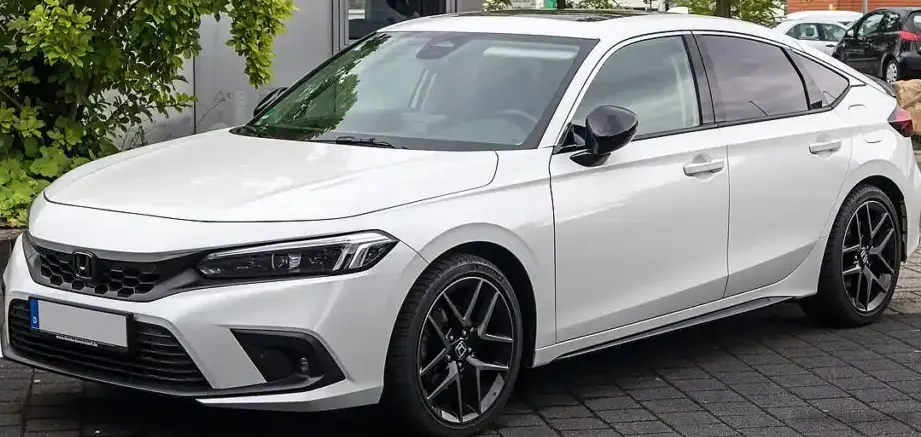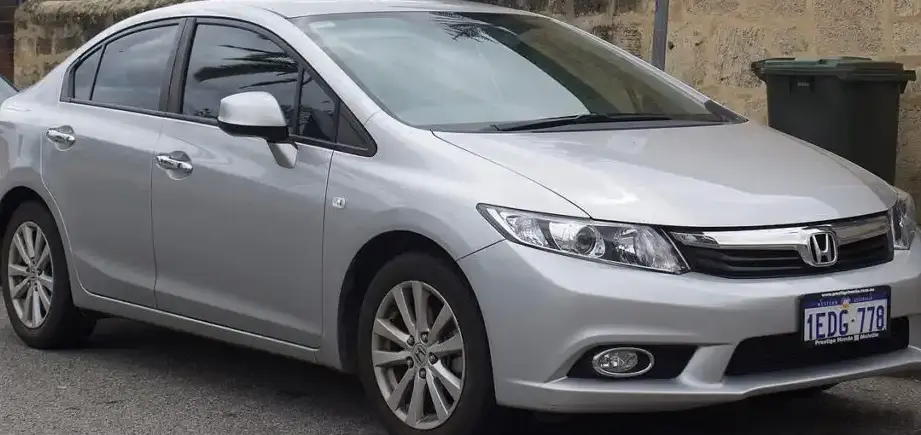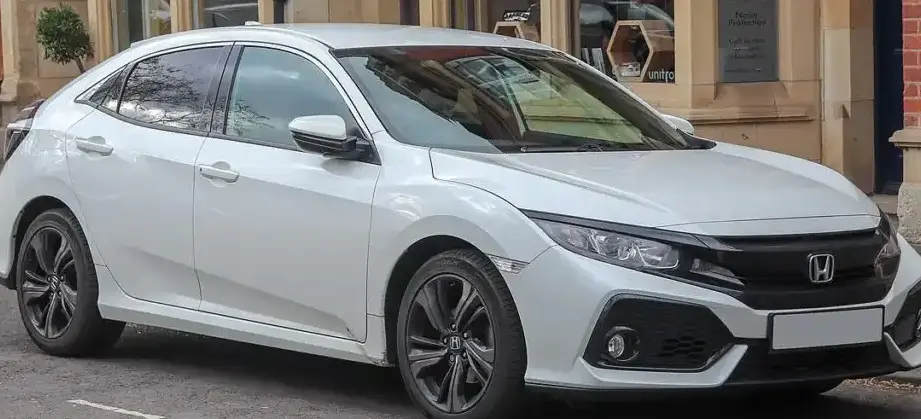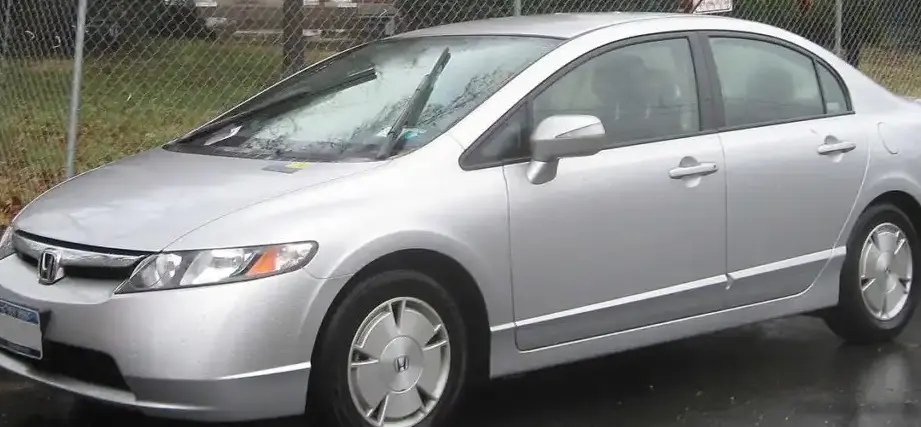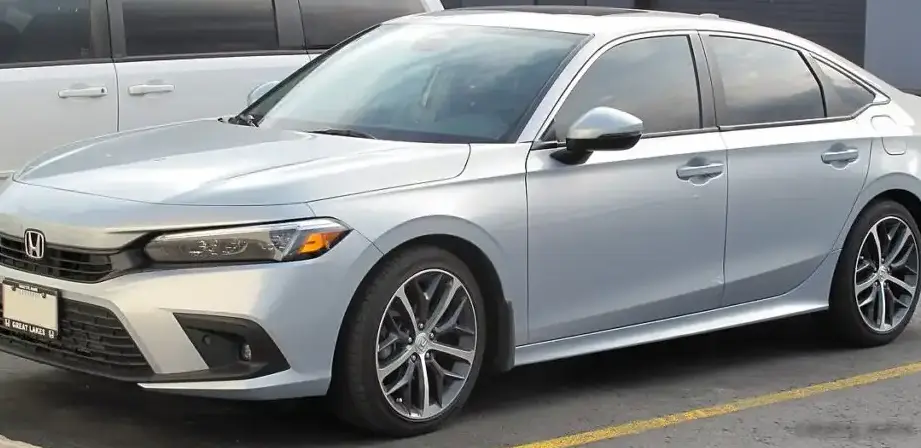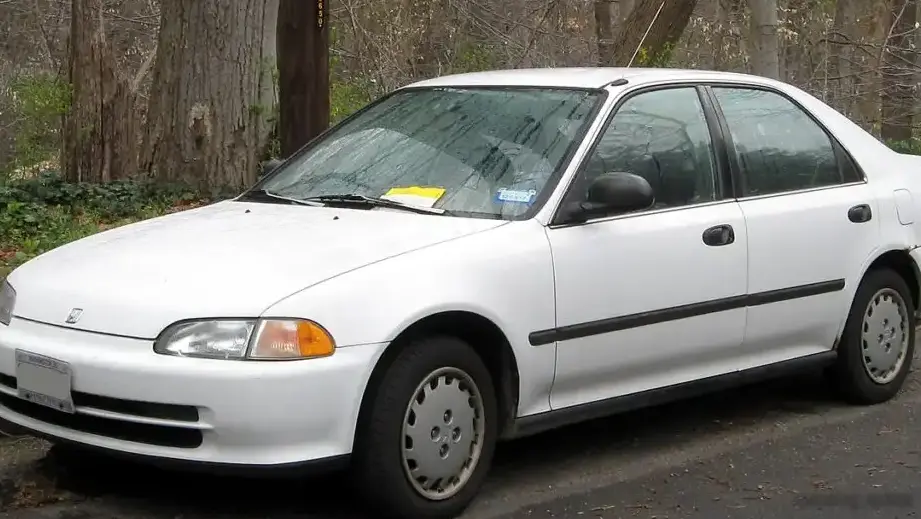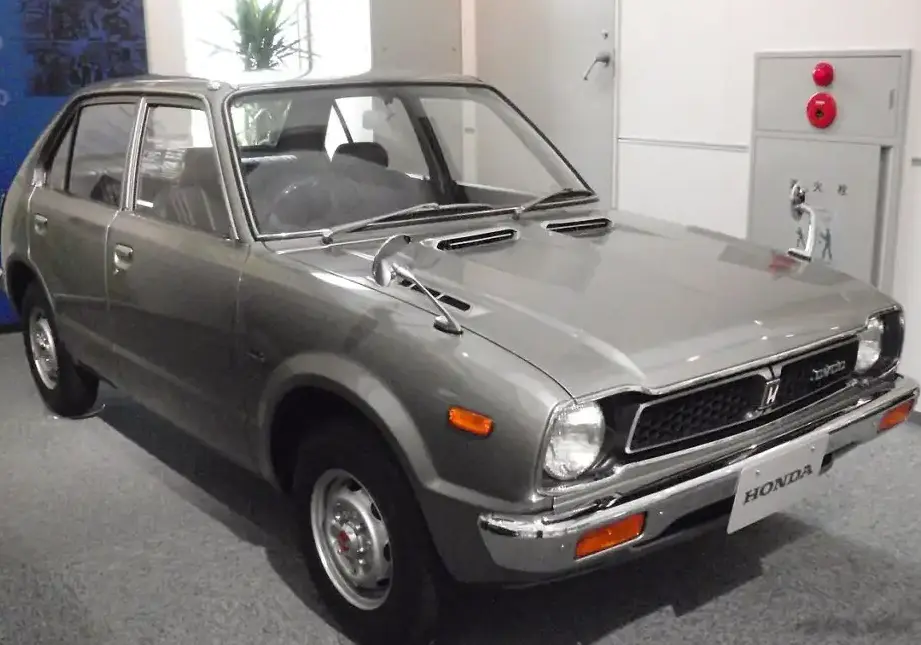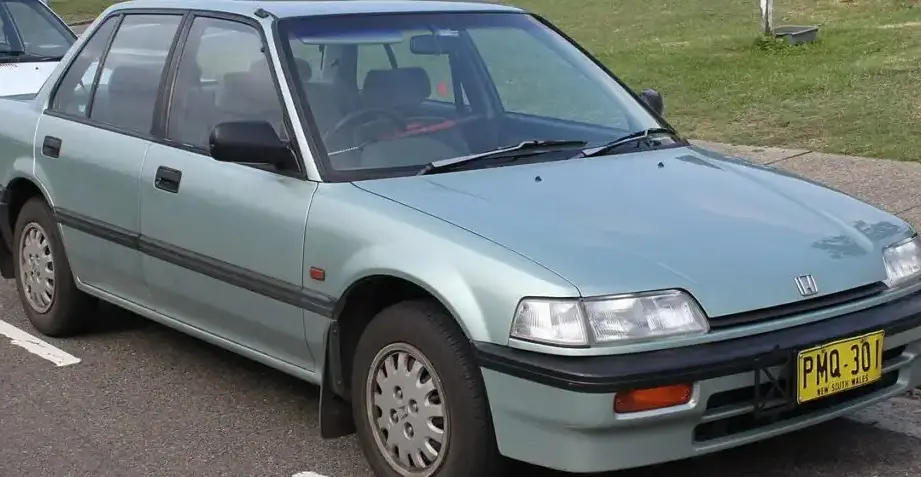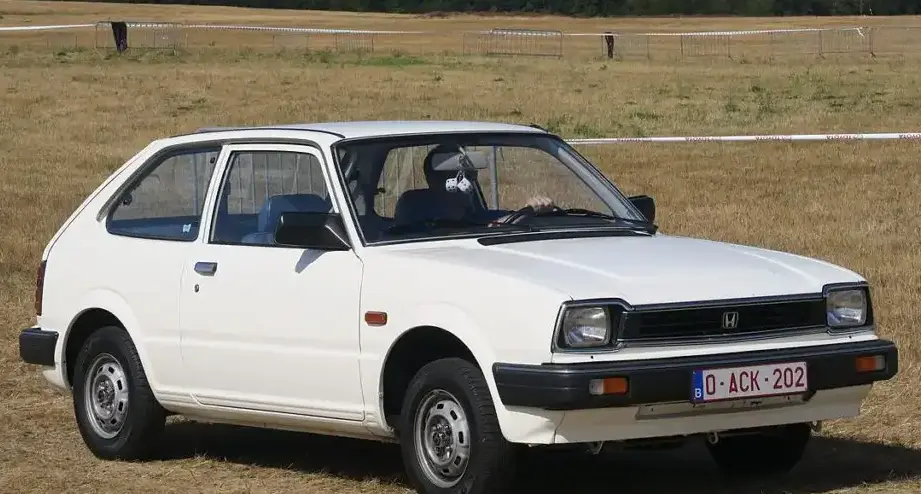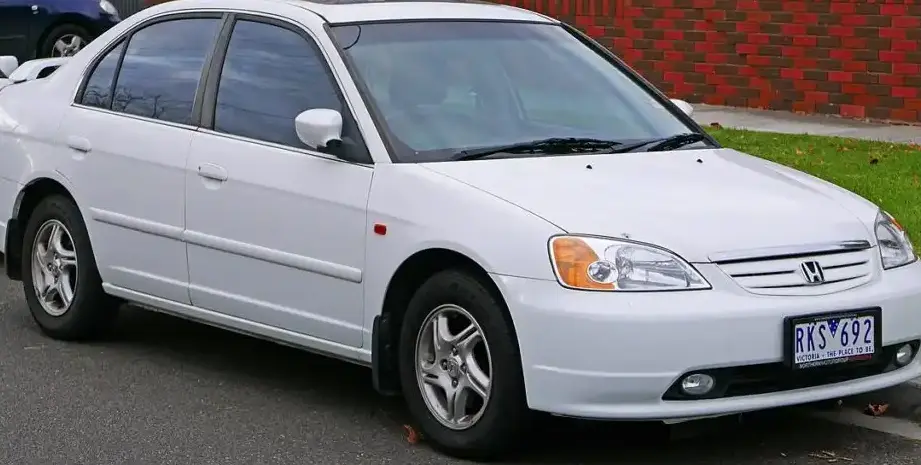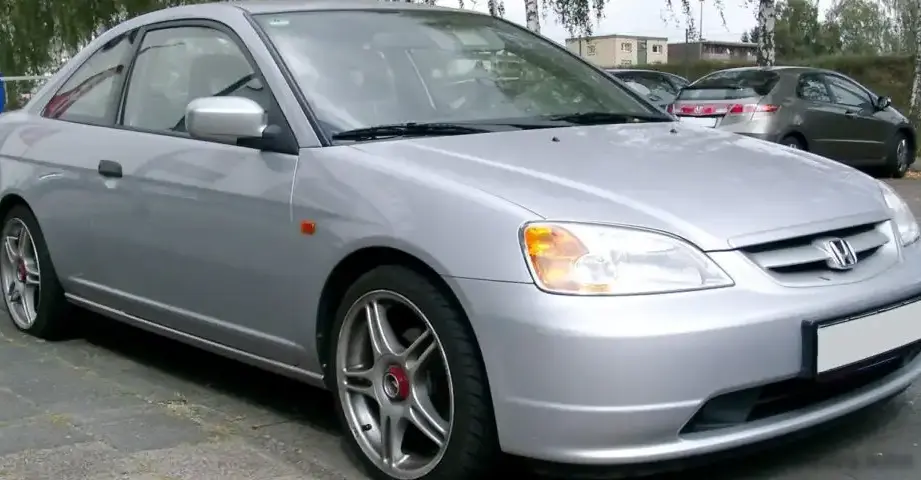
The Honda Civic VII Coupe 1.7i, producing 125 horsepower with an automatic transmission, was a mainstay of the North American Honda lineup from 2001 to 2006. Positioned as a practical and fuel-efficient entry-level coupe, it represented a significant portion of Civic sales during its production run. This variant was part of the seventh generation Civic (2001-2005, with minor updates through 2006), known internally as the New Super Compact platform. It offered a balance between affordability, reliability, and everyday usability, appealing to a broad demographic of first-time car buyers and those seeking a dependable commuter vehicle.
Technical Specifications
| Brand | Honda |
| Model | Civic |
| Generation | Civic VII Coupe |
| Type (Engine) | 1.7i (125 Hp) Automatic |
| Start of production | 2001 |
| End of production | 2006 |
| Powertrain Architecture | Internal Combustion engine |
| Body type | Coupe |
| Seats | 5 |
| Doors | 2 |
| Fuel consumption (urban) | 9.9 l/100 km (23.8 US mpg) |
| Fuel consumption (extra urban) | 5.7 l/100 km (41.3 US mpg) |
| Fuel consumption (combined) | 6.8 l/100 km (34.6 US mpg) |
| Fuel Type | Petrol (Gasoline) |
| Acceleration 0 – 100 km/h | 11.1 sec |
| Acceleration 0 – 62 mph | 11.1 sec |
| Acceleration 0 – 60 mph | 10.5 sec |
| Maximum speed | 195 km/h (121.17 mph) |
| Weight-to-power ratio | 9.2 kg/Hp |
| Weight-to-torque ratio | 7.4 kg/Nm |
| Power | 125 Hp @ 6300 rpm |
| Torque | 154 Nm @ 4800 rpm (113.58 lb.-ft. @ 4800 rpm) |
| Engine layout | Front, Transverse |
| Engine Model/Code | D17A |
| Engine displacement | 1668 cm3 (101.79 cu. in.) |
| Number of cylinders | 4 |
| Engine configuration | Inline |
| Cylinder Bore | 75 mm (2.95 in.) |
| Piston Stroke | 94.4 mm (3.72 in.) |
| Compression ratio | 9.9:1 |
| Number of valves per cylinder | 4 |
| Fuel injection system | Multi-port manifold injection |
| Engine aspiration | Naturally aspirated |
| Valvetrain | SOHC |
| Engine oil capacity | 3.5 l (3.7 US qt | 3.08 UK qt) |
| Coolant capacity | 3.8 l (4.02 US qt | 3.34 UK qt) |
| Kerb Weight | 1145 kg (2524.29 lbs.) |
| Max. weight | 1590 kg (3505.35 lbs.) |
| Max load | 445 kg (981.06 lbs.) |
| Trunk (boot) space | 441 l (15.57 cu. ft.) |
| Fuel tank capacity | 50 l (13.21 US gal | 11 UK gal) |
| Length | 4438 mm (174.72 in.) |
| Width | 1695 mm (66.73 in.) |
| Height | 1399 mm (55.08 in.) |
| Wheelbase | 2620 mm (103.15 in.) |
| Front track | 1470 mm (57.87 in.) |
| Rear track | 1470 mm (57.87 in.) |
| Drivetrain Architecture | Front wheel drive |
| Number of gears | 4 |
| Gearbox type | Automatic transmission |
| Front suspension | Spring Strut |
| Rear suspension | Transverse stabilizer |
| Front brakes | Ventilated discs |
| Rear brakes | Disc |
| Assisting systems | ABS (Anti-lock braking system) |
| Steering type | Steering rack and pinion |
| Tires size | 195/60 R15 |
| Wheel rims size | 15 |
INTRODUCTION
The 2001-2006 Honda Civic VII Coupe 1.7i Automatic represented a key offering in Honda’s compact car range. Built on the foundation of the seventh-generation Civic, this two-door variant provided a more sporty aesthetic than its sedan counterpart while maintaining the Civic’s reputation for reliability and fuel efficiency. The 1.7i designation indicated the engine displacement, and the “Automatic” denoted the transmission choice. This combination was aimed at buyers prioritizing ease of use and affordability over outright performance. It was a common sight on American roads, serving as a practical and dependable transportation solution.
Powertrain & Engine Architecture
At the heart of the Civic 1.7i Automatic lay the D17A engine, a 1.7-liter inline-four cylinder powerplant. This engine utilized a single overhead camshaft (SOHC) valvetrain and multi-point fuel injection. The D17A was known for its relatively simple design, contributing to its longevity and ease of maintenance. The engine produced 125 horsepower at 6300 rpm and 154 Nm (113.58 lb-ft) of torque at 4800 rpm. Paired with this engine was a four-speed automatic transmission, designed for smooth and convenient operation. While not offering the most advanced gear ratios, it provided adequate performance for daily driving. The transmission was electronically controlled, optimizing shift points based on throttle input and vehicle speed. The engine’s design prioritized fuel efficiency and low emissions, aligning with Honda’s commitment to environmental responsibility.
Driving Characteristics
The driving experience in the Civic 1.7i Automatic was characterized by its smoothness and predictability. Acceleration was adequate for merging onto highways and navigating city streets, but it wasn’t particularly brisk. The four-speed automatic transmission, while reliable, lacked the responsiveness of more modern transmissions with additional gears. Compared to the five-speed manual transmission available on other Civic trims, the automatic version felt somewhat less engaging. The gear ratios were tuned for fuel economy rather than performance, resulting in a slightly slower 0-60 mph time of around 10.5 seconds. However, the automatic transmission made the Civic exceptionally easy to drive in stop-and-go traffic, a significant advantage for many drivers. The suspension provided a comfortable ride, absorbing bumps and imperfections in the road without excessive body roll.
Equipment & Trim Levels
The Civic 1.7i Automatic typically came standard with features such as air conditioning, power windows and locks, and an AM/FM stereo. Higher trim levels, such as the EX, added features like a sunroof, upgraded audio system, and alloy wheels. Interior upholstery was typically cloth, with a relatively simple and functional dashboard layout. Optional extras included a CD player, cruise control, and side airbags. The overall interior design prioritized practicality and durability over luxury. The 1.7i Automatic was often seen as the entry-level trim, offering a good value proposition for budget-conscious buyers.
Chassis & Braking
The Civic 1.7i Automatic featured a front-wheel-drive layout with a MacPherson strut front suspension and a torsion beam rear suspension. The front brakes were ventilated discs, providing adequate stopping power, while the rear brakes were solid discs. Anti-lock Braking System (ABS) was standard, enhancing safety by preventing wheel lockup during hard braking. The chassis was designed to provide a balance between ride comfort and handling. The relatively lightweight construction of the Civic contributed to its nimble handling characteristics. Stabilizer bars were included to reduce body roll during cornering.
Market Reception & Comparison
The Civic 1.7i Automatic was generally well-received by critics and consumers alike. It was praised for its reliability, fuel efficiency, and affordability. However, some reviewers noted that the automatic transmission lacked the responsiveness of the manual version and that the engine’s performance was somewhat underwhelming. Compared to other trims, such as the Civic Si with its more powerful engine, the 1.7i Automatic offered a more economical and practical option. Fuel economy was a key selling point, with the Civic achieving around 34.6 US mpg in combined driving. Reliability was also a major factor, with the Civic consistently ranking highly in consumer surveys.
Legacy
The Honda Civic VII Coupe 1.7i Automatic has proven to be a remarkably durable and reliable vehicle. Many examples are still on the road today, a testament to Honda’s engineering prowess. The D17A engine is known for its longevity, and the four-speed automatic transmission, while not the most sophisticated, is generally dependable. In the used car market, these Civics are often sought after for their affordability and reputation for trouble-free operation. While not a performance icon, the 1.7i Automatic remains a popular choice for those seeking a practical and economical coupe. Its simplicity and reliability have cemented its place as a dependable and enduring vehicle in automotive history.