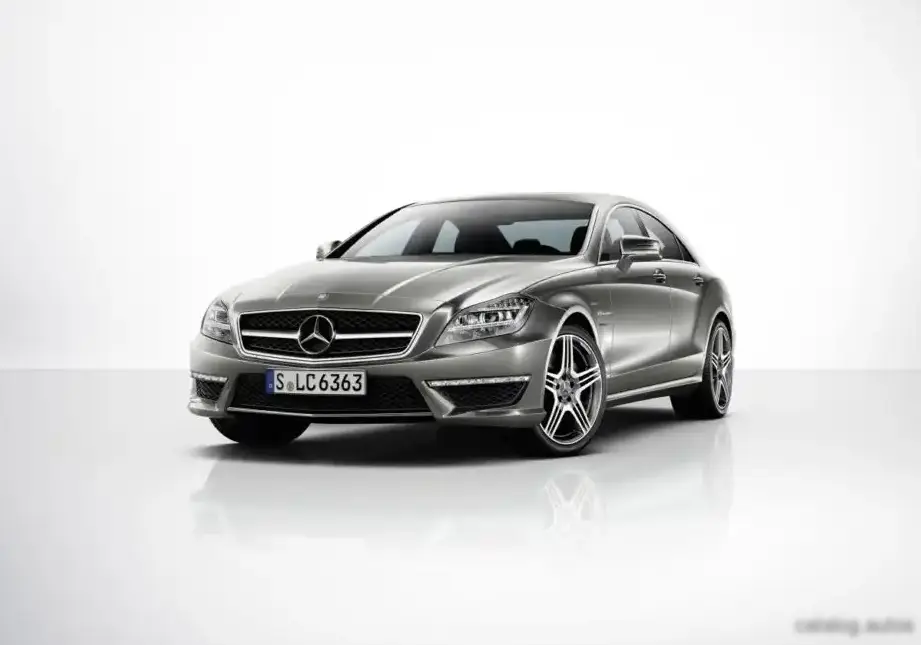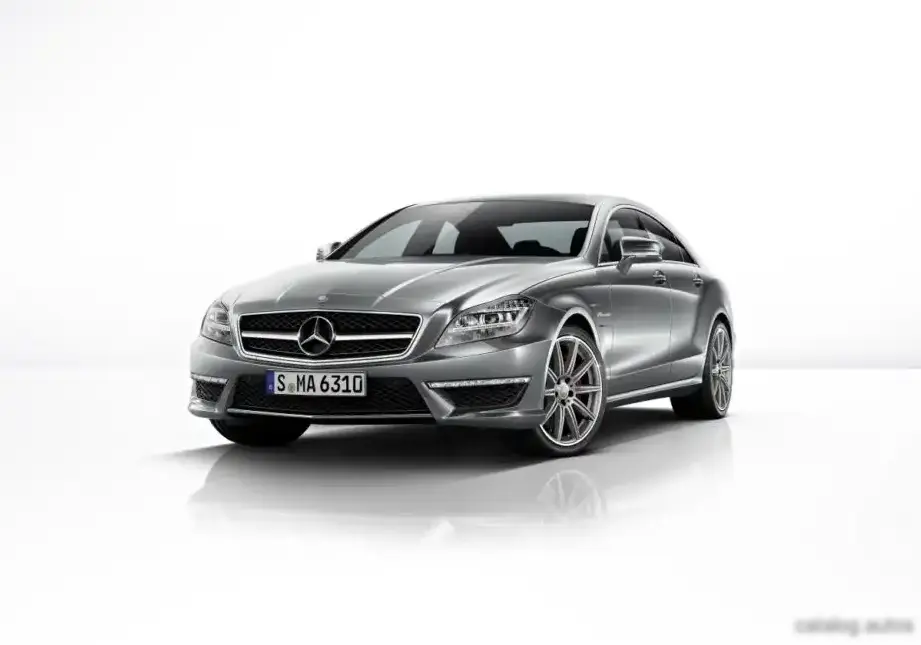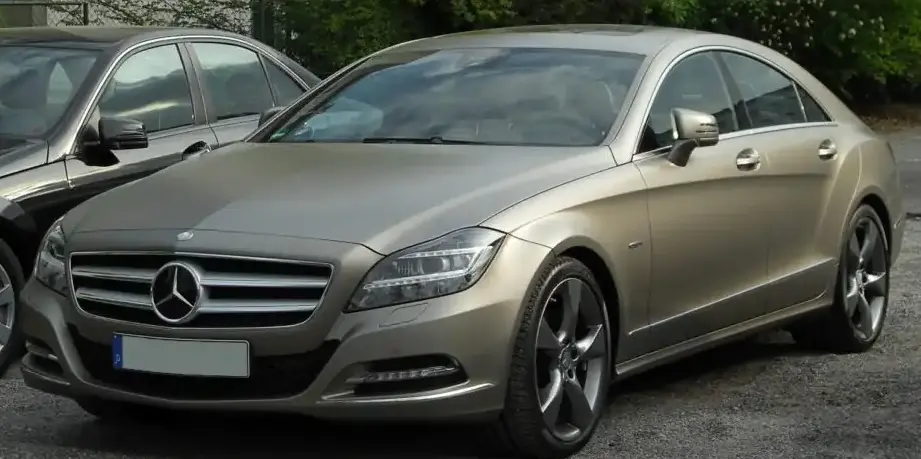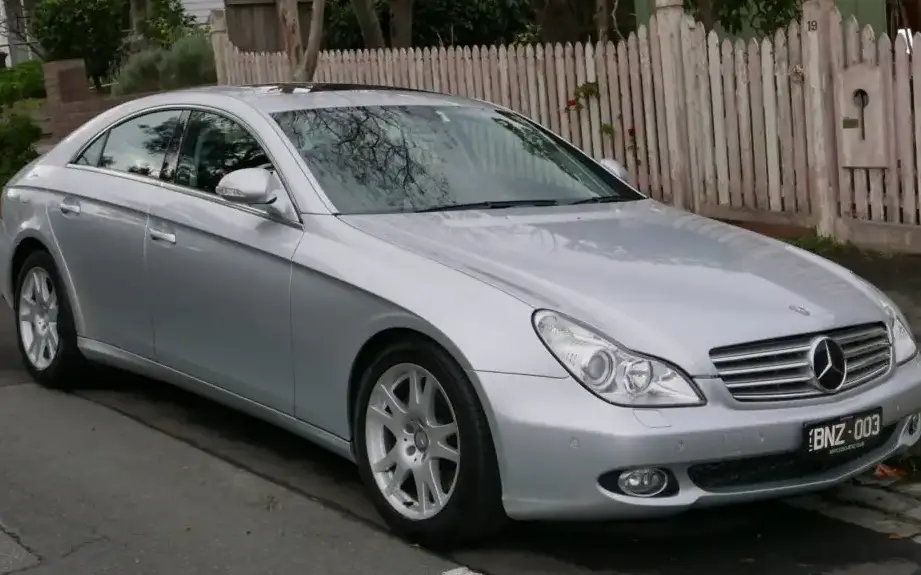
The Mercedes-Benz CLS 350 CGI, produced between June 2006 and January 2008, represented a significant offering within the C219 CLS-Class coupe range. Positioned as a mid-range variant, it bridged the gap between the entry-level CLS 320 CDI and the higher-performance CLS 500 and CLS 63 AMG models. The CLS, launched in 2004, pioneered the four-door coupe segment, blending the elegance of a coupe with the practicality of a sedan. The 350 CGI variant aimed to deliver a balance of performance, efficiency, and luxury, appealing to buyers seeking a sophisticated grand tourer. It was primarily marketed in Europe and North America, offering a compelling alternative to traditional luxury sedans.
| Brand | Mercedes-Benz |
| Model | CLS |
| Generation | CLS coupe (C219) |
| Type (Engine) | CLS 350 CGI V6 (292 Hp) 7G-TRONIC |
| Start of production | June, 2006 |
| End of production | January, 2008 |
| Powertrain Architecture | Internal Combustion engine |
| Body type | Coupe |
| Seats | 4 |
| Doors | 4 |
| Fuel consumption (urban) | 13-13.2 l/100 km (18.1 – 17.8 US mpg, 21.7 – 21.4 UK mpg, 7.7 – 7.6 km/l) |
| Fuel consumption (extra urban) | 7-7.2 l/100 km (33.6 – 32.7 US mpg, 40.4 – 39.2 UK mpg, 14.3 – 13.9 km/l) |
| Fuel consumption (combined) | 9.1-9.3 l/100 km (25.8 – 25.3 US mpg, 31 – 30.4 UK mpg, 11 – 10.8 km/l) |
| CO2 emissions | 217-222 g/km |
| Fuel Type | Petrol (Gasoline) |
| Acceleration 0 – 100 km/h | 6.7 sec |
| Acceleration 0 – 62 mph | 6.7 sec |
| Acceleration 0 – 60 mph | 6.4 sec |
| Maximum speed | 250 km/h (155.34 mph) – Electronically limited |
| Emission standard | Euro 4 |
| Weight-to-power ratio | 5.7 kg/Hp, 175.9 Hp/tonne |
| Weight-to-torque ratio | 4.5 kg/Nm, 219.9 Nm/tonne |
| Power | 292 Hp @ 6400 rpm |
| Torque | 365 Nm @ 3000-5100 rpm (269.21 lb.-ft. @ 3000-5100 rpm) |
| Maximum engine speed | 6750 rpm |
| Engine layout | Front, Longitudinal |
| Engine Model/Code | M 272.985 |
| Engine displacement | 3498 cm3 (213.46 cu. in.) |
| Number of cylinders | 6 |
| Engine configuration | V-engine |
| Cylinder Bore | 92.9 mm (3.66 in.) |
| Piston Stroke | 86 mm (3.39 in.) |
| Compression ratio | 12.2:1 |
| Number of valves per cylinder | 4 |
| Fuel injection system | Direct injection |
| Engine aspiration | Naturally aspirated engine |
| Valvetrain | DOHC, VVT |
| Engine oil capacity | 8 l (8.45 US qt | 7.04 UK qt) |
| Coolant capacity | 12 l (12.68 US qt | 10.56 UK qt) |
| Kerb Weight | 1660 kg (3659.67 lbs.) |
| Max. weight | 2195 kg (4839.15 lbs.) |
| Max load | 535 kg (1179.47 lbs.) |
| Trunk (boot) space – minimum | 505 l (17.83 cu. ft.) |
| Fuel tank capacity | 80 l (21.13 US gal | 17.6 UK gal) |
| Max. roof load | 100 kg (220.46 lbs.) |
| Length | 4913 mm (193.43 in.) |
| Width | 1873 mm (73.74 in.) |
| Width including mirrors | 2059 mm (81.06 in.) |
| Height | 1390 mm (54.72 in.) |
| Wheelbase | 2854 mm (112.36 in.) |
| Front track | 1593 mm (62.72 in.) |
| Rear track | 1603 mm (63.11 in.) |
| Front overhang | 894 mm (35.2 in.) |
| Rear overhang | 1165 mm (45.87 in.) |
| Ride height (ground clearance) | 144 mm (5.67 in.) |
| Drag coefficient (Cd) | 0.30 |
| Minimum turning circle | 11.21 m (36.78 ft.) |
| Drivetrain Architecture | Rear wheel drive |
| Number of gears and type of gearbox | 7 gears, automatic transmission G-TRONIC |
| Front suspension | Independent multi-link suspension, Transverse stabilizer, Air Suspension – Optional |
| Rear suspension | Independent multi-link suspension, Transverse stabilizer, Air Suspension – Optional |
| Front brakes | Ventilated discs |
| Rear brakes | Ventilated discs |
Powertrain & Engine Architecture
The CLS 350 CGI was powered by the M272.985 3.5-liter V6 engine. This engine was a key component of Mercedes-Benz’s CGI (Compressed Gas Ignition) technology, which utilized direct fuel injection and a high compression ratio (12.2:1) to improve efficiency and reduce emissions. Unlike some contemporary engines, it did not employ turbocharging or supercharging. The engine featured a double overhead camshaft (DOHC) valvetrain with variable valve timing (VVT) on both intake and exhaust valves, optimizing performance across the rev range. The engine produced 292 horsepower at 6400 rpm and 365 Nm (269.21 lb-ft) of torque between 3000 and 5100 rpm. The engine’s longitudinal mounting and rear-wheel-drive configuration were typical for Mercedes-Benz vehicles of this era.
The engine was mated to Mercedes-Benz’s 7G-TRONIC seven-speed automatic transmission. This transmission was known for its smooth shifting and wide gear ratio spread, contributing to both fuel efficiency and responsive acceleration. The 7G-TRONIC offered a manual shift mode, allowing drivers some control over gear selection, but it was primarily designed for automatic operation. The transmission’s electronic control unit (ECU) adapted shift points based on driving style and road conditions.
Driving Characteristics
The CLS 350 CGI with the 7G-TRONIC transmission offered a comfortable and refined driving experience. While not overtly sporty, the engine provided adequate power for effortless cruising and confident overtaking. The 0-60 mph acceleration time of around 6.4 seconds was respectable for the period. The 7G-TRONIC transmission contributed to smooth gear changes, minimizing disruptions during acceleration. Compared to the CLS 320 CDI, the 350 CGI offered a more responsive and rev-happy engine, albeit with slightly lower fuel economy. Against the more powerful CLS 500, the 350 CGI felt less urgent in its acceleration, but it provided a more balanced and economical driving experience. The automatic transmission, while smooth, could sometimes feel hesitant during quick downshifts compared to the more direct feel of a manual gearbox.
Equipment & Trim Levels
The CLS 350 CGI typically came well-equipped with standard features including leather upholstery, automatic climate control, a premium audio system, and power-adjustable front seats. Common options included a sunroof, navigation system, upgraded audio, and rear-seat entertainment. The interior design emphasized luxury and sophistication, with high-quality materials and a focus on comfort. Exterior features included alloy wheels, chrome accents, and a distinctive coupe silhouette. The trim level was generally positioned as a mid-range offering, providing a good balance of features and price.
Chassis & Braking
The CLS 350 CGI utilized an independent multi-link suspension system at both the front and rear, providing a comfortable ride and good handling characteristics. An optional air suspension system was available, further enhancing ride quality and allowing for adjustable ride height. The braking system consisted of ventilated discs on all four wheels, providing ample stopping power. Anti-lock braking system (ABS) was standard. The steering was a hydraulic power-assisted rack and pinion system, offering precise and responsive steering feel.
Market Reception & Comparison
The CLS 350 CGI was generally well-received by automotive critics. It was praised for its stylish design, comfortable interior, and refined driving experience. However, some critics noted that the engine, while capable, lacked the outright performance of some of its competitors. Fuel economy was considered reasonable for a vehicle of its size and class, but not exceptional. Compared to the CLS 320 CDI, the 350 CGI offered a more engaging driving experience but at the cost of slightly higher fuel consumption. Against the CLS 500, it represented a more affordable and economical option, albeit with less power.
Legacy
The M272 engine family, including the 3.5-liter variant found in the CLS 350 CGI, has proven to be relatively reliable, although preventative maintenance is crucial. Common issues include oil leaks and potential problems with the balance shaft. The 7G-TRONIC transmission is also generally reliable, but requires regular fluid changes to ensure smooth operation. In the used car market, the CLS 350 CGI represents a good value proposition for buyers seeking a stylish and comfortable grand tourer. However, potential buyers should be aware of the potential maintenance costs associated with a luxury vehicle of this age. The CLS C219, as a whole, is remembered for establishing the four-door coupe segment and remains a desirable vehicle for enthusiasts.