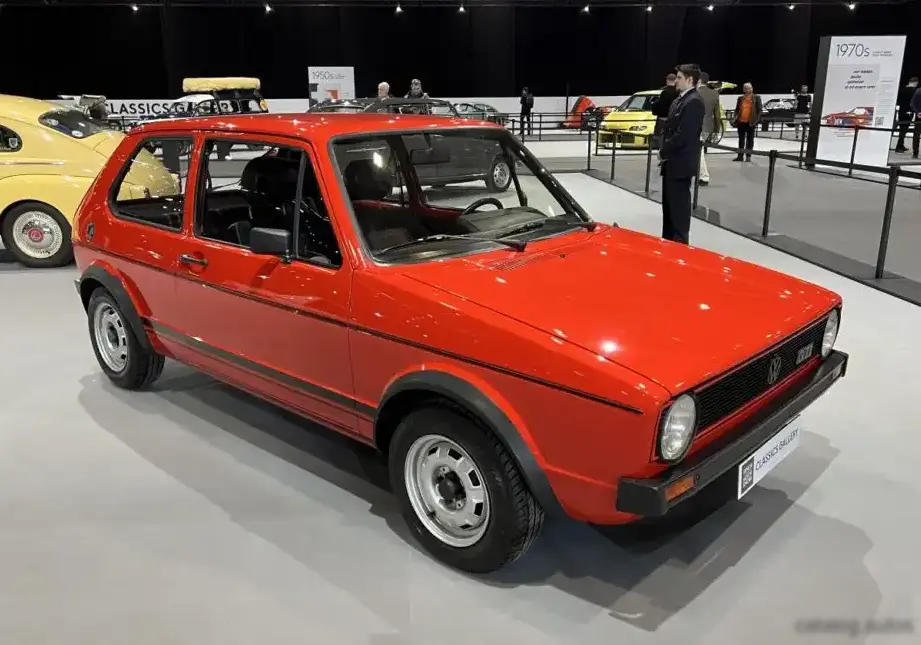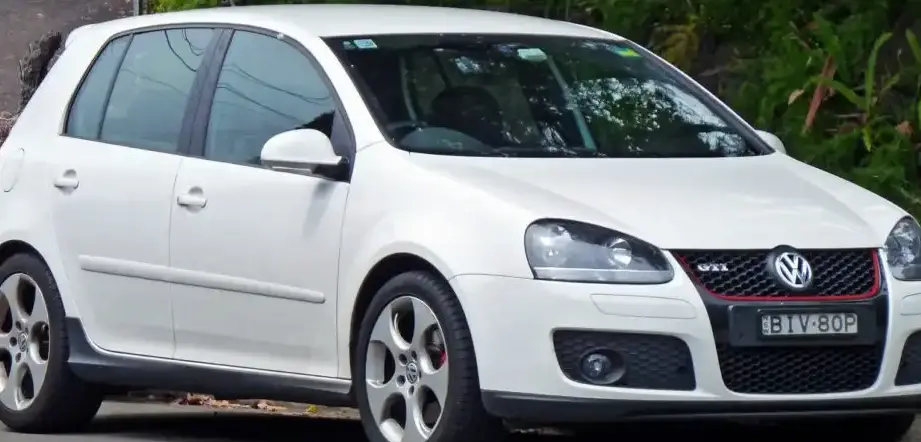
The Volkswagen Golf V GTI 2.0 TFSI with the Direct-Shift Gearbox (DSG) represents a significant evolution in the Golf GTI lineage, produced between 2004 and 2008. Positioned as the performance flagship of the Golf V range (the fifth generation Golf, internally designated the 1K chassis), this variant brought forced induction and advanced transmission technology to a broader audience. It built upon the success of previous GTI models, offering a compelling blend of everyday usability and engaging driving dynamics. This 5-door hatchback aimed to deliver a more refined and technologically advanced hot hatch experience compared to its predecessors.
Technical Specifications
| Brand | Volkswagen |
| Model | Golf |
| Generation | Golf V (5-door) |
| Type (Engine) | GTI 2.0 TFSI (200 Hp) DSG |
| Start of production | 2004 |
| End of production | 2008 |
| Powertrain Architecture | Internal Combustion engine |
| Body type | Hatchback |
| Seats | 5 |
| Doors | 5 |
| Fuel consumption (urban) | 10.7-11 l/100 km (22 – 21.4 US mpg) |
| Fuel consumption (extra urban) | 6.2-6.3 l/100 km (37.9 – 37.3 US mpg) |
| Fuel consumption (combined) | 7.9-8.2 l/100 km (29.8 – 28.7 US mpg) |
| CO2 emissions | 190-197 g/km |
| Fuel Type | Petrol (Gasoline) |
| Acceleration 0 – 100 km/h | 6.9 sec |
| Acceleration 0 – 62 mph | 6.9 sec |
| Acceleration 0 – 60 mph | 6.6 sec |
| Maximum speed | 233 km/h (144.78 mph) |
| Emission standard | Euro 4 |
| Weight-to-power ratio | 6.9 kg/Hp |
| Weight-to-torque ratio | 4.9 kg/Nm |
| Power | 200 Hp @ 5100 rpm |
| Torque | 280 Nm @ 1800-5000 rpm (206.52 lb.-ft. @ 1800-5000 rpm) |
| Engine layout | Front, Transverse |
| Engine Model/Code | BWA |
| Engine displacement | 1984 cm3 (121.07 cu. in.) |
| Number of cylinders | 4 |
| Engine configuration | Inline |
| Cylinder Bore | 82.5 mm (3.25 in.) |
| Piston Stroke | 92.8 mm (3.65 in.) |
| Compression ratio | 10.3:1 |
| Number of valves per cylinder | 4 |
| Fuel injection system | Direct injection |
| Engine aspiration | Turbocharger, Intercooler |
| Valvetrain | DOHC |
| Engine oil capacity | 4.6 l (4.86 US qt | 4.05 UK qt) |
| Coolant | 8 l (8.45 US qt | 7.04 UK qt) |
| Kerb Weight | 1383 kg (3048.99 lbs.) |
| Max. weight | 1880 kg (4144.69 lbs.) |
| Max load | 497 kg (1095.7 lbs.) |
| Trunk (boot) space – minimum | 350 l (12.36 cu. ft.) |
| Trunk (boot) space – maximum | 1305 l (46.09 cu. ft.) |
| Fuel tank capacity | 55 l (14.53 US gal | 12.1 UK gal) |
| Max. roof load | 75 kg (165.35 lbs.) |
| Permitted trailer load with brakes (8%) | 1700 kg (3747.86 lbs.) |
| Permitted trailer load with brakes (12%) | 1400 kg (3086.47 lbs.) |
| Permitted trailer load without brakes | 710 kg (1565.28 lbs.) |
| Permitted towbar download | 75 kg (165.35 lbs.) |
| Length | 4216 mm (165.98 in.) |
| Width | 1759 mm (69.25 in.) |
| Width including mirrors | 2010 mm (79.13 in.) |
| Height | 1469 mm (57.83 in.) |
| Wheelbase | 2578 mm (101.5 in.) |
| Front track | 1534 mm (60.39 in.) |
| Rear track | 1516 mm (59.69 in.) |
| Minimum turning circle | 10.9 m (35.76 ft.) |
| Drivetrain | Front wheel drive |
| Number of gears and type of gearbox | 6 gears, automatic transmission DSG |
| Front suspension | Independent, type McPherson with coil spring and anti-roll bar |
| Rear suspension | Independent multi-link spring suspension with stabilizer |
| Front brakes | Ventilated discs |
| Rear brakes | Disc |
| Assisting systems | ABS (Anti-lock braking system) |
| Steering type | Steering rack and pinion |
| Power steering | Electric Steering |
| Tires size | 225/45 R17; 225/40 R18 |
| Wheel rims size | 7.5J X 17; 7.5J x 18 |
INTRODUCTION
The Golf V GTI 2.0 TFSI DSG, launched in 2004, marked a departure from the naturally aspirated engines of previous GTI generations. It was a key component of the Golf V lineup, designed to appeal to enthusiasts seeking a more modern and technologically advanced hot hatch. The “TFSI” designation signified Volkswagen’s adoption of direct-injection gasoline technology combined with turbocharging, resulting in increased power and efficiency. The DSG (Direct-Shift Gearbox) was a crucial element, offering quicker and smoother gear changes compared to a traditional automatic transmission, and even challenging the shift speed of skilled manual drivers. This variant sat firmly in the mid-to-upper range of the Golf V offerings, bridging the gap between the more economical models and the range-topping R32.
Powertrain & Engine Architecture
At the heart of the Golf V GTI DSG lies the 2.0-liter inline-four cylinder engine, internally designated the BWA. This engine is a significant upgrade over the 1.8L 20V engines found in earlier Golf GTIs. The BWA utilizes direct fuel injection (FSI – Fuel Stratified Injection) which allows for precise fuel delivery and improved combustion efficiency. A single turbocharger with an intercooler provides forced induction, boosting power output to 200 horsepower and 280 Nm (206.52 lb-ft) of torque. The engine features a DOHC (Dual Overhead Camshaft) valvetrain with four valves per cylinder. The DSG 6-speed dual-clutch transmission is a pivotal component. It operates by utilizing two separate clutches for odd and even gears, allowing for pre-selection of the next gear and virtually seamless shifts. This transmission offers both fully automatic operation and manual control via steering wheel-mounted paddle shifters or the gear selector.
Driving Characteristics
The 200 hp and 280 Nm of torque delivered by the BWA engine, coupled with the DSG transmission, resulted in a noticeably quicker and more responsive driving experience compared to earlier Golf GTIs. Acceleration from 0 to 60 mph was achieved in approximately 6.6 seconds, and the car could reach a top speed of 144.78 mph. The DSG transmission’s quick shifts minimized power interruption during gear changes, contributing to a more linear power delivery. While not as raw or visceral as a manual transmission, the DSG offered a level of convenience and performance that appealed to a wider range of drivers. The gear ratios were tuned for a balance between acceleration and fuel economy, providing ample torque in everyday driving situations while still offering strong performance when pushed. Compared to the 1.6L or 1.4L Golf models, the GTI offered a substantial performance upgrade, and while the R32 provided even more power, the GTI offered a more accessible and fuel-efficient option.
Equipment & Trim Levels
The Golf V GTI DSG came standard with a comprehensive list of features, reflecting its position as the performance variant. Interior appointments typically included sport seats upholstered in a distinctive plaid fabric (often referred to as “Clark” plaid), a leather-wrapped steering wheel, and aluminum pedal caps. Standard exterior features included a unique GTI front bumper with a honeycomb grille, side skirts, a rear spoiler, and dual exhaust pipes. Optional extras included leather upholstery, sunroof, upgraded audio systems, and parking sensors. The dashboard featured a unique instrument cluster with red accents and specific GTI badging. Climate control, power windows, and central locking were standard across the range.
Chassis & Braking
The Golf V GTI featured a sport-tuned suspension with McPherson struts at the front and a multi-link setup at the rear. Stabilizer bars were fitted to both axles to reduce body roll during cornering. Braking duties were handled by ventilated disc brakes at the front and solid discs at the rear. ABS (Anti-lock Braking System) was standard. The GTI’s suspension was slightly stiffer than that of the standard Golf models, providing a more controlled and engaging driving experience. The chassis was reinforced to handle the increased power and torque of the 2.0 TFSI engine.
Market Reception & Comparison
The Golf V GTI 2.0 TFSI DSG was generally well-received by automotive critics. It was praised for its strong performance, refined handling, and advanced technology. The DSG transmission was a particular highlight, with reviewers noting its quick shifts and ease of use. Fuel economy was considered respectable for a performance car of its class. Compared to rivals like the Ford Focus ST and the Renault Mégane Sport, the Golf GTI offered a more mature and refined driving experience. The 1.9 TDI Golf models offered superior fuel economy but lacked the GTI’s outright performance. The R32, with its 3.2-liter V6 engine, provided more power but came at a higher price point and with increased running costs.
Legacy
The BWA engine and DSG transmission combination proved to be relatively reliable, although preventative maintenance is crucial. Common issues include carbon buildup on the intake valves (a characteristic of direct-injection engines) and potential DSG transmission issues if maintenance intervals are not adhered to. Today, the Golf V GTI 2.0 TFSI DSG remains a popular choice in the used car market, appreciated for its blend of performance, practicality, and relatively modern features. It represents a significant milestone in the evolution of the Golf GTI, paving the way for future generations of performance Golf models. Well-maintained examples continue to offer an engaging and rewarding driving experience.