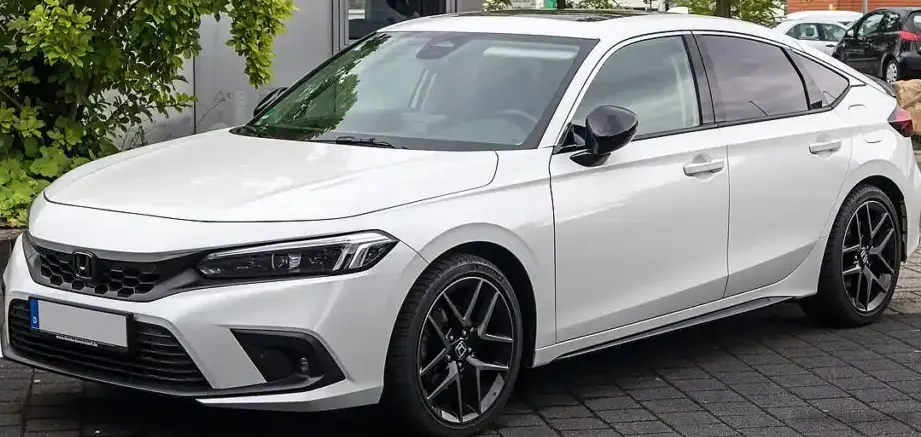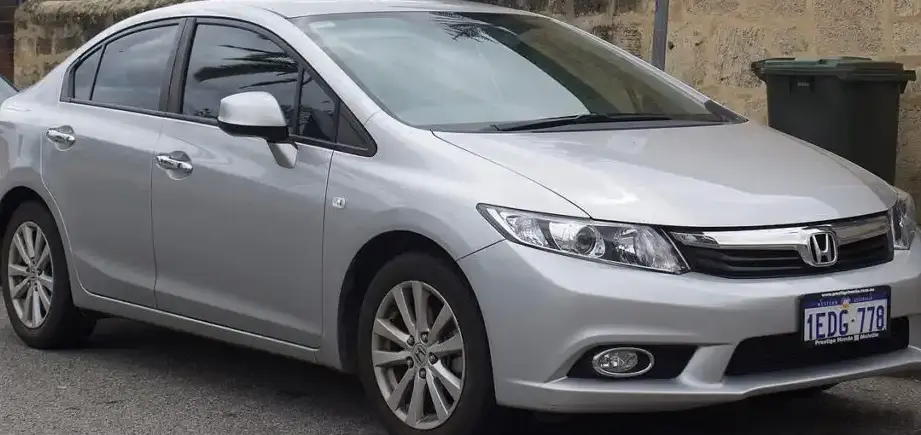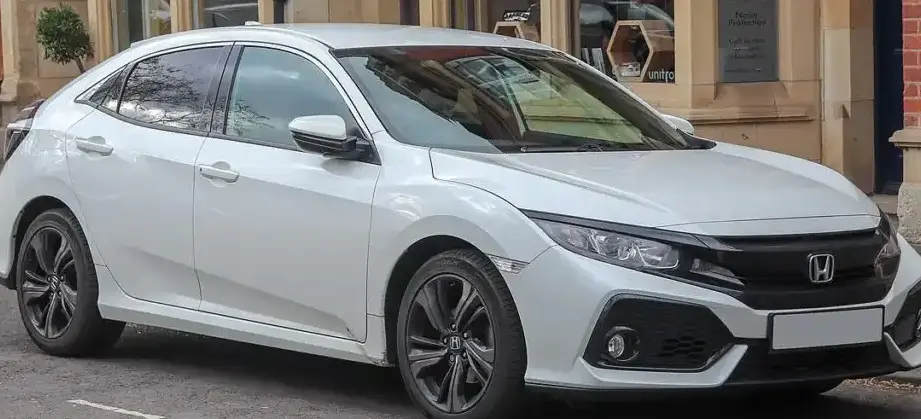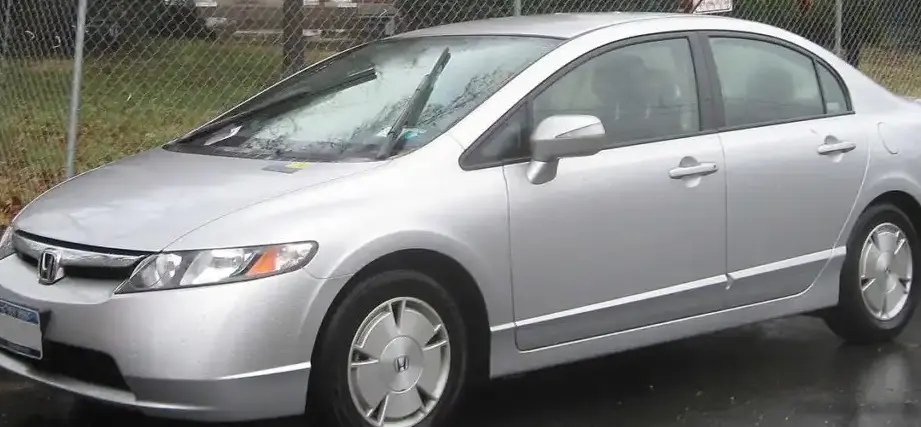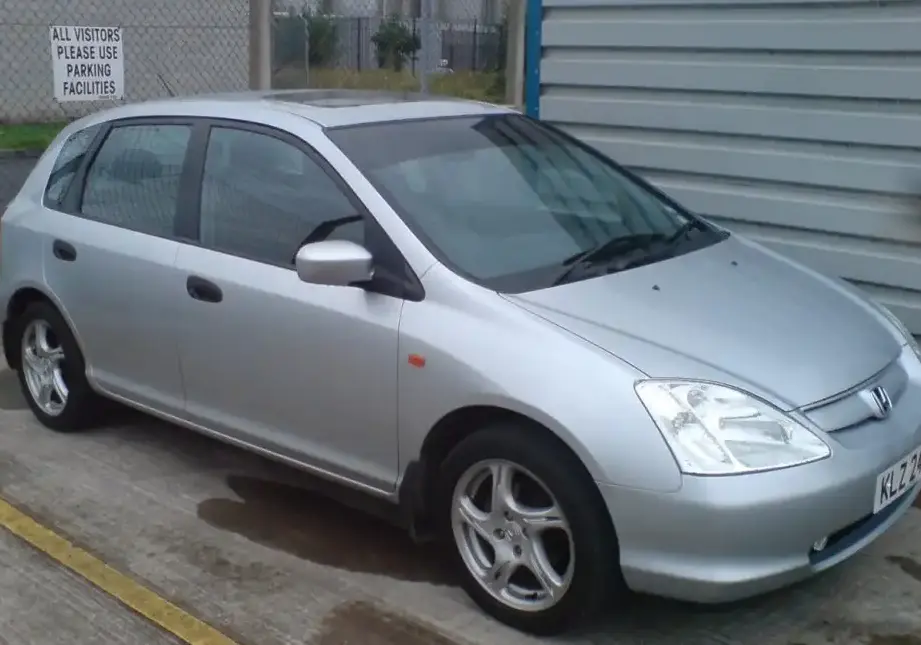
The Honda Civic VII Hatchback 5D 1.6 16V, produced between 2001 and 2006, represented a significant evolution in Honda’s popular compact car line. Part of the seventh generation Civic (internally designated as the ES platform), this hatchback variant was primarily aimed at the European market, where practicality and fuel efficiency were highly valued. In the US, the Civic hatchback was not widely available during this generation, with sedan and coupe models dominating sales. The 1.6 16V engine, producing 110 horsepower, positioned this trim as a mid-range offering, balancing affordability with reasonable performance. It served as a step up from the base 1.4L models, while remaining more accessible than the performance-oriented Si variants.
Technical Specifications
| Brand | Honda |
| Model | Civic |
| Generation | Civic VII Hatchback 5D |
| Type (Engine) | 1.6 16V (110 Hp) |
| Start of production | 2001 |
| End of production | 2006 |
| Powertrain Architecture | Internal Combustion engine |
| Body type | Hatchback |
| Seats | 5 |
| Doors | 5 |
| Fuel consumption (urban) | 8.7 l/100 km (27 US mpg, 32.5 UK mpg, 11.5 km/l) |
| Fuel consumption (extra urban) | 5.5 l/100 km (42.8 US mpg, 51.4 UK mpg, 18.2 km/l) |
| Fuel consumption (combined) | 6.7 l/100 km (35.1 US mpg, 42.2 UK mpg, 14.9 km/l) |
| Fuel Type | Petrol (Gasoline) |
| Acceleration 0 – 100 km/h | 10.2 sec |
| Acceleration 0 – 62 mph | 10.2 sec |
| Acceleration 0 – 60 mph | 9.7 sec |
| Maximum speed | 187 km/h (116.2 mph) |
| Weight-to-power ratio | 10.4 kg/Hp, 96.1 Hp/tonne |
| Weight-to-torque ratio | 7.5 kg/Nm, 132.8 Nm/tonne |
| Power | 110 Hp @ 5600 rpm |
| Power per litre | 69.2 Hp/l |
| Torque | 152 Nm @ 4300 rpm (112.11 lb.-ft. @ 4300 rpm) |
| Engine layout | Front, Transverse |
| Engine Model/Code | D16V1 |
| Engine displacement | 1590 cm3 (97.03 cu. in.) |
| Number of cylinders | 4 |
| Engine configuration | Inline |
| Cylinder Bore | 75 mm (2.95 in.) |
| Piston Stroke | 90 mm (3.54 in.) |
| Compression ratio | 10.4:1 |
| Number of valves per cylinder | 4 |
| Fuel injection system | Multi-port manifold injection |
| Engine aspiration | Naturally aspirated engine |
| Engine oil capacity | 3.5 l (3.7 US qt | 3.08 UK qt) |
| Coolant capacity | 4 l (4.23 US qt | 3.52 UK qt) |
| Kerb Weight | 1145 kg (2524.29 lbs.) |
| Max. weight | 1630 kg (3593.53 lbs.) |
| Max load | 485 kg (1069.24 lbs.) |
| Trunk (boot) space – minimum | 370 l (13.07 cu. ft.) |
| Trunk (boot) space – maximum | 1050 l (37.08 cu. ft.) |
| Fuel tank capacity | 50 l (13.21 US gal | 11 UK gal) |
| Length | 4285 mm (168.7 in.) |
| Width | 1695 mm (66.73 in.) |
| Height | 1495 mm (58.86 in.) |
| Wheelbase | 2680 mm (105.51 in.) |
| Front track | 1468 mm (57.8 in.) |
| Rear track | 1469 mm (57.83 in.) |
| Drivetrain Architecture | Front wheel drive |
| Number of gears | 5 |
| Gearbox type | Manual transmission |
| Front suspension | Spring Strut |
| Rear suspension | Transverse stabilizer |
| Front brakes | Ventilated discs |
| Rear brakes | Disc |
| Assisting systems | ABS (Anti-lock braking system) |
| Steering type | Steering rack and pinion |
| Tires size | 195/60 R15 |
| Wheel rims size | 15 |
Powertrain & Engine Architecture
The heart of this Civic variant was the D16V1 engine, a 1.6-liter inline-four cylinder powerplant. This engine utilized a single overhead camshaft (SOHC) design with 16 valves, hence the “16V” designation. It featured multi-point fuel injection, a common setup for the era, providing precise fuel delivery for improved efficiency and emissions control. The D16V1 was known for its relatively simple design, contributing to its reliability. The engine’s 110 horsepower output at 5600 rpm and 152 Nm (112 lb-ft) of torque at 4300 rpm were respectable for its displacement and class. The engine was paired with a five-speed manual transmission, offering drivers a direct connection to the powertrain. This transmission was chosen for its durability and relatively simple maintenance requirements.
Driving Characteristics
The 1.6 16V Civic Hatchback offered a balanced driving experience. While not a performance machine, the 110 hp engine provided adequate power for everyday driving and even some spirited maneuvers. Acceleration from 0 to 60 mph took around 9.7 seconds, and it could reach a top speed of 116.2 mph. The five-speed manual transmission allowed drivers to keep the engine in its optimal power band, maximizing acceleration and responsiveness. Compared to the base 1.4L models, the 1.6 offered noticeably more punch, especially when overtaking or climbing hills. However, it lacked the outright performance of the higher-spec Si variants, which featured more powerful engines and sport-tuned suspensions. The gear ratios were well-chosen for a blend of fuel economy and usability, making it a comfortable daily driver.
Equipment & Trim Levels
The 1.6 16V trim typically included features such as power steering, central locking, electric front windows, and an AM/FM radio. Air conditioning was often an optional extra. Interior upholstery was typically cloth, with a relatively simple and functional dashboard layout. Higher trim levels within the 1.6 range might have included features like alloy wheels, a sunroof, and upgraded audio systems. Safety features included ABS (Anti-lock Braking System) as standard, a significant advancement for the time. The overall interior design prioritized practicality and durability over luxury.
Chassis & Braking
The Civic VII Hatchback utilized a front-wheel-drive layout with a MacPherson strut suspension in the front and a torsion beam suspension in the rear. This setup provided a good balance of ride comfort and handling. The front brakes were ventilated discs, offering good stopping power, while the rear brakes were solid discs. The ABS system further enhanced braking performance, particularly in slippery conditions. The chassis was relatively lightweight, contributing to the car’s agility and fuel efficiency. Stabilizer bars were included to reduce body roll during cornering.
Market Reception & Comparison
The 1.6 16V Civic Hatchback was generally well-received by automotive critics. It was praised for its fuel efficiency, reliability, and practicality. However, some reviewers noted that the engine lacked the refinement and power of some of its competitors. Compared to other trims in the Civic lineup, the 1.6 16V offered a good value proposition, providing a reasonable level of performance and features at an affordable price. Its fuel economy was competitive with other cars in its class, making it an attractive option for budget-conscious buyers. The manual transmission was favored by enthusiasts for its engaging driving experience.
Legacy
The D16V1 engine, while not known for being particularly high-performance, proved to be remarkably durable and reliable. Civic VII Hatchbacks with this engine configuration continue to be found on the used car market today, often with high mileage and still running strong. The simplicity of the engine and transmission makes it relatively easy and affordable to maintain. The Civic VII generation, as a whole, is remembered as a well-built and practical car that offered a good balance of features and affordability. The 1.6 16V variant remains a popular choice for those seeking a reliable and economical compact hatchback.