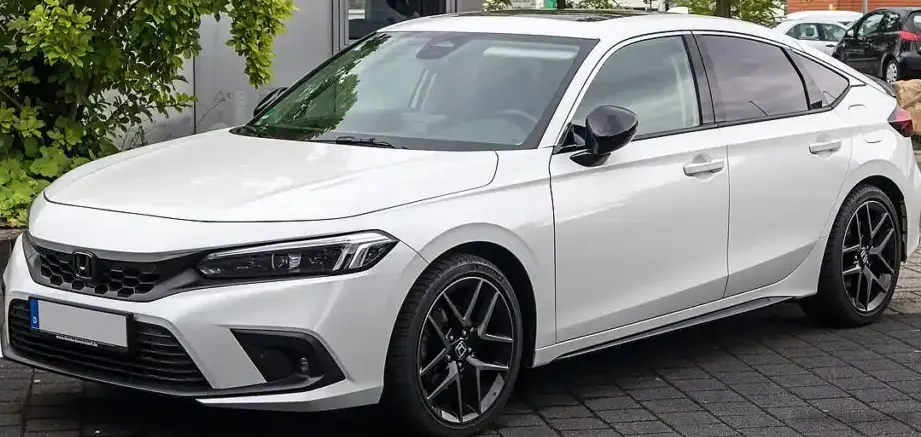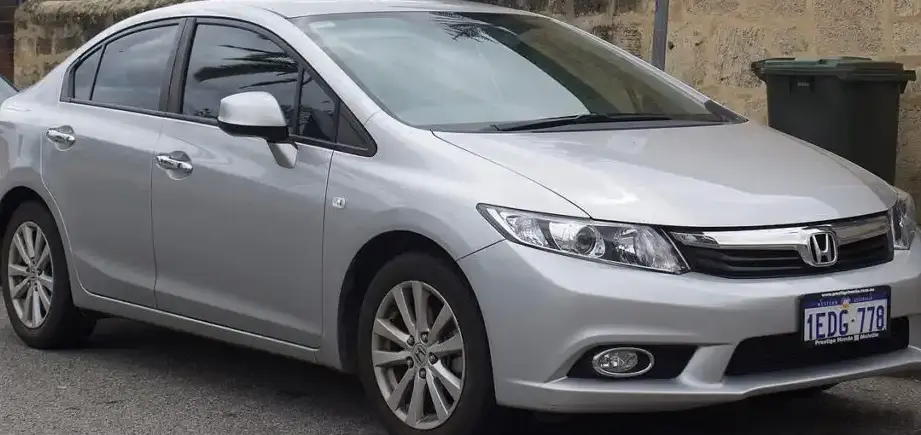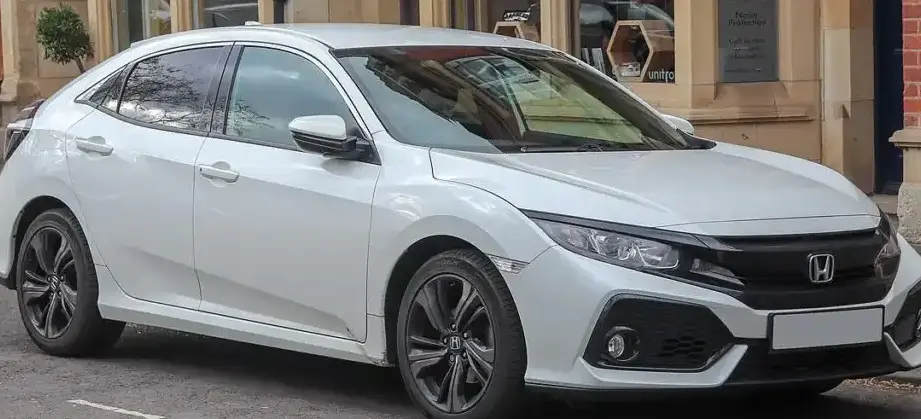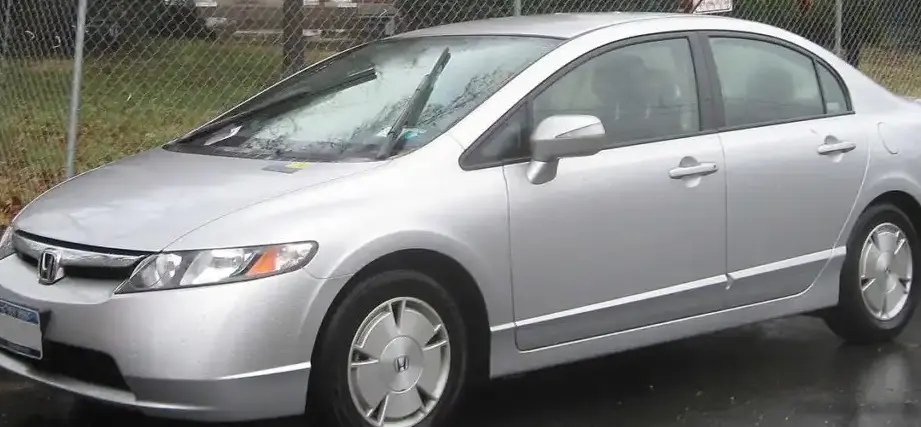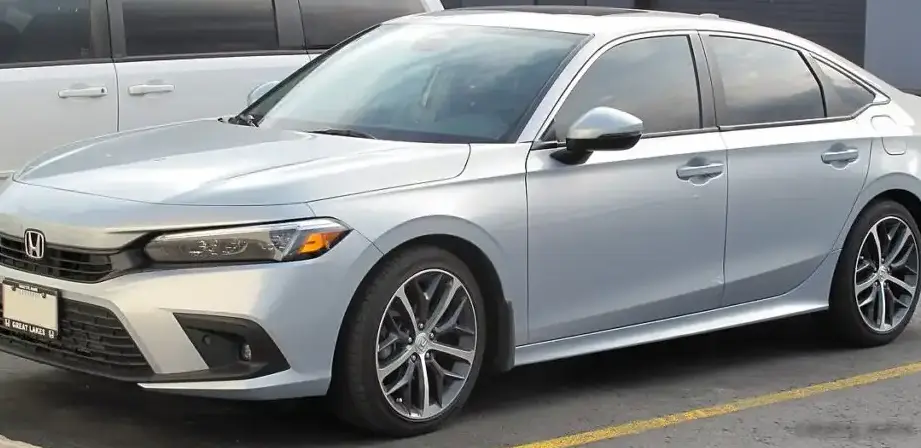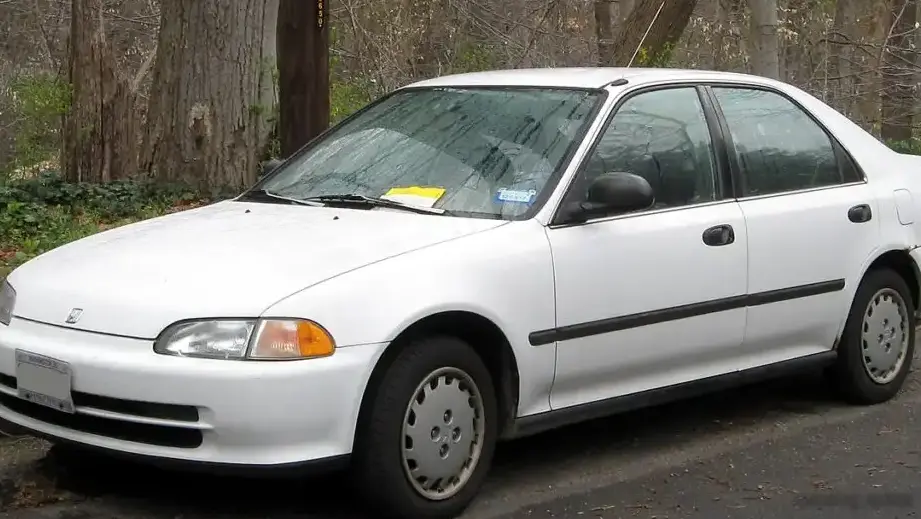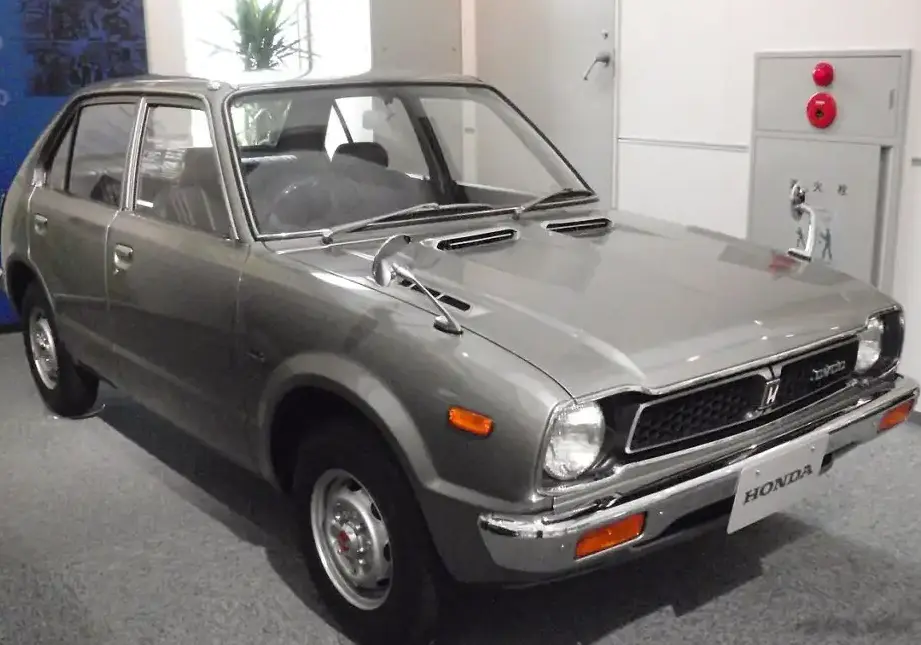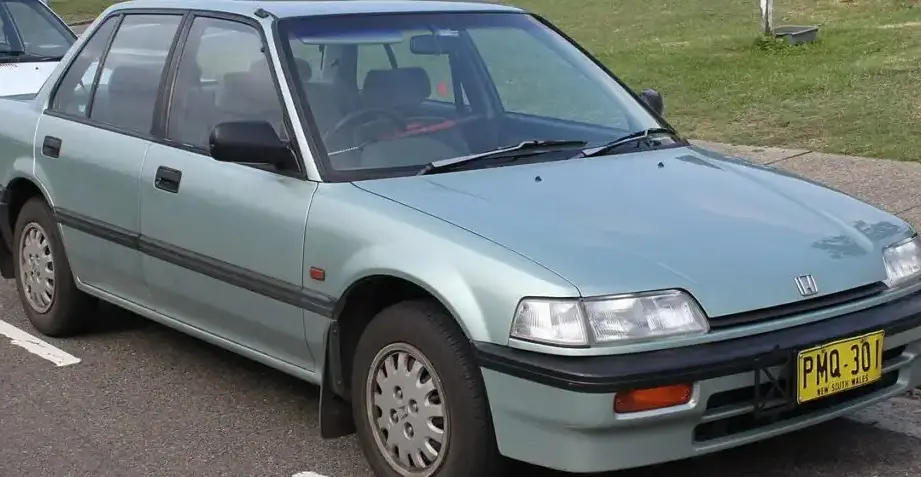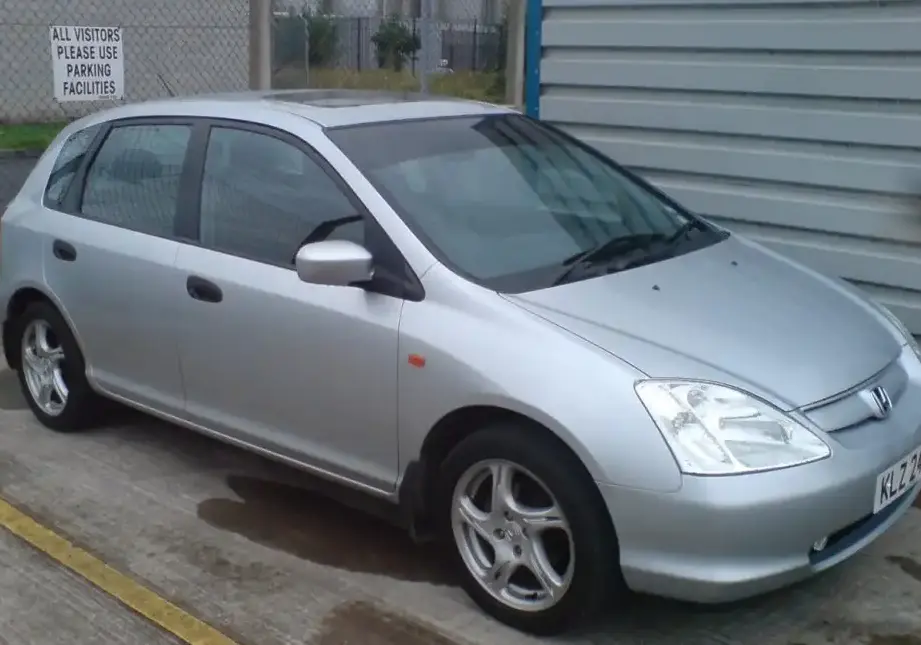
The Honda Civic VII Hatchback 5D 1.6 16V Automatic, produced between 2001 and 2006, represented a practical and fuel-efficient entry point into the seventh-generation (2001-2005) Civic lineup in many European and Asian markets. Positioned as a versatile, everyday vehicle, this variant offered a balance between affordability, usability, and Honda’s reputation for reliability. It was a key offering in a segment increasingly focused on compact, multi-purpose vehicles. The Civic VII, internally designated as the New Mechanical Structure (NMS) platform, aimed to improve rigidity and safety over its predecessor.
Technical Specifications
| Brand | Honda |
| Model | Civic |
| Generation | Civic VII Hatchback 5D |
| Type (Engine) | 1.6 16V (110 Hp) Automatic |
| Start of production | 2001 |
| End of production | 2006 |
| Powertrain Architecture | Internal Combustion engine |
| Body type | Hatchback |
| Seats | 5 |
| Doors | 5 |
| Fuel consumption (urban) | 8.9 l/100 km (26.4 US mpg) |
| Fuel consumption (extra urban) | 5.8 l/100 km (40.6 US mpg) |
| Fuel consumption (combined) | 7.2 l/100 km (32.7 US mpg) |
| Fuel Type | Petrol (Gasoline) |
| Acceleration 0 – 100 km/h | 11.7 sec |
| Acceleration 0 – 62 mph | 11.7 sec |
| Acceleration 0 – 60 mph | 11.1 sec |
| Maximum speed | 182 km/h (113.09 mph) |
| Weight-to-power ratio | 10.4 kg/Hp |
| Weight-to-torque ratio | 7.5 kg/Nm |
| Power | 110 Hp @ 5600 rpm |
| Torque | 152 Nm @ 4300 rpm (112.11 lb.-ft. @ 4300 rpm) |
| Engine layout | Front, Transverse |
| Engine Model/Code | D16V1 |
| Engine displacement | 1590 cm3 (97.03 cu. in.) |
| Number of cylinders | 4 |
| Engine configuration | Inline |
| Cylinder Bore | 75 mm (2.95 in.) |
| Piston Stroke | 90 mm (3.54 in.) |
| Compression ratio | 10.4:1 |
| Number of valves per cylinder | 4 |
| Fuel injection system | Multi-port manifold injection |
| Engine aspiration | Naturally aspirated |
| Engine oil capacity | 3.5 l (3.7 US qt | 3.08 UK qt) |
| Coolant capacity | 4 l (4.23 US qt | 3.52 UK qt) |
| Kerb Weight | 1145 kg (2524.29 lbs.) |
| Max. weight | 1630 kg (3593.53 lbs.) |
| Max load | 485 kg (1069.24 lbs.) |
| Trunk (boot) space – minimum | 370 l (13.07 cu. ft.) |
| Trunk (boot) space – maximum | 1050 l (37.08 cu. ft.) |
| Fuel tank capacity | 50 l (13.21 US gal | 11 UK gal) |
| Length | 4285 mm (168.7 in.) |
| Width | 1695 mm (66.73 in.) |
| Height | 1495 mm (58.86 in.) |
| Wheelbase | 2680 mm (105.51 in.) |
| Front track | 1468 mm (57.8 in.) |
| Rear track | 1469 mm (57.83 in.) |
| Drivetrain | Front wheel drive |
| Number of gears | 4 |
| Gearbox type | Automatic transmission |
| Front suspension | Spring Strut |
| Rear suspension | Transverse stabilizer |
| Front brakes | Ventilated discs |
| Rear brakes | Disc |
| Assisting systems | ABS (Anti-lock braking system) |
| Steering type | Steering rack and pinion |
| Tires size | 195/60 R15 |
| Wheel rims size | 15 |
Powertrain & Engine Architecture
The heart of this Civic variant was the 1.6-liter, 16-valve D16V1 inline-four engine. This engine, a staple in many Honda models of the era, featured a single overhead camshaft (SOHC) design and multi-point fuel injection. The D16V1 was known for its relatively smooth operation and decent fuel economy, though it wasn’t a powerhouse in terms of outright performance. The engine’s 110 horsepower at 5600 rpm and 152 Nm (112 lb-ft) of torque at 4300 rpm were adequate for everyday driving, but it lacked the punch of the more performance-oriented VTEC-equipped engines found in other Civic models. The automatic transmission was a conventional four-speed unit, chosen for its ease of use and suitability for urban driving conditions. It wasn’t known for particularly quick shifts or sporty responsiveness.
Driving Characteristics
The 1.6L Automatic Civic offered a comfortable, if not particularly exciting, driving experience. Acceleration was modest, with a 0-60 mph time of around 11.1 seconds. The automatic transmission, while smooth, tended to prioritize fuel efficiency over performance, resulting in somewhat sluggish responses to throttle inputs. Compared to the five-speed manual version of the same engine, the automatic noticeably reduced responsiveness. The gear ratios were tuned for economy, meaning the engine often felt strained during overtaking maneuvers or when climbing hills. However, for daily commuting and general transportation, the 1.6L Automatic provided a perfectly acceptable level of performance.
Equipment & Trim Levels
The 1.6 16V Automatic trim typically included standard features such as power steering, central locking, electric front windows, and an AM/FM radio. Air conditioning was often standard, but could be optional depending on the specific market. Interior upholstery was typically cloth, with a relatively simple dashboard layout. Optional extras could include alloy wheels, a sunroof, and upgraded audio systems. The trim level generally sat in the lower-mid range of the Civic VII lineup, offering a good balance of features and affordability. It was aimed at buyers who prioritized practicality and fuel economy over sporty performance or luxurious amenities.
Chassis & Braking
The Civic VII Hatchback utilized a MacPherson strut front suspension and a torsion beam rear suspension. This setup provided a comfortable ride quality, although it wasn’t particularly sporty in terms of handling. The front brakes were ventilated discs, providing adequate stopping power, while the rear brakes were solid discs. Anti-lock Braking System (ABS) was standard, enhancing safety. The chassis was designed to be lightweight, contributing to the car’s fuel efficiency. Stabilizer bars were fitted to both the front and rear axles to reduce body roll during cornering.
Market Reception & Comparison
The 1.6 16V Automatic Civic was generally well-received as a practical and reliable family car. Critics praised its fuel economy and spacious interior, but noted its lack of performance compared to other Civic variants, such as the 1.7L VTEC models. Compared to the 1.9 TDI diesel version (available in some markets), the 1.6L petrol offered less torque but a smoother and quieter driving experience. The automatic transmission was seen as a convenient option for urban drivers, but it did detract from the car’s overall driving enjoyment. Fuel economy figures of around 32.7 US mpg combined were competitive for the time.
Legacy
The D16V1 engine, paired with the four-speed automatic transmission, proved to be a durable and reliable powertrain. While not known for its blistering performance, it offered years of dependable service for many owners. Today, these Civics are relatively affordable on the used car market, and well-maintained examples can still provide reliable transportation. The simplicity of the engine and transmission makes them relatively easy and inexpensive to repair. However, age-related issues such as rust and wear and tear on suspension components are common concerns. The 1.6 16V Automatic Civic VII Hatchback remains a testament to Honda’s commitment to building practical, fuel-efficient, and long-lasting vehicles.