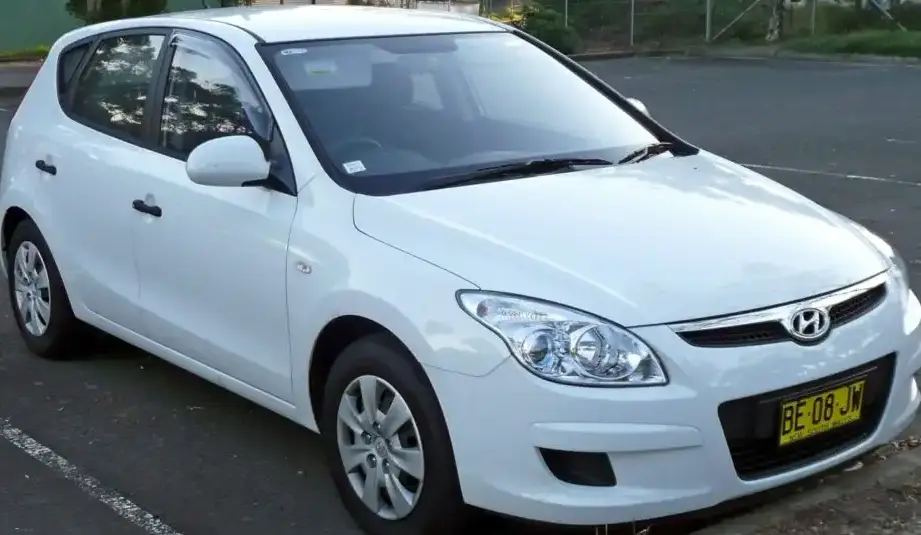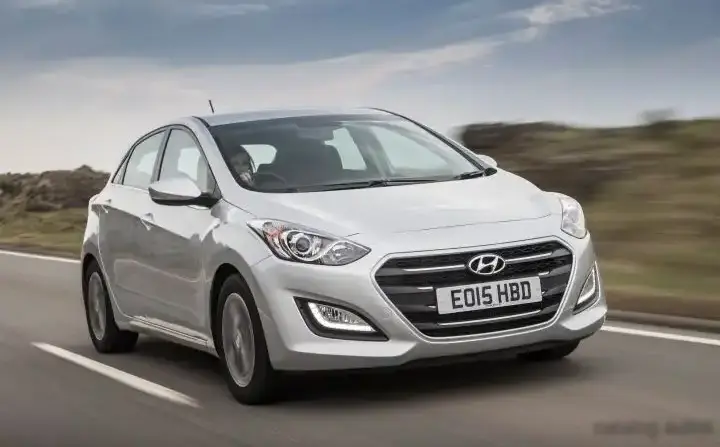
The Hyundai i30 II (facelift, produced 2015-2017) 1.6 GDI 135 horsepower variant represented a significant step forward for Hyundai’s compact hatchback, offering a blend of efficiency, performance, and modern features. Positioned as a mid-range offering within the i30 II lineup, it aimed to appeal to buyers seeking a balance between affordability and a more engaging driving experience than the base models. This facelift brought revised styling, improved interior materials, and updated technology to the already popular i30, solidifying its position in the competitive European C-segment. The i30, in general, was Hyundai’s key model for establishing a strong foothold in the European market, and the 1.6 GDI variant played a crucial role in attracting a wider customer base.
Technical Specifications
| Brand | Hyundai |
| Model | i30 |
| Generation | i30 II (facelift 2015) |
| Type (Engine) | 1.6 GDI (135 Hp) |
| Start of production | 2015 |
| End of production | 2017 |
| Powertrain Architecture | Internal Combustion engine |
| Body type | Hatchback |
| Seats | 5 |
| Doors | 5 |
| Fuel consumption (urban) | 7.7 l/100 km (30.5 US mpg) |
| Fuel consumption (extra urban) | 4.6 l/100 km (51.1 US mpg) |
| Fuel consumption (combined) | 5.7 l/100 km (41.3 US mpg) |
| CO2 emissions | 134 g/km |
| Fuel Type | Petrol (Gasoline) |
| Acceleration 0 – 100 km/h | 9.9 sec |
| Acceleration 0 – 62 mph | 9.9 sec |
| Acceleration 0 – 60 mph | 9.4 sec |
| Maximum speed | 195 km/h (121.17 mph) |
| Emission standard | Euro 6 |
| Weight-to-power ratio | 9.4 kg/Hp |
| Weight-to-torque ratio | 7.8 kg/Nm |
| Power | 135 Hp @ 6300 rpm |
| Torque | 164 Nm @ 4850 rpm (120.96 lb.-ft. @ 4850 rpm) |
| Engine layout | Front, Transverse |
| Engine Model/Code | G4FD |
| Engine displacement | 1591 cm3 (97.09 cu. in.) |
| Number of cylinders | 4 |
| Engine configuration | Inline |
| Cylinder Bore | 77 mm (3.03 in.) |
| Piston Stroke | 85.44 mm (3.36 in.) |
| Compression ratio | 10.5:1 |
| Number of valves per cylinder | 4 |
| Fuel injection system | Direct injection |
| Engine aspiration | Naturally aspirated engine |
| Engine oil capacity | 3.6 l (3.8 US qt | 3.17 UK qt) |
| Coolant | 6.4 l (6.76 US qt | 5.63 UK qt) |
| Kerb Weight | 1271-1417 kg (2802.08 – 3123.95 lbs.) |
| Max. weight | 1820 kg (4012.41 lbs.) |
| Max load | 403-549 kg (888.46 – 1210.34 lbs.) |
| Trunk (boot) space – minimum | 378 l (13.35 cu. ft.) |
| Trunk (boot) space – maximum | 1316 l (46.47 cu. ft.) |
| Fuel tank capacity | 53 l (14 US gal | 11.66 UK gal) |
| Max. roof load | 80 kg (176.37 lbs.) |
| Permitted trailer load with brakes (12%) | 1400 kg (3086.47 lbs.) |
| Permitted trailer load without brakes | 600 kg (1322.77 lbs.) |
| Permitted towbar download | 60 kg (132.28 lbs.) |
| Length | 4300 mm (169.29 in.) |
| Width | 1780 mm (70.08 in.) |
| Height | 1470 mm (57.87 in.) |
| Wheelbase | 2650 mm (104.33 in.) |
| Front track | 1549 mm (60.98 in.) |
| Rear (Back) track | 1557 mm (61.3 in.) |
| Front overhang | 880 mm (34.65 in.) |
| Rear overhang | 770 mm (30.31 in.) |
| Ride height (ground clearance) | 140 mm (5.51 in.) |
| Minimum turning circle (turning diameter) | 10.6 m (34.78 ft.) |
| Drivetrain Architecture | Front wheel drive |
| Drive wheel | Front wheel drive |
| Number of gears and type of gearbox | 6 gears, manual transmission |
| Front suspension | Independent, type McPherson with coil spring and anti-roll bar |
| Rear suspension | Independent multi-link suspension |
| Front brakes | Ventilated discs |
| Rear brakes | Disc |
| Assisting systems | ABS (Anti-lock braking system) |
| Steering type | Steering rack and pinion |
| Power steering | Electric Steering |
| Tires size | 225/45 R17 |
| Wheel rims size | 7.0J x 17 |
INTRODUCTION
The Hyundai i30 II (facelift, 2015-2017) 1.6 GDI, producing 135 horsepower, was a key variant in Hyundai’s second-generation i30 range. Building upon the success of the original i30, the facelifted model aimed to refine the car’s appeal with updated styling, improved interior quality, and enhanced technology. The 1.6 GDI engine, part of Hyundai’s Gamma engine family, was a significant upgrade over the older naturally aspirated engines, offering improved power and efficiency thanks to its direct injection technology. This variant was positioned as a strong contender in the highly competitive compact hatchback segment, targeting buyers who desired a well-equipped, reliable, and reasonably priced vehicle.
Powertrain & Engine Architecture
The heart of this i30 variant is the Hyundai G4FD 1.6-liter inline-four cylinder gasoline engine. This engine utilizes direct fuel injection (GDI), a technology that injects fuel directly into the combustion chamber, resulting in more efficient combustion and increased power output. The G4FD engine features a dual continuously variable valve timing (CVVT) system, optimizing valve timing for improved performance and fuel economy across the rev range. The engine produces 135 hp at 6300 rpm and 164 Nm (120.96 lb-ft) of torque at 4850 rpm. The engine’s architecture is relatively simple and robust, contributing to its overall reliability. The 6-speed manual transmission was standard, offering precise shifts and a good balance between performance and fuel efficiency. While an automatic transmission was available in some markets, the 1.6 GDI was most commonly paired with the manual gearbox.
Driving Characteristics
The i30 1.6 GDI with the manual transmission delivers a reasonably engaging driving experience. While not a performance-oriented model, the 135 hp engine provides adequate power for everyday driving and occasional highway overtaking. The direct injection system contributes to a responsive throttle and a linear power delivery. The 6-speed gearbox is well-matched to the engine’s characteristics, allowing drivers to keep the engine in its optimal power band. Compared to the lower-powered 1.4-liter engine options, the 1.6 GDI offers noticeably more punch. However, it doesn’t match the performance of the more expensive and powerful turbocharged variants. The suspension setup provides a comfortable ride, absorbing bumps and imperfections in the road well, while still offering decent handling characteristics. The steering is light and precise, making it easy to maneuver in urban environments.
Equipment & Trim Levels
The 1.6 GDI variant typically came equipped with a good level of standard features. Depending on the specific trim level (often designated as SE, Sport, or Premium), standard equipment could include air conditioning, power windows, power mirrors, a touchscreen infotainment system with Bluetooth connectivity, and alloy wheels. Higher trim levels added features such as automatic climate control, a rear-view camera, parking sensors, and upgraded interior upholstery. Optional extras included a panoramic sunroof, leather seats, and a navigation system. The interior design was generally functional and well-built, with a focus on practicality and user-friendliness. The facelifted model featured improved interior materials and a more refined dashboard layout compared to the pre-facelift i30.
Chassis & Braking
The i30 II utilized a McPherson strut front suspension and a multi-link rear suspension, providing a good balance between ride comfort and handling. The front suspension incorporates a stabilizer bar to reduce body roll during cornering. Braking duties were handled by ventilated disc brakes at the front and solid disc brakes at the rear. Anti-lock Braking System (ABS) was standard, enhancing braking performance and safety. The chassis was designed to provide a stable and predictable driving experience, with a focus on everyday usability. The steering system employed an electric power steering (EPS) system, offering light and precise steering feel.
Market Reception & Comparison
The Hyundai i30 1.6 GDI was generally well-received by automotive critics. It was praised for its stylish design, comfortable ride, and good value for money. The 1.6 GDI engine was considered a significant improvement over the older engine options, offering a good balance between performance and fuel economy. Compared to rivals such as the Volkswagen Golf, Ford Focus, and Opel Astra, the i30 offered a competitive package with a longer warranty and often a lower price point. However, some critics noted that the i30’s interior wasn’t quite as refined as some of its competitors. Fuel economy figures were competitive, averaging around 41.3 US mpg in combined driving conditions. Reliability was generally good, with the G4FD engine proving to be a durable and dependable unit.
Legacy
The Hyundai i30 II 1.6 GDI has proven to be a reliable and relatively trouble-free vehicle in the used car market. The G4FD engine is known for its durability, and with regular maintenance, it can provide many years of service. Common issues are relatively minor, often related to wear and tear on components such as the clutch, brakes, and suspension. The i30’s relatively affordable price and good fuel economy make it an attractive option for budget-conscious buyers. The 1.6 GDI variant remains a popular choice for those seeking a practical and reliable compact hatchback, and its continued presence on the used car market is a testament to its overall quality and durability.