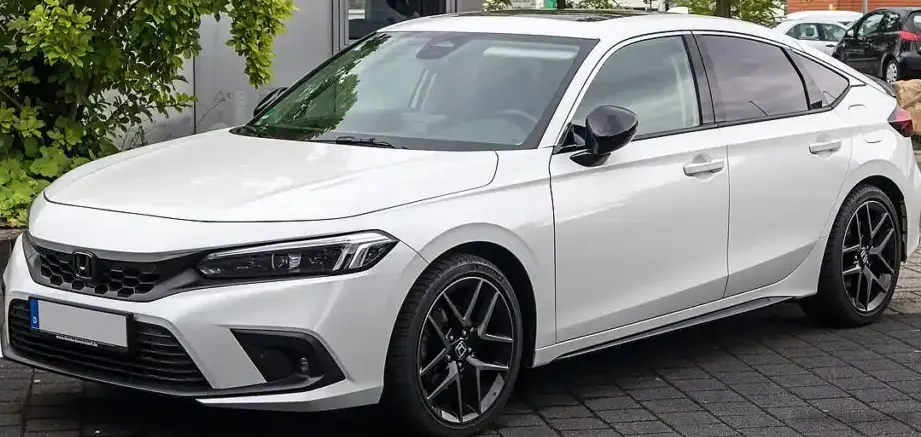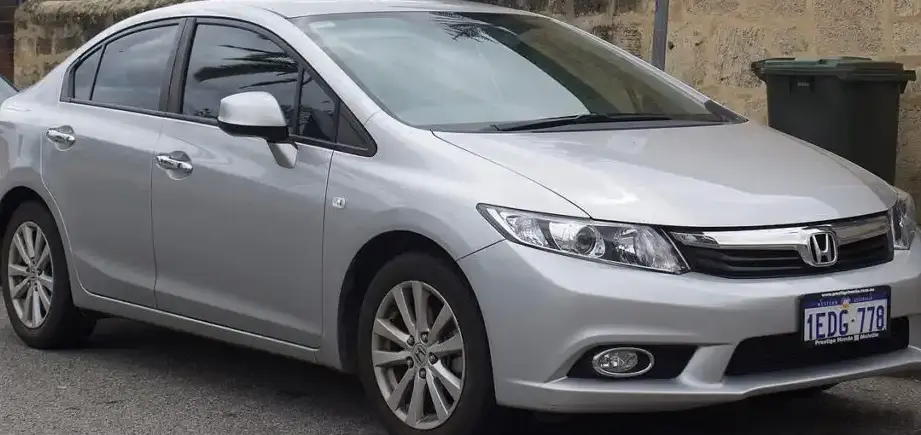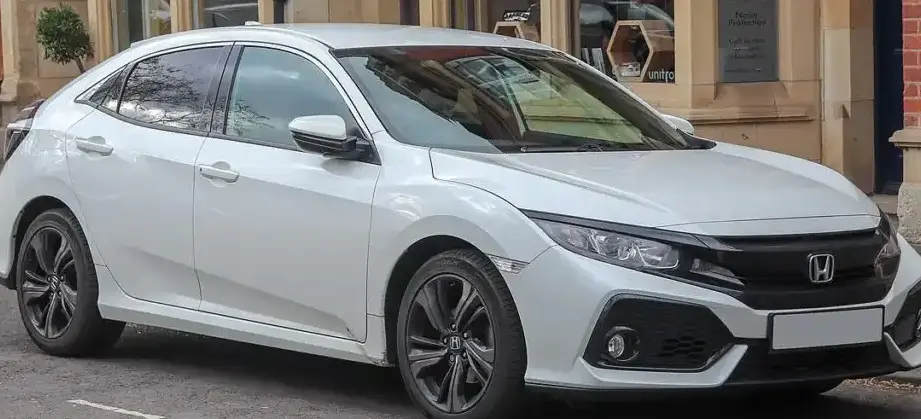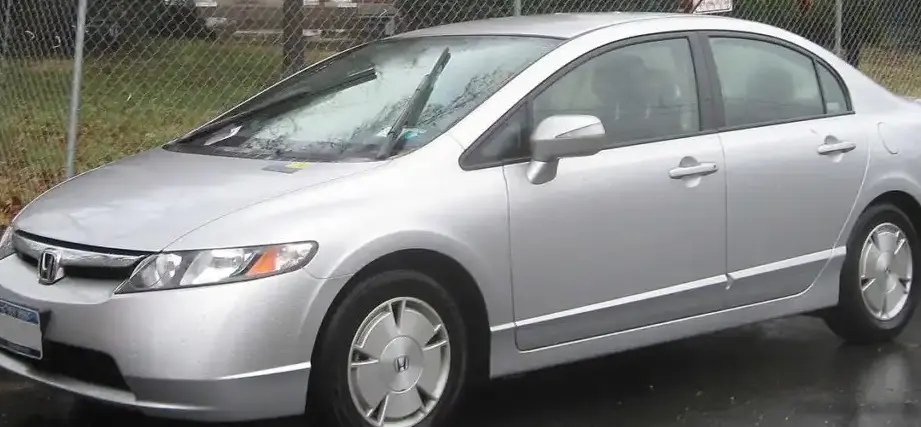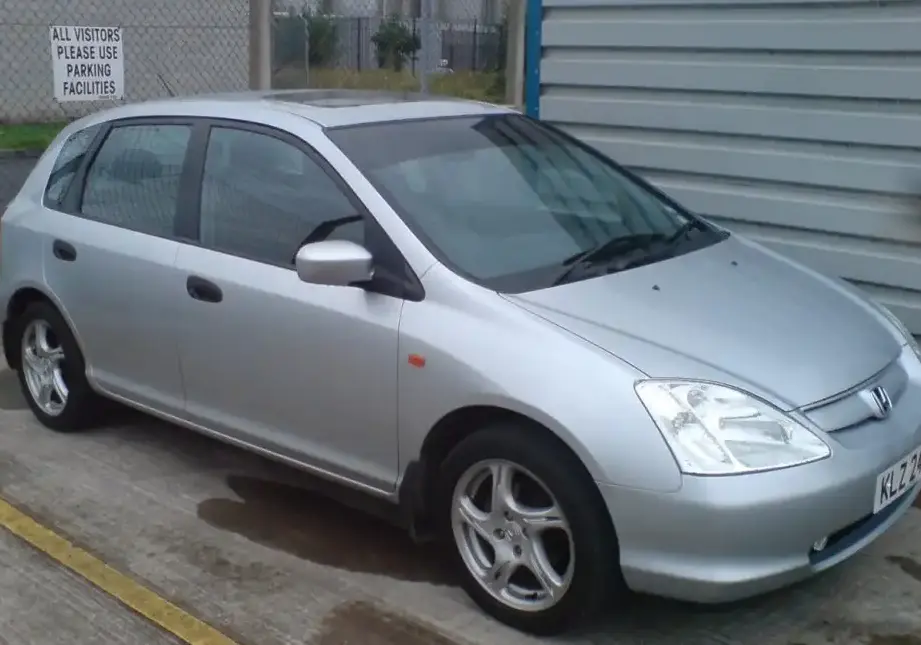
The Honda Civic VII Hatchback 5D 2.0 i 16V Type S, produced from 2004 to 2005, represented a performance-oriented variant within the seventh generation (1995-2005) of the globally popular Honda Civic. Positioned as a sporty trim level, the Type S aimed to deliver a more engaging driving experience than the standard Civic hatchback models. It was primarily marketed in Europe and other international markets, offering a balance between practicality, fuel efficiency, and spirited performance. This model occupied a niche above the base 1.4 and 1.6 liter models, but below the more focused and track-oriented Civic Type R.
Technical Specifications
| Brand | Honda |
| Model | Civic |
| Generation | Civic VII Hatchback 5D |
| Type (Engine) | 2.0 i 16V Type S (160 Hp) |
| Start of production | 2004 |
| End of production | 2005 |
| Powertrain Architecture | Internal Combustion engine |
| Body type | Hatchback |
| Seats | 5 |
| Doors | 5 |
| Fuel consumption (urban) | 10.1 l/100 km (23.3 US mpg) |
| Fuel consumption (extra urban) | 6.1 l/100 km (38.6 US mpg) |
| Fuel consumption (combined) | 7.5 l/100 km (31.4 US mpg) |
| Fuel Type | Petrol (Gasoline) |
| Acceleration 0 – 100 km/h | 8.7 sec |
| Acceleration 0 – 62 mph | 8.7 sec |
| Acceleration 0 – 60 mph | 8.3 sec |
| Maximum speed | 210 km/h (130.49 mph) |
| Weight-to-power ratio | 8 kg/Hp |
| Weight-to-torque ratio | 6.7 kg/Nm |
| Power | 160 Hp @ 6500 rpm |
| Torque | 191 Nm @ 4000 rpm (140.87 lb.-ft. @ 4000 rpm) |
| Engine layout | Front, Transverse |
| Engine Model/Code | K20A3 |
| Engine displacement | 1998 cm3 (121.93 cu. in.) |
| Number of cylinders | 4 |
| Engine configuration | Inline |
| Cylinder Bore | 86 mm (3.39 in.) |
| Piston Stroke | 86 mm (3.39 in.) |
| Compression ratio | 9.8:1 |
| Number of valves per cylinder | 4 |
| Fuel injection system | Multi-port manifold injection |
| Engine aspiration | Naturally aspirated engine |
| Valvetrain | DOHC |
| Engine oil capacity | 4.2 l (4.44 US qt | 3.7 UK qt) |
| Coolant capacity | 5 l (5.28 US qt | 4.4 UK qt) |
| Kerb Weight | 1286 kg (2835.14 lbs.) |
| Max. weight | 1755 kg (3869.11 lbs.) |
| Max load | 469 kg (1033.97 lbs.) |
| Trunk (boot) space – minimum | 370 l (13.07 cu. ft.) |
| Trunk (boot) space – maximum | 775 l (27.37 cu. ft.) |
| Fuel tank capacity | 50 l (13.21 US gal | 11 UK gal) |
| Length | 4285 mm (168.7 in.) |
| Width | 1712 mm (67.4 in.) |
| Height | 1495 mm (58.86 in.) |
| Wheelbase | 2680 mm (105.51 in.) |
| Front track | 1470 mm (57.87 in.) |
| Rear track | 1473 mm (57.99 in.) |
| Drivetrain Architecture | Front wheel drive |
| Number of gears | 5 |
| Gearbox type | Manual transmission |
| Front suspension | Spring Strut |
| Rear suspension | Transverse stabilizer |
| Front brakes | Ventilated discs |
| Rear brakes | Disc |
| Assisting systems | ABS (Anti-lock braking system) |
| Steering type | Steering rack and pinion |
| Tires size | 205/55 R16 |
| Wheel rims size | 5.5J x 16 |
INTRODUCTION
The 2.0 i 16V Type S variant of the Honda Civic VII Hatchback 5D, produced between 2004 and 2005, was a key offering in Honda’s European lineup. Built on the 1HX0/A3 platform, this model aimed to bridge the gap between the more economical Civic trims and the high-performance Type R. It provided a more potent engine option for buyers seeking a sportier driving experience without the higher price tag and more aggressive tuning of the Type R. The Type S trim was designed to appeal to drivers who wanted a practical and reliable hatchback with a noticeable performance boost.
Powertrain & Engine Architecture
At the heart of the Civic Type S lies the K20A3 engine, a 1998cc (121.93 cu. in.) inline-four cylinder powerplant. This engine is naturally aspirated and features a double overhead camshaft (DOHC) valvetrain with 16 valves. The K20A3 utilizes a multi-port fuel injection system, delivering fuel directly into the intake ports. While sharing the same basic architecture as the more powerful K20A engine found in the Civic Type R, the K20A3 was tuned for slightly less peak power and a broader, more accessible torque curve. The engine produces 160 horsepower at 6500 rpm and 191 Nm (140.87 lb.-ft.) of torque at 4000 rpm. The engine’s 9.8:1 compression ratio contributes to its efficiency and responsiveness. The Type S was exclusively offered with a 5-speed manual transmission, designed to complement the engine’s power delivery and provide a more engaging driving experience. The transmission featured relatively short gear ratios, enhancing acceleration, particularly in the lower gears.
Driving Characteristics
The Civic 2.0 i 16V Type S offered a noticeable step up in performance compared to the lower-spec Civic hatchbacks. The 5-speed manual transmission allowed for precise control and encouraged spirited driving. Acceleration from 0 to 60 mph was achieved in approximately 8.3 seconds, and the car could reach a top speed of 130.49 mph. While not as brutally fast as the Civic Type R, the Type S provided ample power for everyday driving and enjoyable weekend excursions. The gear ratios were well-matched to the engine’s torque curve, providing strong acceleration in each gear. The suspension, while not as stiff as the Type R’s, was firmer than the standard Civic, resulting in reduced body roll and improved handling. The steering was precise and responsive, contributing to a confident and engaging driving experience.
Equipment & Trim Levels
The Type S trim level included several features designed to enhance both comfort and style. Standard equipment typically included alloy wheels, a sport-tuned suspension, and unique exterior styling cues, such as a rear spoiler and body-colored side skirts. Inside, the Type S featured sport seats with enhanced bolstering, providing greater support during cornering. Air conditioning, power windows, and a CD player were also standard. Optional extras could include a sunroof, upgraded audio system, and metallic paint finishes. The interior trim generally featured a darker color scheme with sporty accents, differentiating it from the more conservatively styled base models.
Chassis & Braking
The Civic Type S utilized a MacPherson strut front suspension and a torsion beam rear suspension. The suspension was tuned to provide a balance between comfort and handling, offering a more engaging driving experience than the standard Civic. The braking system consisted of ventilated discs at the front and solid discs at the rear. Anti-lock Braking System (ABS) was standard, enhancing safety and control during emergency braking situations. The chassis was reinforced in key areas to improve rigidity and handling precision. The 205/55 R16 tires provided good grip in a variety of conditions.
Market Reception & Comparison
The Civic 2.0 i 16V Type S was generally well-received by automotive critics. It was praised for its responsive engine, engaging handling, and practical hatchback body style. Compared to the 1.6 liter Civic models, the Type S offered a significant performance upgrade. However, it didn’t quite match the outright performance of the Civic Type R, which was geared towards more serious driving enthusiasts. Fuel economy was respectable, averaging around 31.4 US mpg in combined driving. Reliability was also a strong point, as with most Honda models of this era. The Type S offered a compelling alternative for buyers who wanted a sporty and practical hatchback without the higher price tag and more extreme nature of the Type R.
Legacy
The Honda Civic VII Hatchback 5D 2.0 i 16V Type S remains a popular choice among used car buyers. The K20A3 engine is known for its durability and reliability, and the car’s overall build quality is excellent. While finding a pristine example can be challenging, well-maintained Type S models continue to offer a rewarding driving experience. The car’s relatively simple mechanical design makes it easier and more affordable to maintain than many modern vehicles. Today, it’s often seen as a classic example of a sporty and practical hatchback, representing a sweet spot in the Civic lineup.