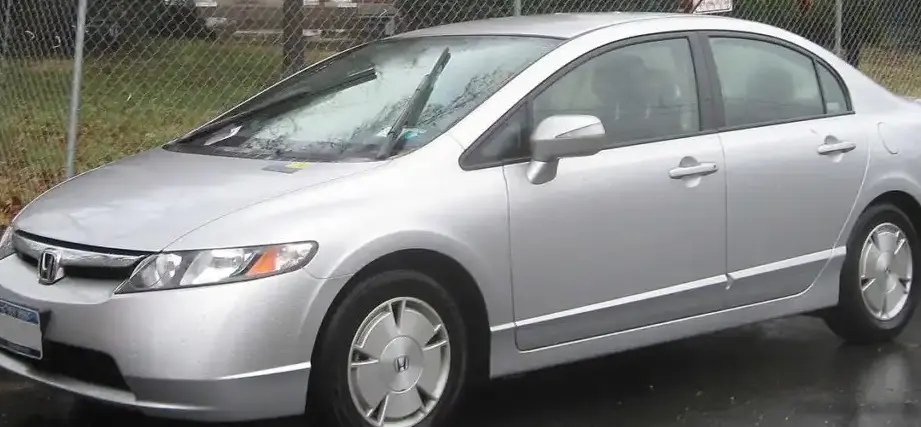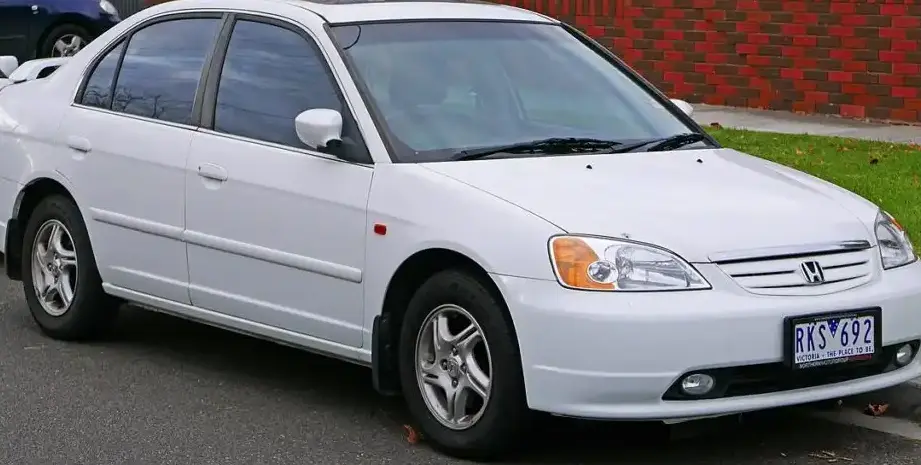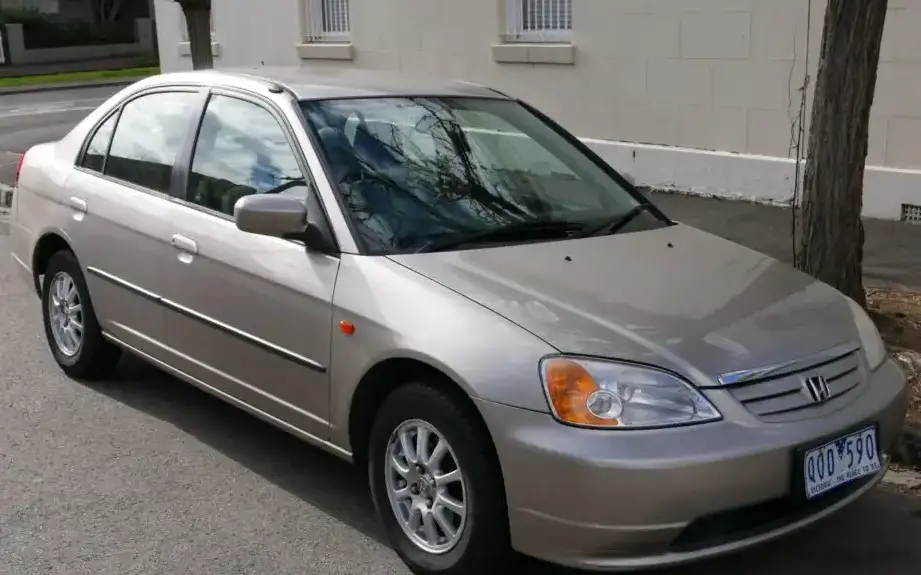
The Honda Civic VII Sedan 1.3 Hybrid, produced between 2003 and 2006, represented Honda’s initial foray into mainstream hybrid technology within the popular Civic lineup. This variant, utilizing Honda’s Integrated Motor Assist (IMA) system, was primarily aimed at the environmentally conscious consumer seeking improved fuel economy without sacrificing the practicality of a compact sedan. It occupied a unique position within the seventh-generation Civic (2001-2005) range, offering a distinct powertrain option compared to the conventional gasoline engines. The 1.3 Hybrid was largely a European and Japanese market vehicle, with limited availability in North America where larger displacement engines were favored.
Technical Specifications
| Brand | Honda |
| Model | Civic |
| Generation | Civic VII Sedan |
| Type (Engine) | 1.3 (93 Hp) Hybrid e-CVT |
| Start of production | 2003 |
| End of production | 2006 |
| Powertrain Architecture | FHEV (Full Hybrid Electric Vehicle) |
| Body type | Sedan |
| Seats | 5 |
| Doors | 4 |
| Fuel consumption (urban) | 4.9 l/100 km (48 US mpg) |
| Fuel consumption (extra urban) | 4.9 l/100 km (48 US mpg) |
| Fuel Type | Petrol (Gasoline) |
| Emission standard | ULEV |
| Weight-to-power ratio | 13.3 kg/Hp |
| Weight-to-torque ratio | 8.7 kg/Nm |
| Gross battery capacity | 0.86 kWh |
| Battery voltage | 144 V |
| Battery technology | Nickel-metal hydride (NiMH) |
| Electric motor power | 13 Hp @ 3000 rpm |
| Electric motor Torque | 49 Nm @ 1000 rpm (36.14 lb.-ft. @ 1000 rpm) |
| System power | 93 Hp @ 5700 rpm |
| System torque | 142 Nm @ 1500 rpm (104.73 lb.-ft. @ 1500 rpm) |
| Internal combustion engine power | 85 Hp @ 5700 rpm |
| Internal combustion engine torque | 118 Nm @ 3300 rpm (87.03 lb.-ft. @ 3300 rpm) |
| Engine displacement | 1339 cm3 (81.71 cu. in.) |
| Number of cylinders | 4 |
| Compression ratio | 10.8:1 |
| Engine oil capacity | 3.5 l (3.7 US qt | 3.08 UK qt) |
| Coolant capacity | 3.8 l (4.02 US qt | 3.34 UK qt) |
| Kerb Weight | 1239 kg (2731.53 lbs.) |
| Max. weight | 1642 kg (3619.99 lbs.) |
| Trunk (boot) space | 286 l (10.1 cu. ft.) |
| Fuel tank capacity | 50 l (13.21 US gal | 11 UK gal) |
| Length | 4440 mm (174.8 in.) |
| Width | 1715 mm (67.52 in.) |
| Height | 1430 mm (56.3 in.) |
| Wheelbase | 2620 mm (103.15 in.) |
| Drive wheel | Front wheel drive |
| Number of gears | automatic transmission e-CVT |
Powertrain & Engine Architecture
The heart of the Civic 1.3 Hybrid is its 1.3-liter, inline-four cylinder gasoline engine (engine code D13Z) coupled with Honda’s Integrated Motor Assist (IMA) hybrid system. The engine itself produces 85 horsepower and 87 lb-ft of torque. It features a single overhead camshaft (SOHC) valvetrain with Variable Valve Timing and Lift Electronic Control (VTEC) on the intake valves, a technology Honda pioneered to improve both fuel efficiency and performance. Fuel delivery is managed by a multi-port fuel injection system. The electric motor, rated at 13 horsepower and 36 lb-ft of torque, is positioned between the engine and the continuously variable transmission (e-CVT). The e-CVT isn’t a traditional CVT with belts and pulleys; instead, it’s a planetary gearset that seamlessly blends power from both the engine and the electric motor. The nickel-metal hydride (NiMH) battery pack, with a capacity of 0.86 kWh, is located behind the rear seats. The system operates in three modes: electric-only (at low speeds and under light loads), gasoline-only, and a combined mode where both the engine and motor work together for maximum power.
Driving Characteristics
The 1.3 Hybrid Civic delivers a noticeably different driving experience compared to its gasoline-powered counterparts. While the combined system output of 93 horsepower isn’t particularly high, the electric motor provides instant torque, resulting in brisk acceleration from a standstill. However, the overall performance is modest, and overtaking maneuvers require careful planning. The e-CVT contributes to a smooth, seamless driving experience, eliminating the gear shifts found in traditional automatic transmissions. Fuel economy is the primary benefit, with the hybrid system achieving approximately 48 mpg in both city and highway driving. The regenerative braking system captures energy during deceleration, further enhancing efficiency. Compared to the 1.6L and 1.7L gasoline engines available in the Civic VII, the 1.3 Hybrid prioritizes fuel economy over outright performance.
Equipment & Trim Levels
The 1.3 Hybrid typically came with a reasonably well-equipped trim level, often positioned as a mid-range offering. Standard features generally included air conditioning, power windows and locks, a basic audio system, and alloy wheels. Interior upholstery was typically cloth, with a functional and durable design. Optional extras could include a sunroof, upgraded audio system, and metallic paint finishes. The dashboard layout was similar to other Civic VII models, with a focus on practicality and ease of use. Safety features included ABS brakes and dual front airbags.
Chassis & Braking
The Civic 1.3 Hybrid utilizes a McPherson strut front suspension and a double wishbone rear suspension, providing a comfortable and controlled ride. The suspension tuning is geared towards fuel efficiency and ride comfort rather than sporty handling. Front brakes are ventilated discs, while rear brakes are drums. The electric power steering provides light and precise steering feel. The vehicle’s relatively low weight, at approximately 2732 lbs, contributes to its nimble handling characteristics. Stabilizer bars are present on both the front and rear axles to reduce body roll during cornering.
Market Reception & Comparison
The Civic 1.3 Hybrid was generally well-received by critics for its impressive fuel economy and smooth driving experience. However, some reviewers noted its modest performance and higher price compared to conventional Civic models. Compared to the 1.6L and 1.7L gasoline variants, the Hybrid offered significantly better fuel economy but less power. The 1.7L engine, in particular, provided a more engaging driving experience. Reliability was generally good, although the hybrid system components (battery pack and electric motor) were a concern for some potential buyers. The ULEV emission standard was a significant selling point for environmentally conscious consumers.
Legacy
The Honda Civic VII 1.3 Hybrid paved the way for Honda’s continued development of hybrid technology. While the early NiMH battery packs have a limited lifespan and may require replacement in older vehicles, the powertrain itself has proven to be relatively durable. In the used car market, these Civics are often sought after by buyers looking for a fuel-efficient and reliable compact sedan. The 1.3 Hybrid represents an important milestone in the history of hybrid vehicles, demonstrating Honda’s commitment to environmental sustainability and innovative automotive technology. The lessons learned from this early hybrid system were instrumental in the development of Honda’s subsequent hybrid models, including the Civic Hybrid and the Insight.