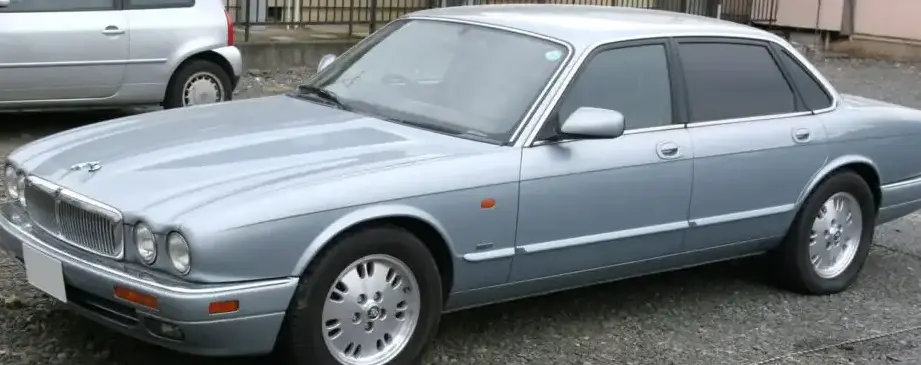
The Jaguar XJ (X300) R 4.0 24V Sport Automatic, produced between 1994 and 1997, represented the pinnacle of the XJ series during its generation. Positioned as the high-performance variant of the X300, it aimed to blend Jaguar’s traditional luxury with significantly enhanced sporting capabilities. The X300 series itself was a crucial model for Jaguar, representing a substantial modernization of the XJ lineage and addressing concerns about build quality and electrical reliability that had plagued earlier models. The ‘R’ designation signified a return to high-performance Jaguars, a tradition that had been somewhat diluted in previous years. This model sat at the top of the X300 range, offering a more potent alternative to the standard 4.0-liter inline-six and 3.2-liter inline-six engines.
Technical Specifications
| Brand | Jaguar |
| Model | XJ |
| Generation | XJ (X300) |
| Type | R 4.0 24V Sport (320 Hp) Automatic |
| Start of production | 1994 |
| End of production | 1997 |
| Powertrain Architecture | Internal Combustion engine |
| Body type | Sedan |
| Seats | 5 |
| Doors | 4 |
| Fuel consumption (combined) | 12.5 l/100 km |
| Fuel consumption (US mpg) | 18.8 US mpg |
| Fuel consumption (UK mpg) | 22.6 UK mpg |
| Fuel consumption (km/l) | 8 km/l |
| Fuel Type | Petrol (Gasoline) |
| Acceleration 0 – 100 km/h | 6.3 sec |
| Acceleration 0 – 62 mph | 6.3 sec |
| Acceleration 0 – 60 mph | 6 sec |
| Maximum speed | 250 km/h (155.34 mph) |
| Weight-to-power ratio | 5.9 kg/Hp |
| Weight-to-torque ratio | 3.7 kg/Nm |
| Power | 320 Hp @ 5000 rpm |
| Power per litre | 80.4 Hp/l |
| Torque | 512 Nm @ 3050 rpm (377.63 lb.-ft. @ 3050 rpm) |
| Engine layout | Front, Longitudinal |
| Engine displacement | 3980 cm3 (242.87 cu. in.) |
| Number of cylinders | 6 |
| Engine configuration | Inline |
| Cylinder Bore | 91 mm (3.58 in.) |
| Piston Stroke | 102 mm (4.02 in.) |
| Compression ratio | 8.5:1 |
| Number of valves per cylinder | 4 |
| Fuel injection system | Multi-port manifold injection |
| Engine aspiration | Supercharger, Intercooler |
| Valvetrain | DOHC |
| Kerb Weight | 1875 kg (4133.67 lbs.) |
| Max. weight | 2295 kg (5059.61 lbs.) |
| Max load | 420 kg (925.94 lbs.) |
| Trunk (boot) space – minimum | 430 l (15.19 cu. ft.) |
| Fuel tank capacity | 86 l (22.72 US gal | 18.92 UK gal) |
| Length | 5023 mm (197.76 in.) |
| Width | 1798 mm (70.79 in.) |
| Height | 1303 mm (51.3 in.) |
| Wheelbase | 2870 mm (112.99 in.) |
| Front track | 1500 mm (59.06 in.) |
| Rear (Back) track | 1498 mm (58.98 in.) |
| Drivetrain Architecture | Rear wheel drive |
| Number of gears | 4 |
| Gearbox type | Automatic transmission |
| Front suspension | Double wishbone |
| Rear suspension | Coil spring |
| Front brakes | Ventilated discs |
| Rear brakes | Disc |
| Assisting systems | ABS (Anti-lock braking system), Hydraulic Power Steering |
| Tires size | 255/45 R17 |
Powertrain & Engine Architecture
The heart of the XJ R 4.0 was Jaguar’s 3,980cc (242.87 cu. in.) inline-six engine, designated as the AJ6. However, unlike the standard AJ6, this version featured a Roots-type supercharger and an intercooler, dramatically increasing power output to 320 horsepower at 5,000 rpm and 512 Nm (377.63 lb.-ft.) of torque at 3,050 rpm. The engine utilized multi-port fuel injection and a double overhead camshaft (DOHC) valvetrain with four valves per cylinder. The supercharger, a key element of the ‘R’ model’s performance, provided instant throttle response and a broad torque curve. The four-speed automatic transmission, a ZF 4HP22 unit, was specifically calibrated to handle the increased power and torque, offering smooth shifts and a relatively quick response. This transmission was known for its robustness, but it wasn’t as sophisticated as some of the electronically controlled automatics emerging at the time.
Driving Characteristics
The XJ R 4.0 offered a distinctly different driving experience compared to other X300 variants. The supercharger delivered a surge of power that was immediately noticeable, resulting in a 0-60 mph time of around 6 seconds and a top speed of 155 mph. While not a sports car in the modern sense, the R model provided a level of performance that was unexpected in a large luxury sedan of the era. The automatic transmission, while smooth, could feel slightly hesitant during quick downshifts. The gear ratios were tuned for a balance between acceleration and cruising comfort. Compared to the naturally aspirated 4.0-liter and 3.2-liter models, the R offered significantly more power and torque throughout the rev range, making overtaking and highway cruising effortless. The added weight of the supercharger and associated components did slightly impact handling, but the well-tuned suspension minimized body roll and provided a comfortable ride.
Equipment & Trim Levels
The XJ R 4.0 Sport came standard with a high level of equipment, befitting its flagship status. Interior features included Connolly leather upholstery, burled walnut trim, and power-adjustable front seats with memory function. Standard amenities also included automatic climate control, a premium sound system, and cruise control. The ‘Sport’ designation indicated a slightly firmer suspension setup and unique exterior trim elements, such as a body-colored grille and rear spoiler. Optional extras included a sunroof, upgraded sound systems, and rear seat entertainment systems. The interior design retained the classic Jaguar aesthetic, emphasizing wood and leather, but with a more sporting feel thanks to the unique trim and seat design.
Chassis & Braking
The XJ R 4.0 utilized a double wishbone front suspension and a coil spring rear suspension. The suspension was tuned to provide a comfortable ride while maintaining good handling characteristics. The braking system consisted of ventilated discs at the front and solid discs at the rear, equipped with an anti-lock braking system (ABS). The steering was hydraulic power-assisted, providing a responsive and precise feel. The R model featured slightly thicker stabilizer bars compared to the standard XJ models, further enhancing handling stability. The 17-inch alloy wheels were fitted with 255/45 R17 tires, providing ample grip.
Market Reception & Comparison
The XJ R 4.0 was generally well-received by automotive critics, who praised its performance, luxury, and refinement. It was often compared favorably to its rivals, such as the BMW 740i and the Mercedes-Benz S420. However, some critics noted that the automatic transmission could be slow to respond at times. Fuel economy, at 18.8 US mpg combined, was typical for a high-performance luxury sedan of the era, but significantly lower than the more fuel-efficient inline-six models. Reliability was generally good, although the supercharger added complexity to the engine and required more frequent maintenance. The R model commanded a premium price compared to other X300 variants, reflecting its higher performance and increased level of equipment.
Legacy
The XJ R 4.0 remains a desirable classic Jaguar today, appreciated for its blend of performance, luxury, and style. The AJ6 engine, particularly the supercharged version, is considered a robust and reliable powerplant when properly maintained. However, the supercharger does require regular servicing, including oil changes and belt replacements. The ZF 4HP22 automatic transmission is also generally reliable, but can be expensive to repair if it fails. In the used car market, the XJ R 4.0 commands a higher price than other X300 models, reflecting its rarity and performance potential. It represents a significant chapter in Jaguar’s history, demonstrating the brand’s ability to create high-performance luxury sedans that are both refined and engaging to drive.