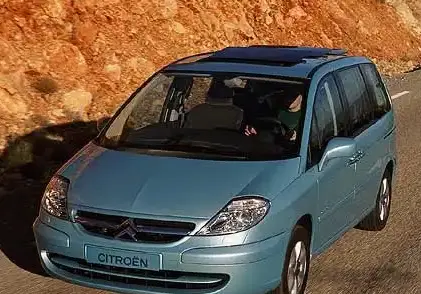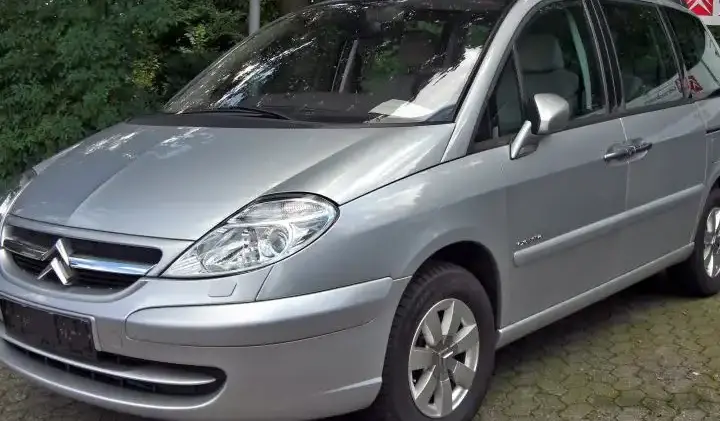
The Citroen C8, specifically the Phase II model produced between 2008 and 2009, represented a significant evolution of Citroen’s large MPV offering. This iteration of the C8, built in collaboration with Peugeot and Fiat (resulting in the Peugeot 807 and Fiat Ulysse respectively), aimed to refine the original’s design and enhance its appeal in the European minivan market. The 2.2 HDi Biturbo variant, equipped with a 170 horsepower engine and a Diesel Particulate Filter (FAP), occupied a mid-range position within the C8 lineup, offering a balance between performance, fuel economy, and practicality for families. It was designed to compete with other large MPVs like the Renault Espace and Volkswagen Sharan.
Technical Specifications
| Brand | Citroen |
| Model | C8 |
| Generation | C8 (Phase II, 2008) |
| Type (Engine) | 2.2 HDi Biturbo (170 Hp) FAP |
| Start of production | 2008 |
| End of production | 2009 |
| Powertrain Architecture | Internal Combustion engine |
| Body type | Minivan, MPV |
| Seats | 7 |
| Doors | 5 |
| Fuel consumption (urban) | 9.2 l/100 km (25.6 US mpg) |
| Fuel consumption (extra urban) | 6.1 l/100 km (38.6 US mpg) |
| Fuel consumption (combined) | 7.2 l/100 km (32.7 US mpg) |
| CO2 emissions | 191 g/km |
| Fuel Type | Diesel |
| Acceleration 0 – 100 km/h | 10 sec |
| Acceleration 0 – 62 mph | 10 sec |
| Acceleration 0 – 60 mph | 9.5 sec |
| Maximum speed | 180 km/h (111.85 mph) |
| Emission standard | Euro 4 |
| Weight-to-power ratio | 11.9 kg/Hp |
| Weight-to-torque ratio | 5.5 kg/Nm |
| Power | 170 Hp @ 4000 rpm |
| Torque | 370 Nm @ 1500 rpm (272.9 lb.-ft. @ 1500 rpm) |
| Engine layout | Front, Transverse |
| Engine Model/Code | 4HT DW12BTED4 |
| Engine displacement | 2179 cm3 (132.97 cu. in.) |
| Number of cylinders | 4 |
| Engine configuration | Inline |
| Cylinder Bore | 85 mm (3.35 in.) |
| Piston Stroke | 96 mm (3.78 in.) |
| Compression ratio | 16.6:1 |
| Number of valves per cylinder | 4 |
| Fuel injection system | Diesel Commonrail |
| Engine aspiration | BiTurbo, Intercooler |
| Valvetrain | DOHC |
| Engine oil capacity | 5.3 l (5.6 US qt | 4.66 UK qt) |
| Coolant | 9 l (9.51 US qt | 7.92 UK qt) |
| Kerb Weight | 2017 kg (4446.72 lbs.) |
| Max. weight | 2570 kg (5665.88 lbs.) |
| Max load | 553 kg (1219.16 lbs.) |
| Trunk (boot) space – minimum | 225 l (7.95 cu. ft.) |
| Trunk (boot) space – maximum | 2948 l (104.11 cu. ft.) |
| Fuel tank capacity | 80 l (21.13 US gal | 17.6 UK gal) |
| Max. roof load | 100 kg (220.46 lbs.) |
| Permitted trailer load with brakes (12%) | 1850 kg (4078.55 lbs.) |
| Permitted trailer load without brakes | 750 kg (1653.47 lbs.) |
| Permitted towbar download | 75 kg (165.35 lbs.) |
| Length | 4727 mm (186.1 in.) |
| Width | 1854 mm (72.99 in.) |
| Width including mirrors | 2194 mm (86.38 in.) |
| Height | 1766-1856 mm (69.53 – 73.07 in.) |
| Wheelbase | 2823 mm (111.14 in.) |
| Front track | 1570 mm (61.81 in.) |
| Rear (Back) track | 1548 mm (60.94 in.) |
| Front overhang | 1013 mm (39.88 in.) |
| Rear overhang | 891 mm (35.08 in.) |
| Minimum turning circle | 11.71 m (38.42 ft.) |
| Drivetrain Architecture | Front wheel drive |
| Number of gears and type of gearbox | 6 gears, manual transmission |
| Front suspension | Independent, type McPherson with coil spring and anti-roll bar |
| Rear suspension | Semi-independent, coil spring |
| Front brakes | Ventilated discs |
| Rear brakes | Disc |
| Assisting systems | ABS (Anti-lock braking system) |
| Steering type | Steering rack and pinion |
| Power steering | Hydraulic Steering |
| Tires size | 215/60 R16 |
| Wheel rims size | 6.5J x 16 |
INTRODUCTION
The Citroen C8 Phase II, launched in 2008, continued the collaboration between Citroen, Peugeot, and Fiat, offering a spacious and versatile MPV option for European families. The 2.2 HDi Biturbo variant, powered by the DW12BTED4 engine, was a key offering in the range. This engine, a four-cylinder diesel, was equipped with two turbochargers to enhance both low-end torque and high-end power. The inclusion of a Diesel Particulate Filter (FAP) aimed to meet increasingly stringent European emission standards. This specific configuration was positioned as a strong all-rounder, appealing to buyers who needed a practical vehicle with decent performance and reasonable fuel consumption.
Powertrain & Engine Architecture
The heart of the C8 2.2 HDi Biturbo is the 4HT DW12BTED4 engine, a 2.2-liter inline-four diesel. This engine utilizes common rail direct injection, delivering fuel at extremely high pressure for optimized combustion. The “Biturbo” designation refers to the use of two turbochargers – a smaller turbocharger for quick response at low engine speeds and a larger turbocharger for increased power at higher speeds. This configuration effectively minimizes turbo lag and provides a broader torque curve. The engine also features an intercooler to cool the compressed air, further enhancing performance. The engine produces 170 horsepower at 4000 rpm and 370 Nm (272.9 lb-ft) of torque at 1500 rpm. The engine is transversely mounted at the front of the vehicle. The C8 utilized a 6-speed manual transmission as standard, providing a good balance between fuel efficiency and driver control.
Driving Characteristics
The 2.2 HDi Biturbo-equipped C8 offered a noticeable step up in performance compared to lower-powered versions. While not a sports car, the twin-turbo setup provided ample torque for comfortable cruising and overtaking maneuvers. The 6-speed manual transmission allowed drivers to keep the engine in its optimal power band. The gear ratios were tuned for a balance of acceleration and fuel economy. Compared to the 1.8L petrol versions, the 2.2 HDi offered significantly more torque and better fuel efficiency, albeit with a slightly heavier engine. The C8’s large size and weight were still apparent, but the engine provided enough power to manage the vehicle confidently, even when fully loaded with passengers and luggage.
Equipment & Trim Levels
The C8 2.2 HDi Biturbo typically came with a good level of standard equipment. This included features like air conditioning, power windows, central locking, and an audio system. Higher trim levels offered additional features such as alloy wheels, rear parking sensors, a navigation system, and leather upholstery. Interior upholstery was typically cloth, but leather options were available. The dashboard layout was functional and user-friendly, with a focus on practicality. Optional extras included a panoramic sunroof, upgraded audio systems, and advanced safety features.
Chassis & Braking
The C8’s chassis was designed to provide a comfortable ride and stable handling. The front suspension utilized McPherson struts with coil springs and an anti-roll bar, while the rear suspension employed a semi-independent coil spring setup. This configuration prioritized ride comfort over sporty handling. The C8 2.2 HDi Biturbo was equipped with ventilated disc brakes at the front and solid discs at the rear. ABS (Anti-lock Braking System) was standard, providing enhanced braking performance and stability. The steering was hydraulic power-assisted, offering a good balance of feel and ease of use.
Market Reception & Comparison
The Citroen C8 2.2 HDi Biturbo was generally well-received by automotive critics. It was praised for its spacious interior, comfortable ride, and strong engine performance. The twin-turbo diesel engine was considered a significant improvement over earlier C8 models. Fuel economy was also a strong point, with combined fuel consumption figures around 7.2 l/100 km (32.7 US mpg). Compared to the petrol-powered C8 variants, the 2.2 HDi offered superior fuel efficiency and torque. However, some critics noted that the C8’s large size and weight could make it feel cumbersome in tight spaces. Reliability was generally good, although the FAP (Diesel Particulate Filter) could require occasional maintenance.
Legacy
The Citroen C8 2.2 HDi Biturbo, while not a high-volume seller, remains a practical and versatile MPV option in the used car market. The DW12BTED4 engine is known for its durability and relatively low maintenance costs, provided it has been properly serviced. The FAP system can be a potential source of issues if not maintained correctly. Today, these vehicles are often sought after by families who need a spacious and reliable vehicle for long journeys. The C8’s comfortable ride and ample interior space continue to make it a compelling choice for those seeking a large MPV.