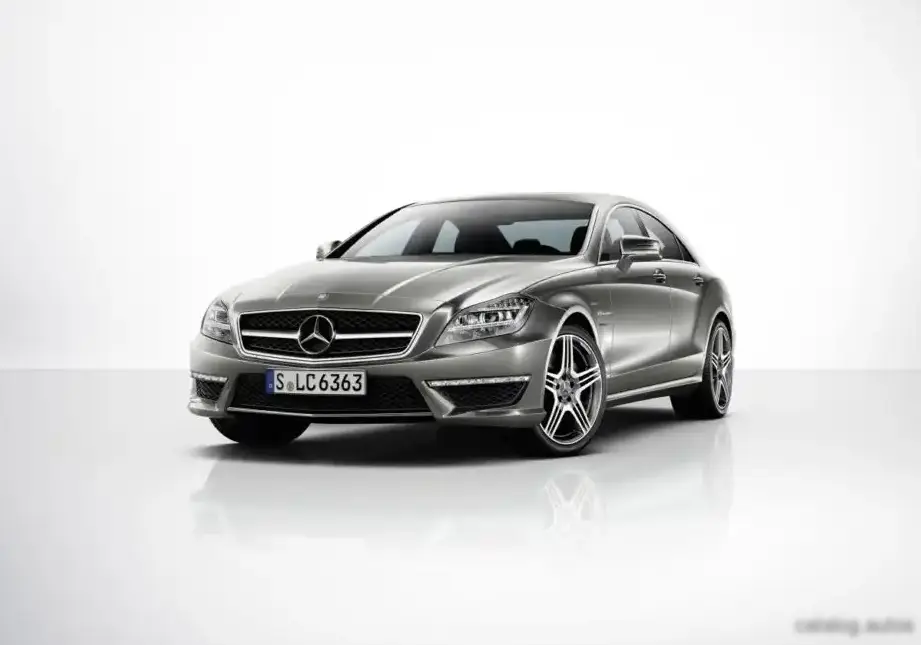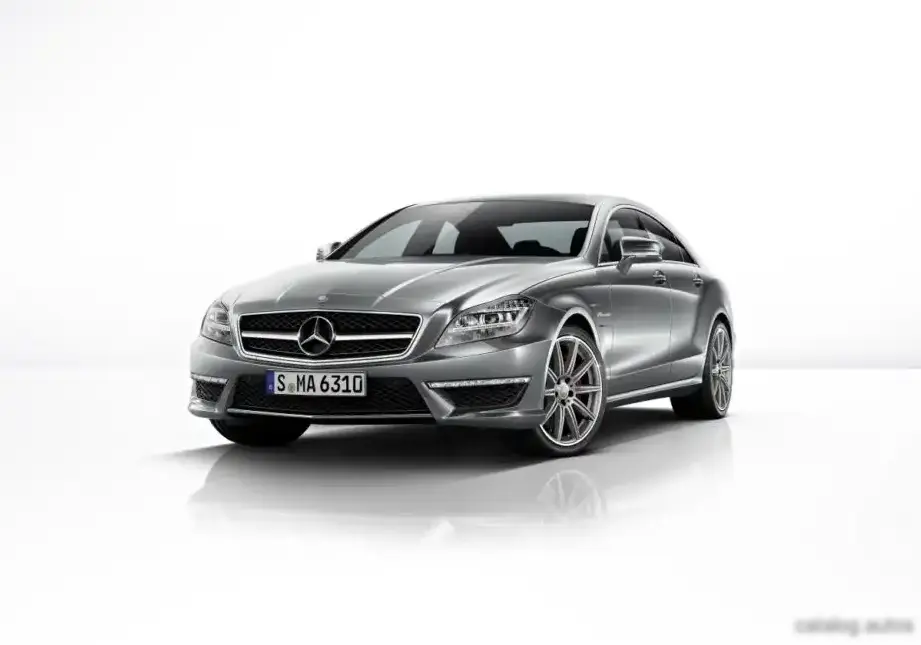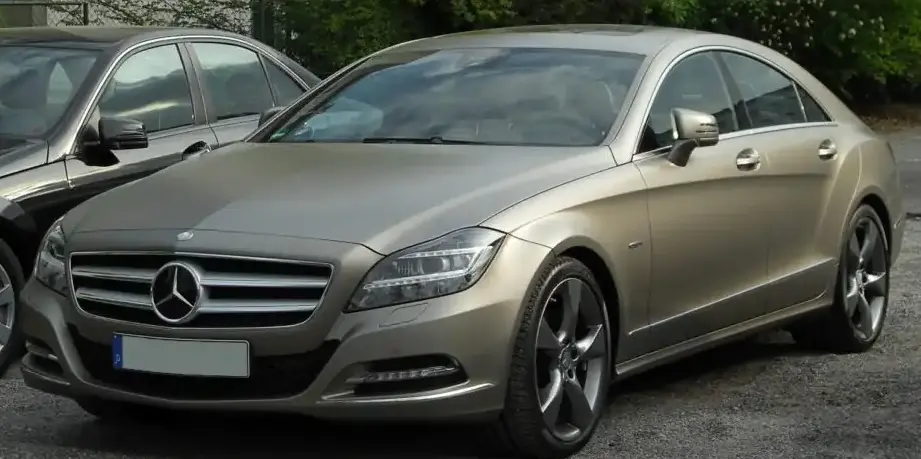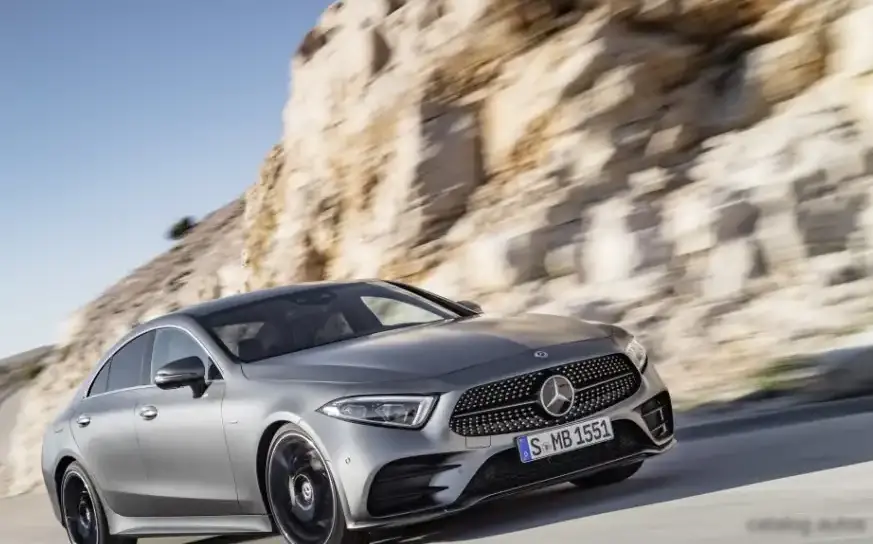
The Mercedes-Benz CLS 350 (C257), produced from 2018 to 2021, represents a compelling blend of luxury, performance, and efficiency within the third generation of the CLS “four-door coupe” lineage. Positioned as a mid-range offering in the C257 series, it served as a more accessible entry point into the CLS range compared to the higher-performance AMG variants or the more technologically advanced CLS 53. This variant distinguished itself through the incorporation of EQ Boost mild-hybrid technology, paired with a refined 2.0-liter turbocharged inline-four engine and the sophisticated 9G-TRONIC nine-speed automatic transmission. The C257 CLS aimed to deliver a comfortable grand touring experience with a focus on fuel economy and everyday usability, appealing to buyers seeking a stylish and technologically advanced vehicle.
Technical Specifications
| Brand | Mercedes-Benz |
| Model | CLS |
| Generation | CLS coupe (C257) |
| Type | CLS 350 (299 Hp) EQ Boost 9G-TRONIC |
| Start of production | 2018 |
| End of production | 2021 |
| Powertrain Architecture | MHEV (Mild Hybrid Electric Vehicle) |
| Body type | Coupe |
| Seats | 5 |
| Doors | 4 |
| Fuel consumption at Low speed (WLTP) | 7.6 l/100 km (30.9 US mpg) |
| Fuel consumption at very high speed (WLTP) | 8.6 l/100 km (27.4 US mpg) |
| CO2 emissions (WLTP) | 172-195 g/km |
| Fuel consumption (economy) – urban | 9.3 l/100 km (25.3 US mpg) |
| Fuel consumption (economy) – extra urban | 5.6 l/100 km (42 US mpg) |
| Fuel consumption (economy) – combined | 7.9 l/100 km (29.8 US mpg) |
| CO2 emissions | 162 g/km |
| Fuel Type | Petrol (Gasoline) |
| Acceleration 0 – 100 km/h | 6 sec |
| Acceleration 0 – 62 mph | 6 sec |
| Acceleration 0 – 60 mph | 5.7 sec |
| Maximum speed | 249 km/h (154.72 mph) |
| Emission standard | Euro 6 |
| Weight-to-power ratio | 5.9 kg/Hp |
| Weight-to-torque ratio | 4.4 kg/Nm |
| Battery voltage | 48 V |
| Electric motor power | 14 Hp |
| Electric motor Torque | 150 Nm (110.63 lb.-ft.) |
| Electric motor location | Front, Longitudinal |
| Power | 299 Hp @ 5800-6100 rpm |
| Torque | 400 Nm @ 3000-4000 rpm (295.02 lb.-ft.) |
| Engine layout | Front, Longitudinal |
| Engine Model/Code | M 264.920 |
| Engine displacement | 1991 cm3 (121.5 cu. in.) |
| Number of cylinders | 4 |
| Engine configuration | Inline |
| Compression ratio | 10:1 |
| Number of valves per cylinder | 4 |
| Fuel injection system | Direct injection |
| Engine aspiration | Turbocharger, Intercooler |
| Valvetrain | DOHC |
| Engine oil capacity | 6.6 l (6.97 US qt | 5.81 UK qt) |
| Coolant capacity | 9 l (9.51 US qt | 7.92 UK qt) |
| Kerb Weight | 1775 kg (3913.21 lbs.) |
| Max. weight | 2420 kg (5335.19 lbs.) |
| Max load | 645 kg (1421.98 lbs.) |
| Trunk (boot) space – minimum | 490 l (17.3 cu. ft.) |
| Fuel tank capacity | 80 l (21.13 US gal | 17.6 UK gal) |
| Permitted trailer load with brakes (12%) | 1900 kg (4188.78 lbs.) |
| Permitted trailer load without brakes | 750 kg (1653.47 lbs.) |
| Length | 4996 mm (196.69 in.) |
| Width | 1896 mm (74.65 in.) |
| Width including mirrors | 2069 mm (81.46 in.) |
| Height | 1436 mm (56.54 in.) |
| Wheelbase | 2939 mm (115.71 in.) |
| Front track | 1619 mm (63.74 in.) |
| Rear track | 1634 mm (64.33 in.) |
| Front overhang | 888 mm (34.96 in.) |
| Rear overhang | 1169 mm (46.02 in.) |
| Ride height (ground clearance) | 94 mm (3.7 in.) |
| Minimum turning circle | 11.60 m (38.06 ft.) |
| Drivetrain Architecture | Rear wheel drive. MHEV. |
| Number of gears and type of gearbox | 9 gears, automatic transmission G-TRONIC PLUS |
| Front brakes | Ventilated discs |
| Rear brakes | Ventilated discs |
| Tires size | 245/40 R19; 275/35 R19 |
| Wheel rims size | 19 |
Powertrain & Engine Architecture
The heart of the CLS 350 is the M 264 2.0-liter inline-four cylinder engine. This engine utilizes direct fuel injection and a single twin-scroll turbocharger, delivering a balance of power and efficiency. The M 264 engine family is known for its NANOSLIDE cylinder coating, reducing friction and improving durability. Crucially, this variant incorporates Mercedes-Benz’s EQ Boost 48-volt mild-hybrid system. This system features a belt-driven integrated starter-generator (ISG) that adds up to 14 horsepower and 150 Nm (110.63 lb.-ft.) of torque, assisting the engine during acceleration and allowing for smoother start/stop functionality. The 9G-TRONIC nine-speed automatic transmission is standard, offering quick and seamless gear changes. This transmission is designed for efficiency and comfort, with a wide range of gear ratios to optimize fuel economy and performance.
Driving Characteristics
The CLS 350 9G-TRONIC delivers a refined and comfortable driving experience. While not as overtly sporty as the AMG models, the 299 horsepower and 400 Nm (295.02 lb.-ft.) of torque provide ample power for both highway cruising and spirited driving. The EQ Boost system provides a noticeable boost during initial acceleration, filling in any potential turbo lag. The 9G-TRONIC transmission is generally smooth and responsive, although some drivers have noted occasional hesitancy during downshifts. Compared to the CLS 450, the 350 offers a slightly less aggressive throttle response and a more relaxed overall demeanor. The rear-wheel drive configuration contributes to a balanced feel, although it doesn’t offer the all-weather capability of the 4MATIC all-wheel drive system available on other CLS models.
Equipment & Trim Levels
The CLS 350 typically came well-equipped as standard. Interior features included MB-Tex artificial leather upholstery, wood trim, and a 12.3-inch digital instrument cluster and infotainment screen. Standard safety features included automatic emergency braking, lane-keeping assist, and adaptive cruise control. Optional extras included genuine leather upholstery, a premium Burmester sound system, a panoramic sunroof, and various driver assistance packages. Trim levels were relatively streamlined, with options primarily revolving around adding individual packages and standalone features.
Chassis & Braking
The CLS 350 utilizes a four-link front suspension and a multi-link rear suspension, tuned for comfort and stability. Ventilated disc brakes are standard on all four wheels, providing adequate stopping power for the vehicle’s weight and performance. The suspension is generally compliant, absorbing bumps and imperfections in the road surface effectively. While a sport suspension option was available, the standard setup prioritizes ride comfort. The steering is precise and well-weighted, providing a confident feel on the road.
Market Reception & Comparison
The CLS 350 was generally well-received by automotive critics, who praised its stylish design, comfortable interior, and refined driving experience. The EQ Boost system was seen as a positive addition, enhancing both performance and fuel economy. Compared to the CLS 450, the 350 offered a more affordable entry point into the CLS range, making it a more attractive option for buyers prioritizing value. Fuel economy figures were competitive for its class, with the combined WLTP rating of 7.9 l/100 km (29.8 US mpg) being a key selling point. Reliability reports have been generally positive, with few widespread issues reported for this powertrain.
Legacy
The CLS 350 (C257) represents a significant step forward in terms of technology and efficiency for the CLS model line. The integration of the EQ Boost mild-hybrid system demonstrated Mercedes-Benz’s commitment to reducing emissions and improving fuel economy. On the used car market, the C257 CLS 350 remains a desirable option for buyers seeking a stylish and well-equipped luxury coupe. The M 264 engine, coupled with the 9G-TRONIC transmission, has proven to be a reliable and durable powertrain, making this variant a relatively safe and sensible choice for long-term ownership. Its blend of performance, comfort, and technology ensures its continued appeal in the pre-owned market.