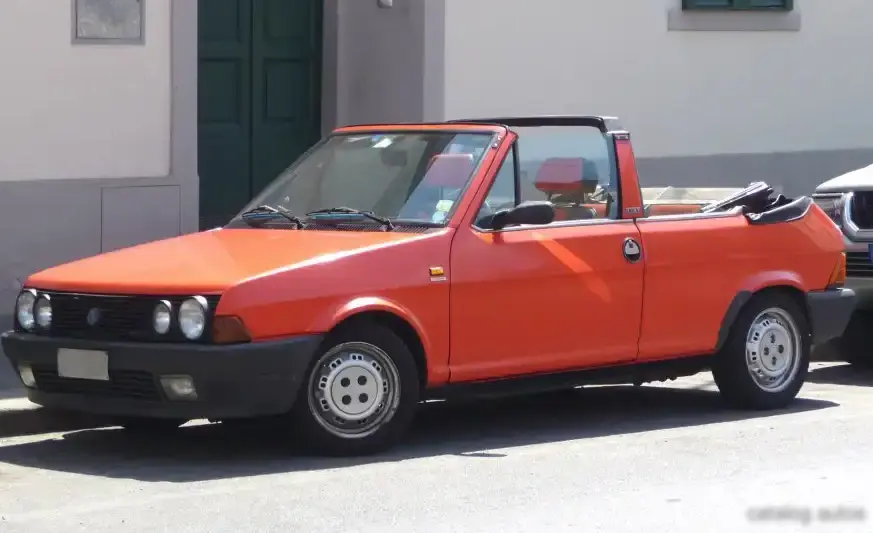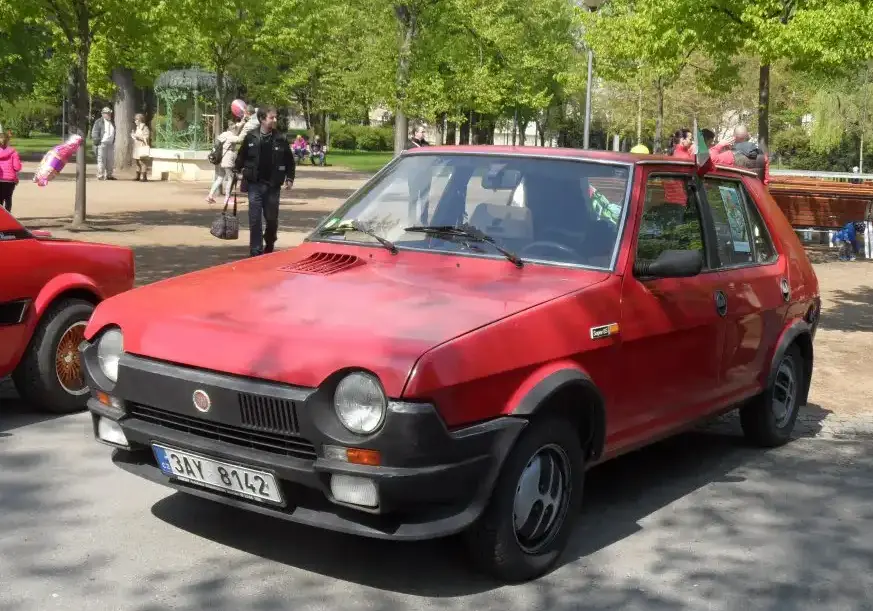
The Fiat Ritmo I (138A) 125 TC Abarth 2.0, produced between 1981 and 1982, represented a performance-oriented variant within the first generation of the Ritmo, a compact hatchback designed to modernize Fiat’s offerings in the early 1980s. Positioned as a sporty upgrade within the Ritmo range, the 125 TC Abarth 2.0 aimed to attract drivers seeking a blend of practicality and engaging performance. It was a relatively short-lived model, bridging the gap between the more basic Ritmo trims and the later, more heavily revised versions. The Ritmo, internally designated as the 138A project, was a significant departure from Fiat’s rear-wheel-drive past, adopting a front-wheel-drive layout which became increasingly common in the European market.
Technical Specifications
| Brand | Fiat |
| Model | Ritmo |
| Generation | Ritmo I (138A) |
| Type (Engine) | 125 TC Abarth 2.0 (125 Hp) |
| Start of production | 1981 |
| End of production | 1982 |
| Powertrain Architecture | Internal Combustion engine |
| Body type | Hatchback |
| Fuel Type | Petrol (Gasoline) |
| Power | 125 Hp |
| Engine Model/Code | 138AR1.000 B |
| Engine aspiration | Naturally aspirated engine |
| Engine oil capacity | 4.4 l / 4.65 US qt / 3.87 UK qt |
| Coolant capacity | 7.5 l / 7.93 US qt / 6.6 UK qt |
Powertrain & Engine Architecture
The heart of the 125 TC Abarth 2.0 was the 138AR1.000 B engine, a 1995cc inline-four cylinder unit. This engine was a development of Fiat’s twin-cam design, featuring two overhead camshafts driven by a timing belt. The cylinder head was a key component, optimized for improved airflow and combustion efficiency. Fuel delivery was managed by a Bosch mechanical fuel injection system, a relatively sophisticated setup for the time, providing more precise fuel metering compared to carburetors. The engine boasted a compression ratio of 9.5:1, contributing to its respectable power output of 125 horsepower. The engine’s valvetrain employed hydraulic lifters, reducing the need for frequent valve adjustments. While a five-speed manual transmission was the most common pairing, the 125 TC Abarth 2.0 was also available with a three-speed automatic transmission, though this configuration was less common and often considered to diminish the car’s sporting potential. The automatic transmission was a Borg Warner unit, known for its durability but not particularly for its responsiveness.
Driving Characteristics
The 125 TC Abarth 2.0 offered a noticeable step up in performance compared to the lower-spec Ritmo models. With 125 hp on tap, the hatchback could achieve a top speed of around 185 km/h (115 mph) and accelerate from 0 to 100 km/h (0-62 mph) in approximately 8.8 seconds. The automatic transmission, while providing convenience, did impact acceleration times and overall driving engagement. Gear changes were relatively smooth but lacked the immediacy of a manual gearbox. The Ritmo’s front-wheel-drive layout provided decent handling characteristics, although it was prone to understeer when pushed hard. The suspension, consisting of MacPherson struts at the front and a twist-beam axle at the rear, offered a reasonable compromise between comfort and handling. Compared to the manual transmission version, the automatic felt less eager to rev and required more careful throttle application to maintain momentum, especially on inclines.
Equipment & Trim Levels
The 125 TC Abarth 2.0 was generally well-equipped for its time, reflecting its position as a premium trim level. Standard features included cloth upholstery, a basic instrument cluster with a speedometer, tachometer, and fuel gauge, and a steering wheel. The Abarth designation signified a sportier aesthetic, with unique badging and often, a slightly more aggressive exterior styling. Optional extras included a sunroof, upgraded audio system, and alloy wheels. Interior trim was typically functional and durable, prioritizing practicality over luxury. The dashboard layout was straightforward, with all essential controls within easy reach of the driver. The Abarth models often featured a unique steering wheel design and sport seats with improved bolstering.
Chassis & Braking
The Ritmo I (138A) utilized a monocoque chassis construction, providing a good balance of rigidity and weight. The front suspension employed MacPherson struts with an anti-roll bar, while the rear suspension featured a twist-beam axle. Braking duties were handled by disc brakes at the front and drum brakes at the rear. The braking system was adequate for normal driving conditions, but the rear drum brakes could fade under heavy use. The steering was a rack-and-pinion system, providing reasonably precise steering feel. The 125 TC Abarth 2.0 typically featured slightly stiffer suspension settings compared to the base models, enhancing handling and reducing body roll. Tire sizes were generally 175/70 R14, providing a good compromise between grip and ride comfort.
Market Reception & Comparison
The Fiat Ritmo 125 TC Abarth 2.0 was generally well-received by automotive critics, who praised its performance and handling. However, the automatic transmission version was often criticized for detracting from the car’s sporting character. Compared to other hatchbacks of the era, such as the Volkswagen Golf GTI, the Ritmo offered a more affordable alternative with a comparable level of performance. The Ritmo’s fuel economy was reasonable for a 2.0-liter engine, averaging around 8-10 liters per 100 kilometers (23-28 mpg). Reliability was generally good, although the Bosch fuel injection system could occasionally require maintenance. The 1.6-liter Ritmo models were more fuel-efficient but lacked the performance of the 2.0-liter Abarth. The diesel-powered Ritmo offered even better fuel economy but was significantly slower.
Legacy
The Fiat Ritmo I (138A) 125 TC Abarth 2.0, while a relatively short-lived model, holds a special place in the hearts of many Fiat enthusiasts. The 138AR1.000 B engine proved to be a durable and reliable unit, and many examples are still on the road today. The car’s combination of performance, practicality, and affordability made it a popular choice in the early 1980s. In the used car market, the 125 TC Abarth 2.0 commands a premium over the lower-spec Ritmo models, particularly those in good condition. The manual transmission versions are generally more sought after by collectors and enthusiasts. The Ritmo’s influence can be seen in later Fiat models, which continued to embrace front-wheel-drive and fuel-efficient engine technology. Finding parts can be challenging, but a dedicated network of Fiat parts suppliers exists to support owners of these classic vehicles.