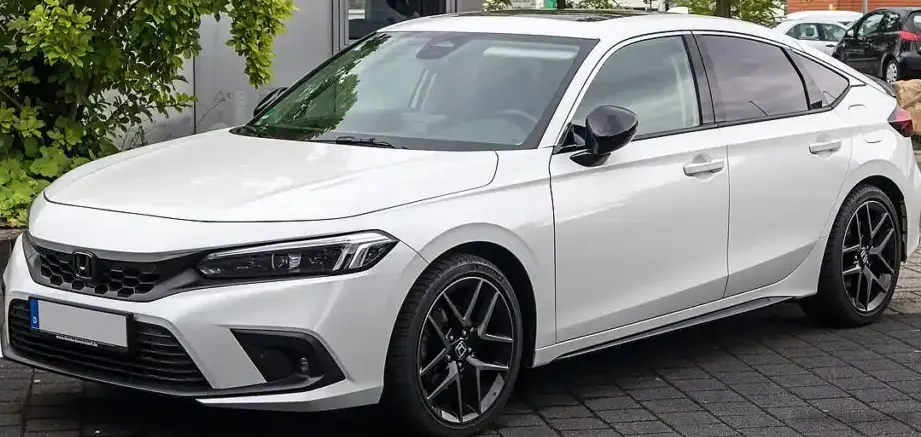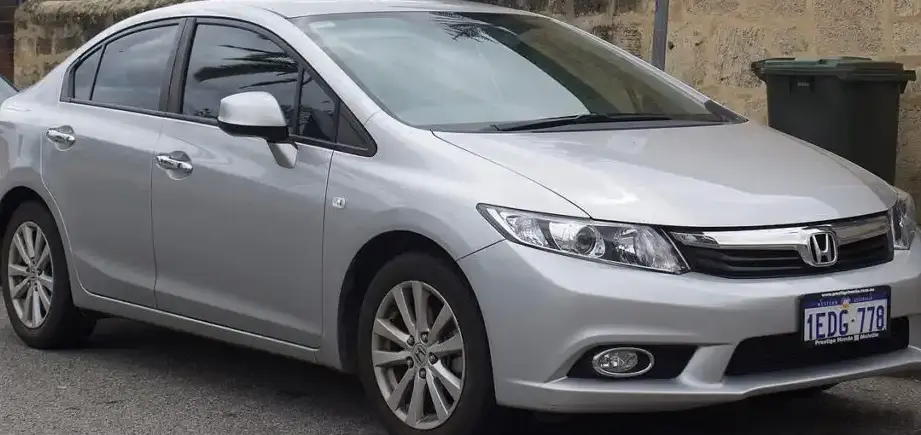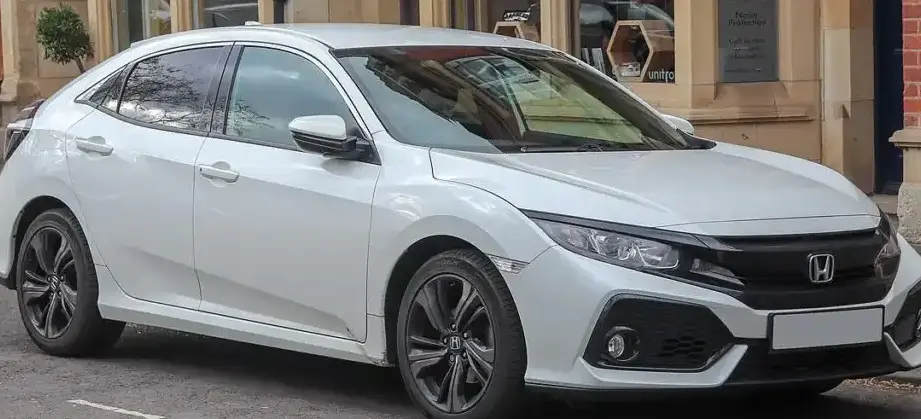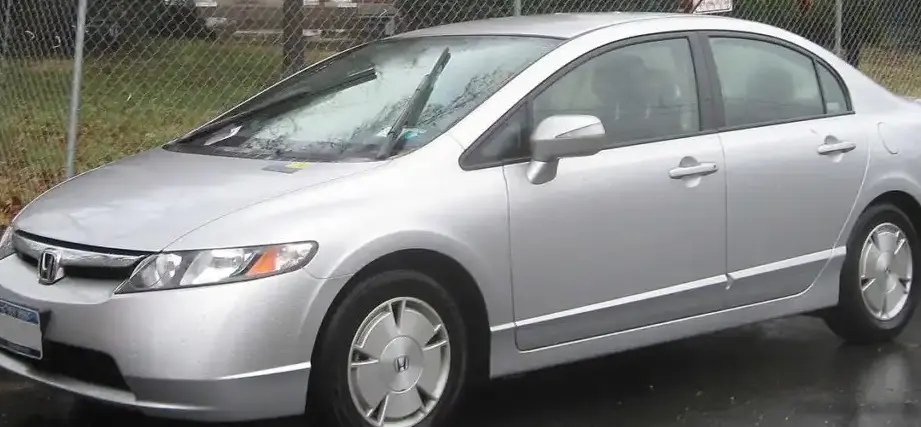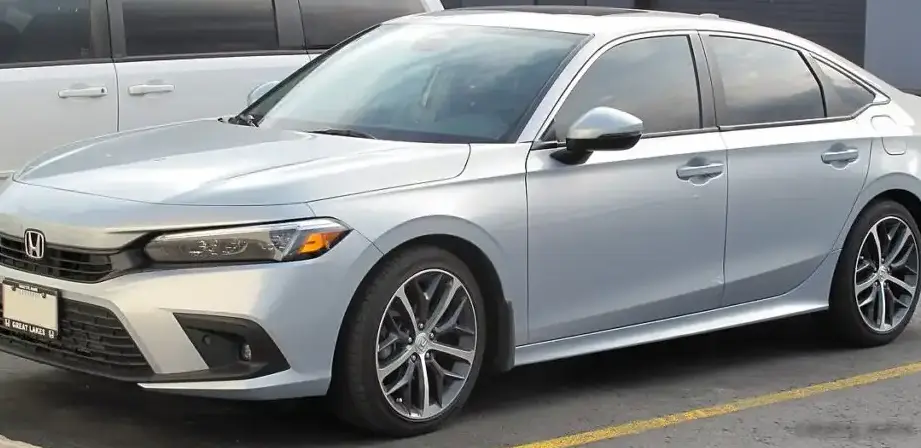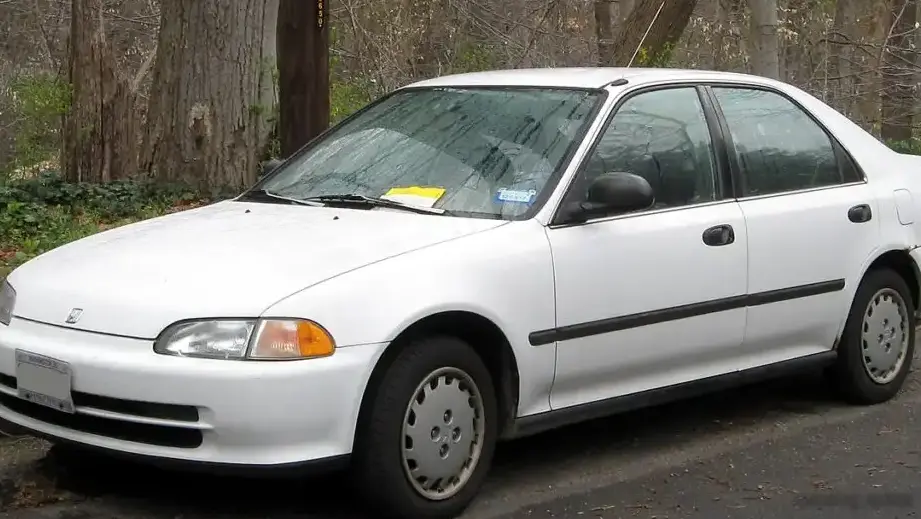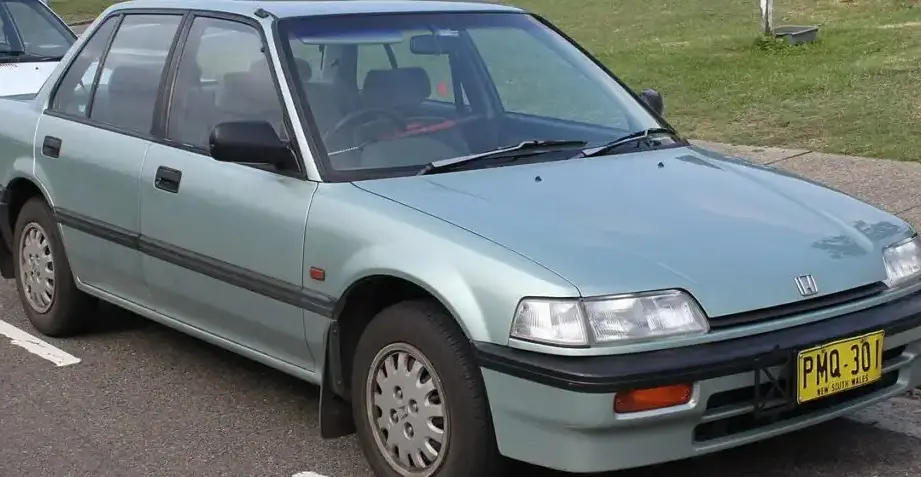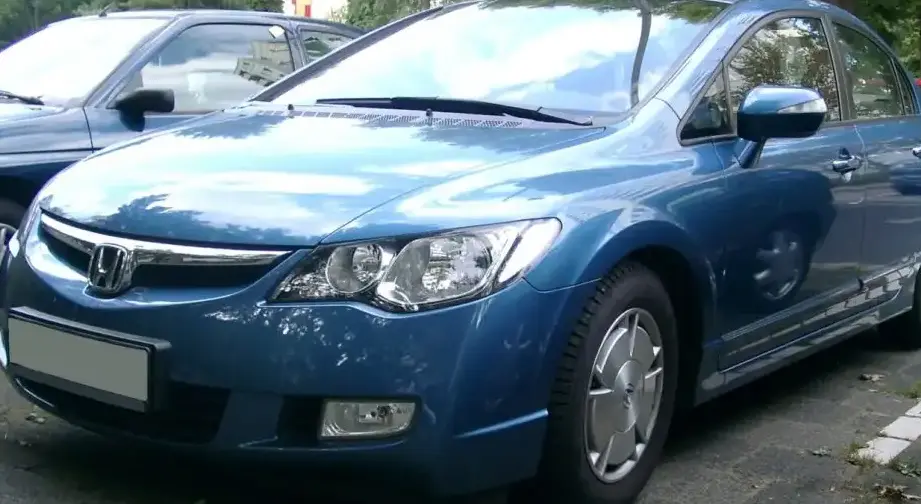
The Honda Civic VIII Sedan 1.8 i-VTEC 16V Automatic, produced between 2006 and 2011, represented a significant evolution in Honda’s popular compact car line. Part of the eighth generation (2005-2011) of the Civic, this variant was primarily aimed at the North American and European markets, offering a balance of fuel efficiency, reliability, and comfortable daily driving. It occupied a mid-range position within the Civic VIII Sedan lineup, slotting between the base 1.3L models and the sportier, higher-performance 2.0L variants. This model was a key player in Honda’s strategy to provide a versatile and appealing vehicle to a broad customer base.
Technical Specifications
| Brand | Honda |
| Model | Civic |
| Generation | Civic VIII Sedan |
| Type (Engine) | 1.8 i-VTEC 16V (140 Hp) Automatic |
| Start of production | 2006 |
| End of production | 2011 |
| Powertrain Architecture | Internal Combustion engine |
| Body type | Sedan |
| Seats | 5 |
| Doors | 4 |
| Fuel consumption (urban) | 9.5 l/100 km (24.8 US mpg) |
| Fuel consumption (extra urban) | 5.5 l/100 km (42.8 US mpg) |
| Fuel consumption (combined) | 6.6 l/100 km (35.6 US mpg) |
| Fuel Type | Petrol (Gasoline) |
| Acceleration 0 – 100 km/h | 9.3 sec |
| Acceleration 0 – 62 mph | 9.3 sec |
| Acceleration 0 – 60 mph | 8.8 sec |
| Maximum speed | 200 km/h (124.27 mph) |
| Weight-to-power ratio | 8.8 kg/Hp |
| Weight-to-torque ratio | 7.1 kg/Nm |
| Power | 140 Hp @ 6300 rpm |
| Torque | 174 Nm @ 4200 rpm (128.34 lb.-ft. @ 4200 rpm) |
| Engine layout | Front, Transverse |
| Engine Model/Code | R18A1 |
| Engine displacement | 1799 cm3 (109.78 cu. in.) |
| Number of cylinders | 4 |
| Engine configuration | Inline |
| Cylinder Bore | 81 mm (3.19 in.) |
| Piston Stroke | 87.3 mm (3.44 in.) |
| Compression ratio | 10.5:1 |
| Number of valves per cylinder | 4 |
| Fuel injection system | Multi-port manifold injection |
| Engine aspiration | Naturally aspirated engine |
| Valvetrain | OHC |
| Engine oil capacity | 3.7 l (3.91 US qt | 3.26 UK qt) |
| Coolant capacity | 5.3 l (5.6 US qt | 4.66 UK qt) |
| Kerb Weight | 1228 kg (2707.28 lbs.) |
| Max. weight | 1675 kg (3692.74 lbs.) |
| Max load | 447 kg (985.47 lbs.) |
| Trunk (boot) space – minimum | 390 l (13.77 cu. ft.) |
| Fuel tank capacity | 50 l (13.21 US gal | 11 UK gal) |
| Length | 4545 mm (178.94 in.) |
| Width | 1750 mm (68.9 in.) |
| Height | 1435 mm (56.5 in.) |
| Wheelbase | 2700 mm (106.3 in.) |
| Front track | 1500 mm (59.06 in.) |
| Rear (Back) track | 1500 mm (59.06 in.) |
| Drivetrain Architecture | Front wheel drive |
| Number of gears and type of gearbox | 5 gears, automatic transmission |
| Front suspension | Spring Strut |
| Rear suspension | Transverse stabilizer |
| Front brakes | Ventilated discs |
| Rear brakes | Disc |
| Assisting systems | ABS (Anti-lock braking system) |
| Steering type | Steering rack and pinion |
| Tires size | 205/55 R16 |
| Wheel rims size | 6J x 16 |
INTRODUCTION
The Honda Civic VIII Sedan 1.8 i-VTEC Automatic, launched in 2006, was a key component of Honda’s strategy to maintain its position in the highly competitive compact car segment. Building upon the success of previous Civic generations, the VIII aimed to offer a more refined and technologically advanced package. The 1.8L i-VTEC engine paired with a five-speed automatic transmission was designed to appeal to buyers seeking a comfortable and efficient daily driver. This configuration was particularly popular in North America and Europe, where automatic transmissions were preferred by a significant portion of the market. The Civic VIII represented a departure from the more angular designs of its predecessor, adopting a sleeker, more contemporary aesthetic.
Powertrain & Engine Architecture
At the heart of this Civic variant lies the R18A1 engine, a 1.8-liter inline-four cylinder powerplant. This engine is a member of Honda’s K-series family, though it differs significantly from the higher-performance K20 and K24 engines. The R18A1 utilizes Honda’s i-VTEC (Intelligent Variable Valve Timing and Lift Electronic Control) technology, which optimizes valve timing and lift based on engine speed and load, improving both fuel efficiency and power output. Fuel delivery is managed by a multi-point fuel injection system. The engine’s valvetrain features a single overhead camshaft (OHC) design. The five-speed automatic transmission, while providing smooth shifts, was a conventional torque converter automatic, lacking the efficiency of newer continuously variable transmissions (CVTs) that would become more prevalent in later Civic models. This transmission was chosen for its reliability and cost-effectiveness.
Driving Characteristics
The 1.8L i-VTEC Automatic Civic offered a comfortable and predictable driving experience. With 140 horsepower and 174 lb-ft of torque, acceleration was adequate for everyday driving, with a 0-60 mph time of around 8.8 seconds. However, it wasn’t designed for spirited performance. Compared to the manual transmission version or the 2.0L models, the automatic felt somewhat less responsive. The five-speed automatic transmission’s gear ratios were tuned for fuel economy rather than outright acceleration. While the transmission shifted smoothly, it could sometimes feel hesitant during quick overtaking maneuvers. The overall driving experience was characterized by its refinement and ease of use, making it an ideal choice for commuters and families.
Equipment & Trim Levels
The 1.8 i-VTEC Automatic trim typically included standard features such as air conditioning, power windows and locks, a CD player with MP3 compatibility, and an anti-lock braking system (ABS). Higher trim levels, such as the EX or LX, added features like a sunroof, alloy wheels, cruise control, and upgraded audio systems. Interior upholstery was typically cloth, with options for leather in higher trims. The dashboard layout was functional and well-designed, with easy-to-read gauges and intuitive controls. Optional extras included a navigation system and a premium sound system.
Chassis & Braking
The Civic VIII Sedan utilized a MacPherson strut front suspension and a multi-link rear suspension, providing a comfortable ride and decent handling. The suspension was tuned for everyday driving, prioritizing comfort over sporty handling. The braking system consisted of ventilated discs at the front and solid discs at the rear. ABS was standard, providing enhanced braking performance in emergency situations. The chassis was relatively lightweight, contributing to the car’s fuel efficiency and agility. Stabilizer bars were included both front and rear to reduce body roll during cornering.
Market Reception & Comparison
The 1.8L i-VTEC Automatic Civic received generally positive reviews from automotive critics. It was praised for its fuel efficiency, reliability, and comfortable ride. However, some critics noted that the automatic transmission could feel sluggish compared to the manual version. Compared to other compact cars in its class, the Civic offered a compelling combination of features and value. The 1.8L engine provided a good balance between performance and fuel economy, making it a practical choice for many buyers. The 2.0L models offered more power but came at a higher price point and with slightly lower fuel economy. The 1.3L models were more affordable but lacked the performance of the 1.8L.
Legacy
The Honda Civic VIII Sedan 1.8 i-VTEC Automatic has proven to be a reliable and durable vehicle. The R18A1 engine is known for its longevity, and the automatic transmission, while not the most efficient, is generally dependable. In the used car market, these Civics are still sought after for their affordability, fuel economy, and Honda’s reputation for reliability. While not a performance icon, this variant remains a practical and well-rounded choice for buyers seeking a dependable and economical compact car. Regular maintenance, including timely oil changes and fluid checks, is key to ensuring the continued longevity of this powertrain.